Posts Tagged ‘personal development’

I started meditation because it seemed like a natural extension of a yoga practice as well as a good cool down from the physical exercise that a yoga session can be. I was able to habitualize a regular meditation practice, years before I was able to habitualize a regular yoga practice.

I enjoy doing yoga. Especially after a weight training session or on a day that I don’t life weights. At the end of a yoga session I feel good. Often I feel better than I did before I started the session. But meditation, hits different for me.

I feel better during and after a meditation in deeper way than I do post yoga. Not better, just better for me. Better enough that my meditation practice stuck sooner.

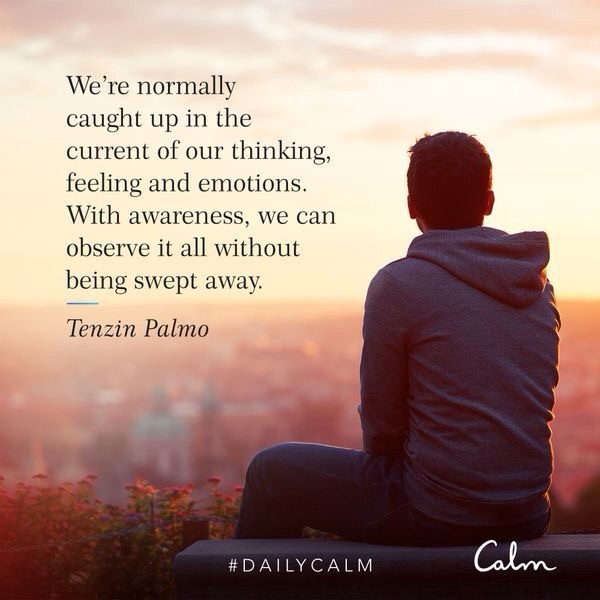
I thank the Calm app for that. The guided meditations, to this day, remain the vehicle that has helped me arrive the most frequently, and consistently to consciousness and awareness of the space between stimulus and response.

I’m not describing the feeling adequately. That is the great thing about meditation and other spirituality practices; concepts beyond words.

On bad days, good days, and neutral days alike, when I’m able to break the cycle of thinking, break away from my identification with my thoughts or emotions or life situation, concentrate on my breath, and reach a place of inner stillness and awareness, even if it’s just for a couple of seconds…that’s the good stuff. That makes the practice worth it’s weight in gold.

That feeling makes me feel like I’ve shed my skin and become a new person on the spot. It feels like coming home again. It feels like putting on all of my most comfortable clothes. It feels like breathing again after being under water.

I certainly wish I was able to get to that place more consistently and for longer. But, we all need goals to chase. I am grateful for every micro second I have spent in the awareness of inner stillness. Just to be aware of it is a blessing for me. Then to feel it and know it, and to know myself for the first time. Tremendous feelings. Gratitude for sure.

Taking my meditation practice off of my cushion and into my daily life was a long delayed happening. For the longest time I just sat, focused on my breath a little, and thought with my eyes closed and a guided meditation playing in my earbuds.

To get into a true meditative state, or even a reasonable facsimile took a while for me. Many times now I simply settle for breath awareness, noticing I’m stuck in my head, or identifying with emotion, and coming back to the breath. Which is also a blessing for me.

Being able to notice I’m identified with my thoughts and being able to break free and come back to breath awareness makes me feel like a new person. I can simply remember the long period of my life where I was completely identified with my thoughts, my emotion and my life situation. The majority of people are.

I still get caught up. Meditation isn’t a magic bullet. But it is an aide. An aide for the mind. An aide for our emotions. An aid for our soul. An aide I am grateful for.

Balance

Possible? Yes. Probable? Well…

That all depends.

Depends on what?

Well if you live in a capitalist controlled society, how much is money a direct concern for your ability to eat, drink, and be sheltered?

Are you living paycheck to paycheck just to survive? Constantly working to keep your head above water and only living on the survival plain?

If yes, then rest is a luxury. It shouldn’t be. Not this side of the industrial revolution. But it seems as though technological advances are weaponized against the working class in order to force more productivity for less compensation. See A.I doing to the white collar class what machines did to the blue collar class forty years ago.

From a place of stress and survival balance seems like a theory and a fantasy created by those who have never known struggle. But the ancient philosophies and spiritual practices that cultivate and tend to our hearts and souls come from a time when all there was to do was survive, when slavery was standard, and life expectancy was a fraction of what it is today.

Wisdom is wisdom for reason. Concepts, teachings, and ways; stand the test of time for a reason.

“Always do what you are afraid to do.” Ralph Waldo Emerson

When one spends the majority of their waking hours “earning a living”, and just trying to keep a roof over one’s head, as I spent many years doing myself; using limited leisure time for something other and pleasure is scary. That fear is often masked with dismissiveness, sarcasm, excuses, cynicism, and/or denial.

We work hard, we have the right to play hard. When one spends their time in the service of someone else’s dreams of making more, having more, producing more, extracting more…we want to spend our time off the clock doing what we want.

I understand this. I’ve eaten my feelings more times than I could ever attempt to count. I spent countless hours binge watches shows, rewatching movies, and marathoning video games because work sucks, I put in my time on the clock, and after my commute home it was ME time.

“Always do what you are afraid to do.” Ralph Waldo Emerson

But entertainment and escapism only worked so long for me before it all became shallow, then hollow, then empty, then a void, then burnout, then darkness.

We must challenge ourselves to work on ourselves and for ourselves, even when we feel we’re being worked to the bone and driven into the ground. It is hard. It is unknown. It is scary. It is work. It is hard. But it is worth it. Why?

Because we become better versions of ourselves. Individually, not in a cookie cutter way. Emotional regulation is different for everybody. Peace of mind is different for everybody. Overcoming fear is different for everybody. Letting go of the past is different for everybody. Physical fitness is different for every body. Mindfulness is different for everybody. Applied philosophical wisdom is different for everybody.

The principles are the same, the wisdom is the same, the application and results are unique because we are all unique.

I slept poorly for a third of my life. I spent my waking hours in a poor mental emotional state for half of my life. I had to work for a living. But when I stopped dedicating all of my leisure time to escaping and entertaining myself and went to work on myself, for myself…my sleep, my mind, my emotions all slowly and steadily became better.

“Always do what you are afraid to do.” Ralph Waldo Emerson

I’m still going, still working on it, no magic pill, no cure all, no end point until the end of my life. However, now I move forward with some stillness and balance.

Immeasurable? Yes.

Immeasurably better? Yes, please, thank you.

Our lives are dyed by the color of our thoughts.

We focus on what we look at.

We get what we focus on.

We are what we repeatedly do.

Trying to create and cultivate space between what happens to us, and our thoughts and emotions regarding what happens to us can be very hard. And certainly is not the default state of doing things for human beings.

They’re called snap judgements for a reason.

In the blink of an eye.

We’ll react with fervent emotion, containing very little, if any, rational thought.

But of course, in the moment of choice, we don’t just think, we know we’re right. We feel it. We don’t know it. We feel it.

Which is more powerful a thought or a feeling?

Which is more influential?

What was the world like during the vast majority of human history before rational thought?

Of course we construct the world through the paradigm of our emotions. Our emotions predate language by at least 100,000 years and rational thought by around 300,000 years.

We evolved to construct the world with our emotions. It is the norm to construct the world with our emotions. We are emotional creatures.

The modern world is one of logic and reason. At least it is officially, on the table, for appearances, in public. But living life is a private matter. Emotions and feelings rule the day for the vast majority of people. If it were the other way around the world would be incomprehensibly different.

So we must have more compassion and empathy for ourselves AND others.

I have found maintaining self compassion and empathy towards others to be a challenge despite large quantities of meditation practice and spirituality study. Negativity and selfishness seem to be increasingly amplified and glorified in the western world. I wonder why that is? Put another log on the fire.

Is it in our nature to be compassionate and empathetic? I believe so. I believe it is, barely, in our nature. Just enough that it can be cultivated, expanded, and spread around in the spirit of emotional contagion.

I know there are, have been, and likely will be plenty of days where I will need to give myself compassion and empathy. Living can be hard and complex.

That means that others need it to. Some more than others. I know I’ll have to develop my ability to extend compassion and empathy. But it’s a challenge worth taking on and conquering. It is a good fight to take on and win.

Because compassion and empathy are good things. Two things we need more of for ourselves. Two things this world needs more of from us.

We’re not done until we’re dead.

Done with what?

Our life’s work.

What is our life’s work?

What we spend our time doing.

Time, the one thing we can’t get back regardless of how rich or poor we are.

It is normal to spend the majority of one’s life just trying to survive as long as possible.

Human, animal, plant…survival and replication is the name of the game, the purpose of life.

But things have changed for some people in some parts of the world depending on external factors completely outside of their control that determine whether or not they can devote their waking hours to doing something that has come to be known as…thriving.

Not just surviving, but thriving.

Not just living moment to moment, minute to minute, hour to hour, day to day, week to week, month to month, year to year. But something the privileged say is greater than just going on until we can’t go on anymore.

Something greater than doing what I am capable of doing to live to see another day? Wonderful! I’m in, sign me up, mark me down, I love it, I want it. This means my all my necessities will be provided for me so I can focus completely on thriving right? Right?

No, I am still completely responsible for my own survival. But now, I have to choose to find, cultivate, and expend from within me an entire new being’s worth of focus, energy, effort, determination, and consistency to dedicate my life to something greater? Even though I still have to devote the majority of my waking hours to doing what I am capable of doing to make sure I don’t die homeless, starving, and dehydrated?

Luckily we can choose what to focus on. We can choose how to perceive things. We can choose how to feel. We can choose how to act and what to do.

Not by default though. After all, we would be urinating and defecating where we sit or stand without being potty trained. So we have to learn the theories, concepts, skills, tools, practices, habits, rituals and routines to develop and improve ourselves gradually, over time, patiently into a better more actualized version of ourselves.

How many steps is that? How many choices is that? How many days is that? How many years is that? What is the cost of that? Why is it up to me to do all that? Shouldn’t they be teaching us those things in school? Shouldn’t that be paid training on how to live rather than pay to play?

Luckily we can choose what to focus on. We can choose how to perceive things. We can choose how to feel. We can choose how to act and what to do.

I suppose trying to be a better person is a better use of leisure time than watching tv. But what about people who don’t have leisure time?

That’s out of my control or ability to influence. The best thing I can do is focus on improving myself without negatively impacting others. No harm, no foul. Becoming a better version of myself may even end up having a positive effect on the people around me. That is certainly a good thing. To positively impact the people, places, and things around us.

It would be nice to know why we have to discover this on our own and do it on our own when in America we are forced to spend the first quarter of our lives being educated. Educated in what? For what? Now I have to spend the rest of my life learning and applying knowledge that will actually benefit me pragmatically?

I thought I was done learning. I thought one day I would be done working.

We’re not done until we’re dead.

Done with what?

Our life’s work.

What is our life’s work?

What we spend our time doing.

I found it to be a tangible sign of progression on my path that I stopped be as internally triggered by external reality not matching up with what I wanted, expected or hoped for.

Have a achieved zen? HA! We all need goals to chase.

Maybe it’s just part of growing older and accumulating more life experience that teaches us, whether we like it or not, that external reality is going to do what external reality is going to do and the best we can do is attempt to influence it then completely let go/detach from there.

I have gotten better at that.

There is a balance there too.

One can give up altogether. Stop trying.

Giving up control is good. Giving up altogether is bad.

Identifying what is in our control and what is not is a pillar of stoicism. It is one of the things that initially drew me to the ancient philosophy that has helped so many people for so many thousands of years.

I remember in the depths of my depression turning to personal development/self help books. In my case, audiobooks. My education in America taught me to hate learning. I hated reading. I would learn to unlearn to paradigm of hating learning, slowly, over time. Renting audiobooks from my local library was a big step in that direction.

One of the first authors that drew my attention was the late great Stephen Covey and his iconic book The Seven Habits of Highly Effective People. A book I recommend to everyone that is capable of reading or listening to audiobooks.

More than his book were his speeches and interviews. Regardless of the material he preached, he had an amazing voice and a magnetic presence.

In his book and his talks he talked about two circles. The Circle of Control and the Circle of Concern. As one might guess, the circle of control is very small and the circle of concern is very big. Yet the attention we pay to each is often inversely proportional. I know it was for me when I first learned about the terms. I know that learning about those terms or any terms is in no way a cure all.

So it still takes constant effort over a decade and a half after first learning about what I have direct control over and what I have no control over. I’ve studied stoicism through reading, listening to podcast, and watching videos for almost a decade now. No one thing magically makes my shortcomings or predispositions disappear.

But I am as grateful or more grateful for the progress I’ve made in this area of my life than anything that has ever happened to me or anything I have ever done. Because putting my focus, energy, and effort towards things outside of my control has been a source of tremendous suffering for me. Life experience has shown me it is a great source of suffering for many if not most of the people I have ever met.

Meditation, stoicism, journaling, theanine, ashwaghanda have all helped me calm my mind, slow my thought streams down at least enough to realize I am in the witness and not a passenger.

Things happen.

I can choose to put my focus, energy, and effort into accomplishing a goal regardless of size or scope and then when I have done all that I am capable of doing to the best of my ability at that time…I can choose to let go and then I can choose to accept what is.

It is as it is…