


What happens when the price of something stops being a decision and becomes an optimization?
There was a time when pricing was relatively simple.
A store decided what to charge. A landlord decided what to charge for an apartment. A hotel adjusted its rates. A customer looked at the number and decided whether to buy.
The decision might have involved spreadsheets, forecasts, competitors, and plenty of guesswork. Today, software can make that decision continuously.
It can watch demand, inventory, competitor prices, location, timing, browsing behavior, and thousands of other signals. It can adjust the price, watch what happens, and adjust it again.
The question is no longer simply: What should this cost?
It can become: What is the highest price the market—or this particular person—will accept?
That sounds like a technological question. It isn’t. It is an economic one.
Because an algorithm does not decide what to optimize. A person does.
And when the objective is maximizing revenue, the machine can become extraordinarily good at pursuing it.
The Market Learns to Move
Dynamic pricing is not new.
Airlines have used it for decades. Hotels do it. Rideshare companies do it. Retailers have long adjusted prices based on demand, inventory, season, and competition.
There is nothing inherently sinister about responding to changing market conditions. The important change is what software makes possible. A human pricing team might review yesterday’s sales and adjust prices today.
An algorithm can monitor thousands of variables in real time. It can test prices continuously. It can detect patterns no human employee could reasonably track. It can respond before anyone even notices the market has changed.
That is useful when the goal is efficiency. Businesses can manage inventory, respond to demand, reduce waste, and sometimes lower prices. But the same capability works in the other direction.
If a system can identify where demand is strong, it can also identify where consumers have little choice. If it can detect when inventory is scarce, it can detect when a customer is unlikely to walk away. And if it can make those calculations continuously, pricing stops being an occasional judgment.
It becomes an optimization problem. That distinction matters because optimization always depends on the objective.
Efficient at what?
From the Market to You
This is where another form of algorithmic pricing enters the picture.
Dynamic pricing asks: What will the market bear? Personalized pricing asks: What will you bear?
The difference can be subtle. A dynamic system might raise the price of a hotel room because demand increased. A personalized system could use information about the person searching for that room to estimate how much that individual is willing to pay. That information can come from many places: browsing history, location, demographics, purchasing behavior, or other characteristics.
The Federal Trade Commission has been investigating this emerging market under the term surveillance pricing. In 2024, it ordered eight companies offering surveillance-pricing products or services to provide information about how they use consumer data to set or influence prices. The FTC has said these systems can use information such as location, browsing history, demographics, and shopping behavior.
The technology is not hypothetical. The economics aren’t hypothetical either.
A field experiment published by economists Jean-Pierre Dubé and Sanjog Misra found that machine-learning-based personalized pricing could increase firm profits substantially beyond an optimized uniform price. Consumers did not all lose: more than 60 percent received lower prices. But total consumer surplus fell substantially compared with uniform pricing.
That distinction is important. Personalized pricing is not simply a machine programmed to charge everyone more.
It is more sophisticated than that. Some people pay less. Some pay more. The system’s purpose is to identify the difference and capture more of the value.
The old question was: What is the price of this thing? The new question can become: What is this particular person likely to pay?
That changes the relationship between buyer and seller. The price is no longer simply attached to the product. It can become attached to the person.
And that raises a more important question: What happens when the person has no good alternative?

The People Who Can’t Walk Away
For a luxury purchase, pricing power has limits. You can decide not to buy the watch. You can wait for the vacation. You can order something else.
But not every market works that way. People need housing. They need food. They need transportation. They need medicine and childcare.
The fewer alternatives a person has, the less meaningful the choice to simply walk away becomes. That is where algorithmic pricing collides with something older than artificial intelligence: unequal bargaining power.
A corporation may have sophisticated data, pricing software, economists, lawyers, and capital behind a transaction. The person on the other side may have a paycheck and a deadline.
The technology does not create that imbalance. But it can measure and exploit the consequences of it with extraordinary precision. And nowhere is that easier to see than housing.
The Apartment
Consider the case of RealPage. In 2024, the U.S. Department of Justice sued RealPage, alleging that its software helped competing landlords coordinate apartment pricing rather than compete independently. The basic mechanism was strikingly simple.
Landlords provided the software with information about their properties and rental markets, including sensitive information about rents and lease terms. The system processed that information and generated pricing recommendations.
The DOJ alleged that this allowed landlords to use competitors’ nonpublic information to make pricing decisions and reduced the incentive to compete for tenants. The department later expanded the case to include several major landlords.
This matters because there is a major difference between an algorithm responding to a competitive market and an algorithm helping competitors coordinate within that market. The first can make markets move faster. The second can make competition itself weaker. And the issue has not disappeared.
In 2026, the DOJ has continued to reach settlements and proposed judgments involving landlords accused of using RealPage’s system in ways that restricted competition. A proposed September 2026 consent decree involving Pinnacle, for example, would prohibit certain uses of competitors’ sensitive data and certain anticompetitive algorithmic pricing practices.
The machine is not merely calculating the market here. It is becoming part of the market’s structure. That is the important shift.
The algorithm is no longer just a faster calculator sitting behind a human decision. It can influence what competitors charge, how they respond to one another, and what prices consumers encounter.
The tenant does not get a machine. The landlord does. That difference matters.
The Algorithm Doesn’t Need to Hate You
It is tempting to describe all of this as if the algorithm itself were the villain.
That would be a mistake. An algorithm does not hate renters. It does not resent grocery shoppers. It does not want to extract money from anyone. It has no desires. It has an objective.
People choose the objective. That is why saying “the algorithm decided” can obscure more than it explains.
The important questions are:
- Who built the system?
- What information does it use?
- What has it been told to optimize?
- Who owns it?
- Who benefits when it succeeds?
The machine does not introduce the incentive. It inherits it.
If a company rewards its pricing system for maximizing revenue, the system will look for revenue. If it rewards the system for increasing occupancy, it will pursue occupancy. If it rewards the system for extracting more from customers who have fewer alternatives, it will become better at finding those customers.
The technology is powerful because it does not have to believe in the objective. It only has to optimize it.
Algorithms didn’t invent exploitation. They industrialized its optimization.
When Optimization Becomes Extraction
This is where algorithmic pricing becomes more than a story about automation.
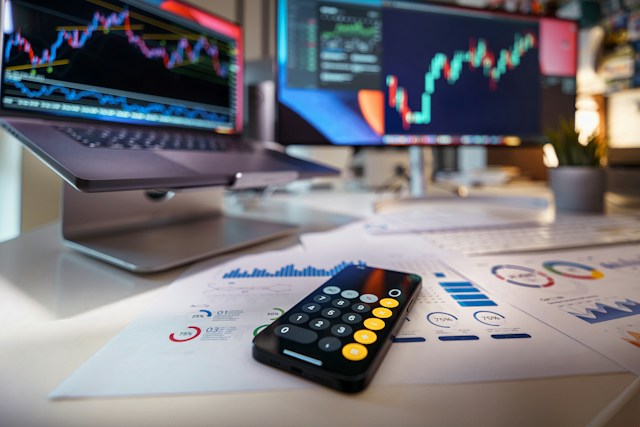
The system can observe. Then predict. Then price. Then observe what happened. Then learn. Then price again.
That creates a feedback loop. The market provides data. The data improves the model. The model changes the price. The new price changes consumer behavior. That behavior produces more data. And the cycle begins again.
A human pricing department cannot operate at this speed across thousands of products, customers, properties, or markets. A machine can. That gives the owner of the system a new form of economic power.
Not simply the power to set a price. The power to continuously discover how far a price can be pushed.
This is why the question cannot stop at whether algorithms are efficient. Of course they are.
The more important question is: Efficient for whom?
What Happens When the Machines Compete?
There is another problem hiding inside that question.
Competition assumes that sellers have a reason to undercut one another. But what happens when pricing systems become sophisticated enough to learn that constantly undercutting competitors is not the most profitable strategy? Researchers have already explored this possibility.
A 2020 American Economic Review study found that AI pricing algorithms can learn to collude and raise prices without ever talking to each other. More recent economic theory has examined similar problems, including models in which algorithmic pricing can produce inflated outcomes even without the traditional forms of communication antitrust law is designed to detect.
These studies do not prove that every pricing algorithm will collude. They prove something more useful: A machine does not need to be told to collude for competition to become a problem.
If the system is rewarded for profit, it can discover strategies that make more money. Sometimes those strategies may benefit consumers. Sometimes they may benefit the firm at the consumer’s expense. And sometimes they may weaken the competition that was supposed to protect the consumer in the first place.
That brings us back to the question underneath all of this. Who gets the gains from the machine?
Who Benefits From the Optimization?
The answer is not automatically “the corporation.” Businesses can use algorithmic systems to reduce waste, manage inventory, improve forecasting, and operate more efficiently. Those gains can sometimes reach consumers through lower prices or better service.
That is the strongest case for algorithmic pricing. But efficiency does not tell us how the gains are distributed.
The people buying the product generally do not own the pricing system. Renters do not own the housing software. Workers do not own the corporate data. Consumers do not decide what the algorithm is rewarded for maximizing. The companies do. And when the system becomes better at extracting value, the question becomes who captures that additional value.
That is the deeper economic issue. Technology can increase the size of the pie. It does not determine who gets the larger slice.
That depends on ownership, bargaining power, competition, regulation, and the rules surrounding the market.
An algorithm can therefore look like a neutral piece of software while operating inside a very non-neutral economic structure.
The machine may be new. The incentive is not.
The Machine Is Working
There is something almost unsettling about how ordinary this can look.
- You search for an apartment. A price appears.
- You look for groceries. A price appears.
- You book a hotel. A price appears.
You assume the number is simply the price. But behind that number may be a system processing enormous amounts of information, predicting behavior, responding to competitors, and optimizing an objective chosen somewhere above you.
None of this requires a conspiracy. It does not require an evil executive sitting in a dark room. It does not even require anyone involved to believe they are doing something wrong.
The machine can be working exactly as designed. That is the point. The question is not whether the machine works. The question is what we have asked it to work toward.
We built systems capable of measuring human behavior at extraordinary scale. We gave them access to markets, consumer data, competitor information, and real-time feedback. Then we told them to optimize. So they did.
The problem is not that algorithms make decisions instead of humans. It is that we can encode our existing economic incentives into systems capable of pursuing those incentives faster, more precisely, and at a scale no human workforce could match.
Once that happens, pricing is no longer just a number. It becomes a reflection of power.
- Who owns the data?
- Who owns the software?
- Who chooses the objective?
- Who has the ability to walk away?
- Who captures the gains?
- And who pays for the optimization?
Those questions matter because algorithms did not create the economic system they operate inside. They made that system more capable.
Perhaps that is the question we should be asking when the machine sets the price: Was the thing we built it to optimize ever working for us in the first place?



 Anarchy Journal Constitutional