Posts Tagged ‘personal growth’


Resistance is a Roadblock and a Brick Wall

Have you ever felt paralyzed by indecision, knowing exactly what you need to do but unable to take action? I’ve been there, countless times. The culprit? Resistance, the invisible saboteur that can derail our plans, our goals, and our dreams often before we even get started.

I’ve realized that resistance has been a huge roadblock in my life. Just take this article — I put off writing it for three extra days, letting resistance win when I sat down to write. Even with routines in place to help me tackle that writing resistance, it’s so much easier to say, “I’ll do it later” or “I’ll handle it tomorrow,” and then get lost in distractions, whether online or in the real world.
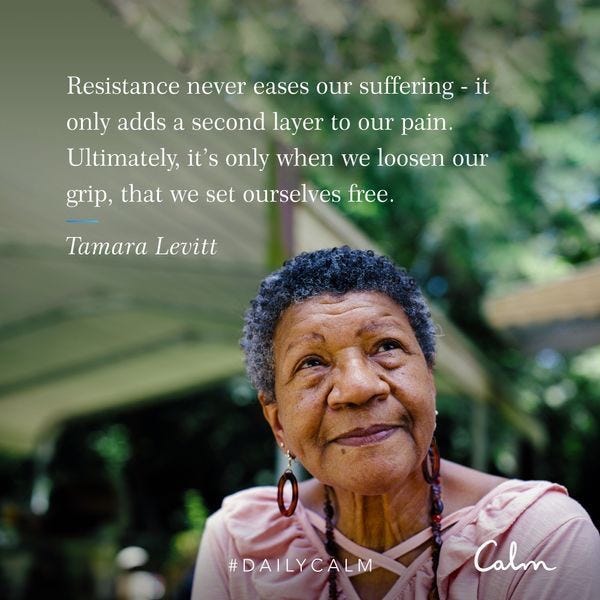
Not doing something is still a choice. When I choose not to act, I’m choosing to miss out. There’s no escaping the cost of that choice. Giving in to resistance only makes things tougher, which is the opposite of what we want. We often think, “I don’t want to make things worse,” but that’s exactly what happens when we do nothing.

So, how does giving in to resistance make things worse? It breeds bad habits. It keeps us stressed and anxious. It turns into excuse-making. We end up feeling stuck or helpless, living from a place of inaction that feels lazy.

Photo by Jens Aber on Unsplash

Habitual Wet Cement

And that’s a perfect way to describe it — cementing a lazy mindset. Once you’re used to being lazy, trying to switch to a more proactive attitude feels like trying to walk through wet cement that’s already starting to harden. It’s tough because fighting against the habit of giving in to resistance is like pushing against reality. Remember, inaction is still a form of action. So now, on top of laziness, stress, and anxiety, there’s also this extra layer of resisting change.

“The reason why we struggle with insecurity is because we compare our behind-the-scenes with everyone else’s highlight reel.” — Steven Furtick

So, how do we change? How do we at least start to attempt to change? Well by letting go and giving up of course. It would be weird if the solution didn’t sound weird and counterintuitive. But we’re not giving up on ourselves, giving up on our goal(s), giving up on life. We’re letting go of our illusion of control. We’re giving up our need to achieve the perfect, ideal version of what we want based on our own imagined outcome.

Resistance is the Red Right Hand of Perfectionism.

We’re giving up perfectionism when we stop giving in to resistance. When we accept we are not only not perfect, but are closer to mediocrity than our ego would ever care to let us admit. That is why we have to try. That is why we have to do it. That is why we have to work at it. What is it? It is our goal, our task, our life’s work, what we want to achieve, etc.

“Letting go doesn’t mean giving up. It means accepting that some things are out of your control and that life goes on whether you like it or not.” — Katharina Manderson

Mindfulness and Microtasking

One step at a time, one choice at a time, one action at a time. A building is built brick by brick, plank by plank, beam by beam, floor by floor. Each action we take, and each piece of work we create helps us get to the vision we have in our head pragmatically.

We can’t think our way into anything but we can think our way out of everything. Whatever it is that we want to do, to get it done we need to get out of our heads, get into the present moment, and focus on the first small thing we have to do, to tangibly move our process of accomplishment forward.

Whether we want to move mountains or move into the kitchen to get a snack, we start by getting up and taking a single step in the direction we need to move. Small chunking or micro-tasking takes the burden of accomplishment off of our shoulders.

We mindfully or consciously choose to focus on the present moment, and on this small, individual action we have to take. It may seem insignificant at first and maybe insignificant in the long run but micro-tasking is the way to pragmatically and consistently move through resistance and let go of perfectionism.

“The brick walls are there for a reason. The brick walls are not there to keep us out. The brick walls are there to give us a chance to show how badly we want something.” — Randy Pausch

Awareness then Action is the Path to Progress

So, the next time you find yourself grappling with resistance, and there will be a next time, try to remember: it’s a choice. You can let it hold you back, or you can choose to let go. Embrace mindfulness and micro-tasking. Choose to focus on taking small actions, step by step and you’ll find you can overcome any obstacle to accomplishing your goals.

The journey may be challenging because life is challenging. However, the rewards are immeasurable. Are you ready to break free from the chains of resistance and embrace a life of freedom and fulfillment?


Inner peace is a term that has been used and abused over the years for a variety of reasons. It’s become a cliche and a buzzword, which in the everything-is-content-for-influencers era seems to be inevitable. But having inner peace or seeking inner peace in times of outer chaos is something that everyone can get behind.

One’s life experience is enough to know this: no matter what you do, life is better with some inner peace. Inner peace leads to better decisions, empathy, and deep conversations. It also improves active listening.

“Peace is not the absence of conflict. It is the ability to handle conflict with skillfulness.” — Thich Nhat Hanh

Inner peace lets us exercise courage, discipline, ambition, and restraint. It helps us engage with life instead of being jerked around by it. Inner peace isn’t just for yogis, meditation practitioners, and philosophy students. It is for everyone, and it is as important as cultivating physical health and critical thinking skills.

In my experience, I have found that inner peace is often confused with external peace. Inner peace is not a lack of strife, stress, or challenges. Inner peace is a calm state of being within ourselves, regardless of what is happening around us.

Photo by Iva Rajović on Unsplash

Stoicism is rooted in identifying what is within our control and what is outside of our control. Learning of that concept helped me a lot. But, the idea of equanimity has been a lifesaver. It means accepting what we can’t control.

Accepting what we can’t control flows right into accepting the impermanent nature of life. I love how philosophical practices can flow into spiritual concepts which can flow into humanistic techniques.

  • Practicing mindfulness
  • Gratitude
  • Detachment
  • Acceptance
  • Congruence
  • Meditation
  • Journaling
  • Building meaningful relationships.

Are those the strategies of philosophy, spirituality, or humanism?

The answer is all of the above. After almost 20 years of study, I find a constant. The similarities in these systems, or disciplines, are a metaphorical pressure release valve.

Not a hack, a magic pill, a quick fix, or a miracle cure because no such thing exists. Rather a clear path to inner peace. Being able to take a deep breath in knowing what I’m going through isn’t new or unique.

“The chief task in life is simply this: to identify and separate matters so that I can say clearly to myself which are externals not under my control, and which have to do with the choices I actually control. ” — Epictetus

I am a human being going through what the majority of human beings go through. Knowing that there have been people for thousands of years experiencing similar internal and external challenges and have created systems, disciplines, strategies, and techniques to deal with the obstacles of existence.

Photo by David Clode on Unsplash

That harmony among the ancient teachings helps to cultivate inner peace before one acts on the wisdom. The symmetry between Stoicism, Taoism, Buddhism, and Humanism removes an inner fear of isolated deficiency within me. The confusion of what to do is taken away. The immature hope for a quick fix dissolves.

The what to do is there. It is simply a matter of doing. And the simpler we can make living, the more likely we are to cultivate inner peace for ourselves.

I thought I had to wait until I was ready. But the truth is, readiness comes after the return — not before.

The act of beginning again is itself the practice — not a flaw in the process, but the process. We tend to think of starting over as something reserved for mistakes or failures, as if it’s a sign we’ve strayed off course. But what if beginning again is actually the most honest course we can take?

Every breath is a reset. Every day we wake up alive is a quiet invitation to try once more — this time with a little more clarity, a little more compassion, a little less ego. We are not meant to stay in motion uninterrupted. We are meant to pause, to question, to recommit. To begin again is not weakness. It’s wisdom.

Photo by Tatiana Rodriguez on Unsplash

This idea — that beginning again is not a detour but the path itself — is something the Stoics understood deeply. To them, each moment was a fresh opportunity to align with reason, virtue, and the present.

“You could leave life right now. Let that determine what you do and say and think.” — Marcus Aurelius

The urgency here isn’t morbid — it’s motivational. It’s a call to reset with intention, without needing a grand reason. Just the present moment is reason enough. Focusing on what I have control over, in the present moment, and then taking action with a sense of urgency is a balanced approach to life that Stoicism has brought to my attention many times.

Where Stoicism urges us to meet the moment with discipline, Taoism invites us to meet it with ease. If the Stoics offer a firm hand on the tiller, the Tao offers an open palm to the wind.

“Nature does not hurry, yet everything is accomplished.” — Lao Tzu

There’s wisdom in allowing our return — our beginning again — to unfold naturally, like water finding its path downhill. Taoism helps to take the weight off our backs and reduce the pressure we put on ourselves.

Taoism teaches us to flow, but Buddhism teaches us to see. To see the moment clearly, without clinging or resistance. In the Buddhist view, every beginning is just part of the great cycle of arising and passing away. The breath in. The breath out. There is no need to carry the weight of yesterday when the present is already enough.

“Each morning we are born again. What we do today is what matters most.” — Buddha

These ancient philosophies of nature and simplicity feel more vital than ever in a world shaped by constant productivity, curated identities, and hustle culture. Internally and externally, we’re pressured to do more, be more, and prove our worth through performance.

That pressure often leads to stagnation, analysis paralysis, and burnout. But revisiting these timeless teachings — ones that predate democracy and capitalism — offers calming reassurance. It reminds us that what we’re feeling isn’t failure. It’s human. And it makes beginning again feel not only acceptable, but natural.

Returning to the present — the Stoic, Taoist, and Buddhist invitation to simply be — also finds support in modern psychology and neuroscience. Where ancient wisdom speaks in metaphors and mantras, contemporary science offers data and neural pathways.

Dr. Andrew Huberman often reminds us that real change begins not with motivation, but with action. Tiny, repeated actions reshape the brain through neuroplasticity. So even when the mind says, “Why bother starting over?” the body can respond, “Because this is how we grow.”

Science may explain how we change, but philosophy still asks us why. Why return to a craft, a calling, a version of yourself you once abandoned?

The answer, I’ve found, is rarely logical. It’s personal. It’s emotional. Because I’m a person and people aren’t logical, we are emotional beings.

Sometimes it’s a whisper — other times a reckoning. But whatever shape it takes, it’s a form of recommitment. Not to some imagined perfection, but to the values and curiosities that make us feel most alive.

“You’re under no obligation to be the same person you were five minutes ago.” — Alan Watts

All of this — the philosophy, the science, the stillness — eventually brought me back to something simple but easy to forget: the quiet power of recommitment. Not a dramatic restart. Not a brand-new version of me. Just a returning.

A choice to keep showing up, to remember what matters most, and to walk toward it again, even if slowly. I’ve realized it’s not about being perfectly consistent. It’s about being consistently willing to try — to give whatever effort you have in you, in the moment.

There will always be reasons to delay the return — doubt, fear, the feeling that we’ve waited too long. But the truth is, we don’t need permission to begin again. Not from others, and not even from our past selves.

The beginner’s mind is the bravest mind. The moment we choose to return — to a habit, a purpose, a part of ourselves — we’re already on the path. Whether it’s through meditation, journaling, movement, or simply pausing to take a breath, there are so many ways to come home to yourself. Whichever path you take, just know this: beginning again doesn’t make you a beginner. It makes you human. It makes you brave.


It can be offputting to hear the concept that the past is nothing more than thoughts in our heads. We know it happened. Often, we have physical proof that it happened. But when it’s over, where does the past exist in the present moment?

For many of us (myself included) our past exists in the present through the stories we tell ourselves in our heads. We turn a singular experience into a defining trait. We do this by repeating a narrative to ourselves and the world, over and over.


“The soul becomes dyed with the color of its thoughts.” — Marcus Aurelius


Our memory of the past and how we think and feel about ourselves in the present are shaped by the stories we tell ourselves and others about it. For better and for worse, this creates a self-fulfilling prophecy. For many, it creates a vicious circle that, without awareness or action, can become destiny disguised as fate.


“We become what we think about all day long.” — Ralph Waldo Emerson


It isn’t the past or even the self-talk stories about the past that are the problem; rather, our attachment to them is the problem. The first time I got a whiff of attachment as the root of all suffering was listening to the audiobook version of A New Earth by Eckhart Tolle. That was about a year or two before I started habitually doing guided meditation practices. I can remember not wanting to get out of my car in my university’s parking lot because I was so mesmerized by what I was hearing.


“The root of suffering is attachment.” — Buddha


Unfortunately, hearing and reading the concept didn’t create a miracle-epiphany-cure all. It danced around in my head for a minute before exiting stage left and being drowned out by habitual thoughts and emotions in the other direction. But I can still remember sitting in that parking lot to this day. So it’s fair to say that at least a seed was planted that day.

Photo by Osama Khan on Unsplash

Repetition is key to learning. We need to hear, see and do things repeatedly for them to stick. That is why the stories in our heads become our destiny. We repeat them more times than we could ever possibly count. It is also how we let go of the old stories and define ourselves by what we do in each present moment. Repetition.

I had to hear and read about the concept of attachment as the root of suffering repeatedly but also phrased differently. I’ve gravitated to Stoicism, Buddhism, and Taoism over the years because I feel that many of their core principles overlap. Amor Fati and Wu Wei. Letting go of attachment and choosing to focus on what is within your control. I feel like before I learned these principles my life was all yin and no yang or vice versa.

Photo by freestocks on Unsplash

Journaling can create mental space. It does this by getting our thoughts, emotions, and self-talk onto paper. We can use meditation to cultivate awareness. We can also tap into the wisdom of ancient philosophies and spiritual practices. They have helped people with our issues for thousands of years. A gratitude practice can help us habitually think positively. It can also boost our mood and beliefs.

With enough consistent, focused execution we can create new narratives for ourselves because we will be living new lives. Maybe externally everything may look the same. But our experience of the world is from the inside out.

I have had to challenge myself constantly to journal, to be more mindful, and to be more grateful. To shift focus from the external to the internal. From the past to the present. From the negative to the positive. And it is a challenge, but it is a challenge worth undertaking. Why? Because habitualizing these practices allows us to begin again infinitely.


“When you change the way you look at things, the things you look at change”- Max Planck


Photo by Karsten Würth on Unsplash

“Your life is a message to yourself. What is it saying?” — Ram Dass


Personal power can come across as a nausea-inducing cliche. The collateral damage of the toxic positivity movement of retro self-help gurus and modern influencers. The road to hell is paved with good intentions. A concept as important and helpful as personal power, like most good things, seems fated to be used as a tool to take for the few, rather than give to the many.

Self-control and self-discipline don’t have much if any of an eye-roll factor. They may have an ick factor for the general folks. Ick factor as in, “ick I don’t want to deploy self-control/self-discipline in this situation, I’ve earned my treat.” I know I’ve been that way more times than I would care to count or remember.


“As long as you live, keep learning how to live.” — Seneca


Personal power isn’t a buzzword because it isn’t a one-and-done, miracle-cure, magic pill. Personal power is the result of the process of living life, utilizing self-control one step at a time, and deploying self-discipline one choice at a time. It is a gradual process, not an instant achievement. It is a process we are either strengthening or decaying with our actions until the day we die.

We all exercise personal power more than we think in our day-to-day lives. Regardless of background, age, sex, economic status. If we all as a society, as a species, didn’t possess a high level of personal power then we wouldn’t have societies or cultures period. So when talking about personal power, self-control, and/or self-discipline the first thing to do is often the most overlooked which is to give ourselves some credit.

But we know internally, silently, when we’re alone, when we look at ourselves in the mirror that we can do more and be better. Not in some pie-in-the-sky way, but measured against our past actions and against our future goals. I know I can’t be the only one who has felt and feels that way. It’s not that I’m trying to be Superman or what influencers pretend to be on social media. It’s when I do the right things, give the right effort, and consistently take the right action but then fall off and seemingly forget how to do it and that I did it.


“Waking up to who you are requires letting go of who you imagine yourself to be.” — Alan Watts


So what do we do? How do we get better? We know we have to do, try, take action, and put forth effort but we as humans need to be taught everything. We would be crawling on all fours, urinating, and defecating ourselves if we weren’t taught to walk and potty trained. So something like growing one’s power through self-discipline and control needs to be taught and unfortunately, schools would rather teach us algebra and dodgeball. So it’s up to us to teach ourselves. Luckily there are philosophical ideas, spiritual concepts, and humanistic approaches that can provide us with simple, pragmatic steps for growth. Simple, not easy…as is life.

Personal power is often thought of and referred to as an external thing but it is completely created from the inside out from doing internal work. We can’t control if we influence other people or situations. But we can control what we do to cultivate our inner strength, our inner peace, the strength of our character, our self-control, and our self-discipline. This is the Stoic Dichotomy of Control. Our pursuit of self-mastery is always within our control. Stoicism has been an immense help to me in introducing me to the concepts of what is within and what is outside of our control.


“It’s not what happens to you, but how you react to it that matters.” — Epictetus


Pursuing external personal power may have an eye-roll factor, but pursuing internal self-mastery is as universally noble of a purpose and life’s work as there is, since there is nothing harder or more complex for the average person like myself to seek. Philosophy can help create awareness and identify what we need to focus on. Journaling was probably the first productive habit I cultivated as an adult and is a Stoic exercise that helps us to reflect and look ahead through the lens of timeless principles.

Photo by Levi XU on Unsplash

Spirituality-based practices like meditation and yoga can guide us along the way by also giving us things to do to cultivate self-control and self-discipline on the path. Mindfulness meditation has been a lifesaver for me over the past decade and a half. Self-improvement can turn to self-punishment early and often. Day-to-day living can be a challenge. Meditation has helped me cultivate greater awareness and compassion for myself in the face of internal and external challenges.

Habitualizing a consistent yoga practice has taken a tremendous amount of self-control and self-discipline over many years for me. I find regular yoga practice helps my body feel the way regular meditation practice helps my mind and heart feel. Feeling good through consistent, active action rather than passive escapism is a path to self-mastery and personal power.


“No one saves us but ourselves. No one can and no one may. We ourselves must walk the path.” — Gautama Buddha


Ultimately cultivating our personal power starts with the humanistic belief in our inherent goodness and potential. Stoic journaling and resilience combined with Buddhist mindfulness as well as the Taoist principle of getting into and being in harmony with nature is a combination that works for me. I find these concepts and practices help level out the disjointed nature of modern living for me. This allows me to find stillness and space within myself to harvest beneficial habits of thought, perception, and emotion internally which produces the right action externally.

The journey is different for everyone. We all have to walk our path. But some timeless principles and paradigms will outlive us all that can make life a little less complex, a little easier, and help us harvest our personal power a little more. Doing so can make our individual lives and the world we live in a better place.


“Mastering others is strength; mastering yourself is true power.” — Lao Tzu