Posts Tagged ‘self improvement’


The challenge of maintaining awareness of our thoughts is a fundamental aspect of human experience. Our minds are hardwired to think and become lost in thought streams constantly.

However, awareness of our thoughts and the ability to open our minds is crucial for personal growth and mental well-being. By revisiting this concept, we can continually remind ourselves of its importance and strive to live more consciously.
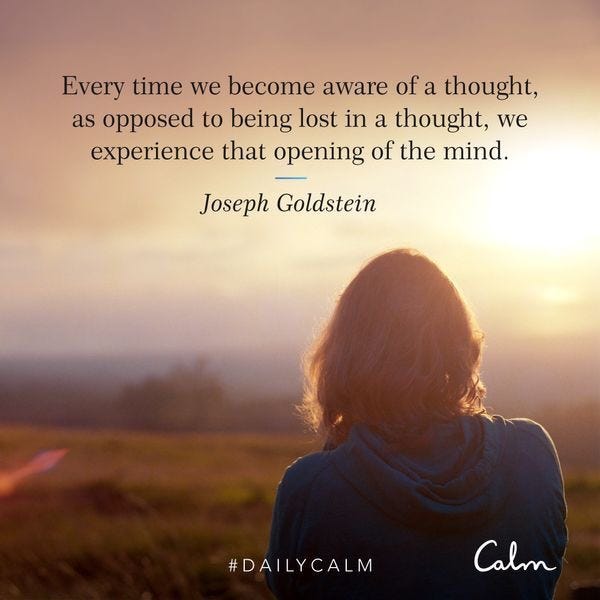

Many, if not most, people are completely identified with their thoughts and emotions. Despite meditating and studying philosophy and spirituality for ten years, I still slip into identification with my thoughts and emotions. I have often found myself dragged into petty thoughts and judgmental emotions.

Even though I take multiple actions habitually to counteract negativity such as:

  • reading philosophy
  • meditating
  • journaling
  • taking mood support supplements
  • doing yoga
  • walking outside
  • getting around eight hours of sleep
  • hydrating
  • drinking herbal tea
  • lifting weights
  • eating healthy meals
  • watching self-improvement videos on YouTube
  • listening to binaural beats
  • limiting screen time

I still constantly identify with my thoughts, emotions, and life situations.

Becoming aware of our thoughts, breaking free from identifying with them, and opening up the mind are important subjects to me. Worth coming back to again and again. Because it is an inner fight we all must wage again and again if we are to live a life of inner peace.

Typically, awareness of our thoughts is not the norm — automatic thoughts usually dominate. In cognitive psychology, automatic thoughts are rapid, often unconscious assumptions or conclusions that arise in response to a situation or stimuli. They appear without conscious effort and are usually brief, immediate interpretations of an event, often with a negative bias.

“Thoughts are like clouds in the sky. Sometimes it’s clear, sometimes it’s cloudy. But don’t get attached to the clouds.” — Thich Nhat Hanh

Automatic thoughts often lead to runaway thoughts, which are longer and more intense versions of automatic thoughts. A consistent double dose of automatic and runaway thoughts can likely result in cognitive distortions, confirmation biases, and intense emotional triggers.

Observing social media and the modern world, it seems more people are easily triggered when their confirmation bias, built on cognitive distortions, is challenged or broken. A clear example is the state of America after a presidential election.


Photo by Dan Crile on Unsplash

“It is not what happens to you that troubles you, but your judgment about what happens.” — Epictetus


Identifying with our thoughts means being consumed by them. Our true selves get swallowed up and erased due to constant states of stress, anxiety, disappointment, depression, and anger. We can’t escape fight-or-flight survival mode if we are constantly pulled into the rushing stream of automatic and runaway thoughts.

We must continuously choose to be aware and detach from our thought streams because our thoughts never stop. Our minds are thinking machines, but they do not define who we are. We are not our minds. We are not our thoughts. We are not our emotions. We must constantly cultivate awareness and remind ourselves of this truth.

Photo by Bahadır on Unsplash

Practical ways to practice awareness include mindfulness, which involves being fully focused on the present moment. Deep breathing exercises and guided meditations have also significantly helped me in my ongoing effort to increase awareness in my life. Journaling is beneficial as well, provided you consistently write and periodically review past entries to observe your patterns and progress.

Cultivating awareness of our thoughts while remaining detached from them can create an opening in the mind. The more we expand that opening with healthy practices like mindfulness, yoga, journaling, meditation, and studying philosophy and spirituality, the better we become at utilizing that inner space.

This helps us avoid reacting automatically to stimuli like an animal and instead respond thoughtfully and consciously. By embracing these practices, we can strive to live with greater mindfulness and peace, continually growing and evolving in our journey of self-awareness.


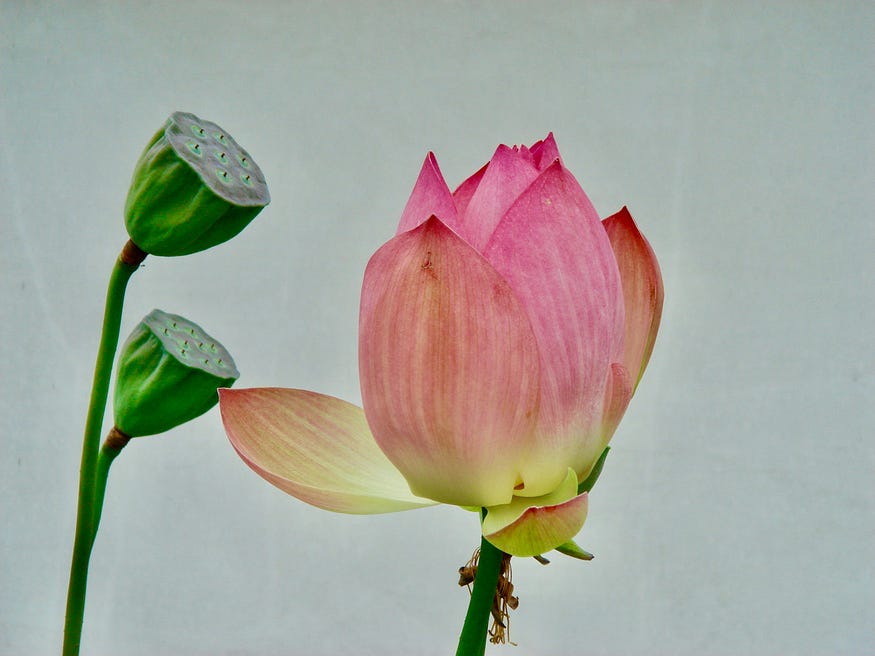
Imperfection is the most human characteristic.

We often find ourselves in a constant state of wanting to be perfect, expecting others to be perfect, forgiving our imperfections, and accepting the imperfections in others. This internal battle can create a tug-of-war between self-criticism and the desire to be social and supportive of those closest to us.

Who are we to be there for others when we have so many flaws ourselves? This harsh self-judgment can make us feel unworthy or not confident enough to interact with others. Alternatively, we might judge ourselves and others so harshly that we isolate ourselves from the world, clinging to imagined ideals that only exist in our minds. Neither of these paths is healthy.

“Our culture is obsessed with fixing and improving. This relentless improvement mentality can leave us feeling perpetually inadequate.” — Brené Brown

Guided Meditations

Non-judgment and loving-kindness centered meditations, from the Calm app, have been instrumental in helping me address this issue over the years. The judging mind can be hard to tame, especially in an increasingly hyper-judgmental culture. Cultivating awareness of my judging mind through meditation has been a significant help in this journey.

Amor Fati

The next step forward for me was learning about the Stoic concept of Amor Fati — a love of fate. This philosophy encourages us to accept what is outside of our control and to love whatever happens to us as if it is what we had wished for. By embracing this mindset, we can find peace and strength in our imperfections, allowing us to be open and there for others despite our flaws.

“The chief task in life is simply this: to identify and separate matters so that I can say clearly to myself which are externals not under my control, and which have to do with the choices I actually control. Where then do good and evil lie? In my own choices.” — Epictetus

Compassion

The more time I spent practicing meditation and studying Stoicism, the more I found myself dipping my toes into Buddhist teachings as well. One of those teachings is that self-compassion is the foundation for compassion towards others. We can’t pour from an empty cup.

It can be hard not to be our own worst enemy or biggest critic. The intersection of these philosophies and spiritualities helped me realize that peace begins with compassion, whether for ourselves or others.

Photo by Jonas Gerlach on Unsplash

Authentic Acceptance

If awareness shows us the way out, acceptance is how we start moving in the direction of the right action. To be human is to be flawed. We must accept this about ourselves for our own sake and sanity. If and when we can do that, the next step is to extend that acceptance to others.

Offering ourselves acceptance allows us to exist authentically. We don’t have to lie to ourselves or others. When we can be ourselves, rather than putting up a front, we are then more able and likely to have deeper connections with others. How? Because acceptance and authenticity open doors to vulnerability.

“Vulnerability is the core of all connection, whether it’s emotional intimacy or physical intimacy. Vulnerability is what we share when we open ourselves up to love and connection. It’s the core of all empathy and connection.” — Brené Brown

It simply isn’t optional for us to embrace imperfection. If we want to grow, evolve, or be our best selves, we need to embrace our imperfections. To deepen existing relationships, resolve family conflicts, or meet new potential romantic partners, we must accept and empathize with the imperfections of others.

Our flaws are part of our journey. To become aware of them, we need to make and take time for reflection in our lives. Meditation and journaling are time-tested tactics, used in philosophy and spirituality practices, that have been very helpful for me, and I believe they can be very helpful for you as well.


The concept of being able to begin again and start over every day has fascinated me for a long time. Studying philosophy and spirituality has brought me to the idea that we can start over at any moment, with any choice we decide to make, with every breath that we take.

I know the feeling of being stuck, like I’m on a loop I can’t control. Many people, regardless of their demographic, experience this sentiment. Addressing this concept can shed light on an overlooked or under-featured area of personal growth content.

“Growth is painful. Change is painful. But nothing is as painful as staying stuck somewhere you don’t belong.” — Mandy Hale

Often, I need to start again within a given day, or even within a given hour. I can have a productive morning, hit a wall in the afternoon, and then rally in the evening. Or I might struggle to get out of bed in the morning, gain momentum in the afternoon, and have a ‘meh’ evening before needing to sleep.

Keeping the concept of being able to begin again in mind is crucial. It’s easy to fall into all-or-nothing thinking, focus on the negatives, or catastrophize. Knowing that we can always begin again can relieve some of the pressure we put on ourselves. This mindset allows us to live more productively or at least more positively. The sun will come out tomorrow, after all.


Photo by Jessica Ruscello on Unsplash

What a relief it is to learn that we don’t have to wait for tomorrow. Sometimes, the challenges of life will dictate that we power down and try again the next day. But many other times by studying and applying the wisdom of philosophy, spirituality, and humanism; we can directly take action in the present moment to begin again immediately.

  • Stoicism has a core tenet of self-reflection, (often through journaling) and course-correcting our actions, habits, and lives as we go. To begin again is to exercise virtue.
  • Buddhism encourages revising our thoughts and actions because being attached to them or anything is the root cause of suffering. Small, consistent resets are normal and natural.
  • Taoism believes in not overplanning or overreacting which is a wonderful anecdote to the catastrophizing and all-or-nothing thinking that causes us to get stuck and need to start over.
  • Humanism highlights critical thinking and adaptation to new information and experience. Change being the only constant means beginning again is a necessity.

Photo by Lili Popper on Unsplash

There is no literal reset button in this life. But a metaphorical reset is constantly possible in regards to how we choose to think, perceive, feel, and act going forward regardless of what is behind us. We can choose to begin again and change our:

  • Habits
  • Goals
  • Relationships
  • Self-Perception

Embracing the ability to revise and start over empowers us to navigate life’s challenges with resilience and hope. It’s never too late to change our stories and create new beginnings.


“The good life is a process, not a state of being. It is a journey, not a destination.” — Carl Rogers


anarchyroll presents

Stimulus Space Response
 ☯ Wisdom is Resistance | ∞ Truth Over Tribalism
 Follow @anarchyroll on TikTok, IG, X, Threads & Bluesky


Resistance is a Roadblock and a Brick Wall

Have you ever felt paralyzed by indecision, knowing exactly what you need to do but unable to take action? I’ve been there, countless times. The culprit? Resistance, the invisible saboteur that can derail our plans, our goals, and our dreams often before we even get started.

I’ve realized that resistance has been a huge roadblock in my life. Just take this article — I put off writing it for three extra days, letting resistance win when I sat down to write. Even with routines in place to help me tackle that writing resistance, it’s so much easier to say, “I’ll do it later” or “I’ll handle it tomorrow,” and then get lost in distractions, whether online or in the real world.

Not doing something is still a choice. When I choose not to act, I’m choosing to miss out. There’s no escaping the cost of that choice. Giving in to resistance only makes things tougher, which is the opposite of what we want. We often think, “I don’t want to make things worse,” but that’s exactly what happens when we do nothing.

So, how does giving in to resistance make things worse? It breeds bad habits. It keeps us stressed and anxious. It turns into excuse-making. We end up feeling stuck or helpless, living from a place of inaction that feels lazy.

Photo by Jens Aber on Unsplash

Habitual Wet Cement

And that’s a perfect way to describe it — cementing a lazy mindset. Once you’re used to being lazy, trying to switch to a more proactive attitude feels like trying to walk through wet cement that’s already starting to harden. It’s tough because fighting against the habit of giving in to resistance is like pushing against reality. Remember, inaction is still a form of action. So now, on top of laziness, stress, and anxiety, there’s also this extra layer of resisting change.

“The reason why we struggle with insecurity is because we compare our behind-the-scenes with everyone else’s highlight reel.” — Steven Furtick

So, how do we change? How do we at least start to attempt to change? Well by letting go and giving up of course. It would be weird if the solution didn’t sound weird and counterintuitive. But we’re not giving up on ourselves, giving up on our goal(s), giving up on life. We’re letting go of our illusion of control. We’re giving up our need to achieve the perfect, ideal version of what we want based on our own imagined outcome.

Resistance is the Red Right Hand of Perfectionism.

We’re giving up perfectionism when we stop giving in to resistance. When we accept we are not only not perfect, but are closer to mediocrity than our ego would ever care to let us admit. That is why we have to try. That is why we have to do it. That is why we have to work at it. What is it? It is our goal, our task, our life’s work, what we want to achieve, etc.

“Letting go doesn’t mean giving up. It means accepting that some things are out of your control and that life goes on whether you like it or not.” — Katharina Manderson

Mindfulness and Microtasking

One step at a time, one choice at a time, one action at a time. A building is built brick by brick, plank by plank, beam by beam, floor by floor. Each action we take, and each piece of work we create helps us get to the vision we have in our head pragmatically.

We can’t think our way into anything but we can think our way out of everything. Whatever it is that we want to do, to get it done we need to get out of our heads, get into the present moment, and focus on the first small thing we have to do, to tangibly move our process of accomplishment forward.

Whether we want to move mountains or move into the kitchen to get a snack, we start by getting up and taking a single step in the direction we need to move. Small chunking or micro-tasking takes the burden of accomplishment off of our shoulders.

We mindfully or consciously choose to focus on the present moment, and on this small, individual action we have to take. It may seem insignificant at first and maybe insignificant in the long run but micro-tasking is the way to pragmatically and consistently move through resistance and let go of perfectionism.

“The brick walls are there for a reason. The brick walls are not there to keep us out. The brick walls are there to give us a chance to show how badly we want something.” — Randy Pausch

Awareness then Action is the Path to Progress

So, the next time you find yourself grappling with resistance, and there will be a next time, try to remember: it’s a choice. You can let it hold you back, or you can choose to let go. Embrace mindfulness and micro-tasking. Choose to focus on taking small actions, step by step and you’ll find you can overcome any obstacle to accomplishing your goals.

The journey may be challenging because life is challenging. However, the rewards are immeasurable. Are you ready to break free from the chains of resistance and embrace a life of freedom and fulfillment?


Inner peace is a term that has been used and abused over the years for a variety of reasons. It’s become a cliche and a buzzword, which in the everything-is-content-for-influencers era seems to be inevitable. But having inner peace or seeking inner peace in times of outer chaos is something that everyone can get behind.

One’s life experience is enough to know this: no matter what you do, life is better with some inner peace. Inner peace leads to better decisions, empathy, and deep conversations. It also improves active listening.

“Peace is not the absence of conflict. It is the ability to handle conflict with skillfulness.” — Thich Nhat Hanh

Inner peace lets us exercise courage, discipline, ambition, and restraint. It helps us engage with life instead of being jerked around by it. Inner peace isn’t just for yogis, meditation practitioners, and philosophy students. It is for everyone, and it is as important as cultivating physical health and critical thinking skills.

In my experience, I have found that inner peace is often confused with external peace. Inner peace is not a lack of strife, stress, or challenges. Inner peace is a calm state of being within ourselves, regardless of what is happening around us.

Photo by Iva Rajović on Unsplash

Stoicism is rooted in identifying what is within our control and what is outside of our control. Learning of that concept helped me a lot. But, the idea of equanimity has been a lifesaver. It means accepting what we can’t control.

Accepting what we can’t control flows right into accepting the impermanent nature of life. I love how philosophical practices can flow into spiritual concepts which can flow into humanistic techniques.

  • Practicing mindfulness
  • Gratitude
  • Detachment
  • Acceptance
  • Congruence
  • Meditation
  • Journaling
  • Building meaningful relationships.

Are those the strategies of philosophy, spirituality, or humanism?

The answer is all of the above. After almost 20 years of study, I find a constant. The similarities in these systems, or disciplines, are a metaphorical pressure release valve.

Not a hack, a magic pill, a quick fix, or a miracle cure because no such thing exists. Rather a clear path to inner peace. Being able to take a deep breath in knowing what I’m going through isn’t new or unique.

“The chief task in life is simply this: to identify and separate matters so that I can say clearly to myself which are externals not under my control, and which have to do with the choices I actually control. ” — Epictetus

I am a human being going through what the majority of human beings go through. Knowing that there have been people for thousands of years experiencing similar internal and external challenges and have created systems, disciplines, strategies, and techniques to deal with the obstacles of existence.

Photo by David Clode on Unsplash

That harmony among the ancient teachings helps to cultivate inner peace before one acts on the wisdom. The symmetry between Stoicism, Taoism, Buddhism, and Humanism removes an inner fear of isolated deficiency within me. The confusion of what to do is taken away. The immature hope for a quick fix dissolves.

The what to do is there. It is simply a matter of doing. And the simpler we can make living, the more likely we are to cultivate inner peace for ourselves.