As an exercise in building self esteem and self confidence I was recently challenged to list thirty things I like or love about myself. My list is below. I found it to be an effective and pragmatically valuable exercise. I recommend it.
1. BxB XI Experience
2. Pro wrestling experiences
3. Vest in the world
4. Beard
5. Blog
6. Poetry
7. Journaling
8. Meditation practice
9. Weight training
10. Yoga
11. Bracelets
12. House plants
13. Media Communications BA
14. Alcohol tolerance
15. Sense of humor
16. Reading habit
17. Music taste
18. Concert experiences
19. Rave experiences
20. Poker experiences
21. Hair
22. Nightlife Experiences
23. Knowledge of/Taste in entertainment
24. Knowledge of/Taste in sports
25. Study of stoicism & philosophy
26. Study of spirituality
27. Desire for personal development
28. Hallucinogen knowledge/experiences
29. Supplement knowledge/consumption
30. Survival and thriving through grief and depression
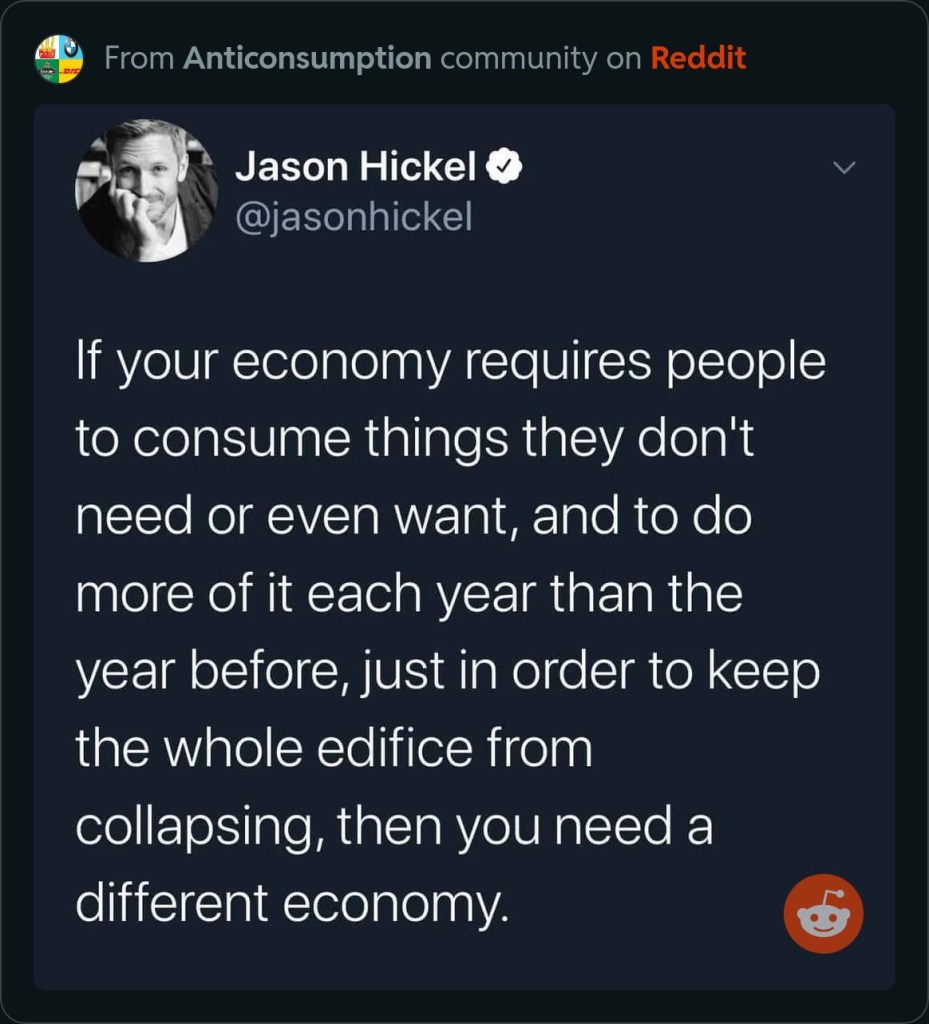
Consumerism as a mandatory sign of love, caring, and affection.
That’s the American Way
It certainly is the holiday season in a nutshell for capitalists and their bootlickers.
Don’t dare ask why you have to buy someone something to show you love/care for them. Don’t even ask if there is something they actually need or can tangibly use in their day to day life.
Just buy them something, or you’re a piece of garbage. The more you spend, the better person you are. Whether it’s a lot of little things, a few medium things, or a really big thing. The more you spend, the more you are allowed to feel good about yourself.
Until the next day when you wake up. Until the next week when the holiday is over. Until the next month when the bill(s) come. Until next year…
62% of Americans are living paycheck to paycheck, but do we dare buy groceries or pay someone else’s bills for the holiday? No, because that would be charity and if they want charity then they can pick themselves up by the boot straps and get a job. Oh they have a job? Well get a second job. Oh they have a second job? Uh…well…stop buying avocado toast and fancy coffee.
One of the first audio books I ever rented from my local library was Don’t Sweat the Small Stuff and It’s All Small Stuff by Richard Carlson. I had a bad habit of turning molehills into mountains. Of turning little things into big things. Of taking serious, things which were meant to be taken lightly.
Through nature or nurture, I inherited this habit from my parents. Both of them, up until they both passed away; dramatized insignificant day to day happenings in their personal lives and the events of the world around them. So frequently and with such fervor, that it short circuited my internal ability to distinguish between the important and the irrelevant while judging each in a negatively passive aggressive manner.
I was in my twenties when I had a roommate who told me that my priorities and way of seeing the world were totally out of whack. That I focused my time and attention on things that I had no control over and/or had nothing to do with me.
Around that same time is when I got more serious about a regular-daily meditation practice. That was likely a new years resolution around that time when I first downloaded the Calm app.
When this prompt popped up on one of my recent Daily Calm meditations, it brought back a flood of memory pieces from the times spent listening to that audiobook during my commutes in and around Chicago. The concept of don’t sweat the small stuff is modern wrapping paper placed on the gift of traditional philosophy.
I wasn’t ready to implement and habitualize the concept back then. Because it was just touching on the edges of philosophies like stoicism and taoism. I didn’t need to dip my toes in philosophy and spirituality, I needed to dive head first into the deep end. Because my head was already drowning in constant thoughts and negative emotions.
Flushing the negative judgements of myself and others with the pressure washer of philosophy and the cleansing waters of a spirituality practice were what I needed then, and what is helping me so much, now.
But some people need to just dip there toes in. Change is hard. Paradigms die hard. Perception shifts are slow. The modern personal development/self help genre is built on the foundation philosophy.
So do check out some non fiction self help books, audio books, podcasts, YouTube videos, etc if you need help. Modern people, language, examples and stories will be a necessary ingredient for many people. Since ageism applies to concepts as well as people in the world we live in.
“Between stimulus and response there is a space. In that space is our power to choose our response. In our response lies our growth and our freedom.”
It would be nice to say that I had an awakening or an epiphany that changed the way I lived forever all at once.
The older I get, the more I feel like that isn’t how change works.
I’ve had, what I thought were life changing epiphanies, repeatedly. Life changing visions, repeatedly. Life changing moments, repeatedly. I thought after X or Y happened to me that I would live differently from that point onward.
Habits always win out however. Choices, actions done repeatedly make our lives.
The concept of Stimulus-Space-Response was a concept I first learned from a rented audio book by Stephen Covey. He was telling the story of Holocaust survivor Dr. Victor Frankl.
Learning about that concept I can still remember thinking, in the library I was listening to the audiobook in; that this was going to change my life from that point on.
I thought my depression, laziness, anxieties would all be instantly and forever changed now that I knew that there was a space between stimulus and response.
I get to choose how I respond?! I can cultivate and grow that space?!! Surely this will change my life immediately. I will only make good choices now. I will only do right actions.
The older I get, the more I feel like that isn’t how change works.
But learning about Stimulus-Space-Response is one of the closest things I’ve ever experienced to an epiphany that stuck. I suppose a more apt metaphor would be that of a seed being planted. A seed of lasting change was planted that day.
Stephen Covey also used farming as an analogy for change and for life. I may have planted the seed(s) for growth, but I failed to tend to the soil properly with patience and persistence. Then the harvest was nothing.
It is a great concept that more people should know about. The knowledge that we can choose what happens to us no matter what happens. Because we have the ability to think, perceive, and assign meaning in our brain. Unlike most animals.
I think most people are unaware of this. I know I was. I think most people think that to live, is to live reactively. Just reacting to whatever happens to us and around us whether good, bad, or indifferent.
But we can choose to stop, breath, think, and choose.
It’s no magic pill, no such thing of course. But it can help. It helps me.
It is in our nature to follow rather than lead. It is in our nature to believe rather than to question.
If it wasn’t, we wouldn’t be so easy to propagandize.
And in the modern world, humans are constantly propagandized.
Propagandized to buy, to believe, to escape, to be lead.
It is in our nature to believe we are the good guys. Individually we constantly tell ourselves in our own head that we are a good person. That our family, our tribe, our community, our country, our gender, are the good ones.
That bias is leveraged.
Smart phones have turned peer pressure into a propaganda atom bomb that never stops detonating.
What feels better than being right? Especially when life can make us feel so wrong sometimes.
So when a war is waged, of course we’re the good guys. What did the other side do? Why? War is the only answer?
Where does the money for war come from? What else could that money be used on? Who makes money during a war?
Money can be made during a war? Is that a good thing. Of course, because we’re the good guys.
But if we’re the good guys, descendants of the winners of all the previous wars, then these questions are moot, unpatriotic, and weak. And we can’t have that, what if our enemies found out?
Luckily for us, we’re the good guys.
It’s the good guys in charge.
It’s the good guys dropping bombs.
It’s the good guys selling weapons.
It’s the good guys controlling the media.
It’s the good guys running the economy.
Because if they’re not good, what does that mean about us?







 Anarchy Journal Constitutional