


The Cloud Has a Physical Address & The Myth of the Weightless Internet
The cloud has always been sold to us as something weightless.
Our photos float into it. Our emails live there. Movies stream from it. Artificial intelligence draws upon it. We speak of “the cloud” as if it exists somewhere above us, detached from geography, resources, and consequence.
But the cloud is not a cloud.
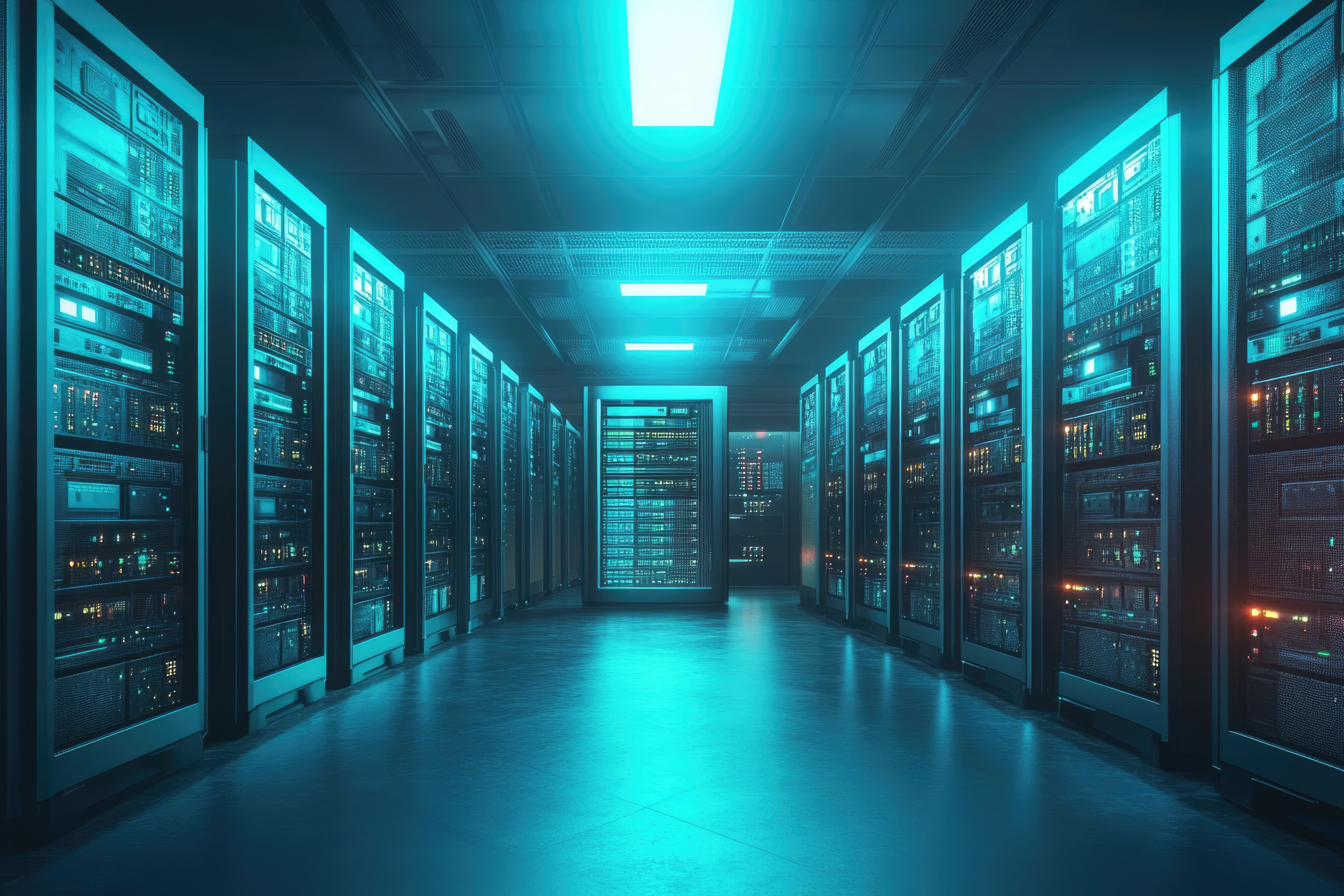
It is concrete, steel, transmission lines, cooling towers, substations, and warehouses filled with servers running around the clock.
Most importantly, it exists somewhere.
As artificial intelligence accelerates demand for computing power, data centers are expanding at a pace rarely seen in modern infrastructure development. Communities across America are increasingly being asked to host the physical infrastructure supporting a digital economy that often feels invisible to the people living beside it.
The New Industrial Revolution
The AI boom is frequently framed as a software revolution. In reality, it may prove to be one of the largest infrastructure expansions of the twenty-first century.
According to projections from the International Energy Agency, electricity demand from data centers worldwide is expected to more than double by 2030. The United States is expected to account for nearly half of that increase as technology companies race to build the computing capacity needed to power artificial intelligence.
For many Americans, these facilities remain largely out of sight.
For others, they are arriving in their neighborhoods.
Powering the Machine: Artificial Intelligence Runs on Electricity
Every chatbot response, image generator, recommendation algorithm, and machine-learning model requires enormous computing power. The more sophisticated the systems become, the greater their energy demands.
Artificial intelligence may feel virtual, but its appetite is profoundly physical.
Utilities across the country are now forecasting electricity demand increases not seen in decades. New transmission lines, substations, and generation projects are being proposed to support the growing needs of data centers.
Northern Virginia: Data Center Alley
Nowhere is this transformation more visible than in Northern Virginia.
Often referred to as “Data Center Alley,” the region has become the world’s largest concentration of data centers. Vast facilities operated by major technology companies support much of the internet’s daily activity.
For local residents, however, the story is not simply about technological innovation.
Communities have raised concerns about land use, noise, transmission infrastructure, environmental impacts, and the strain that continued growth may place on local resources. What began as a niche industry has evolved into a defining feature of the region’s economy and landscape.
The experience raises a broader question:
When infrastructure becomes essential to the global economy, how much influence should local communities retain over its expansion?
The Human Cost of Growth
Supporters argue that these projects create jobs, attract investment, and strengthen America’s technological competitiveness.
Critics ask a different question.
If communities are expected to provide land, power, and public resources, how much of the economic benefit actually remains local?
The answer varies from project to project, but the question itself reveals a growing tension between national ambitions and local realities.
The Cloud Drinks Water: The Resource Nobody Talks About
Electricity is only part of the equation.
Data centers generate extraordinary amounts of heat, requiring sophisticated cooling systems that often depend upon large quantities of water.
While most Americans understand the relationship between water and agriculture, manufacturing, or population growth, few think about the water needed to support cloud computing and artificial intelligence.
That is beginning to change.
Arizona and the Water Question
In Arizona and other drought-prone regions, water has become one of the most controversial aspects of data center development.
Residents who have spent years hearing warnings about conservation increasingly question how scarce resources should be allocated. Local governments are being asked to balance economic development against long-term concerns about sustainability and water security.
For supporters, the facilities represent jobs and investment.
For opponents, they represent another demand being placed on an already stressed resource.
Neither side is entirely wrong.
The challenge lies in determining how communities should balance immediate economic opportunities with future environmental realities.
Competing Visions of Progress
The debate is not simply about gallons of water. It is about competing visions of progress.
One vision sees technological growth as an investment in the future.
The other asks whether communities should have greater influence over how finite resources are allocated.
Both perspectives ultimately lead to the same question:
Who gets to decide?
Who Gets a Say? Local Consequences, Global Benefits
A data center may serve users around the world. The consequences remain local.
The land use decisions remain local. The water consumption remains local. The noise remains local. The visual impact remains local.
As AI infrastructure expands, many residents are discovering projects only after negotiations have already begun.
Community Pushback
Across the country, communities have increasingly pushed back against proposed projects through zoning hearings, public meetings, moratoriums, and legal challenges.
Some oppose specific facilities. Others object to the process itself.
The concern is often not whether development should occur, but whether citizens have a meaningful opportunity to influence decisions that could shape their communities for decades.
Democracy in the Age of AI
Artificial intelligence is advancing rapidly. Democracy moves more slowly.
Public hearings, environmental reviews, community meetings, and local elections all take time. Yet those slower processes exist for a reason. They create opportunities for citizens to weigh competing interests and participate in decisions that affect their lives.
As investment accelerates, communities are increasingly asking whether democratic participation can keep pace with technological change.
Progress for Whom? A Question Bigger Than Data Centers
The cloud has a physical address. It consumes electricity. It consumes water. It occupies land. It reshapes communities.
The infrastructure supporting artificial intelligence may feel distant and abstract, but its footprint is increasingly local.
Powering that infrastructure requires resources. Allocating those resources requires decisions.
And those decisions inevitably raise questions about fairness, accountability, and representation.
The Future Is Being Built Somewhere
The debate over data centers is not a debate about whether innovation should continue.
It is a debate about who benefits, who bears the costs, and how communities participate in shaping the future being built around them.
Throughout history, every transformative technology has forced societies to confront similar questions. Railroads, factories, highways, telecommunications networks, and the internet itself all delivered remarkable benefits while concentrating power in new ways.
Artificial intelligence may prove to be the defining technology of the twenty-first century. But long after the hype cycles fade, one question will remain:
If the future is being built in our communities, using our resources, and reshaping our lives, shouldn’t the people most affected by those decisions have a meaningful voice in determining what that future looks like?
The servers may store humanity’s data. The consequences remain deeply human.
 Anarchy Journal Constitutional