
Posts Tagged ‘ai’


What happens when the most powerful institutions in society become experts at shaping attention itself?

For most of human history, power was relatively easy to recognize.

Kings controlled armies. Governments controlled laws. Corporations controlled resources. Media organizations controlled information. The centers of influence were visible.

Today, influence is becoming harder to see.

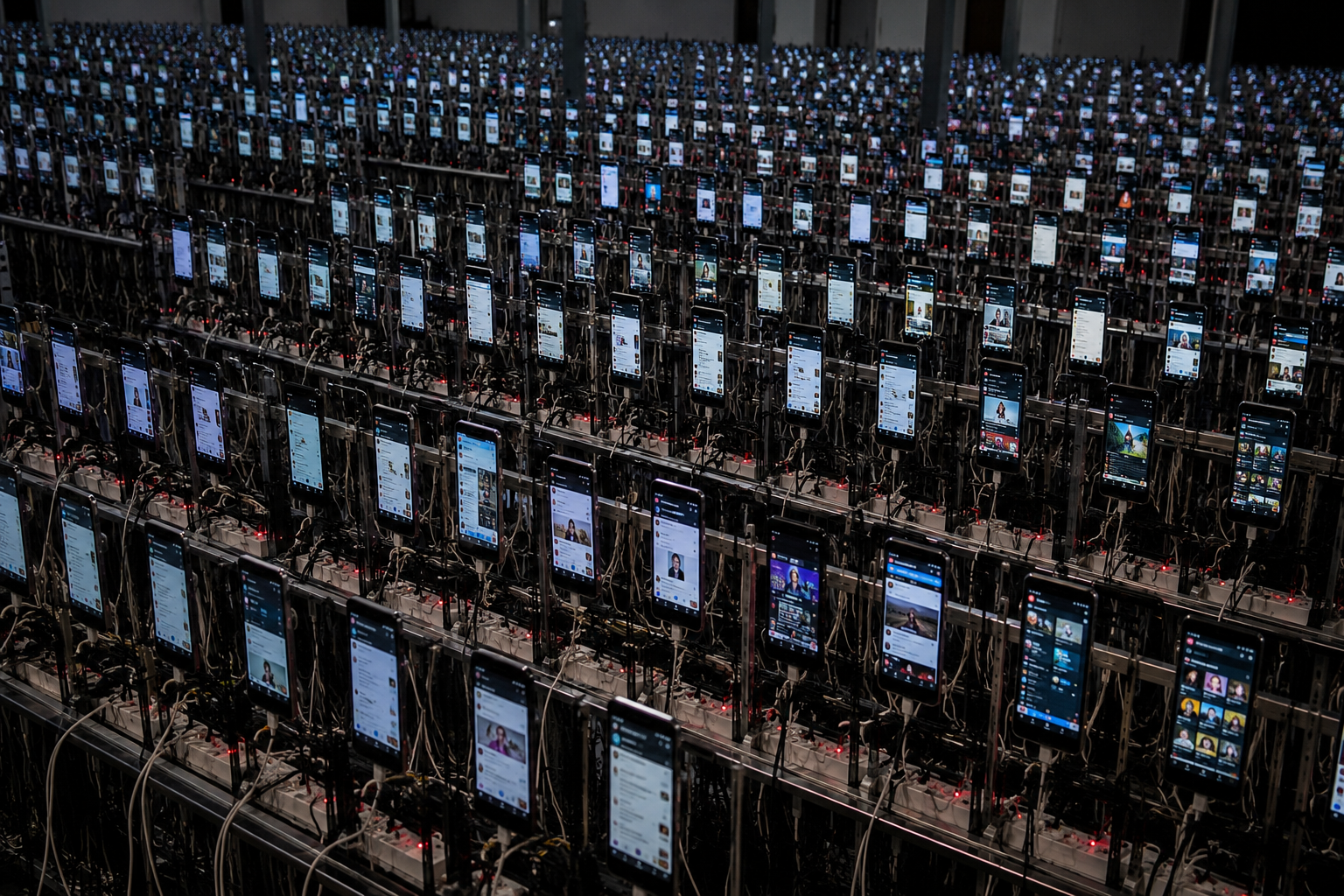
It arrives through recommendation engines, notifications, search results, personalized feeds, and algorithms that quietly decide what appears in front of us each day.

Glenn Greenwald famously argues that the greatest power of the state is not controlling what people think, but controlling the actual information they are allowed to see.

That distinction matters.

Most people imagine propaganda as something obvious—a government ministry, a state broadcaster, or a censor with a red pen. But modern influence rarely works that way. Instead, it emerges through systems designed to maximize engagement, collect behavioral data, and compete relentlessly for human attention.

The result is something new in human history: a world where billions of people interact daily with platforms that continuously study, predict, and increasingly shape human behavior.

Not necessarily because anyone designed a grand conspiracy. But because influence itself has become profitable. And profitable systems tend to expand.


The Most Valuable Commodity on Earth

Oil powered the industrial age. Data powers the digital age.

Every click, scroll, pause, search, purchase, and interaction leaves a trail behind. Individually, these actions seem insignificant. Collectively, they create a remarkably detailed portrait of who we are, what captures our attention, what triggers our emotions, and what keeps us engaged.

Consider what happens during a typical day. A smartphone records location data. A search engine records questions. An online retailer records purchases and browsing habits. Social media platforms record likes, shares, comments, watch time, and scrolling behavior.

Individually, these data points appear trivial. Together, they form a behavioral profile of extraordinary depth.

For the largest technology companies, this information has become one of the most valuable resources on Earth. The longer we stay engaged, the more advertisements can be shown. The more advertisements that can be shown, the more revenue can be generated.

At first glance, this appears to be a simple business model. But once engagement becomes the primary objective, the incentives begin to change. The goal is no longer merely to understand behavior. The goal becomes predicting it and eventually shaping it.


When the Experiment Was Real

For years, critics warned that social media platforms possessed extraordinary power to influence human behavior.

Then, in 2014, Facebook demonstrated it.

Researchers working with the company altered the news feeds of hundreds of thousands of users without their knowledge. Some users were shown slightly more positive content. Others were shown slightly more negative content. The objective was to determine whether changes in information exposure would influence emotional expression.

The results suggested they would.

Users exposed to more negative content tended to post more negatively themselves. Users exposed to more positive content tended to post more positively.

The study became controversial after it became public, largely because participants had not given informed consent. But the larger implication received less attention.

The significance was not that Facebook conducted the experiment. The significance was that Facebook possessed the capability to conduct it.

A platform used by hundreds of millions of people had demonstrated that adjusting information flows could produce measurable changes in behavior.

The experiment was small. The implications were enormous.


Behavioral Futures

In her work on surveillance capitalism, Shoshana Zuboff details how tech monopolies no longer merely predict human behavior but actively seek to modify it for corporate profit.

The Facebook experiment offered a glimpse into a much larger economic model.

For decades, businesses have studied consumer behavior to predict purchasing decisions. Digital platforms expanded that process dramatically. Every interaction became measurable. Every preference became data. Every behavior became another signal that could be collected, analyzed, and monetized.

Prediction gradually evolved into optimization. Optimization gradually evolved into influence.

Not because engineers necessarily wished to manipulate people, but because engagement was rewarded. The system followed the incentives placed before it. And over time, optimization itself became a form of behavioral engineering.


The Day the Curtain Moved

If Facebook’s emotional contagion experiment revealed the capability, Cambridge Analytica revealed the potential.

The scandal exploded into public view in 2018 after reports revealed that data from millions of Facebook users had been harvested and used to build psychological profiles. The controversy centered on elections. But elections were only part of the story.

The larger revelation was that modern digital platforms had created the infrastructure for highly personalized persuasion.

Different people could receive different messages. Different fears could be activated. Different motivations could be targeted.

Not at the level of demographics. At the level of individuals.

Cambridge Analytica did not invent these capabilities. It exposed them.

For many people, it was the first glimpse into a world where persuasion itself had become increasingly automated, data-driven, and personalized. The curtain moved just enough for the public to see the machinery behind it.


Manufacturing Reality

Tech ethicist Tristan Harris frequently warns that modern technology is no longer just competing for our attention; it is competing for absolute control over it.

That competition for attention shapes nearly every aspect of the modern digital experience.

Consider TikTok’s recommendation engine. The platform became famous not because users carefully selected what they wanted to watch, but because the algorithm became exceptionally good at predicting what would hold attention. A few seconds of watch time, a pause, a replay, or a swipe can rapidly reshape the content that follows.

Within minutes, two people opening the same app for the first time may find themselves in entirely different information environments.

A similar dynamic has fueled years of debate around YouTube’s recommendation system. Researchers and former employees have questioned whether engagement-driven recommendations can gradually push users toward increasingly sensational content. The platform’s goal is straightforward: keep people watching.

Yet emotionally charged content often performs exceptionally well.

Conflict performs well. Outrage performs well.

The recommendation system may not intend to create polarization, but it can amplify polarization when polarization proves engaging. The result is not a single shared reality. It is millions of individualized realities.

Two people can open the same app at the same moment and encounter different headlines, different narratives, different fears, and different priorities. Both may believe they are seeing an accurate reflection of reality.

In truth, they are seeing a filtered version of reality assembled through algorithms designed to maximize engagement.


The Invisible Architecture

The Twitter Files reignited debates about censorship, content moderation, and government influence. Reasonable people continue to disagree about many of the conclusions.

But one observation emerged clearly: the modern information ecosystem is far more interconnected than most people realize.

Government agencies communicate with platforms. Researchers communicate with platforms. Journalists communicate with platforms. NGOs communicate with platforms. Political actors communicate with platforms.

Influence no longer flows through simple hierarchies. It flows through networks.

The public often imagines information control as a top-down process directed by a single institution. The reality appears considerably more complex.

Multiple actors, pursuing different objectives, interact within a sprawling ecosystem that helps determine which information gains visibility and which disappears from view.

No single organization controls the entire system. Yet the system itself remains extraordinarily powerful.

Because influence does not require centralized control. It only requires aligned incentives.


The Influence Ecosystem

Viewed individually, Facebook’s emotional contagion experiment, Cambridge Analytica, and the Twitter Files appear to be separate stories. Together, they reveal a broader pattern.

Facebook demonstrated that exposure to information can influence behavior.

Cambridge Analytica demonstrated that behavioral data can be used for highly personalized persuasion.

The Twitter Files demonstrated how networks of institutions increasingly shape information environments.

Consider how most people now experience major events. Elections, wars, public health emergencies, and social movements increasingly arrive through algorithmically ranked feeds rather than direct observation. Most people encounter reality through recommendations, trending topics, suggested videos, and curated posts.

The information may be accurate, inaccurate, or somewhere in between. But the experience is increasingly mediated. Three separate stories. One emerging reality.

Attention has become a strategic resource. And the institutions that understand it best possess extraordinary influence over public perception.


The New Architecture of Power

“The smart way to keep people passive and obedient is to strictly limit the spectrum of acceptable opinion, but allow very lively debate within that spectrum…” – Noam Chomsky

For much of history, accomplishing that required editors, gatekeepers, and institutions.

Today, portions of the process can be automated. Not through conspiracy. Not through ideology. But through optimization.

Algorithms shape visibility. Visibility shapes attention. Attention shapes belief. Belief shapes behavior. Behavior shapes history.

Previous generations worried about who owned the factories. Today, we may need to ask who owns the systems that shape perception itself. Because power no longer depends solely on controlling land, resources, or industry. Increasingly, power belongs to those who can guide attention.

And in an age of influence machines, attention may be the most valuable form of power ever created.


The Cloud Has a Physical Address & The Myth of the Weightless Internet

The cloud has always been sold to us as something weightless.

Our photos float into it. Our emails live there. Movies stream from it. Artificial intelligence draws upon it. We speak of “the cloud” as if it exists somewhere above us, detached from geography, resources, and consequence.

But the cloud is not a cloud.

It is concrete, steel, transmission lines, cooling towers, substations, and warehouses filled with servers running around the clock.

Most importantly, it exists somewhere.

As artificial intelligence accelerates demand for computing power, data centers are expanding at a pace rarely seen in modern infrastructure development. Communities across America are increasingly being asked to host the physical infrastructure supporting a digital economy that often feels invisible to the people living beside it.


The New Industrial Revolution

The AI boom is frequently framed as a software revolution. In reality, it may prove to be one of the largest infrastructure expansions of the twenty-first century.

According to projections from the International Energy Agency, electricity demand from data centers worldwide is expected to more than double by 2030. The United States is expected to account for nearly half of that increase as technology companies race to build the computing capacity needed to power artificial intelligence.

For many Americans, these facilities remain largely out of sight.

For others, they are arriving in their neighborhoods.


Powering the Machine: Artificial Intelligence Runs on Electricity

Every chatbot response, image generator, recommendation algorithm, and machine-learning model requires enormous computing power. The more sophisticated the systems become, the greater their energy demands.

Artificial intelligence may feel virtual, but its appetite is profoundly physical.

Utilities across the country are now forecasting electricity demand increases not seen in decades. New transmission lines, substations, and generation projects are being proposed to support the growing needs of data centers.


Northern Virginia: Data Center Alley

Nowhere is this transformation more visible than in Northern Virginia.

Often referred to as “Data Center Alley,” the region has become the world’s largest concentration of data centers. Vast facilities operated by major technology companies support much of the internet’s daily activity.

For local residents, however, the story is not simply about technological innovation.

Communities have raised concerns about land use, noise, transmission infrastructure, environmental impacts, and the strain that continued growth may place on local resources. What began as a niche industry has evolved into a defining feature of the region’s economy and landscape.

The experience raises a broader question:

When infrastructure becomes essential to the global economy, how much influence should local communities retain over its expansion?


The Human Cost of Growth

Supporters argue that these projects create jobs, attract investment, and strengthen America’s technological competitiveness.

Critics ask a different question.

If communities are expected to provide land, power, and public resources, how much of the economic benefit actually remains local?

The answer varies from project to project, but the question itself reveals a growing tension between national ambitions and local realities.


The Cloud Drinks Water: The Resource Nobody Talks About

Electricity is only part of the equation.

Data centers generate extraordinary amounts of heat, requiring sophisticated cooling systems that often depend upon large quantities of water.

While most Americans understand the relationship between water and agriculture, manufacturing, or population growth, few think about the water needed to support cloud computing and artificial intelligence.

That is beginning to change.


Arizona and the Water Question

In Arizona and other drought-prone regions, water has become one of the most controversial aspects of data center development.

Residents who have spent years hearing warnings about conservation increasingly question how scarce resources should be allocated. Local governments are being asked to balance economic development against long-term concerns about sustainability and water security.

For supporters, the facilities represent jobs and investment.

For opponents, they represent another demand being placed on an already stressed resource.

Neither side is entirely wrong.

The challenge lies in determining how communities should balance immediate economic opportunities with future environmental realities.


Competing Visions of Progress

The debate is not simply about gallons of water. It is about competing visions of progress.

One vision sees technological growth as an investment in the future.

The other asks whether communities should have greater influence over how finite resources are allocated.

Both perspectives ultimately lead to the same question:

Who gets to decide?


Who Gets a Say? Local Consequences, Global Benefits

A data center may serve users around the world. The consequences remain local.

The land use decisions remain local. The water consumption remains local. The noise remains local. The visual impact remains local.

As AI infrastructure expands, many residents are discovering projects only after negotiations have already begun.


Community Pushback

Across the country, communities have increasingly pushed back against proposed projects through zoning hearings, public meetings, moratoriums, and legal challenges.

Some oppose specific facilities. Others object to the process itself.

The concern is often not whether development should occur, but whether citizens have a meaningful opportunity to influence decisions that could shape their communities for decades.


Democracy in the Age of AI

Artificial intelligence is advancing rapidly. Democracy moves more slowly.

Public hearings, environmental reviews, community meetings, and local elections all take time. Yet those slower processes exist for a reason. They create opportunities for citizens to weigh competing interests and participate in decisions that affect their lives.

As investment accelerates, communities are increasingly asking whether democratic participation can keep pace with technological change.


Progress for Whom? A Question Bigger Than Data Centers

The cloud has a physical address. It consumes electricity. It consumes water. It occupies land. It reshapes communities.

The infrastructure supporting artificial intelligence may feel distant and abstract, but its footprint is increasingly local.

Powering that infrastructure requires resources. Allocating those resources requires decisions.

And those decisions inevitably raise questions about fairness, accountability, and representation.


The Future Is Being Built Somewhere

The debate over data centers is not a debate about whether innovation should continue.

It is a debate about who benefits, who bears the costs, and how communities participate in shaping the future being built around them.

Throughout history, every transformative technology has forced societies to confront similar questions. Railroads, factories, highways, telecommunications networks, and the internet itself all delivered remarkable benefits while concentrating power in new ways.

Artificial intelligence may prove to be the defining technology of the twenty-first century. But long after the hype cycles fade, one question will remain:

If the future is being built in our communities, using our resources, and reshaping our lives, shouldn’t the people most affected by those decisions have a meaningful voice in determining what that future looks like?

The servers may store humanity’s data. The consequences remain deeply human.


“It isn’t ‘They’re spying on me through my phone’ anymore. Eventually, it will be ‘My phone is spying on me.’” That warning from Philip K. Dick captures the slope Palantir is already halfway down—turning citizens into data points, and autonomy into algorithmic obedience (Goodreads).

As Edward Snowden put it, “Under observation, we act less free, which means we effectively are less free” (Goodreads). That’s the business Palantir is in: surveillance disguised as efficiency, control dressed up as analytics.

This isn’t theory. Palantir already fuels ICE raids, predictive policing, corporate risk dashboards, and battlefield logistics in Ukraine (IBANet). As Thor Benson reminds us, “Don’t oppose mass surveillance for your own sake. Oppose it for the activists, lawyers, journalists and all of the other people our liberty relies on” (Ammo.com).

Palantir isn’t just selling software. It’s selling obedience. And like all Silicon Valley myths, it started with a story about “innovation” that hid something darker.


Origins & Power Connections

Founded in 2003 by Peter Thiel, Alex Karp, Joe Lonsdale, and Stephen Cohen (Wikipedia), Palantir wasn’t born in a garage—it was born in Langley’s shadow. Early funding came from In-Q-Tel, the CIA’s venture arm (DCF Modeling). When your first investors are spymasters, your product isn’t disruption. It’s surveillance.

Its flagship platform, Gotham, was built hand-in-glove with U.S. intelligence agencies. Palantir engineers embedded inside government offices stitched together oceans of data: phone records, bank transactions, social media posts, warzone intel (EnvZone). Palantir didn’t just sell a tool; it sold itself into the bloodstream of the national security state.

By the time it was worth billions, Palantir was indispensable to the U.S. war machine. Its software was used in Afghanistan and Iraq (SETA Foundation), where surveillance wasn’t a civil liberties debate but a weapon of war. When those tools came home to American cities, they carried the same battlefield logic: control first, questions never.


Domestic Impact: Policing & Immigration

Palantir’s second act was on U.S. streets. Its predictive policing contracts in Los Angeles, New Orleans, and beyond promised crime prevention through data. In reality, biased arrest records fed the machine, and the machine spit bias back out dressed as math (SETA Foundation).

Shoshana Zuboff warned: “Surveillance is the path to profit that overrides ‘we the people,’ taking our decision rights without permission and even when we say ‘no’” (Goodreads). Prediction isn’t neutral—it’s a form of control.

Immigration enforcement sharpened that control. Palantir built ImmigrationOS for ICE, consolidating visa files, home addresses, social media posts, and more (American Immigration Council). Critics call it “deportation by algorithm.” In Palantir’s language, that’s “efficiency.” The human cost is invisible in the spreadsheet.

A traffic stop can spiral into deportation. A visa application can flag someone as “high risk” with no explanation. Entire neighborhoods live under digital suspicion. And when protests erupted against these tools, six activists were arrested outside Palantir’s New York office in 2025 (The Guardian).

Palantir insists it only “builds the tools.” But when those tools fracture families and criminalize communities, the line between code and consequence vanishes.


Global Expansion: From Battlefields to Boardrooms

War proved Palantir’s business case. In Afghanistan and Iraq, its engineers sat beside soldiers, mapping bomb patterns and insurgent networks with data fusion software (SETA Foundation). The Pentagon called it a breakthrough. Critics called it privatized intelligence.

Now, Ukraine is Palantir’s showcase. Its tools analyze satellite imagery, coordinate battlefield logistics, and even gather evidence of war crimes (IBANet). CEO Alex Karp boasts Ukraine is a “tech-forward war.” But once normalized on the front lines, surveillance rarely stays in the trenches.

And Palantir’s reach doesn’t stop at war. Its Foundry platform runs inside JPMorgan, Airbus, Merck, and Fiat Chrysler (Wikipedia). What began as battlefield software is now a corporate dashboard—tracking supply chains, financial risks, and consumer behavior. The architecture is the same: consolidate data, predict outcomes, reduce uncertainty. Only the labels change.


Surveillance Capitalism & The Future

Jeremy Bentham’s Panopticon imagined a prison where one guard could watch every inmate without them knowing when they were being watched. “Visible: the inmate will constantly have before his eyes the tall outline of the central tower… Unverifiable: the inmate must never know whether he is being looked at” (Farnam Street). It was a theory then. Palantir has built it for real—and scaled it to entire societies.

Zuboff called surveillance capitalism a regime that reshapes human behavior for profit (Yale Law Journal). Palantir goes further, reshaping governance itself. Its platforms don’t just analyze data; they dictate institutional behavior, target populations, and define acceptable outcomes. The architecture dictates the politics.

Glenn Greenwald cut to the core: “The mere existence of a mass surveillance apparatus, regardless of how it is used, is in itself sufficient to stifle dissent” (Goodreads). That stifling doesn’t make headlines. It happens in silence—when a protest isn’t planned, when a whistleblower doesn’t speak, when communities live in quiet fear of an algorithm they can’t see.

And that’s why Benson’s warning should stick: “Don’t oppose mass surveillance for your own sake. Oppose it for the activists, lawyers, journalists, and all of the other people our liberty relies on” (Ammo.com). Because the weight of Palantir’s code doesn’t fall evenly. It presses hardest on those who dare to resist.

Orwell said it plainly: “Big Brother is watching you.” The 21st-century twist is worse. Big Brother has been privatized, optimized, and sold at a markup (The Guardian).


Truth Over Tribalism

Follow anarchyroll:

Wisdom Is Resistance


Rent the world, own nothing: how the economy of access replaced ownership—and why that’s not freedom, it’s feudalism in a hoodie.


We Don’t Own Our Music.

We don’t own our movies.
We don’t even own our cars.

What used to be ours to keep is now ours to rent—on a recurring, never-ending loop. The world has been restructured around access, not ownership. But access without control isn’t freedom.

It’s a digital landlord economy.
And we’re living on rented ground.


The Convenience Con

The pitch was irresistible: subscribe and simplify.

From Netflix to Microsoft, Spotify to Adobe—subscription models promised us seamless access to everything. No bulky boxes. No up-front costs. Just “click and go.”

But convenience was the bait.
Dependence was the hook.

Now we can’t cancel half our apps without playing hide-and-seek in the settings menu. Our tools and files vanish the second a payment fails. Even our refrigerators and vehicles may stop functioning if we miss the latest software toll.

This was never about helping us.
It was about controlling us.


Photo by Pixabay on Pexels.com

From Tools to Tethers

We remember when we could buy software once and use it for years.
We remember when a car’s features were hardware, not paywalled.
We remember when a song download meant we owned it.

But now:

  • Microsoft Office is a subscription.
  • Tesla’s seat warmers require a monthly payment.
  • E-books on our Kindle can be deleted remotely.

We’ve moved from products to platforms to prisons.
And the doors lock automatically when the rent is late.

“The war on general-purpose computing is a war on ownership.”Cory Doctorow, author & digital rights activist


The Algorithmic Lease

This system doesn’t just live on our bank statements.
It feeds on our behavior.

We’re managed by code. Trained by design. Nudged by algorithms that know exactly when to tempt us, prod us, or penalize us.

  • Free trials renew without notice.
  • Cancel buttons are buried in UI mazes.
  • “Are you sure you want to cancel?” guilt-trips pop up like clockwork.

We’re not being served—we’re being optimized.
For extraction. For retention. For profit.

“Surveillance capitalism unilaterally claims human experience as free raw material for translation into behavioral data.”Shoshana Zuboff, author of The Age of Surveillance Capitalism


The New Feudalism

“You will own nothing and be happy.”

A phrase once dismissed as dystopian is now just business strategy.

Let’s look around:

  • Homes are rentals.
  • Cars are leased.
  • Content is licensed.
  • Tools are cloud-locked.
  • Even tractors are DRM’d to block our right to repair.

This is corporate enclosure 2.0.
But instead of kings and lords, we’ve got CEOs and cloud platforms.

We’re not customers anymore. We’re subscription serfs—locked into infinite payment cycles just to function in daily life.


Photo by ready made on Pexels.com

We Still Have Choices

This isn’t anti-tech. It’s pro-agency.

We can seek out companies that still let us buy once and own forever. We can use open-source tools that aren’t tied to profit motives. We can refuse to mistake convenience for autonomy.

Every time we choose ownership, even in small ways, we push back against a system designed to make us permanent renters.

Because ownership still matters.
And freedom doesn’t auto-renew.


🗞 anarchyroll presents

Excess and Algorithms
Wisdom is resistance. Truth over tribalism.


🎬 This article was reimagined as a visual essay — watch the reel below.

@anarchyroll_

Subscription Serfdom We used to own what we paid for. Now we lease our lives—locked into endless subscriptions, optimized by algorithmic landlords. 🗞 Full article at anarchyjc.com ☯️ Truth over tribalism ♾️ Wisdom is resistance. #DigitalFeudalism #SubscriptionEconomy #ExcessAndAlgorithms #anarchyroll #subscribe #economy #economics

♬ start the action – patrickzaun

📡 Follow anarchyroll across platforms for more visual essays, short-form truth, and independent, gonzo journalism-inspired writing:

📽️ TikTok: @anarchyroll_
📷 Instagram: @anarchyroll
🐤 X / Twitter: @anarchyroll
🧵 Threads: @anarchyroll
🔵 Bluesky: @anarchyroll