
The $900 Billion That No One Voted For


A $900 Billion Decision With Little Public Scrutiny
The U.S. House of Representatives this week approved the annual defense policy bill — the National Defense Authorization Act (NDAA) — authorizing roughly $900 billion in Pentagon spending for fiscal year 2026. The measure passed with broad bipartisan support, continuing a streak that has now lasted more than six decades.
According to reporting from CBS News and Reuters, the bill cleared the House by a 312–112 vote, once again exceeding the administration’s initial budget request and reinforcing a familiar outcome: the Pentagon’s budget grows, regardless of party control or global conditions.
- CBS News coverage: https://www.cbsnews.com/news/house-vote-ndaa-defense-policy-bill/
- Reuters coverage: https://www.reuters.com/world/us/majority-us-house-backs-massive-defense-policy-bill-voting-continues-2025-12-10/
Despite the scale of the authorization — one of the largest federal expenditures approved annually — the vote generated limited sustained public debate. Media coverage focused largely on procedural elements, such as troop pay increases and geopolitical provisions, rather than the broader question of why military spending has become one of the few areas of government effectively insulated from public resistance.
What the Public Actually Thinks
Public opinion data paints a far more complicated picture than congressional voting patterns suggest.
Long-term polling by Gallup shows that Americans are not clamoring for ever-higher military budgets. In 2024, only about 29 % of respondents said the United States was spending too little on national defense, while the majority believed spending was either “about right” or “too high.”
- Gallup defense spending trends: https://news.gallup.com/poll/1666/military-national-defense.aspx
When asked more directly about budget increases beyond Pentagon requests, opposition becomes even clearer. A Data for Progress survey found that 63 % of Americans opposed increasing military spending above the requested level, including majorities of both Democrats and Republicans.
- Data for Progress analysis: https://www.dataforprogress.org/blog/2022/6/7/americans-widely-reject-proposals-for-more-pentagon-spending
The disconnect is difficult to ignore: voters across party lines express skepticism about increased military spending, yet Congress delivers it year after year with bipartisan consensus.
A Budget That Always Goes Up
The Pentagon budget has become one of the most consistent growth mechanisms in American governance.
Wars begin, and the budget rises. Wars end, and the budget rises. Economic downturns, inflation, and public health crises — none have reversed the trend. Even in years without newly declared conflicts, defense authorizations continue to expand.
According to the Peter G. Peterson Foundation, defense spending remains the single largest category of discretionary federal spending, often rivaling or exceeding all other discretionary priorities combined.
- Defense spending overview: https://www.pgpf.org/article/chart-pack-defense-spending/
This growth occurs with remarkably little interrogation of outcomes. While most federal programs are subjected to cost-benefit scrutiny, defense spending is treated as inherently justified — a baseline necessity rather than a policy choice.
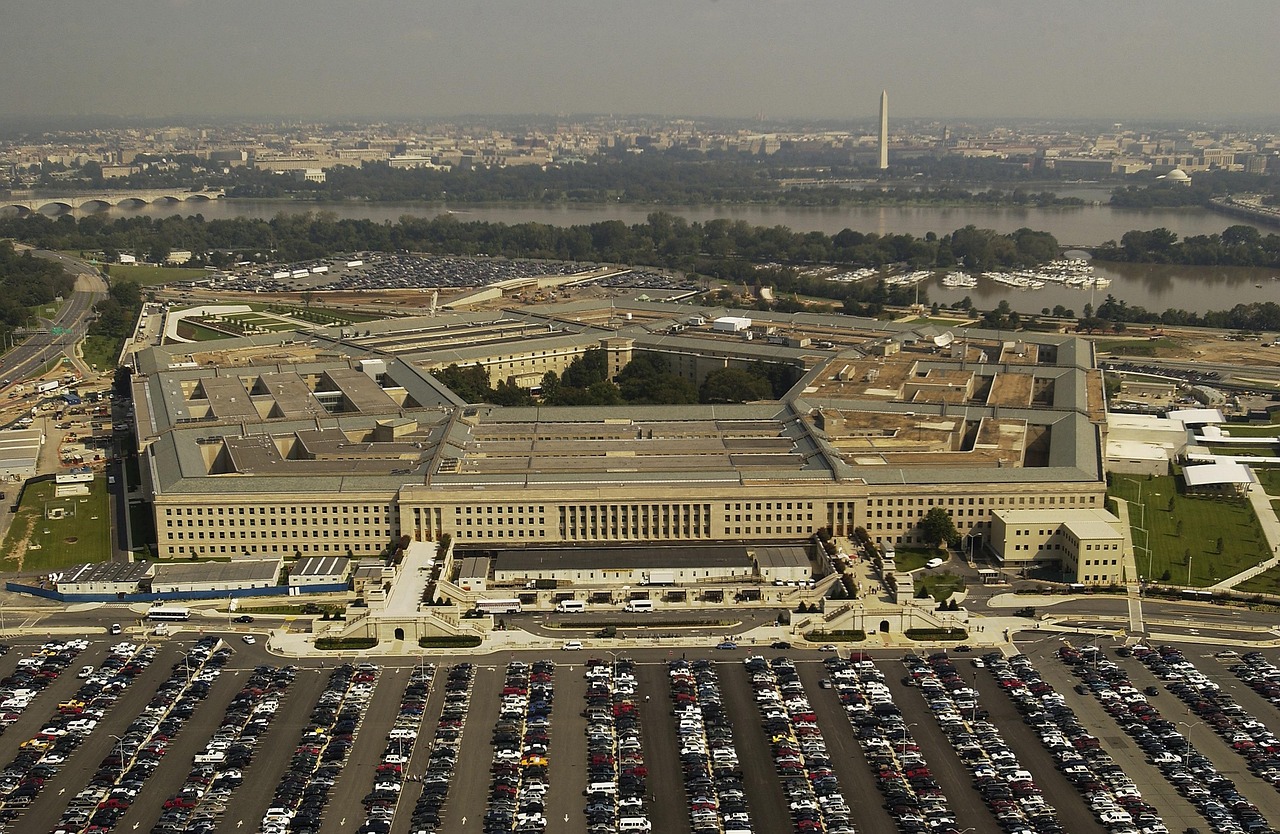
The Military-Industrial Complex: Structure, Not Conspiracy
President Dwight D. Eisenhower’s warning about the “military-industrial complex” was not a prediction of corruption so much as a diagnosis of incentives.
Today, more than half of Pentagon discretionary spending flows directly to private defense contractors, including Lockheed Martin, RTX (Raytheon), Boeing, General Dynamics, and Northrop Grumman.
- Responsible Statecraft analysis: https://responsiblestatecraft.org/contractors-percentage-dod-spending/
These firms spend tens of millions of dollars annually on lobbying, shaping procurement priorities and legislative outcomes in Washington.
- Taxpayers for Common Sense report: https://www.taxpayer.net/wp-content/uploads/2024/10/Oct-2024-Political-Footprint-of-the-Military-Industry.pdf
This is not a shadowy conspiracy — it is an openly functioning system. Defense spending sustains regional economies, fuels revolving-door careers between government and industry, and anchors think tanks and policy institutions whose incentives align with budget growth.
When peace is bad for business, conflict does not need to be declared to remain profitable.
If Not Defense, Then What?
This is where the numbers stop being abstract.
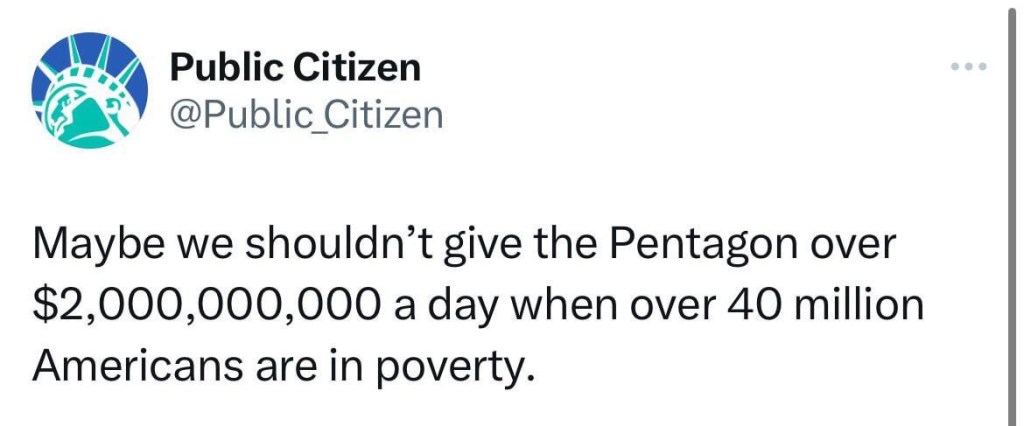
$900 billion is not just a defense budget — it is a statement of national priorities.
That sum could meaningfully expand healthcare access, address student debt, fund public housing initiatives, modernize infrastructure, or strengthen climate resilience programs. These are not fringe ideas; they are perennial public demands.
Yet unlike military spending, domestic investments are always conditional. They must be negotiated, trimmed, justified, and re-justified. Defense spending, by contrast, is treated as automatic — the one area of government where growth is assumed rather than debated.
What threat, exactly, requires permanent expansion?
The United States increasingly practices defense by spending rather than defense by strategy. Budgets grow while outcomes remain unclear, conflicts multiply, and interventions persist with little accountability for long-term consequences.
America Is the Pentagon Now
At some point, the distinction between institution and identity blurs.
The Pentagon is no longer just a department — it is an economic engine, a political stabilizer, and a defining feature of American global posture. Its budget reflects not only perceived threats abroad, but a domestic system built around permanent militarization.
When Congress passes another massive Pentagon authorization that the public never meaningfully demanded, it sends a clear message: defense is not merely a priority — it is the default.
America does not simply have a military budget.
America is organized around one.
The question democracy must eventually confront is not whether defense matters. It is whether a democracy can remain responsive when its largest annual decision is effectively pre-decided.
That answer won’t come from another bipartisan vote. It will come from whether the public insists on asking why the budget always grows — and who it is really for.


 Anarchy Journal Constitutional