Posts Tagged ‘donald trump’

How Epstein transparency, anti-war dissent, and donor-driven politics collided in one of the most revealing Republican primaries in modern America.

American politics still pretends to reward independence.

Candidates campaign as outsiders. Lawmakers promise to “fight the establishment.” Cable news panels praise courage, authenticity, and principle — at least rhetorically. Voters are told that democracy works because elected officials answer to the public rather than to entrenched power.

But every so often, a political event cuts through the performance and reveals something colder underneath.

The recent political destruction of Congressman Thomas Massie felt like one of those moments.

Massie was never an easy figure to categorize. A libertarian-minded Republican from Kentucky, he spent years irritating both parties with his opposition to surveillance expansion, foreign intervention, omnibus spending bills, and centralized federal authority. He frequently voted alone. Sometimes awkwardly. Sometimes stubbornly. Sometimes correctly. Often inconveniently.

For years, Washington tolerated him as a manageable dissenter — the kind of ideological outlier every political system keeps around as proof that dissent still exists.

Then something changed.

Massie became one of the most visible congressional voices demanding greater transparency surrounding the Epstein files. At the same time, he grew increasingly outspoken about U.S. foreign aid, Israeli military policy in Gaza, and the role powerful lobbying organizations play inside American politics.

Individually, none of those positions was unprecedented.

Combined, they placed him in direct conflict with some of the most protected consensus structures in modern American political life.

Soon afterward, the money arrived.

Not ordinary campaign money. Not local political backlash. Nationalized political money. Establishment money. Punishment money.

Outside groups flooded the race. Party pressure escalated. Trump turned against him publicly. Media framing hardened. What should have been a relatively contained congressional primary transformed into something much larger: a political demonstration.

Whether one agrees with Thomas Massie personally is almost beside the point.

The real question is what his defeat reveals about the narrowing boundaries of acceptable dissent inside the American political system.

Because modern political systems rarely suppress opposition outright anymore.

They discipline it financially.


The One Scandal Neither Party Could Fully Contain

The Jeffrey Epstein case became something larger than a criminal scandal over the past year.

For many Americans, it evolved into a symbol of elite impunity itself — a cultural shorthand for the suspicion that wealth, political connections, intelligence-adjacent networks, and institutional protection can place certain people beyond the reach of normal accountability.

The reason the Epstein story refused to disappear was not simply because of the crimes. It was because of the perception that the public was only being allowed to see fragments of the truth.

Names remained redacted. Records appeared to be selectively released. Court documents surfaced in waves. Questions multiplied faster than answers. Every partial disclosure created new suspicion that powerful institutions were managing information rather than transparently releasing it.

In that environment, calls for transparency became politically potent.

What made Massie’s involvement especially significant was that he approached the issue not as a fringe media personality or internet provocateur, but as a sitting member of Congress working alongside Democratic Congressman Ro Khanna in a rare bipartisan alliance demanding broader disclosure of Epstein-related documents.

That bipartisan coalition mattered.

The Epstein issue briefly united groups that normally agree on almost nothing:

  • populist conservatives
  • anti-establishment progressives
  • libertarians
  • independent journalists
  • online transparency activists
  • distrustful voters across ideological lines

For a brief moment, the issue threatened to cut across traditional party management structures entirely.

Massie and Khanna pushed legislation demanding the release of records connected to Epstein, Ghislaine Maxwell, flight logs, plea agreements, and internal Justice Department communications. The language surrounding those efforts was unusually aggressive for official congressional action. One transparency proposal explicitly argued that information should not be withheld simply because disclosure might cause embarrassment or political discomfort.

That language struck a nerve because it touched the deeper public fear underneath the entire Epstein story: not merely criminality, but institutional protection.

As pressure grew, the Department of Justice faced accusations of excessive redactions and withholding large portions of relevant material. Khanna publicly accused the DOJ of “stonewalling.” Massie argued that millions of documents remained hidden from public view.

Whether every suspicion surrounding Epstein is justified is ultimately less important than what the controversy exposed psychologically. Millions of Americans across the political spectrum no longer trust powerful institutions to investigate powerful people honestly.

That erosion of trust is politically explosive.

And politicians willing to amplify that distrust — especially from inside the system itself — become dangerous in ways that extend beyond any single issue.


The Third Rail of American Politics

If the Epstein issue made Massie politically uncomfortable for establishment Republicans, his criticism of Israeli policy and American foreign aid pushed him into even more dangerous territory.

American politics contains certain subjects that remain heavily managed by bipartisan consensus. Criticism of intelligence agencies can trigger backlash. Opposition to military intervention can trigger backlash. Serious scrutiny of donor infrastructure can trigger backlash.

But few areas generate political consequences faster than questioning the American political relationship with Israel.

To be clear, criticism of Israeli government policy is not remotely the same thing as hostility toward Jewish people, and collapsing those distinctions has become one of the most effective ways to shut down legitimate political discussion in the United States.

Massie’s criticism largely emerged through an anti-war and constitutionalist framework. He opposed large foreign aid packages, criticized endless interventionism, and raised concerns about civilian casualties in Gaza. In many cases, his objections mirrored the same anti-interventionist principles he applied to Ukraine funding, surveillance expansion, and military spending generally.

That consistency matters.

Because the issue was not merely that Massie opposed a particular policy. It was that he refused to obey the normal partisan boundaries governing which foreign policy questions are considered politically safe to ask.

At the same time, lobbying organizations connected to pro-Israel advocacy were becoming increasingly aggressive in congressional primaries nationwide. Enormous sums of money were already being deployed against candidates perceived as insufficiently aligned with establishment foreign policy consensus.

This was not hidden. It was a public strategy.

Super PACs and donor networks openly framed many of these races as battles for ideological control of Congress itself.

Again, none of this proves secret coordination or conspiracy. Modern political enforcement rarely operates through cinematic backroom plotting anyway. It operates through incentives. Through donor pressure. Through career calculations. Through media narratives. Through fear of becoming the next example.

And examples matter. Because once lawmakers see enormous political punishment deployed against visible dissenters, most never need to be threatened directly. They self-correct.


When the Money Arrived

Every political system has mechanisms for enforcing discipline.

In modern America, that mechanism is often money.

The transformation of congressional races after Citizens United fundamentally altered the balance of political power inside both parties. Primaries increasingly stopped being local contests between candidates and became nationalized proxy wars fueled by donor infrastructure, ideological branding, and outside spending.

Massie’s race reflected that transformation perfectly.

What should have remained a relatively routine Republican primary became saturated with outside attention, outside messaging, and outside financial interests. Trump’s involvement escalated the stakes dramatically. Once the former president publicly turned against Massie, the race stopped being merely about Kentucky politics and became a symbolic loyalty test inside the broader Republican ecosystem.

The message was unmistakable: independence has limits.

Massie’s critics framed him as disloyal, difficult, obstructionist, and politically erratic. Establishment media often portrayed him as a fringe libertarian figure perpetually at odds with his own party. Meanwhile, many independent media voices framed the situation very differently — as a visible case study in how modern political systems punish ideological unpredictability.

That framing divide is important. Because one of the defining features of modern American politics is that entirely separate media ecosystems now describe the same events using completely different moral frameworks.

To establishment institutions, Massie became an example of the dangers of ideological noncompliance.

To many anti-establishment observers, he became an example of what happens when someone challenges too many protected interests simultaneously.

Neither interpretation fully explains the entire story alone. But together, they reveal a political environment increasingly defined by enforcement rather than persuasion. And enforcement does not require proving conspiracy.

The money itself is visible.

The incentives are visible.

The punishment is visible.
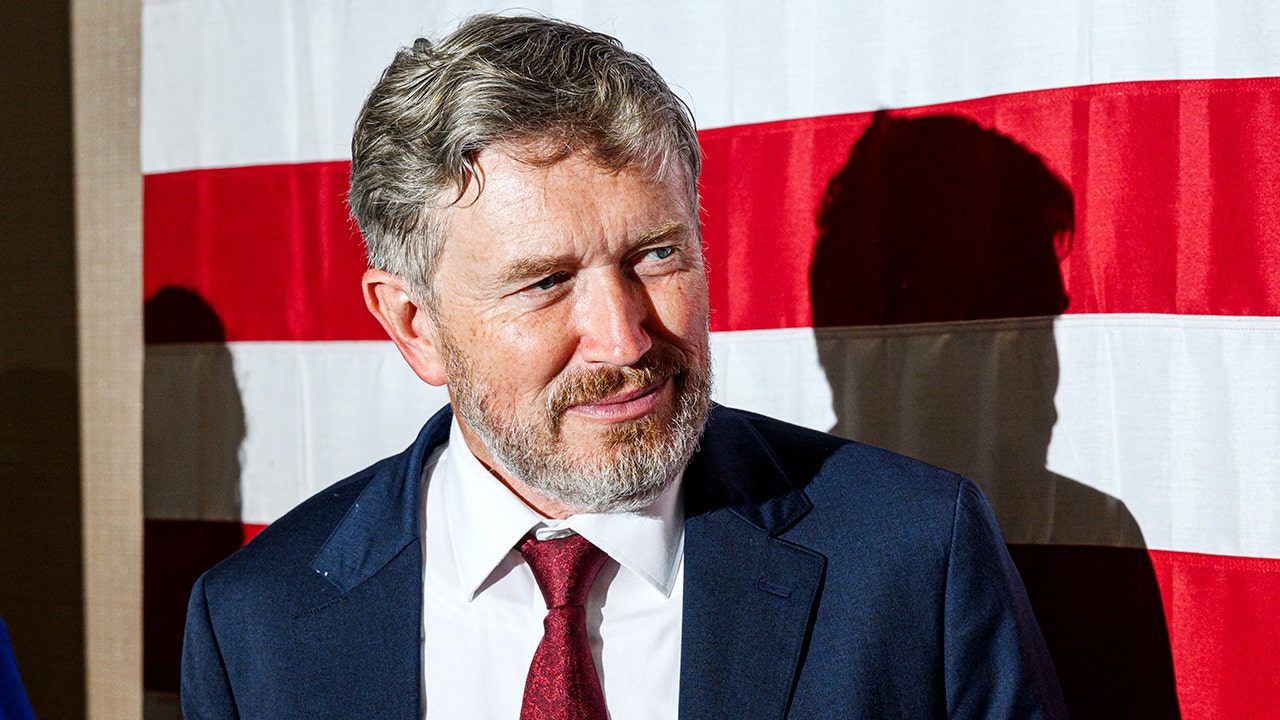


Managed Democracy

The deeper story here is not Thomas Massie specifically.

It is the political system that produced this outcome.

Americans still speak about democracy as though elected officials operate primarily according to public opinion and voter interests. In reality, modern political behavior is shaped by a far more complicated matrix of pressures:

  • donor dependency
  • media ecosystems
  • lobbying infrastructure
  • party advancement incentives
  • ideological branding
  • fear of organized retaliation

Most politicians understand these pressures intuitively. Very few openly resist them.

That does not mean every politician is corrupt, nor does it mean shadowy forces secretly control every outcome. The truth is often more banal and more disturbing at the same time: systems of power become self-reinforcing long before explicit coordination is necessary.

People adapt to incentives. Careers adapt to incentives. Institutions adapt to incentives.

The result is a form of managed democracy where dissent technically remains allowed, but only within carefully tolerated boundaries.

Step too far outside those boundaries — especially on issues involving war, intelligence, donor power, or elite protection systems — and the political machinery begins activating around you.

Sometimes subtly. Sometimes all at once.

This is why Massie’s case resonated far beyond Kentucky.

He represented something increasingly rare in American politics: ideological unpredictability.

Not ideological purity. Not moral perfection. Not universal correctness. Unpredictability.

He was difficult to fully control because his positions did not fit neatly into the existing partisan architecture. He could align with conservatives on spending while aligning with civil libertarians on surveillance. He could criticize Democratic leadership while also opposing Republican foreign policy orthodoxy. He could support populist transparency efforts while alienating establishment donors.

Systems built around message discipline struggle with figures like that. Especially when those figures begin attracting public attention around elite accountability issues.


Every Purge Is Also a Warning

The most revealing part of Thomas Massie’s political downfall may not be that it happened. It may be how openly it happened.

The money was public. The pressure was public. The endorsements were public. The media narratives were public. The punishment was visible enough that other politicians could clearly understand the lesson being communicated. And perhaps that was the point.

Because political punishment is rarely just about removing one person. It is about shaping the future behavior of everyone watching. Whether Thomas Massie was right about every issue is ultimately irrelevant to the larger question.

The larger question is this: What kinds of political dissent trigger overwhelming institutional response in modern America?

Criticize party leadership, and you may survive. Challenge intelligence narratives and you may survive. Oppose foreign wars, and you may survive. Question the donor infrastructure and you may survive.

But begin combining all of those positions together — while amplifying public distrust surrounding elite accountability — and the tolerance for independence appears to shrink rapidly.

That does not prove conspiracy. It proves systems have boundaries.

And increasingly, those boundaries are enforced not through censorship alone, but through financial warfare, reputational management, donor coordination, and political isolation.

In modern Washington, dissent is still allowed. Right up until it becomes contagious.

The $900 Billion That No One Voted For


A $900 Billion Decision With Little Public Scrutiny

The U.S. House of Representatives this week approved the annual defense policy bill — the National Defense Authorization Act (NDAA) — authorizing roughly $900 billion in Pentagon spending for fiscal year 2026. The measure passed with broad bipartisan support, continuing a streak that has now lasted more than six decades.

According to reporting from CBS News and Reuters, the bill cleared the House by a 312–112 vote, once again exceeding the administration’s initial budget request and reinforcing a familiar outcome: the Pentagon’s budget grows, regardless of party control or global conditions.

Despite the scale of the authorization — one of the largest federal expenditures approved annually — the vote generated limited sustained public debate. Media coverage focused largely on procedural elements, such as troop pay increases and geopolitical provisions, rather than the broader question of why military spending has become one of the few areas of government effectively insulated from public resistance.


What the Public Actually Thinks

Public opinion data paints a far more complicated picture than congressional voting patterns suggest.

Long-term polling by Gallup shows that Americans are not clamoring for ever-higher military budgets. In 2024, only about 29 % of respondents said the United States was spending too little on national defense, while the majority believed spending was either “about right” or “too high.”

When asked more directly about budget increases beyond Pentagon requests, opposition becomes even clearer. A Data for Progress survey found that 63 % of Americans opposed increasing military spending above the requested level, including majorities of both Democrats and Republicans.

The disconnect is difficult to ignore: voters across party lines express skepticism about increased military spending, yet Congress delivers it year after year with bipartisan consensus.


A Budget That Always Goes Up

The Pentagon budget has become one of the most consistent growth mechanisms in American governance.

Wars begin, and the budget rises. Wars end, and the budget rises. Economic downturns, inflation, and public health crises — none have reversed the trend. Even in years without newly declared conflicts, defense authorizations continue to expand.

According to the Peter G. Peterson Foundation, defense spending remains the single largest category of discretionary federal spending, often rivaling or exceeding all other discretionary priorities combined.

This growth occurs with remarkably little interrogation of outcomes. While most federal programs are subjected to cost-benefit scrutiny, defense spending is treated as inherently justified — a baseline necessity rather than a policy choice.


The Military-Industrial Complex: Structure, Not Conspiracy

President Dwight D. Eisenhower’s warning about the “military-industrial complex” was not a prediction of corruption so much as a diagnosis of incentives.

Today, more than half of Pentagon discretionary spending flows directly to private defense contractors, including Lockheed Martin, RTX (Raytheon), Boeing, General Dynamics, and Northrop Grumman.

These firms spend tens of millions of dollars annually on lobbying, shaping procurement priorities and legislative outcomes in Washington.

This is not a shadowy conspiracy — it is an openly functioning system. Defense spending sustains regional economies, fuels revolving-door careers between government and industry, and anchors think tanks and policy institutions whose incentives align with budget growth.

When peace is bad for business, conflict does not need to be declared to remain profitable.


If Not Defense, Then What?

This is where the numbers stop being abstract.

$900 billion is not just a defense budget — it is a statement of national priorities.

That sum could meaningfully expand healthcare access, address student debt, fund public housing initiatives, modernize infrastructure, or strengthen climate resilience programs. These are not fringe ideas; they are perennial public demands.

Yet unlike military spending, domestic investments are always conditional. They must be negotiated, trimmed, justified, and re-justified. Defense spending, by contrast, is treated as automatic — the one area of government where growth is assumed rather than debated.

What threat, exactly, requires permanent expansion?

The United States increasingly practices defense by spending rather than defense by strategy. Budgets grow while outcomes remain unclear, conflicts multiply, and interventions persist with little accountability for long-term consequences.


America Is the Pentagon Now

At some point, the distinction between institution and identity blurs.

The Pentagon is no longer just a department — it is an economic engine, a political stabilizer, and a defining feature of American global posture. Its budget reflects not only perceived threats abroad, but a domestic system built around permanent militarization.

When Congress passes another massive Pentagon authorization that the public never meaningfully demanded, it sends a clear message: defense is not merely a priority — it is the default.

America does not simply have a military budget.
America is organized around one.

The question democracy must eventually confront is not whether defense matters. It is whether a democracy can remain responsive when its largest annual decision is effectively pre-decided.

That answer won’t come from another bipartisan vote. It will come from whether the public insists on asking why the budget always grows — and who it is really for.

Elections change the faces—but never the outcome. Lobbyists always win.


“Now it’s just an oligarchy, with unlimited political bribery being the essence of getting the nominations for president or being elected president.”
Jimmy Carter


Every election cycle, we’re told to pick a side.

Red or blue.
Hope or fear.
Change or more of the same.

But behind the curtains and campaign ads, the same winners always emerge: the corporations who bankroll both sides.

Their lobbyists don’t need to win elections.
They just need to outlast them.

“The most offensive aspect of the modern political system is how entirely legalized the corruption is.”
Matt Taibbi


The Revolving Door Spins On

The people writing our laws?
They often come straight from the industries they’re supposed to regulate.

And when they’re done “serving the public”?
They go right back into the private sector—with a pay bump for playing ball.

This isn’t representation.
It’s a handshake deal between government and corporate power.

And it’s why regulations rarely hurt the companies they’re aimed at.
They’re often written by them.

“The reason why the U.S. government does not hold elites accountable is because they are part of the same system. It is not broken — it is designed that way.”
Glenn Greenwald


Regulatory Capture Is Not a Flaw—It’s the Design

When Big Pharma influences the FDA,
when defense contractors sit on Pentagon advisory boards,
when fossil fuel execs shape environmental policy—
that’s not corruption by accident.
It’s the system working exactly as built.

Agencies meant to protect the public
are used to protect the profits of the powerful.

And once captured, those agencies become shields—
giving the illusion of oversight while doing the opposite.

“The smart way to keep people passive and obedient is to strictly limit the spectrum of acceptable opinion, but allow very lively debate within that spectrum.”
Noam Chomsky


Campaign Donors Aren’t Donating—They’re Investing

In 2024, over $17 billion was spent on political campaigns.

But none of that money was a gift.
It was an investment.

And like all investors, donors expect returns:
– favorable legislation
– deregulation
– subsidies
– tax loopholes

They buy access. They buy influence.
And when necessary, they buy silence.

No matter who wins the vote, the lobby wins the outcome.


It’s Not a Bug. It’s a Business Model.

We’re taught that voting is our voice.
But what happens when the choices are pre-approved by money?

What happens when both parties answer to the same donors?
When every regulation is pre-lobbied?
When the economy is run by the few and paid for by the many?

Then we aren’t living in a democracy.
We’re living in a managed marketplace.

And the customers don’t get to write the rules.

“Elections are supposed to be an expression of will — not a demand for submission to manufactured choices.”
Edward Snowden


🩸 Truth Over Tribalism

This isn’t about red or blue.
It’s about the money that owns them both.

It’s about a system where billionaires write the laws,
corporations fund the campaigns,
and lobbyists run the show.

We don’t need new slogans.
We need new structures.
Because the lobby will keep winning—until we stop playing by their rules.


📣 Follow the work:

📹 TikTok: @anarchyroll_
📸 Instagram: @anarchyroll
🐦 X/Twitter: @anarchyroll
🧵 Threads: @anarchyroll
🌐 Bluesky: @anarchyroll.bsky.social


The Epstein list is no longer a conspiracy theory. So why does everything still feel so silent?


📚 The Facts — No Longer Fringe

Over 170 names have now been confirmed through the release of legal documents tied to Jeffrey Epstein’s sex trafficking network. These include billionaires, celebrities, politicians, and royalty. The details are out. The timeline is established. The cover-up is ongoing.


🔦 What Do We Do With the Truth?

We now know.

Not in theory. Not through whispers or redacted documents or vague rumors.

We know — because it’s confirmed.

There was, and likely still is, a global sex trafficking network facilitated by billionaires, royalty, scientists, politicians, and financiers. Children were exploited. Victims were silenced. Powerful names were protected.


So what does it say about us?


That these are our leaders.
That this is our system.
That this was allowed to exist.

What does it say about power?
About justice?
About what we tolerate?

What kind of society protects this?
What kind of humanity forgets it?


We have been taught that truth is powerful.


That exposure leads to change.
That sunlight is the best disinfectant.

But what happens when truth lands like a stone in the ocean?
When facts come out — and are absorbed into the machine of normalcy?

What happens when justice does not follow evidence?


This isn’t a left vs. right issue.


This isn’t partisan.
This is a reflection of power.

And maybe that’s the point.
Maybe we are not meant to act on this truth.
Maybe we are only meant to know it — and feel helpless.

But that’s not enough.

We should not be okay with knowing… and doing nothing.

We should not learn of atrocities… and scroll past.

We cannot pretend that this level of coordinated abuse — and cover-up — is just another passing headline.


Some truths shouldn’t fade.


They should haunt.
They should wake us up.
They should never be allowed to settle.


🕳️

If you’ve made it this far, sit with it.
Not to be consumed by despair — but to resist forgetting.
Because forgetting is how they win.


🎬 This article was reimagined as a visual essay — watch the reel below.

@anarchyroll_

The list is real The silence is louder This is the part where we don’t look away. We don’t stop asking. We don’t stop naming. 🕳️ 🎥 Visual essay from: anarchyjc.com @anarchyroll_ #EpsteinCoverup #EliteProtection #TruthOverTribalism #epstein #digitalart

♬ Deep – Courten

📡 Follow anarchyroll across platforms for more visual essays, short-form truth, and independent, gonzo journalism-inspired writing:

📽️ TikTok: @anarchyroll_
🐤 X / Twitter: @anarchyroll
🧵 Threads: @anarchyroll
🔵 Bluesky: @anarchyroll

eanda logo

By @anarchyroll

No thing quite says the Republican party of the United States of America like a tax cut.

Did you notice how quickly and easily Congress was able to push through a tax cut for the wealthy? Almost every other piece of legislation (except for military spending increases) that has been attempted to be passed over the past decade has been a textbook example of two-party democratic government not working. If 1980s Dominos Pizza was delivering this tax cut, the oligarchs would get it piping hot and received no discount..

1C9BD3D3-8D10-4D19-970D-4CEA9BC739A5

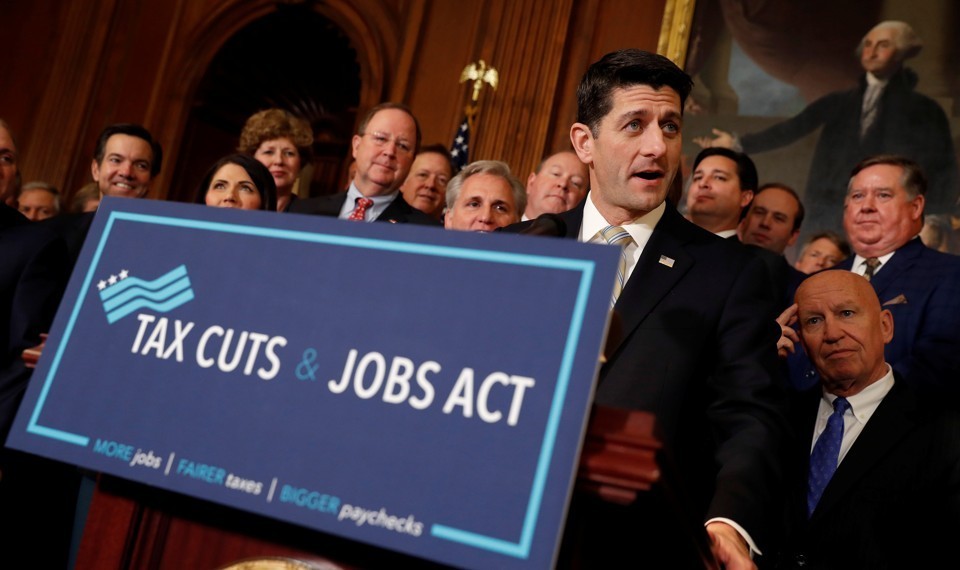
Every aspect of this Tax Cuts and Jobs Act of 2017 is a big, bright, and bold example of how the rich get richer and the poor get poorer in America. Follow the money is an age old expression. Congressional gridlock shows just how true that is. Because the only bills that have moved quickly through Congress have been military spending increases and this tax cut. The military industrial complex (who own he Democratic Party like violent pimps) and the oligarchs. King Kong ain’t got shit on them.

This bill is less about the Republican Party and more about who they represent and who they work for. Is it half of the American population? Is it a loud minority? A silent majority? Follow the money, who does this tax cut benefit?

Passing legislation has come to a halt in America since the last two years of the George W Bush administration. There was that one big exception, but almost every other bill has been stuck in legislative gridlock hell that is the United States Congress. Healthcare reform, immigration reform, financial regulation, digital privacy protection, et al have moved at painfully slow speeds if at all. Even common sense, bipartisan bills have had a hard time even seeing the light of day on the floor of either house of Congress.

But a tax cut for the wealthiest Americans? A 500 page bill involving one of the largest transfers of wealth in the history of the country? Less than a month is more than enough time. How does that happen? Why does that happen? Is that not why we fled England in the first place? I guess no taxation without representation only applies to taxes going up and not taxes going down, on less than two percent of the population.

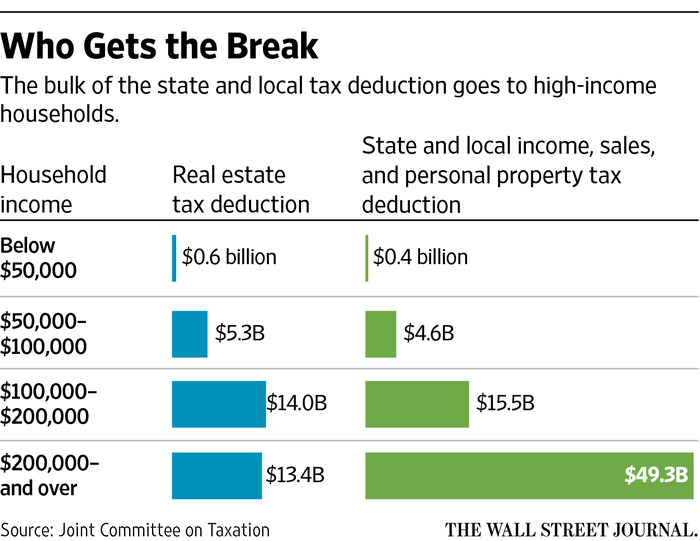
Is this a tax cut to benefit people making less than one hundred thousand dollars per year? Less than fifty? Less than thirty?  Many might snicker and say those making so little don’t pay taxes anyway. That is the problem isn’t it? There are vastly more people in the current society who will benefit more in the day to day lives from taxes collected on the wealthy (social safety nets, community services) than by a one time, minor at best, windfall from a tax cut/credit.

The tax bill moved so fast through both houses that they have needed double, if not triple the amount of time to take the bills into conference committees to negotiate and fix the numerous, egregious math and budgeting errors. Drafting and finalizing a compromise bill behind closed doors has taken the place of proper on the floor debate as a result of this Congress moving at lightning speed to pass a bill that no one had time to read, let alone make logical decisions based upon critical thinking.

lead_960

Congress rushed through this bill like a college kid rushing to finish a final paper or cramming at the last-minute for a midterm. There are two key differences there and that is that when a college kid waits until the last-minute to do their deep work it only affects them and their roommates. The legislative branch of the United States of America however, effects just slightly more people than a dormitorium.

Greed and corruption like this used to have the cover of a lack of transparency. In the era of telephones and television and newspapers and radios and telegraphs it was much easier for politicians to say X, do Y, and say the result is Z. The age of the smartphone makes it easier to be shady, but much harder to keep it a secret. The wave of careers being ended by sexual misconduct allegations from Hollywood to Washington is evidence of this.

What is also apparent when held up to the light of day is the fact that this bill is amoral. Ethics, budgets, math do not apply to this trillion dollar wealth transfer. Negotiated in secret, passed before it could be read, full of so many errors that both the House and Senate versions needed to be negotiated so much they were both essentially rewritten. How does the urgency of this compare to the passing of hurricane relief to Puerto Rico?

The tax cut of 2017 that has been instituted by the Republican party has been called the Tax Cuts and Jobs Act of 2017 by some and the #TaxScamBill by others. Terms of endearment or damnation depending on which side of the political aisle and socioeconomic spectrum one falls on. What are facts and not opinions however are that this bill was so rushed it wasn’t read or proofread by the people who wrote it. That there were so many earmarks in there in such short order that many proved to be illegible when held up to the light of day or a camera

This tax cut is like putting your coat down at a bar, turning your back for a minute, then turning back to find someone going through the pockets and them playing dumb about it. They know what they’re doing, but are hoping to use ignorance as a guise for willful immorality.