
Posts Tagged ‘emotions’

Our lives are dyed by the color of our thoughts.

We focus on what we look at.

We get what we focus on.

We are what we repeatedly do.

Trying to create and cultivate space between what happens to us, and our thoughts and emotions regarding what happens to us can be very hard. And certainly is not the default state of doing things for human beings.

They’re called snap judgements for a reason.

In the blink of an eye.

We’ll react with fervent emotion, containing very little, if any, rational thought.

But of course, in the moment of choice, we don’t just think, we know we’re right. We feel it. We don’t know it. We feel it.

Which is more powerful a thought or a feeling?

Which is more influential?

What was the world like during the vast majority of human history before rational thought?

Of course we construct the world through the paradigm of our emotions. Our emotions predate language by at least 100,000 years and rational thought by around 300,000 years.

We evolved to construct the world with our emotions. It is the norm to construct the world with our emotions. We are emotional creatures.

The modern world is one of logic and reason. At least it is officially, on the table, for appearances, in public. But living life is a private matter. Emotions and feelings rule the day for the vast majority of people. If it were the other way around the world would be incomprehensibly different.

So we must have more compassion and empathy for ourselves AND others.

I have found maintaining self compassion and empathy towards others to be a challenge despite large quantities of meditation practice and spirituality study. Negativity and selfishness seem to be increasingly amplified and glorified in the western world. I wonder why that is? Put another log on the fire.

Is it in our nature to be compassionate and empathetic? I believe so. I believe it is, barely, in our nature. Just enough that it can be cultivated, expanded, and spread around in the spirit of emotional contagion.

I know there are, have been, and likely will be plenty of days where I will need to give myself compassion and empathy. Living can be hard and complex.

That means that others need it to. Some more than others. I know I’ll have to develop my ability to extend compassion and empathy. But it’s a challenge worth taking on and conquering. It is a good fight to take on and win.

Because compassion and empathy are good things. Two things we need more of for ourselves. Two things this world needs more of from us.

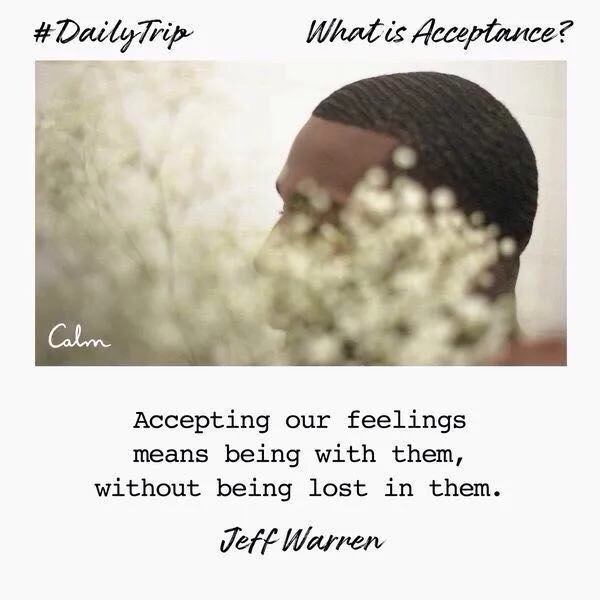
It’s already hard to not identify with our emotions, without our culture ruthlessly exploiting our emotions perpetually professionally.

We’re never taught that we are not our thoughts, we are not our emotions. It’s usually the opposite or taught nothing at all. Figure it out as you go. On the job training. Job in this case being…being.

I’ve been meditating for over ten years, I’ve been studying spirituality for longer, journaling longer than that. I’ve been regularly studying stoicism seven years, started studying other philosophies on a regular basis four years ago…and negative emotions can still take me for a ride like a teenager in puberty.

Life may be simple, but easy? I don’t know about that one. The older I get, the more experiences I have, the more people I meet, it seems like living is hard.

If one were to say life is easy, they would at least agree that our emotions don’t add to the simplicity or ease of life. I feel confident in the determination that it is our emotions that are the primary sources of many of the difficulties and complexities of our collective and individual existence.

Are the things that happen to us hard and complex, or is it our emotional reactions that make them so?

Are the events of our life hard and complex, or is it our thoughts that make them so?

Detaching those two questions from spirituality teachers and gurus is worthwhile for all secular types. To be honest, most religious people I know would be wise to ask those questions regularly. I need to ask myself those questions more often, and I already had a couple of instances this week where I was asking myself those questions repeatedly.

Breathing, following the breath with our attention, walking, stretching, laughing can all help detach ourselves from the grip of our thinking mind and emotional reactions.

No one things is gonna make us go from A to Zen as if a magic wand was waved in front of our face.

But awareness is the way out.

It’s not just easy to get lost in our thoughts and emotions, it’s normal…it’s natural.

And if it was normal for us to get lost in productive thought streams and positive emotional reactions, then we’d be living in a utopia…and have you seen the news lately?

ssrlogo2

by @anarchyroll
7/3/2014

Social network sounds so much more appealing than electronic social emotional psychological experiment platform.

It was recently revealed that in 2012, Facebook manipulated the news feeds of just under 700,000 users, in order to measure the effects the news feed changes, on the mood(s) of the user(s).

The exact number of users who were unknowingly experimented on is 689,003. The exact amount of time was one week. Facebook showed less (than) positive posts from both friends and publication providers. Facebook did not get the consent of the users to do this experiment.

Facebook has both apologized, and offered no apologies for conducting this unauthorized psychological experiment.

Me personally, I find something like this to be disgusting and despicable. This is also a great learning lesson on a variety of levels. Let’s focus on how the results of the experiment show what social conditioning is.

Social conditioning is how we learn to think, perceive, and act through the media (movies, television, music, magazines, newspapers, social media websites/platforms, etc).

Facebook proved to themselves and to the world that social conditioning is a very real, very applicable, very effective social-emotional concept. Social conditioning shapes all of us, myself very much included. Facebook itself can be considered one big social conditioning machine.

It was also learned in the experiment that emotions are contagious. That people can in mass be manipulated to feel happier or sadder. What are the implications of this? What other large companies have performed experiments like this in the past? In the present?

I’m not going to bring this article down the conspiracy theory rabbit hole. There are simply questions worth asking of ourselves internally as well as the external world around us. How much of what we think and feel is rooted in our own personal identity, integrity, character, and principles? How much of our identity, values, and consent has been manufactured?

Think about it. Be aware of it.

What is “it”? It in this case would be the non material aspects of what makes you up as a person. Your thoughts, feelings, and so on. Do you think, perceive, and act based on what you internally believe? Or are you being so manipulated by the world around you that you have no identity that isn’t a corporate brand or group think produced? No one is above being asked that question, especially not yours truly.

Think about it. Be aware of it.