
Posts Tagged ‘habits’


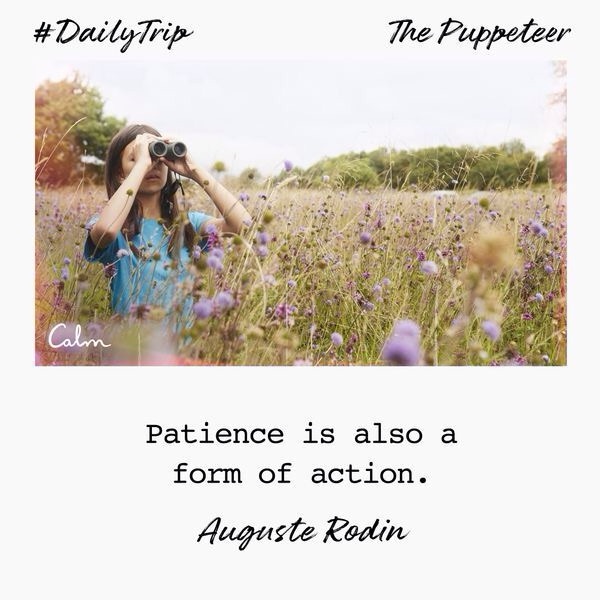
When should I be patient and when should I take action?

This can be a tough question for anyone at any level in life. I know it has been for me, at every stage of my life up to this point. I remember thinking that epiphanies brought about by consuming and then applying knowledge would be a permanent solution to this puzzle.

I suppose I’m old enough to possess the wisdom through experience to know that there is no such epiphany. I’ve had epiphanies. Did they create permanent change? No. Nothing does. Habitualized action creates permanent change. Anything else is snake oil.

“The two most powerful warriors are patience and time.” – Leo Tolstoy

Patience and action are practical examples and applications of yin and yang. Buddhist philosophy has been a big help for me in taking the pressure off of the choice between patience and proactivity.

Because it is natural to worry about being too patient just as it is normal to worry about taking too much action. Bringing mindfulness into my life helped to relieve some of the pressure that modern life puts on us to always be doing something exciting and interesting while simultaneously always relaxing in an exotic location vacation. And of course, making sure to document anything and everything one does in HD 4K photo and video, posted and reposted in portrait and landscape mode.
After suffering textbook burnout multiple times in my life, I overcalibrated towards patience. Buddhism, Taoism, and other spiritual philosophies that I studied lent themselves to patience and non-doing, which I felt I desperately needed at the time. Stoicism helped steer me back towards proactivity.

“Action without vision is blind; vision without action is just a dream.” – Nelson Mandela

I have found that Stoicism pairs well with Buddhism and Taoism. I would counsel people to consume all three in equal proportion. Stoicism helped teach me to take action and to do so boldly and consistently AND THEN to let go from there.

Detach from the outcome. Let go of how the action is received and perceived. 

That last part is a major missing piece from the good advice I received my entire life and hear/see being given to people these days by well-meaning folks. My experience has taught me that the majority of people are heavily tied up in the outcome of their actions. Not just entangled, but almost completely identified with their actions. 

That is also totally normal and natural. Aren’t we taught to believe that we are the result of our actions? Even if we aren’t taught that, isn’t there a consensus that a person’s identity is what they do? This is where spiritual philosophies and spiritual teachings fill in the hole I and many people feel inside of us when we’ve lived a life identified externally.

The teachings of Alan Watts, Ram Dass, Eckhart Tolle, and others provide empathy and compassion for myself and others in place of the default of judgment. The judgment of the patience, the judgment of the action, and the judgment of the results. Replacing all that judgment requires teaching and training because we live in a society that encourages and rewards judgment. 

Traditionally we have been our own worst critic. The modern era of the comment section has put negative judgment on steroids and placed it into a weapon of mass destruction with unlimited ammo.

“Empathy is about finding echoes of another person in yourself.” Mohsin Hamid

The scales of balancing patience and action are properly weighted with studying philosophy and spirituality.

Studying and applying the knowledge of these disciplines also helps to put an immeasurable, immaterial, internal balance on the scale in our very measurable, material, externally focused world. 

Before them, I was lost. I may not yet be found but I know I am at least on a path rather than walking alone and confused in the dark. 

I’ve been a premium subscriber to Lumosity (brain games app) on and off for a decade now. I find it helpful. The older I get the more I realize my brain can use all the help it can get. Real, imagined, or placebo I don’t care. Don’t tell me about the labor pains just show me the baby.

I would use it reasonably consistently here and there then drop off. I would subscribe to the premium version when there was a sale on Cyber Monday or on New Year’s Day something like that. I’d start and stop and start and stop. I’d unsubscribe and resubscribe. Does this cycle sound familiar or relatable?

I never confused it as a magic pill for a bulletproof brain. I just knew myself enough to know that I’ve done enough detrimental work on my brain that a brain training app could at least serve as a beneficial use of time.

It has helped me at least a little. But what made it finally stick, just in the last year, was when I dropped the expectation of it helping my brain and doubled down on it helping me structure my time/daily schedule.

I realized that the value of just going through the motions, even half heartedly, provided as much value to me as putting full effort into using the app. How? Consistency.

I found that for me, the consistency of using the app everyday, without exception, even if I picked the quickest, easiest games, without enthusiasm or even a quarter of my concentration, did more for me that applying myself fully to the game once or twice a week and then forgetting about it for stretches of time.

As I did that more and more, and built up more and more streaks, a funny thing happened…my scores in all the games went up. I set my personal best records in all the games I played consistently. How? Consistency. I didn’t half ass it every time I opened the app.

But I did some of the times. When I was busy, feeling burned out, hungover, melancholy, distracted, multitasking, etc I still would take the time each day to open the app, and play the five games required to warrant completion and a little graphic at the end showing how many days I had completed my brain training consecutively.

There were however plenty of times where I was motivated, concentrated, caffeinated, enthusiastic and excited to play the games and try to beat my previous best score, to make up for a poor performance from yesterday and/or because I felt training extra memory or attention games would help me at an upcoming event.

This isn’t a paid ad for Lumosity (I wish) because it’s not about the particulate it’s about the general. It’s about doing the thing consistently. It’s about doing it every day, even half assed. Because if we do something everyday, half heartedness is inevitable but so is doing our best and so is doing better than we perceive we are capable of.

How?

Consistency.

Live long enough and you’ll eventually ask yourself internally or out loud; “Why am I like this?”

The rational answer sans emotional baggage and personal history is…habits.

We are a product of our habits. Habits being repeated actions. Our most repeated actions. We are what we repeatedly do, without exception.

Habits by their nature, are unconscious. The purpose of forming habits is to be able to do them with minimal or no thought. That’s how they stick for better AND for worse.

New Years Resolutions are the most popular, socially accepted, tradition of bringing conscious awareness to our habits. For the first couple of weeks every year people become aware of and focus on their eating habits, drinking habits, social habits, exercise habits, leisure time habits, relationship habits, etc.

It’s also a meme that people drop off of their resolutions within days or maybe weeks the beginning of the new year. Planet Fitness’ profitability is dependent on people signing up, dropping off, but not canceling their membership.

However the act of the new years resolution is a proper formula for change. At least for the beginning portion of change. One can’t change without being aware change is needed. Again, habits are by their nature unconscious. We have to bring awareness to our habits to change them for better AND for worse.

Our lives aren’t just dominated by our habits, our lives are our habits. Whatever our individual life constitutes as normal is made normal by the habitual actions we take every hour of everyday or every week of every month of every year of our lives.

Awareness is the way out. I know I’ve had to spend a lot of mental energy on building new habits in pretty much every area of my life. Naturally there was/is emotional baggage attached to them. We’re all human beings after all. We’re not productivity or efficiency machines no matter how much capitalism wants us to be.

It’s a marathon not a sprint.

Some of the new years resolutions I stuck to last year, literally didn’t become habitualized until December. Because habits don’t form in a couple of days or a couple of weeks no matter how impatient we may be.

We may have to work to make a living but our life’s work is the work of making our life. As long as we’re alive, we can dedicate the time, energy, focus, and consistency to improving our lives based on our own criteria for what brings us consistent joy and fulfillment. And we can’t do that unconsciously with one off actions.

Habits are not dependent on enthusiasm.

Forming and cementing habits is about repetition.

Just do it, over and over and over and over and over again.

Does it have to be great every time? NO

Does it have to be good every time? no

Do you still need to do it even when you don’t want to? Yes

That is where the mental disconnect is for myself and the majority of people when it comes to establishing and sticking to new habits. When starting something new, it’s rarely if ever going to be good at first.

The not wanting to do something different is baked into the human condition. If starting and sticking to new, hard things was easy we would be living in a utopia.

What I have found in my experience is the lack of motivation gets its fuel from the thought of not wanting to be bad, look bad, come across as bad, etc.

Bad meaning inferior, mediocre, amateur, inadequate.

People don’t like looking foolish. That’s human nature. One can notice this in the ratio of creators to critics.

One of the things that has helped me is taking enthusiasm and expectation of quality out of the equation. I have so many journal entries that have the line “I’m just going through the motions” written, then list what I did that day, what I ate that day, my current mood, etc. With the end goal being habitual daily journal writing.

Not quality journal writing. Habitual journal writing.

Not quality published essays/articles/blogs (at first). Habitually published essays/articles/blogs.

It’s so natural and so common and so normal to resist doing something because we’ll be bad at it at first. I stopped playing video games because my friends all got way better than me and I didn’t want to keep losing to them and didn’t want to invest the time into getting better.

On the other end of the importance spectrum; after finally following my life’s dream of becoming a professional wrestler, I resisted practicing and taking low level indy bookings because I didn’t want to look foolish or embarrass myself.

Every bar and nightclub in the history of the world has been filled with men and women who don’t talk to each other because they’re scared of sounding foolish on approach and/or looking foolish if rejected.

So consider taking positive expectations, excitement, and enthusiasm out of the equation and just go through the motions. Literally saying to yourself internally or out load that’s what you’re doing in the process. Or writing it down. Or texting it to yourself. As long as the thing you want to do gets done, today.

Then the next day. Then the next day. Then next week. Then the week after that. Then next month. Then the month after that. Until it’s just something you do. Until the thing you want to do is something that you start to do on autopilot. Until you know you are going to do it that day as your default setting when you wake up (and have your morning coffee).

It’s when we reach the point of doing it by default, that we can shift our focus to proficiency, quality, excellence, and hopefully one day…mastery.

There’s value in just going through the motions.

It feels like I’ve spent my entire adult life trying to improve my habits.

At least the periods of time I care to remember. Which are the periods of time in which I cared to care and tried to try. I also remember many instances of the internal resistance to trying to build new habits being so strong, it felt like a literal force from within my body pushing me the opposite direction.

In 2023 I read the book Atomic Habits by James Clear. One of the best books I’ve ever read. I strongly recommend it for a host of reasons. While reading the book and after reading the book, one of the concepts that stuck and that I noticed when consuming other material related to habit formation, is the necessity of focusing on and doing the new thing rather than focusing on not doing the old thing.

That was a light bulb moment for me. Reading about that in the book, I knew both in my heart and in my head that I had spent the majority of time when trying to form new habits on what I didn’t want to do versus the new action I wanted to cement.

This concept legitimately helped me and is actively helping me now. You reading this blog is a product of me focusing on writing and publishing my work, rather than focusing on the time spent not writing and fixating on the details of what I want to write through the paradigm of perfectionism.

I like writing. I like blogging. I wanted to write again. I wanted to blog again. I posted an article that I liked one day last year. I just wrote it, revised it, and posted it. Then when I sat down to do the next one, the old habits of focusing on the topic, the title, the body, a catchy opener, and a well wrapped up closing line all creeped into my mind and put a writer’s block in front of the habit of blogging.

A couple of months later I read Atomic Habits. After finishing the book I read various articles and watched various YouTube videos on habits. The concept I found myself implementing the most in my day to day life was thinking about the new action, rather than thinking about past actions, past mistakes, past failures, etc.

The value of this concept is directly proportional to the action taken. It’s real value that can be measured externally, based on the real action one takes. I’m very grateful to have this paradigm taking hold in me. I hope it can do the same for whoever reads my words.