Posts Tagged ‘history’

The $900 Billion That No One Voted For



A $900 Billion Decision With Little Public Scrutiny

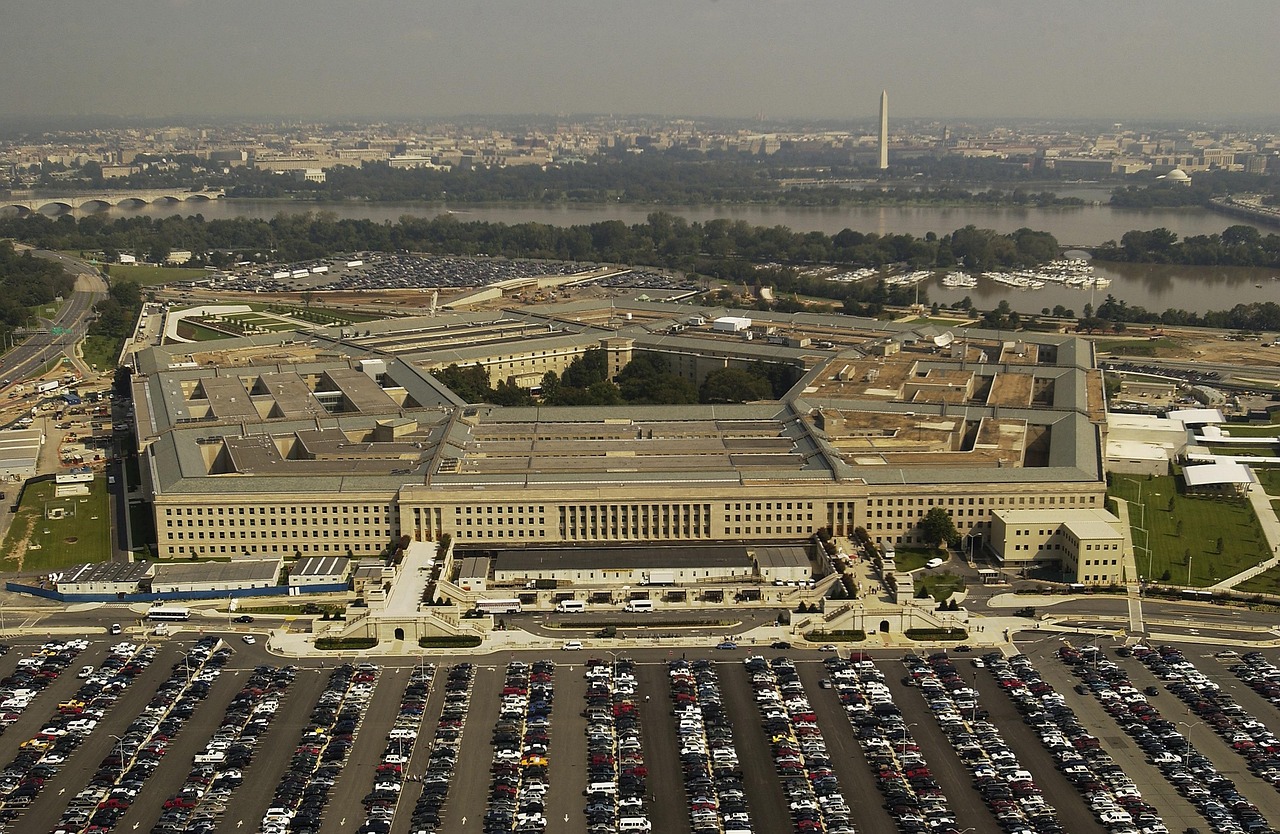
The U.S. House of Representatives this week approved the annual defense policy bill — the National Defense Authorization Act (NDAA) — authorizing roughly $900 billion in Pentagon spending for fiscal year 2026. The measure passed with broad bipartisan support, continuing a streak that has now lasted more than six decades.

According to reporting from CBS News and Reuters, the bill cleared the House by a 312–112 vote, once again exceeding the administration’s initial budget request and reinforcing a familiar outcome: the Pentagon’s budget grows, regardless of party control or global conditions.

Despite the scale of the authorization — one of the largest federal expenditures approved annually — the vote generated limited sustained public debate. Media coverage focused largely on procedural elements, such as troop pay increases and geopolitical provisions, rather than the broader question of why military spending has become one of the few areas of government effectively insulated from public resistance.


What the Public Actually Thinks

Public opinion data paints a far more complicated picture than congressional voting patterns suggest.

Long-term polling by Gallup shows that Americans are not clamoring for ever-higher military budgets. In 2024, only about 29 % of respondents said the United States was spending too little on national defense, while the majority believed spending was either “about right” or “too high.”

When asked more directly about budget increases beyond Pentagon requests, opposition becomes even clearer. A Data for Progress survey found that 63 % of Americans opposed increasing military spending above the requested level, including majorities of both Democrats and Republicans.

The disconnect is difficult to ignore: voters across party lines express skepticism about increased military spending, yet Congress delivers it year after year with bipartisan consensus.


A Budget That Always Goes Up

The Pentagon budget has become one of the most consistent growth mechanisms in American governance.

Wars begin, and the budget rises. Wars end, and the budget rises. Economic downturns, inflation, and public health crises — none have reversed the trend. Even in years without newly declared conflicts, defense authorizations continue to expand.

According to the Peter G. Peterson Foundation, defense spending remains the single largest category of discretionary federal spending, often rivaling or exceeding all other discretionary priorities combined.

This growth occurs with remarkably little interrogation of outcomes. While most federal programs are subjected to cost-benefit scrutiny, defense spending is treated as inherently justified — a baseline necessity rather than a policy choice.


The Military-Industrial Complex: Structure, Not Conspiracy

President Dwight D. Eisenhower’s warning about the “military-industrial complex” was not a prediction of corruption so much as a diagnosis of incentives.

Today, more than half of Pentagon discretionary spending flows directly to private defense contractors, including Lockheed Martin, RTX (Raytheon), Boeing, General Dynamics, and Northrop Grumman.

These firms spend tens of millions of dollars annually on lobbying, shaping procurement priorities and legislative outcomes in Washington.

This is not a shadowy conspiracy — it is an openly functioning system. Defense spending sustains regional economies, fuels revolving-door careers between government and industry, and anchors think tanks and policy institutions whose incentives align with budget growth.

When peace is bad for business, conflict does not need to be declared to remain profitable.


If Not Defense, Then What?

This is where the numbers stop being abstract.

$900 billion is not just a defense budget — it is a statement of national priorities.

That sum could meaningfully expand healthcare access, address student debt, fund public housing initiatives, modernize infrastructure, or strengthen climate resilience programs. These are not fringe ideas; they are perennial public demands.

Yet unlike military spending, domestic investments are always conditional. They must be negotiated, trimmed, justified, and re-justified. Defense spending, by contrast, is treated as automatic — the one area of government where growth is assumed rather than debated.

What threat, exactly, requires permanent expansion?

The United States increasingly practices defense by spending rather than defense by strategy. Budgets grow while outcomes remain unclear, conflicts multiply, and interventions persist with little accountability for long-term consequences.


America Is the Pentagon Now

At some point, the distinction between institution and identity blurs.

The Pentagon is no longer just a department — it is an economic engine, a political stabilizer, and a defining feature of American global posture. Its budget reflects not only perceived threats abroad, but a domestic system built around permanent militarization.

When Congress passes another massive Pentagon authorization that the public never meaningfully demanded, it sends a clear message: defense is not merely a priority — it is the default.

America does not simply have a military budget.
America is organized around one.

The question democracy must eventually confront is not whether defense matters. It is whether a democracy can remain responsive when its largest annual decision is effectively pre-decided.

That answer won’t come from another bipartisan vote. It will come from whether the public insists on asking why the budget always grows — and who it is really for.

Systemic Cruelty Dressed Up as Policy


Like slavery and apartheid, poverty is not natural. It is man-made and it can be overcome and eradicated by the actions of human beings. — Nelson Mandela (earth.org)


Criminalization of Survival

Across the United States, cities are treating the act of survival—sleeping, sitting, asking for help—as criminal behavior. These punitive “sit-lie” laws, camping bans, sweeps, and aggressive policing do not solve homelessness—they entrench it.

The National Homeless Law Center notes that criminalizing homelessness punishes life-sustaining activities and makes it “more difficult to escape” homelessness (homelesslaw.org). Human Rights Watch calls Los Angeles’s enforcement “cruel and ineffective,” targeting the visible poor rather than root causes (hrw.org).

And the National Alliance to End Homelessness found in a 2025 report that criminalization fails to enhance safety and instead deepens racial inequities (endhomelessness.org).


Welfare as Surveillance

What was once a safety net has become a web of surveillance and moral judgment. Welfare recipients often face drug testing, work mandates, and algorithmic gatekeeping. The state spends more money building systems to punish “fraud” than the fraud itself.

The broader trend is summed up in the concept of the criminalization of poverty—fines, anti-homeless laws, welfare policing—all disproportionately penalize people for behaviors tied to economic status (en.wikipedia.org).


Bipartisan Neglect

From Clinton’s “end of welfare as we know it,” to Republican austerity, to performative pandemic relief—both parties have abandoned structural solutions. Poverty remains a prop for campaigns, a scapegoat for policy failures.

The trajectory is clear: LBJ’s 1964 War on Poverty drastically reduced poverty, but the programs were retrenched in the decades that followed (en.wikipedia.org). As the New Yorker observed, “the retrenchment of the social-welfare state went hand in hand with the rise of the prison and policing state” (newyorker.com).


Policy as War

This isn’t side-effect cruelty—it’s intentional. Austerity is meticulously planned: sprawling military budgets and corporate bailouts while school lunches vanish, shelters shrink, and Medicaid is constantly threatened.

Anti-homeless laws that target sitting, sleeping, begging, and even sharing food are not about solving poverty—they’re about making the poor less visible (en.wikipedia.org).


Turning Cruelty into Care

Poverty isn’t inevitable—it’s policy. But if it’s made, it can be unmade.

Everyday Direct Care

  • Support mutual aid groups, solidarity kitchens, street medicine teams, and eviction defense networks.
  • Donate to or volunteer with organizations that protect civil rights for the unhoused, such as those advancing a Homeless Bill of Rights (en.wikipedia.org).
  • Choose ways to help that don’t rely on surveillance or punishment, but on trust and dignity.

Local Policy Pressure

  • Demand that local officials defund homeless sweeps and redirect funds to housing-first programs, mental health care, and tenant protections.
  • Organize for the passage of Homeless Bills of Rights in your state or city.
  • Pressure city councils and state legislatures to prioritize affordable housing budgets over police budgets.

State & National Strategy

  • Advocate for restoring and expanding War on Poverty–era programs like Head Start, expanded tax credits, and affordable housing investments.
  • Oppose laws that subject welfare recipients to invasive surveillance, drug testing, or punitive work requirements.
  • Build alliances that prioritize social infrastructure over military expansion or corporate subsidies.

This is the real choice: treat poverty as crime, or treat it as solvable. The first path guarantees endless war on the poor. The second path builds a society worth living in.


Truth Over Tribalism

Follow anarchyroll:

Wisdom Is Resistance


Elections change the faces—but never the outcome. Lobbyists always win.


“Now it’s just an oligarchy, with unlimited political bribery being the essence of getting the nominations for president or being elected president.”
Jimmy Carter


Every election cycle, we’re told to pick a side.

Red or blue.
Hope or fear.
Change or more of the same.

But behind the curtains and campaign ads, the same winners always emerge: the corporations who bankroll both sides.

Their lobbyists don’t need to win elections.
They just need to outlast them.

“The most offensive aspect of the modern political system is how entirely legalized the corruption is.”
Matt Taibbi


The Revolving Door Spins On

The people writing our laws?
They often come straight from the industries they’re supposed to regulate.

And when they’re done “serving the public”?
They go right back into the private sector—with a pay bump for playing ball.

This isn’t representation.
It’s a handshake deal between government and corporate power.

And it’s why regulations rarely hurt the companies they’re aimed at.
They’re often written by them.

“The reason why the U.S. government does not hold elites accountable is because they are part of the same system. It is not broken — it is designed that way.”
Glenn Greenwald


Regulatory Capture Is Not a Flaw—It’s the Design

When Big Pharma influences the FDA,
when defense contractors sit on Pentagon advisory boards,
when fossil fuel execs shape environmental policy—
that’s not corruption by accident.
It’s the system working exactly as built.

Agencies meant to protect the public
are used to protect the profits of the powerful.

And once captured, those agencies become shields—
giving the illusion of oversight while doing the opposite.

“The smart way to keep people passive and obedient is to strictly limit the spectrum of acceptable opinion, but allow very lively debate within that spectrum.”
Noam Chomsky


Campaign Donors Aren’t Donating—They’re Investing

In 2024, over $17 billion was spent on political campaigns.

But none of that money was a gift.
It was an investment.

And like all investors, donors expect returns:
– favorable legislation
– deregulation
– subsidies
– tax loopholes

They buy access. They buy influence.
And when necessary, they buy silence.

No matter who wins the vote, the lobby wins the outcome.


It’s Not a Bug. It’s a Business Model.

We’re taught that voting is our voice.
But what happens when the choices are pre-approved by money?

What happens when both parties answer to the same donors?
When every regulation is pre-lobbied?
When the economy is run by the few and paid for by the many?

Then we aren’t living in a democracy.
We’re living in a managed marketplace.

And the customers don’t get to write the rules.

“Elections are supposed to be an expression of will — not a demand for submission to manufactured choices.”
Edward Snowden


🩸 Truth Over Tribalism

This isn’t about red or blue.
It’s about the money that owns them both.

It’s about a system where billionaires write the laws,
corporations fund the campaigns,
and lobbyists run the show.

We don’t need new slogans.
We need new structures.
Because the lobby will keep winning—until we stop playing by their rules.


📣 Follow the work:

📹 TikTok: @anarchyroll_
📸 Instagram: @anarchyroll
🐦 X/Twitter: @anarchyroll
🧵 Threads: @anarchyroll
🌐 Bluesky: @anarchyroll.bsky.social


“The smart way to keep people passive and obedient is to strictly limit the spectrum of acceptable opinion.”
Noam Chomsky

They marched under one banner—No Kings—across over two thousand U.S. cities. The chants echoed: Democracy, not dynasty. People over billionaires.

And for a moment, it felt like something real. Unity. Purpose. A mass of people moving as one.
That matters.

But here’s the thing: marches don’t dethrone kings—votes do. Not the kind fed to us by billionaire media or corporate-funded parties. But the kind we carve out ourselves, with calloused hands and clear eyes.

Because if the system crowns kings disguised as candidates—red tie or blue tie—then we haven’t abolished royalty. We’ve just rebranded it.

Let’s be clear: this isn’t about shaming the other half of the working class. The ones who didn’t show up. The ones who don’t trust any of it.


They aren’t the enemy. They’re the evidence.


Evidence of a rigged system that leaves most Americans disillusioned, exhausted, and priced out of participation.

“Transparency is for those who carry out public duties… Privacy is for everyone else.”
Glenn Greenwald

Then here’s the catch: protest is ignition, not the engine. Activism fades. If you’re not moving toward real political power, the system just waits you out.

“A system unable to stop this must be very sick indeed.”
Matt Taibbi

We’ve seen this before. In Occupy, in anti–Iraq War protests, in the George Floyd uprisings. They all said something important—but without sustained, organized follow-through, the system waited us out.

Protest is the ignition. Organization is the engine.

This moment is only a spark—unless we stop waiting for permission to lead ourselves.
No kings. No puppets. No more billionaires pulling the strings.


anarchyjc.com | Anarchy Journal Constitutional

Wisdom is Resistance

🎬 Scroll-Friendly Version
This article was reimagined as a visual essay — watch the reel below.

@anarchyroll_

Protesting is better than nothing. But it’s not enough. Not anymore. Real change doesn’t come from chants alone. It comes from organized labor, grassroots movements, and political power built outside a two-party system that’s fully captured by billionaires and the military-industrial complex. No kings. No puppets. No excuses. #NoKings #GeneralStrike #BeyondTheBallot #fyp #currentevents #ProtestArt

♬ realization – FutureVille

📡 Follow anarchyroll across platforms for more visual essays, short-form truth, and independent, gonzo journalism-inspired writing:

📽️ TikTok: @anarchyroll_
📷 Instagram: @anarchyroll
🐤 X / Twitter: @anarchyroll
🧵 Threads: @anarchyroll
🔵 Bluesky: @anarchyroll