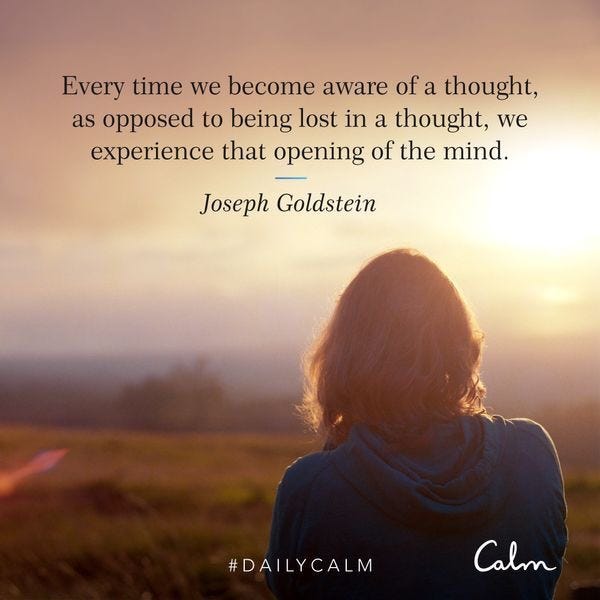
Posts Tagged ‘meditation’


I want to write about this subject because, despite years of meditation, personal development, journaling, yoga, philosophy, and spirituality, when I get pressed, I still find myself acting out of ego.

I judge people. I think negatively. I feel bad. My mind races. I replay negative situations over and over. I get vulgar, angry, hostile, and negative.

Being older now, and having studied philosophy and spirituality for almost two decades, and consumed personal development content for twenty years, I know that this doesn’t make me inferior or unique — it makes me human. And I want to share this with others. It’s okay to be human. It’s okay to screw up. Negative events don’t define who we are.

Photo by Jeremy Yap on Unsplash

A negative outburst doesn’t define me. Doing the wrong thing doesn’t define me. Failing to practice what I preach doesn’t define me. It makes me a human being.

That’s why I study philosophy. It’s why I have a spirituality practice. It’s why I meditate. It’s why I study humanist personal development. It’s why I’m drawn to neuroscience.

We all struggle with these challenges, and I want to explore how ego-driven anger is something we all experience, especially in today’s world.

Photo by Dave Hoefler on Unsplash

The Hidden Role of Ego in Anger

The ego — the sense of self that fuels our need for validation, control, and superiority — often hides in plain sight. It shows up in negative judgments, reactive thoughts, and moments of anger. But it’s not always the loud, brash ego we imagine. Sometimes it’s the quiet voice that whispers, “I deserve better,” or “I’m right and they’re wrong,” feeding our emotions and judgments without us even realizing it.

“Your anger and annoyance are more detrimental to you than the things themselves which anger or annoy you,” — Marcus Aurelius

Philosophy: The Stoic and Taoist View of Ego

Stoicism teaches us to observe our emotions without judgment — to step back and recognize that we are not our anger. Taoism, on the other hand, encourages letting go of resistance and embracing the natural flow of life.

“Knowing others is intelligence; knowing yourself is true wisdom.”— Lao Tzu

Spirituality: Understanding Ego through Mindfulness

Spiritual practice, especially mindfulness, offers a direct experience of observing the ego. Buddhism teaches that anger arises from attachment to the self and from clinging to identity and righteousness.

“When we let go of the need to be ‘right,’ we allow the ego to dissolve on its own, like a drop of water evaporating in the sun.” — Thich Nhat Hanh

Photo by Mike Labrum on Unsplash

Intellect and Neuroscience: How the Brain Reinforces Ego

Science has begun to confirm what ancient philosophies intuited long ago. Our brain’s default mode network — active when we’re ruminating or imagining — fosters ego identity. The brain rewards validation and recognition, making it easy to get stuck in ego-based loops, even when we know better.

Humanism: Embracing Our Humanity

The humanist approach is rooted in self-compassion. We don’t grow by shaming ourselves — we grow by understanding and responding with care. To be human is to be imperfect.

“The curious paradox is that when I accept myself just as I am, then I can change.” — Carl Rogers

Ego Is a Messenger

Ego-based anger is part of the human condition — especially in a fast-paced, comparison-driven society. We don’t need to destroy our ego. We just need to recognize when it’s taking the wheel. That recognition alone is a kind of freedom.

Next time the anger hits, ask: “Is this my ego speaking?”
Pause. Breathe.
Try to let that moment of awareness be enough.
Photo by Fabrizio Chiagano on Unsplash


The challenge of maintaining awareness of our thoughts is a fundamental aspect of human experience. Our minds are hardwired to think and become lost in thought streams constantly.

However, awareness of our thoughts and the ability to open our minds is crucial for personal growth and mental well-being. By revisiting this concept, we can continually remind ourselves of its importance and strive to live more consciously.


Many, if not most, people are completely identified with their thoughts and emotions. Despite meditating and studying philosophy and spirituality for ten years, I still slip into identification with my thoughts and emotions. I have often found myself dragged into petty thoughts and judgmental emotions.

Even though I take multiple actions habitually to counteract negativity such as:

  • reading philosophy
  • meditating
  • journaling
  • taking mood support supplements
  • doing yoga
  • walking outside
  • getting around eight hours of sleep
  • hydrating
  • drinking herbal tea
  • lifting weights
  • eating healthy meals
  • watching self-improvement videos on YouTube
  • listening to binaural beats
  • limiting screen time

I still constantly identify with my thoughts, emotions, and life situations.

Becoming aware of our thoughts, breaking free from identifying with them, and opening up the mind are important subjects to me. Worth coming back to again and again. Because it is an inner fight we all must wage again and again if we are to live a life of inner peace.

Typically, awareness of our thoughts is not the norm — automatic thoughts usually dominate. In cognitive psychology, automatic thoughts are rapid, often unconscious assumptions or conclusions that arise in response to a situation or stimuli. They appear without conscious effort and are usually brief, immediate interpretations of an event, often with a negative bias.

“Thoughts are like clouds in the sky. Sometimes it’s clear, sometimes it’s cloudy. But don’t get attached to the clouds.” — Thich Nhat Hanh

Automatic thoughts often lead to runaway thoughts, which are longer and more intense versions of automatic thoughts. A consistent double dose of automatic and runaway thoughts can likely result in cognitive distortions, confirmation biases, and intense emotional triggers.

Observing social media and the modern world, it seems more people are easily triggered when their confirmation bias, built on cognitive distortions, is challenged or broken. A clear example is the state of America after a presidential election.


Photo by Dan Crile on Unsplash

“It is not what happens to you that troubles you, but your judgment about what happens.” — Epictetus


Identifying with our thoughts means being consumed by them. Our true selves get swallowed up and erased due to constant states of stress, anxiety, disappointment, depression, and anger. We can’t escape fight-or-flight survival mode if we are constantly pulled into the rushing stream of automatic and runaway thoughts.

We must continuously choose to be aware and detach from our thought streams because our thoughts never stop. Our minds are thinking machines, but they do not define who we are. We are not our minds. We are not our thoughts. We are not our emotions. We must constantly cultivate awareness and remind ourselves of this truth.

Photo by Bahadır on Unsplash

Practical ways to practice awareness include mindfulness, which involves being fully focused on the present moment. Deep breathing exercises and guided meditations have also significantly helped me in my ongoing effort to increase awareness in my life. Journaling is beneficial as well, provided you consistently write and periodically review past entries to observe your patterns and progress.

Cultivating awareness of our thoughts while remaining detached from them can create an opening in the mind. The more we expand that opening with healthy practices like mindfulness, yoga, journaling, meditation, and studying philosophy and spirituality, the better we become at utilizing that inner space.

This helps us avoid reacting automatically to stimuli like an animal and instead respond thoughtfully and consciously. By embracing these practices, we can strive to live with greater mindfulness and peace, continually growing and evolving in our journey of self-awareness.


An open mind can seem like a vague term. Yet closed-minded is very succinct and easy to understand. It can be confusing to learn that openness to the world is the key to finding what we seek in life. But it is straightforward that being closed-minded towards the world is to live a limited, suffocated life.


“The mind is everything. What you think you become.” — Buddha


I find myself in a battle against being closed-minded regularly. Some practices that help me keep my mind more open than closed are:

  • Reading philosophy
  • Meditating
  • Studying humanism
  • Journaling
  • Practicing yoga

I have cultivated enough awareness to at least know the concepts of open vs closed-mindedness which I am grateful for. I still have much work to do to keep myself open-minded in moments of test and choice, but then again, who doesn’t?


“The important thing is not to stop questioning. Curiosity has its own reason for existing.” — Albert Einstein


Photo by Chris Barbalis on Unsplash

Close-Minded — having or showing rigid opinions or a narrow outlook.

Open-Minded — willing to consider new ideas; unprejudiced.


Photo by Levi Bare on Unsplash

Having an open mind generally involves curiosity, willingness to learn, and embracing new experiences. For me, I find having an open mind correlates with positivity, productivity, or at the very least neutrality regarding thought, perception, emotion, and action. Day to day if/when I find myself slipping into negative or detrimental thoughts, perceptions, emotions, or actions; there is a good chance I’ve concurrently slipped into closed-mindedness.

I feel like being closed-minded is the default setting in our human nature. Hard-wired into us as a survival mechanism from caveman times. It also seems like we are becoming more closed-minded in the algorithm-dominated modern world of digital echo chambers and rage-bait. An open mind is a rich soil for evolution and growth. A closed mind is a rich soil for egocentric withering.


“The only person you are destined to become is the person you decide to be.” — Ralph Waldo Emerson


Thankfully, fostering an open mind is simple, easy, and completely within our ability to control. This is nice because living can be complex, difficult, and at the mercy of external situations enough as it is.

  • Mindful breathing exercises
  • Guided meditation
  • Journaling
  • Getting out into nature

The above list are some of my go-to’s that have been very helpful and enriching for me. But in the name of micro-tasking, start by just trying any small, simple new thing or by doing something you already do just a little bit differently.

Starting with our existing routines and habits, even the most mundane ones, is a practical way to open our minds. Try holding items with a different hand, eating breakfast for dinner, taking a different route to work, or watching a foreign film with subtitles. These small modifications can be surprisingly effective first steps toward a more open-minded perspective.


“Change the way you look at things and the things you look at change.” — Wayne Dyer


We need to be more open-minded. The world needs more open-minded people. Being open-minded is the foundational paradigm for learning, connecting with people, discovering new opportunities, and living a fulfilling and meaningful life.

It’s simple but not easy because we are going against the grain of human nature. It’s natural to be closed-minded when we already have what we need to survive. But we don’t want to just survive, we want to thrive. Regardless of our definition of what thriving is to us individually, the first step on our path there, begins with having an open mind.


While our experiences are constantly in flux, a core sense of self exists, a presence that remains constant. Our external experience of life and the world is like a river, fire, or busy urban intersection. Our internal presence, awareness, consciousness, soul, or being; are the ground beneath those things.

The river flows fast and slow, the fire rages and flickers and the intersection goes from bustling to quiet, but the ground is solid, unmoving, unchanged, unnoticed but without it what goes on above it couldn’t exist.

“No man ever steps in the same river twice, for it’s not the same river and he’s not the same man.” — Heraclitus

Is this unchanging “simple being” who we are? Is this the answer to the question; “Who am I?” I’m pretty sure the answer to that question isn’t our ego, job title, hobbies, credit score, or proficiency with Excel.

The enduring self or our consciousness as the witness to our thoughts hasn’t exactly been part of the zeitgeist. However, the juxtaposition of getting and looking older externally, but feeling the same as we did when we were young internally, is a commonality shared by all people who reach old age.

“You are not a body, you have a body.” — Wayne Dyer

What is that within us that doesn’t age? Our body decays and our mind declines, but there is something about us that is ageless and timeless. We all share it. We all know what it is when we see ourselves in the mirror as we get older. We know we are older, but we also know there’s a part of us that doesn’t feel older. A constant presence underlying our experiences. Something within us that we can see, touch, or feel that seems to stay the same as everything else changes.

“There is a feeling of presence that transcends thought. This is your own essence, your Being.” — Eckhart Tolle

We inherently know this enduring self or consciousness exists. Notwithstanding, modern life distracts us from it, aiming our attention outward. We have numerous daily concerns, and virtual propaganda adds unnecessary layers of thought on top of what we need to survive. On top of that, our minds can be out of control thought-producing machines. Adding stress and suffering to our existence, by confusing us into emotionally identifying with our thoughts, rather than passively witnessing them.

Photo by HONG FENG on Unsplash

How do we combat this? Where attention goes, energy flows. We have to take some time or make some time to habitualize the cultivating our inner awareness and connection to our unchanging presence. The simplest, easiest, and most time-tested way of doing this is through mindfulness.

Mindfulness has become an overused catch-all buzzword in recent years. Mindfulness is no magic wand. It is simply the practice of paying attention to the present moment without judgment. Mindfulness is most commonly associated with meditation. The guided meditation sessions I engaged in daily can be classified as mindfulness meditation. I love and wholeheartedly recommend meditation to anyone and everyone.

Mindfulness isn’t limited to a traditional meditation practice. However, mindfulness is a way to turn everyday tasks and activities into meditative experiences.
  • Mindful Eating: Pay attention to the taste, texture, and aroma of your food.
  • Mindful Walking: Focus on your senses as you walk, noticing the sights, sounds, and sensations.
  • Mindful Showering: Pay attention to the feeling of the water on your skin and the sensations in your body.
  • Mindful Chores: Bring your full attention to the task at hand, whether it’s washing dishes or cleaning the house.
  • Mindful Drawing or Painting: Focus on the sensations of the brush or pencil and the colors you’re using.
  • Mindful Writing: Pay attention to the flow of your thoughts and the feel of the pen on the paper.
  • Mindful Music Listening: Listen to music with full attention, focusing on the sounds and emotions it evokes.
  • Forest Bathing: Spending time in nature, immersing yourself in the sights, sounds, and smells.

Keyword in all of these activities is either focus/attention. Where our attention goes, energy flows. Paying extra attention or deeply focusing on the different aspects of one of these activities helps us forget about external distractions, quiet our internal thought stream, and cultivate the connection with the constant presence within ourselves amidst the ever-changing stream of our life experience.

“You are not a thought, you are the awareness of thought.” — Mooji

Amidst the ever-changing currents of life, our deeper self remains constant and unchanging. By practicing mindfulness, we can reconnect with this inner presence, transcending the distractions and noise of modern life. Whether through meditation or mindful daily activities, we can cultivate a deeper awareness of our timeless self. As we turn our attention inward, we nurture the connection with our true being, allowing us to navigate life’s flux with greater peace and clarity.

“One must first know oneself to grow beyond oneself.” — Abraham Maslow


It can be so hard to ask for help. In real life, not in terms of asking people to like, subscribe, and turn on notifications.  

To need help is like the Big Bad Wolf blowing down a house made of straw. Knowing that one needs help is like blowing down a house made of wood. To ask for help, to be vulnerable, and to reveal our internal shortcomings to the external world; can be like trying to blow down a house made of bricks. 

Although I (like all other living things) have needed lots of help at various points in my life, I have been unwilling to ask for help more often than not. There’s an internal assumption that I should be able to pick myself up by my bootstraps, put my nose to the grindstone, be a man, and do it myself. There is also societal pressure that lionizes this kind of thinking. 

We think to ask for help is to be and to admit weakness.

It’s one thing if we know internally we are weak, but to admit it outwardly by asking for help? I for one have chosen many times to suffer in silence and isolation than to have to admit to myself or others that I am an imperfect being. 

The terms self-improvement, personal development, and self-help naturally mean that we should be able to help ourselves. Reading books, watching videos, taking courses, and attending events with these labels can lead one to believe that we can, should, and will solve all problems, obstacles, or issues by ourselves. 

Listening to self-help audiobooks during my commutes led me to study spirituality and philosophy. Philosophy and spirituality often intertwine and one can be confused for the other. I’ve found that viewing all philosophical and spiritual teachings through the lens of humanism helps me apply the lessons to my life without adhering to or being attached to any kind of potential religious or metaphysical doctrines. 

“We must help one another, and among those who are willing to be helped, are those who must be instructed.” – Epictetus 

Stoicism views asking for help as a sign of wisdom, that you understand what is within your control and what is not. When you reach your perceived limit of what you can control and need help, it is the wise and the correct thing to do to ask for help. 

“Don’t be ashamed to need help. Like a soldier storming a wall, you have a mission to accomplish. And if you are wounded and can’t climb up without another soldier’s help? So what?” – Marcus Aurelius 

The concept that it is not just the right thing to do to ask for help, but it is our job as a human being to ask for help helped me out a lot. Stoicism pushes the concept that we as human beings have to purpose to fulfill while we are alive, a service to provide to the world and our fellow man. A purpose beyond survival or making and spending money? Sign me up. If asking for help is a part of that, consider it done. 

“A giver of gifts is the one who advises, a giver of gifts is the one who shares knowledge, a giver of gifts is the one who points out faults. He who does all these to a friend is a giver of gifts.” – The Dhammapada (Buddhist text)

Spiritual philosophies that I’ve studied tend to focus on the internal, the individual, and the immaterial. However many spiritual teachings do emphasize compassion and our interdependence with our environment and other living beings. This has been a big help to me, as a person who was more of an antisocial loner type for many years but kept finding that way of living; limiting and directly hindering my happiness, fulfillment, and ability to achieve my goals. 

“He who walks alone walks in vain.” – Guru Nanak (Sikhism founder)

Studying spirituality coupled with a meditation practice has helped to dissolve the inner walls I had built up that detrimentally separated me from the world. Those metaphorical walls are built by and with the ego. It is selfish and ego-centered to think we can accomplish anything of substance alone, that we don’t need help, or that to ask for help is to admit weakness. Our ego convinces us that we are so special and superior to not need help and that asking for help is a bad thing.

“All beings are afraid of pain. All beings love life. All beings are the same as you are. Remember this always.” – Buddha

Ultimately, the decision to ask for help is a personal one. It requires courage, vulnerability, and a willingness to let go of the ego. By understanding the philosophical and spiritual underpinnings of interdependence and compassion, we can begin to dismantle the barriers that prevent us from seeking support. Remember, asking for help is not a sign of weakness but a testament to our strength and humanity.

Let’s embrace the idea that we are interconnected, so we can begin to break down the walls of isolation and create a more supportive environment for ourselves and others. By acknowledging our interdependence and embracing the courage to ask for help, we can unlock new possibilities for personal growth and happiness.

Through our choices, we can challenge detrimental societal norms. Together, we can create a culture where asking for help is seen as a strength, not a weakness.