Posts Tagged ‘congress’

The $900 Billion That No One Voted For



A $900 Billion Decision With Little Public Scrutiny

The U.S. House of Representatives this week approved the annual defense policy bill — the National Defense Authorization Act (NDAA) — authorizing roughly $900 billion in Pentagon spending for fiscal year 2026. The measure passed with broad bipartisan support, continuing a streak that has now lasted more than six decades.

According to reporting from CBS News and Reuters, the bill cleared the House by a 312–112 vote, once again exceeding the administration’s initial budget request and reinforcing a familiar outcome: the Pentagon’s budget grows, regardless of party control or global conditions.

Despite the scale of the authorization — one of the largest federal expenditures approved annually — the vote generated limited sustained public debate. Media coverage focused largely on procedural elements, such as troop pay increases and geopolitical provisions, rather than the broader question of why military spending has become one of the few areas of government effectively insulated from public resistance.


What the Public Actually Thinks

Public opinion data paints a far more complicated picture than congressional voting patterns suggest.

Long-term polling by Gallup shows that Americans are not clamoring for ever-higher military budgets. In 2024, only about 29 % of respondents said the United States was spending too little on national defense, while the majority believed spending was either “about right” or “too high.”

When asked more directly about budget increases beyond Pentagon requests, opposition becomes even clearer. A Data for Progress survey found that 63 % of Americans opposed increasing military spending above the requested level, including majorities of both Democrats and Republicans.

The disconnect is difficult to ignore: voters across party lines express skepticism about increased military spending, yet Congress delivers it year after year with bipartisan consensus.


A Budget That Always Goes Up

The Pentagon budget has become one of the most consistent growth mechanisms in American governance.

Wars begin, and the budget rises. Wars end, and the budget rises. Economic downturns, inflation, and public health crises — none have reversed the trend. Even in years without newly declared conflicts, defense authorizations continue to expand.

According to the Peter G. Peterson Foundation, defense spending remains the single largest category of discretionary federal spending, often rivaling or exceeding all other discretionary priorities combined.

This growth occurs with remarkably little interrogation of outcomes. While most federal programs are subjected to cost-benefit scrutiny, defense spending is treated as inherently justified — a baseline necessity rather than a policy choice.



The Military-Industrial Complex: Structure, Not Conspiracy

President Dwight D. Eisenhower’s warning about the “military-industrial complex” was not a prediction of corruption so much as a diagnosis of incentives.

Today, more than half of Pentagon discretionary spending flows directly to private defense contractors, including Lockheed Martin, RTX (Raytheon), Boeing, General Dynamics, and Northrop Grumman.

These firms spend tens of millions of dollars annually on lobbying, shaping procurement priorities and legislative outcomes in Washington.

This is not a shadowy conspiracy — it is an openly functioning system. Defense spending sustains regional economies, fuels revolving-door careers between government and industry, and anchors think tanks and policy institutions whose incentives align with budget growth.

When peace is bad for business, conflict does not need to be declared to remain profitable.


If Not Defense, Then What?

This is where the numbers stop being abstract.

$900 billion is not just a defense budget — it is a statement of national priorities.

That sum could meaningfully expand healthcare access, address student debt, fund public housing initiatives, modernize infrastructure, or strengthen climate resilience programs. These are not fringe ideas; they are perennial public demands.

Yet unlike military spending, domestic investments are always conditional. They must be negotiated, trimmed, justified, and re-justified. Defense spending, by contrast, is treated as automatic — the one area of government where growth is assumed rather than debated.

What threat, exactly, requires permanent expansion?

The United States increasingly practices defense by spending rather than defense by strategy. Budgets grow while outcomes remain unclear, conflicts multiply, and interventions persist with little accountability for long-term consequences.


America Is the Pentagon Now

At some point, the distinction between institution and identity blurs.

The Pentagon is no longer just a department — it is an economic engine, a political stabilizer, and a defining feature of American global posture. Its budget reflects not only perceived threats abroad, but a domestic system built around permanent militarization.

When Congress passes another massive Pentagon authorization that the public never meaningfully demanded, it sends a clear message: defense is not merely a priority — it is the default.

America does not simply have a military budget.
America is organized around one.

The question democracy must eventually confront is not whether defense matters. It is whether a democracy can remain responsive when its largest annual decision is effectively pre-decided.

That answer won’t come from another bipartisan vote. It will come from whether the public insists on asking why the budget always grows — and who it is really for.


I am regularly around people not from America. I enjoy it. I enjoy different perspectives and experiences and perceptions and opinions.

One of my favorite things about regularly being around foreigners is their reactions when they see American political advertising aka campaign commercials. Which is common because election season in America never ends now, since it’s a set it and forget it emotional trigger and decisiveness tool for the unwashed masses.

After they see one or two…dozen…political ads in an hour, they’ll inevitably start asking the people around them what they think of politics, what they think of democracy, what they are thinking about the upcoming election, etc.

If/when they ask me, my answer is a sloppy version of the following; American politics is theater for the capitalist oligarchy and the military industrial complex to give the masses the illusion of choice, control and influence.

If I’m talking to a European, they quickly understand what I’m talking about. If it’s an Australian or South American, there is usually an explanation of what an oligarchy is and that the MIC is and how they are the shadow authoritarian government and have been for a minimum of half a century.

Any doubt or skepticism towards that can be directed towards the 2008 bank bailouts, 2020 TARP bailouts, the volume of assassinations of anti-war organizers in the 1960s, and of course the never ending wars we have never ending money for while homelessness and wealth inequality reach all time highs in the richest country in the history of the planet.

I remember in the 90’s when Jessie Ventura became governor of Minnesota as an independent. When asked why he was an independent he said that the only difference between a democrat and a republican is the speed at which their knees hit the ground when their donors walk into the room.

Those who would say that America is a democracy and isn’t a corporate captured, authoritarian state; would also openly admit how corrupt Washington is. They would call me a conspiracy theorist, and then complain about how nothing ever seems to get done in Washington. Drain the swamp! But we live in a direct democracy. What does duopoly mean anyways?!

As long as we’re blaming the rank and file voters of the opposite party, obsessing over pronouns, or thinking an ex billionaire game show host is to blame for all of our problems, then we certainly won’t have the mental capacity to comprehend the people who control the currency, the land, the bombs and the resources are the ones controlling the government and that the combination of the two controls our lives.

Because then we would have to admit that we aren’t free, we own nothing, we have no rights. And I know from repeated experience, that ignorance…is…bliss.

eanda logo

104329295-gettyimages-649571592-1910x1000


By @anarchyroll

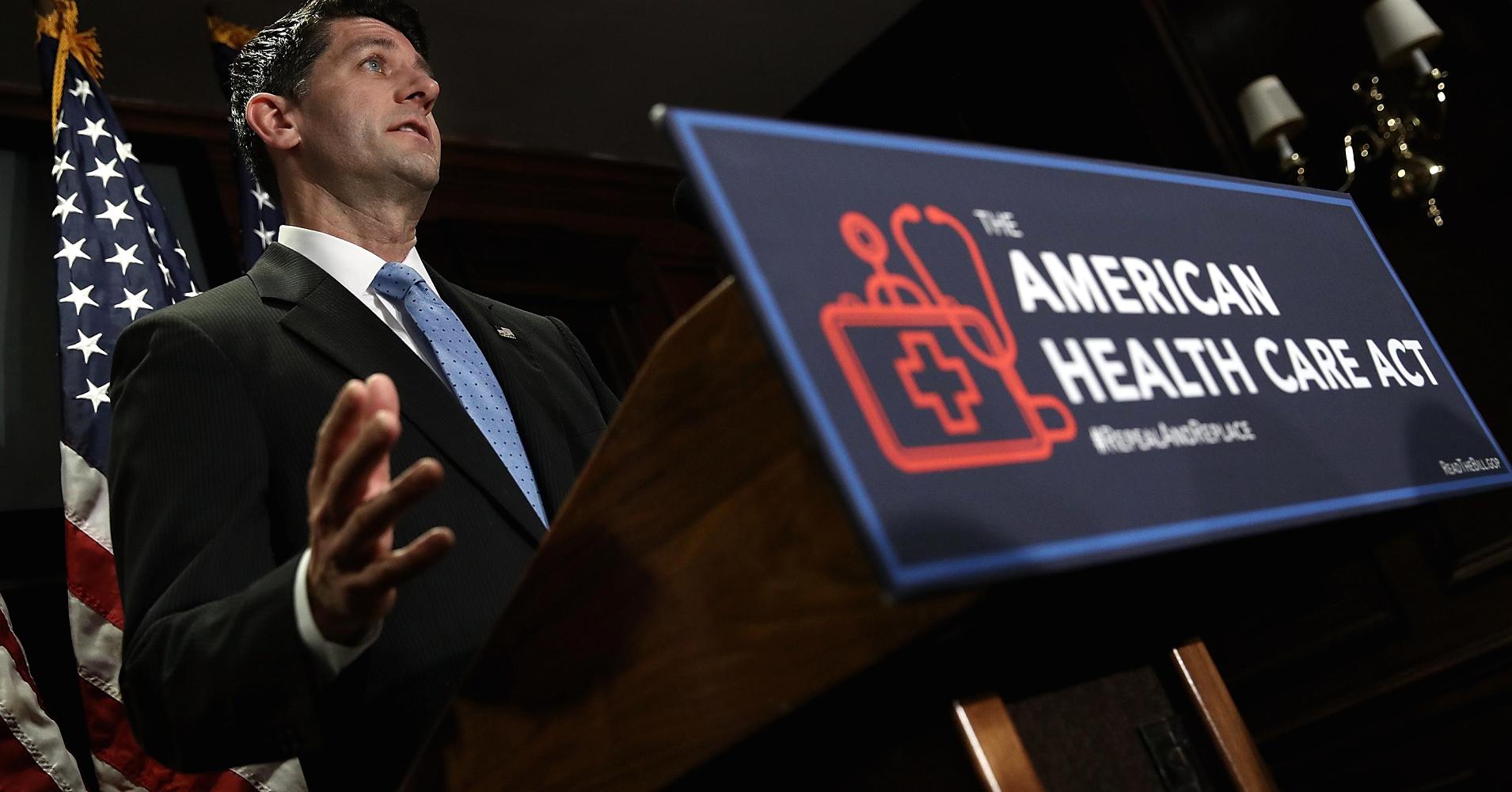
What does it feel like to tell someone they must remain sick or die so that you can have more disposable income? In America, you indirectly tell people through backdoor lobbying of elected representatives with dark money.

What is the cost of living? Is there a societal flash point where that question is addressed out in the open collectively? In 2017, it feels like that point may be boiling closer to the surface than ever before. It was thought that the question was asked and answered in 2010 with the passing of the Affordable Care Act (Obamacare) into law.

What was learned was that there were a great volume of people who benefited from having access to health insurance who didn’t before and there was a large volume of money spent to resist the legislation at every possible turn. It seemed like a vocal majority of the country enjoyed what the ACA did for them. We also found out from the 2016 presidential election, that the silent majority of this country (whites) knows how and when to make a stink.

Repeal and Replace has been a battle cry for over half a decade for the Republican Party and the top one percent of economic earners whom they represent. Obamacare was nowhere near unflawed. Despite its limitations, holes, and warts it did accomplish something that those on the left have been championing for almost a century; access to free/low-cost healthcare to millions of people regardless of political affiliation or belief.

The masses have had a whiff, a taste, a sample of universal health care…there is no going back.

Republicans currently control the United States government. They have the executive and legislative branches and are gaining control of the judiciary. With such deep and vast control, they have been unable to eliminate Obamacare. How? The only thing that’s stopping them is the voting public. Who would’ve thought that an approval rating of 24% as a Congress compared to a 55% approval rating of Obamacare would create obstacles in a democracy?

There used to be this thing called give and take, compromise for short. In terms of economic policy in America for the past half century, it has become take, take, take. Income inequality is at eye-popping levels. Social media has put a magnifying glass on the haves in America. Their appetites of ego and greed has had them binge sharing their lives via smartphones for a decade. One thing all of these filtered and geo tagged pictures, videos, and stories have made clear; is that the 1% can never get enough.

I suppose it would be great to live our lives on permanent vacation. Is that not the end result of the American Dream? Going from the beach, to the boat, to the club, to the rooftop bar, to the personal jet, to the invitation only party, in the unlisted restaurant, at the private island, etc. This lifestyle requires opting out of the social contract, it is an evolution of the gated community.

To live these contribution-less lifestyles, there must be a transfer of wealth without physical labor or violence. The American Health Care Act of 2017 has been independently shown to be nothing more than a tax cut for and transfer of wealth to the top one percent of income earners in America. It is a money grab through the legislative process. It is a bank heist through legal channels.

Okay, that might be too cynical of a view. We should be glass half full kind of people. It’s better to just think of the repercussions of this bill, as a cost of living adjustment.

590


By @anarchyroll

The golden rule. Only hard to abide when it is an inconvienience to our ego.

The right to privacy is not explicitly stated in the US Constitution. However, Americans have since the country’s inception, have implicitly demanded a right to privacy. If that were not the case, the Quartering Act of 1765 wouldn’t have been a big deal, catalyst for the colonies.

Americans work hard. So whether or not we play hard or not, we seemingly demand to know that if we do play hard that it will remain our business. What is our business? Whatever we do when we are not trading our time for money or services from another person or persons. That time off the clock, that is our personal time, our free time.

Personal and free are two words the vast majority of Americans take to heart regardless of age, creed, color, sex, or status. What we do with our personal/free time is nobodies business but our own as long as no laws are broken.

Is that not the perceived right to privacy? Is that asking too much?

Apparently the ask is too low because it is a right that has been bought and sold in a deal between the Republican controlled Congress and Internet Service Providers. The only thing surprising is how public and unapologetic the entire thing was. The legislation may have been crafted in the smokey backrooms of private Washington D.C establishments, but the sellout was done very much in the public eye.

The legislation was covered both by the internet press and mainstream media. There was plenty of outrage but very little resistance. The parties that will benefit from this have gerrymandered themselves into partisan footholds of the legislative branch. Hardline partisan politcal lines have been made facing consequences for many in Congress as much a part of the past as the personal privacy they just stripped away from everyday Americans.

Privacy may not be good enough for common folks anymore, but those in power still command it. Literally at the same time Congress took away privacy from the public, the White House announced it would no longer make public its visitor list citing “privacy concerns“. This two faced hypocrisy is a poster for why having a title or position of power does NOT make a person a leader.

Taking away from the many and giving more of it to the few. Yep, that is what America was founded on alright. That is definitely the cornerstone of American values. That is what the grand experiment of democracy is all about right? Right?


download

By @anarchyroll

Suspected terrorists not being allowed to legally buy guns in America sounds like a no brainer. The type of legislation that is only a formality to pass because it is such common sense. What type of law-abiding citizen who exercises their right to bear arms for the purposes of hunting, stamp like collecting, and/or personal protection of property would object to such legislation?

Congressional legislation is rarely black and white or red and blue. The shades of gray, along with the devil, are in the details. In Congress, the devil and the details are earmarks, appropriations, and general language. Previous attempts to close the Terror Gap have stalled for all three of the aforementioned reasons.

There are so many mass shootings in America, it seems like something like the Terror  Gap would at least be used as a token gesture of good will. A way for the Congress to convince themselves and their varying constituents that they aren’t tone-deaf to the scare and suffering going on around the country at the hands of gun violence.

In the wake of the Pulse nightclub Orlando shooting, it is natural to assume that something needs to be done about guns in America. There are crazy, angry people everywhere in this world. In America however, those crazy, angry people just like the sane, happy people have consistent easy access to automatic weapons and military grade assault rifles.

Wishing for pie in the sky fantasy bills like a total ban on automatic weapons ie the Australia way, is not helpful. As far as America goes, file that under if it sounds too good to be true, it is.

Filibustering and staging sit ins to draw attentions to Congressional gridlock although well-intentioned, do nothing to move forward tangibly or pragmatically in a country where gun ownership is not going away anytime soon. We need cooperation and Congressional compromise literally  now more than ever at the most polarized political point since the Red Scare.

Closing the Terror Gap with a bill sans earmarks or strings tied to appropriations is only a first step, not a cure-all. A first step forward on the issue of guns is just what the doctor ordered for America right about now. Resistance to closing the Terror Gap puts law-abiding gun owners in a negative light. An insatiable desire to go take away all the guns casts progressives as nothing more than the yang to the yin of the redneck, gun clutching, bible-thumpers they claim to be better than through an ego centered in education as opposed to ideology.

A new normal of never-ending mass shootings in America is the time for pragmatism in terms of gun control. What can we do in this situation, at this time, to take a step forward as a nation and a species. Critical mass has been reached and we are long past the tipping point. Something most be done about guns in America.

To think things will change going forward based upon our current actions is insanity defined. There are simply too many guns freely available in the United States of America. Action must be taken. Whether that action is drastic or pragmatic, remains to be seen. But closing the Terror Gap is a first step that can be taken regardless of whether the next step is that of a baby or a giant. And the time to close the gap was yesterday. We need the easy choices like closing the Terror Gap behind us so that we can face the real hard choices like adults, with the kiddy pool decisions already behind us.