
Posts Tagged ‘excess and algorithms’


Rent the world, own nothing: how the economy of access replaced ownership—and why that’s not freedom, it’s feudalism in a hoodie.


We Don’t Own Our Music.

We don’t own our movies.
We don’t even own our cars.

What used to be ours to keep is now ours to rent—on a recurring, never-ending loop. The world has been restructured around access, not ownership. But access without control isn’t freedom.

It’s a digital landlord economy.
And we’re living on rented ground.


The Convenience Con

The pitch was irresistible: subscribe and simplify.

From Netflix to Microsoft, Spotify to Adobe—subscription models promised us seamless access to everything. No bulky boxes. No up-front costs. Just “click and go.”

But convenience was the bait.
Dependence was the hook.

Now we can’t cancel half our apps without playing hide-and-seek in the settings menu. Our tools and files vanish the second a payment fails. Even our refrigerators and vehicles may stop functioning if we miss the latest software toll.

This was never about helping us.
It was about controlling us.


Photo by Pixabay on Pexels.com

From Tools to Tethers

We remember when we could buy software once and use it for years.
We remember when a car’s features were hardware, not paywalled.
We remember when a song download meant we owned it.

But now:

  • Microsoft Office is a subscription.
  • Tesla’s seat warmers require a monthly payment.
  • E-books on our Kindle can be deleted remotely.

We’ve moved from products to platforms to prisons.
And the doors lock automatically when the rent is late.

“The war on general-purpose computing is a war on ownership.”Cory Doctorow, author & digital rights activist


The Algorithmic Lease

This system doesn’t just live on our bank statements.
It feeds on our behavior.

We’re managed by code. Trained by design. Nudged by algorithms that know exactly when to tempt us, prod us, or penalize us.

  • Free trials renew without notice.
  • Cancel buttons are buried in UI mazes.
  • “Are you sure you want to cancel?” guilt-trips pop up like clockwork.

We’re not being served—we’re being optimized.
For extraction. For retention. For profit.

“Surveillance capitalism unilaterally claims human experience as free raw material for translation into behavioral data.”Shoshana Zuboff, author of The Age of Surveillance Capitalism


The New Feudalism

“You will own nothing and be happy.”

A phrase once dismissed as dystopian is now just business strategy.

Let’s look around:

  • Homes are rentals.
  • Cars are leased.
  • Content is licensed.
  • Tools are cloud-locked.
  • Even tractors are DRM’d to block our right to repair.

This is corporate enclosure 2.0.
But instead of kings and lords, we’ve got CEOs and cloud platforms.

We’re not customers anymore. We’re subscription serfs—locked into infinite payment cycles just to function in daily life.
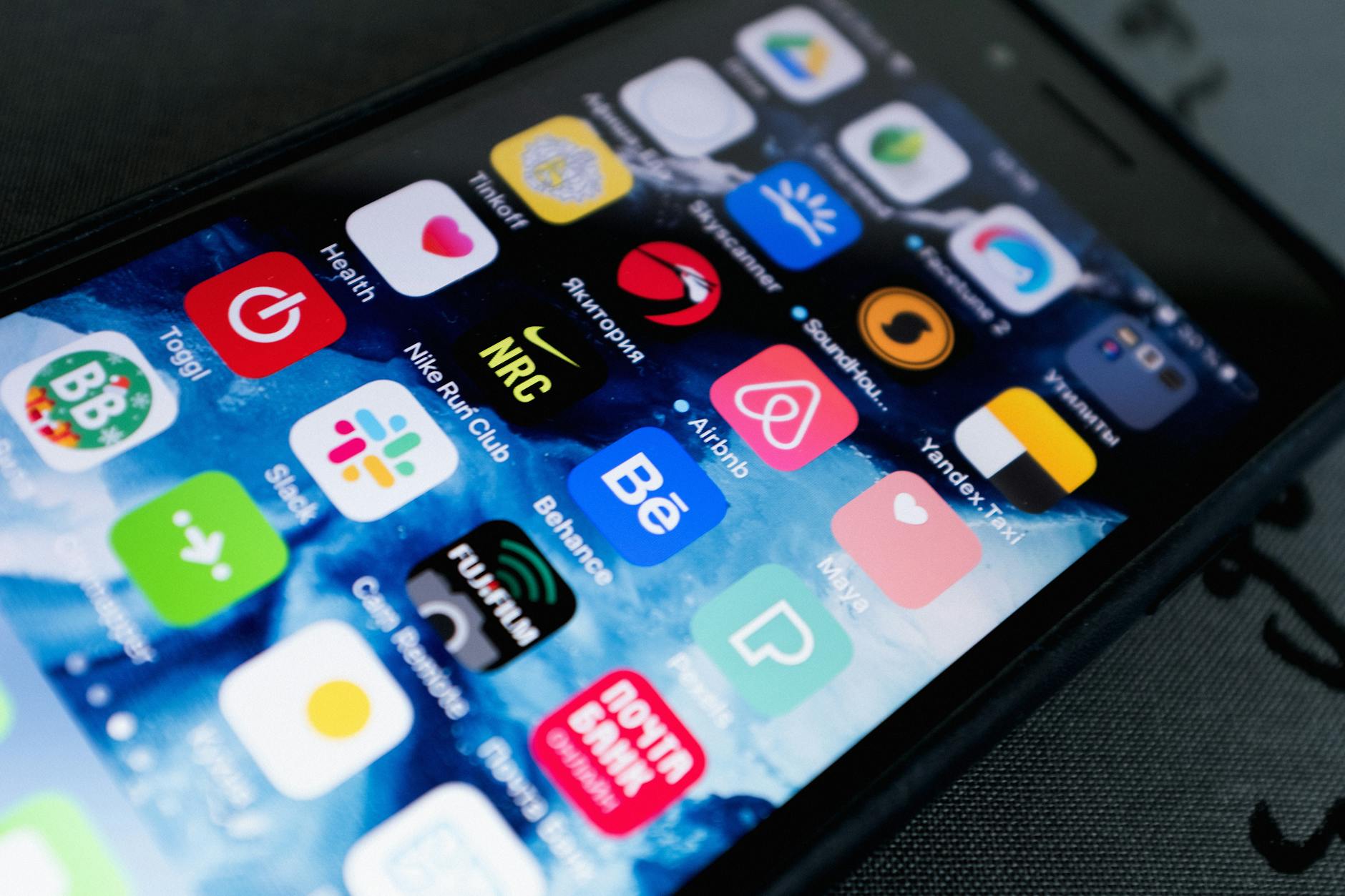

Photo by ready made on Pexels.com

We Still Have Choices

This isn’t anti-tech. It’s pro-agency.

We can seek out companies that still let us buy once and own forever. We can use open-source tools that aren’t tied to profit motives. We can refuse to mistake convenience for autonomy.

Every time we choose ownership, even in small ways, we push back against a system designed to make us permanent renters.

Because ownership still matters.
And freedom doesn’t auto-renew.


🗞 anarchyroll presents

Excess and Algorithms
Wisdom is resistance. Truth over tribalism.


🎬 This article was reimagined as a visual essay — watch the reel below.

@anarchyroll_

Subscription Serfdom We used to own what we paid for. Now we lease our lives—locked into endless subscriptions, optimized by algorithmic landlords. 🗞 Full article at anarchyjc.com ☯️ Truth over tribalism ♾️ Wisdom is resistance. #DigitalFeudalism #SubscriptionEconomy #ExcessAndAlgorithms #anarchyroll #subscribe #economy #economics

♬ start the action – patrickzaun

📡 Follow anarchyroll across platforms for more visual essays, short-form truth, and independent, gonzo journalism-inspired writing:

📽️ TikTok: @anarchyroll_
📷 Instagram: @anarchyroll
🐤 X / Twitter: @anarchyroll
🧵 Threads: @anarchyroll
🔵 Bluesky: @anarchyroll



Inside the calculated architecture of algorithmic addiction—and why the systems keeping us hooked aren’t accidental, they’re engineered for profit.


Photo by Gabriel Freytez on Pexels.com

This Isn’t a Bug. It’s the Business Model.

Addiction isn’t a side effect. It’s the product.

The algorithms driving our feeds, for‑you pages, and autoplay queues weren’t built to serve us. They were built to own us—to capture attention, distort behavior, and extract time. The longer we stay, the more they win. And they’ve gotten very good at winning.

“Big Tech firms… have developed more and more sophisticated AI models… more successful at their goal of ensuring addiction to their platforms.” — Michelle Nie, “Algorithmic Addiction by Design” (2025)

This isn’t content delivery. It’s behavioral engineering at scale. And it’s working exactly as intended.

Hook the Brain, Hijack the Future

Let’s call it what it is: neurological warfare for profit.

Infinite scrolls keep us locked in motion. Likes and shares drip dopamine through variable rewards. Personalized algorithms feed us just enough novelty, rage, or validation to keep the lever pulling. And the lever never runs out.

“Persuasive design is deliberately baked into digital services… to create habitual behaviours.” — 5Rights Foundation, “Disrupted Childhood” (2024)

We are not customers. We are inputs in a profit‑generating loop, optimized not for our benefit, but for our addiction.

What It’s Doing to Us (Especially Them)

The damage isn’t theoretical. It’s measurable. Especially among kids and teens—those still forming identities, boundaries, and brains.

An algorithm doesn’t care if a 13‑year‑old spirals. It cares about engagement metrics.

“TikTok algorithms fed adolescents tens of thousands of weight‑loss videos… vulnerable accounts were served twelve times more self‑harm and suicide videos.”
American Journal of Law & Medicine, 2023

The platforms know. The companies know. And still they choose to push what hooks hardest.

It’s exploitation. But because it’s dressed in UX and recommender systems, it slides by as innovation.

Photo by cottonbro studio on Pexels.com

Legal Fiction vs. Corporate Reality

Law hasn’t caught up—but it’s beginning to stir.

Some EU voices are framing this as a consumer protection crisis, not just a mental health one.

“Hyper‑engaging dark patterns… reduce users’ autonomy and may have additional detrimental health effects.”
Fabrizio Esposito, “Addictive Design as an Unfair Commercial Practice” (2024)

The SAFE for Kids Act in New York aims to curb algorithmic targeting of minors. Europe is considering stricter design ethics laws. But Big Tech lobbyists work overtime to water down reform—and delay the inevitable.

Addiction is profitable. That’s why it persists.

Resist the Feed

This isn’t personalization. It’s manipulation.
And the only way out is resistance—personal, political, cultural.

Start small. Microtasks become momentum:

  • Turn off autoplay.
  • Disable nonessential notifications.
  • Use browser extensions to block algorithmic feeds.
  • Delete one app for a week. Watch what happens.

These aren’t solutions. They’re trim tabs—small shifts that change the system from below.

Then go bigger:

  • Push for dark‑pattern bans.
  • Support platform‑transparency laws.
  • Demand algorithmic opt‑outs.

Your time, your attention, your mental state—they’re not raw materials to be mined.

They’re yours. Take them back.


anarchyjc.com | Excess & Algorithms

Wisdom is Resistance

🎬 Scroll-Friendly Version
This article was reimagined as a visual essay — watch the reel below.

@anarchyroll_

🎯 ALGORITHM ADDICTION We scroll, swipe, and tap — and the algorithm learns. This <1-minute visual essay explores how tech hijacks attention and reshapes identity. #DigitalAddiction #TikTokAwareness #AlgorithmAddiction #MentalClarity #SelfAwareness

♬ Mystic – Perfect, so dystopian

📡 Follow anarchyroll across platforms for more visual essays, short-form truth, and independent, gonzo journalism-inspired writing:

📽️ TikTok: @anarchyroll_
📷 Instagram: @anarchyroll
🐤 X / Twitter: @anarchyroll
🧵 Threads: @anarchyroll
🔵 Bluesky: @anarchyroll


eanda logoby @anarchyroll
2/20/2014

What is money velocity? It is the speed at which the M2 money supply moves from one transaction to another.  What is the M2 money supply? It is all the liquid cash assets in the country from cash, savings accounts, mutual funds, certificate of deposits (CDs), checking deposits, or basically any kind of money stored in any kind of account, or mattress if you’re old and senile.

How can money velocity be used to gauge economic strength? Because money velocity ends up being the ratio of the size of a country’s economy to the size of the money supply. So there shouldn’t be more cash than there is gross domestic product (GDP) or less than. If there is more/less, then inflation/deflation occurs as a market correction.

I may sound very smart with the above explanation, but a recent article in Bloomberg Businessweek did all the heavy lifting for me. The article is short, quick, to the point, and keeps everything in plain language, as I try to do with this blog.

The concept of money velocity fascinated me because; I had never even heard or come across the term before, was unaware it is a relatively accurate economic indicator, and was surprised that the slower money moves the safer we are from inflation or another recession. Why is that? Hasn’t the Fed been flooding the markets with freshly printed money for over three years? They have, but people and businesses aren’t spending it, they’re saving it. Which is good for now because inflation could stop the economic recovery in its tracks.

But the money will have to start flowing sooner than later. Especially as QE gets tapered off over the next 18 months. Fading out QE and fading in inflation wouldn’t do much damage to the economy. It would be like getting autumn before winter or spring before summer, our bodies acclimate to the changing weather because of a gradual transition. This could be the case with money velocity. It was refreshing to learn that the low money velocity we are seeing now is historically normal, and has in the 60s and 80s preceded boom periods.

But those booms were just bubbles. We all must keep one eye on Wall Street to make sure that our country isn’t held hostage by a bursting bubble again. That is why they teach consumer ed in high schools folks, it’s not just to give an elective teacher a pay bump.

So now you know what money velocity and M2 money supply are. It’s used as an economic indicator because of its ratio to GDP. Lower velocity means lower prices and deflation while higher velocity means higher prices and inflation. Drop those in conversation at the cocktail lounge but not the night club, depending on how fast you want to move the cash in your wallet to keep the other parties interested…

eanda logoby @anarchyroll
2/1/2014

Part One  |  Part Two

Ex cons have a hard time getting jobs in America due to a stigma that they can’t be trusted due to past actions. Even though going through the incarceration process is supposed to bring you the other end rehabilitated with a clean slate, the reality of the situation is often quite the opposite. It also often only applies to racial minorities who commit blue collar crimes as opposed to white collar criminals who not only don’t go to jail but often barely get a metaphoric slap on the wrist.  In the spirit of the latter example, Janet Yellen is the new Fed Chief.

Janet Yellen is a much better choice than Larry Summers.  Summers is one of the forgotten architects of the 2008 economic collapse thanks to his economic policy of derivatives deregulation during the Clinton administration during the 1990s.  Summers was thought to be getting the job last year before the liberal wing of the Democratic party threatened rebellion in the midterm elections if it happened.

Ben Bernanke who Yellen is replacing, well he is to the economy what George W Bush is to national security.  9/11 happened on Bush’s watch, the 2008 collapse happened on Bernanke’s watch, that’s all you need to know.

Janet Yellen was recently featured in a TIME magazine cover story since she is about to become the most powerful person in the economic world. Why does she fit into the Quantitative Easing conversation? Two reasons. One, she helped create it in 2010. Two, she will be responsible for the tapering (fading out of) and ending of it. But do drug dealers and drug addicts often voluntarily quit their habit? Or do they continuously justify their habit to themselves?

Yellen and QE have been, are presently, and will be in the future tied together for better and for worse.  Wall Street has benefited immensely from QE. The massive bond buying program has held down interest rates (QE’s stated intent).  This has allowed the casino that is the stock market to function smoothly and at times on steroids, seeing unprecedented highs.

But these highs are drug induced. When a person does blow, crack, or meth they get an intense high for a limited amount of time.  Someone who drops acid sees walls melt and a new world of colors birth before their very eyes. But these things do not last, because they are induced by an outside substance.  The crash afterwards can be brutal, even from a simple alcohol or marijuana high. The high may feel real, but not as real as the hangover.

The American economy was high after the recovery from the dot com bubble burst. Deregulation, default swaps, and derivatives were the drug of choice of the early 2000s and the high was tremendous making houses as affordable as cars, cars as affordable as vacations, and vacations as affordable as a credit card induced weekend shopping spree. The hangover that started in 2008 was and is very real. Make no mistake we are still in recession, the recovery is false.

The recovery is false because it is also drug induced, stock market highs snorted, smoked, and shot up thanks to quantitative easing.  Asset bubbles have been created, inflation is inevitable, and any time tapering is stated or hinted at the stock market nose dives.

Tapering is occurring at about $5 to $10 billion a month, which is a good thing.  Yellen has publically stated her support for stricter economic regulation and has the backing of Elizabeth Warren.  My concern is that Yellen is a wolf in sheep’s clothing. In addition to being an architect of the current quantitative easing policy written about here, she is also proponent of trickle-down economics or Reaganomics.

The last paragraph of her TIME interview is a quote which that TIME tries to spin as “a rising tide can lift all boats” and then point out that phrase was first used by President Kennedy.  The problem is Yellen states that the purpose of QE is directly tied to trickle-down theory. The more money rich people have, the more they will spend, and that will mean more money for the poor by osmosis.  Aka when a drunk person drinks a lot, they’ll piss a lot more. QE is nothing more than a tax cut substitute in the Reaganomics equation. She claims to have main street on her mind, but her economic actions indicate she is looking out for the people at the top, hoping their crumbs become big enough to feed the poor when they trickle down after their hedge fund has enough capital freed up to buy another section of homes.

Better than Larry Summers? Yes. Does she deserve some time as the Fed Chair to prove herself? Yes. But QE is her baby. The stock market and unemployment numbers are her master.  She is going to nurture her baby and serve her master as long as they are tied together.  And all economic indicators show that QE is directly tied to stock market gains and losses as well as the unemployment numbers.  Yellen has stated as long as unemployment remains high, QE will remain.

Drug cartel kingpins tend not to be at the forefront of legalization movements. Why? Because the status quo makes them rich.  Janet Yellen helped devise QE and now she’s in charge of ending it? Next thing you know you’re going to tell me the insurance companies helped write the Affordable Health Care Act…..

eanda logoby @anarchyroll
1/28/2014

Click Here for Part One

Getting high, if it wasn’t fun, why would so many people do it? The only problem is that the high doesn’t last forever. The come down is often a crash, back to reality, damnit there’s still the law of gravity. Oh no, the stash is gone. What to do? Face life and the world as it is? Okay, but only for as long as it takes to get the next hit.

The sky was falling in the fall of 2008.  Not just millions, not just billions, but TRILLIONS of dollars evaporated from the global economy.  The wound wasn’t just opened, it was hemorrhaging blood.  What to do? Let the free market run free until it corrected itself?  Use taxpayer money to try and plug the leak? Bomb another middle eastern country?

Desperation causes people to do things that they don’t fully understand. Under intense stress and scrutiny many human beings seek a temporary escape from reality in mind or mood altering chemical substances produced naturally or artificially known to many simply as drugs.  Coffee, cigarettes, alcohol, marijuana, molly, mushrooms, lsd. cocaine, heroin, meth, crack.  Those who shake their head and thumb their nose at drug users often substitute adrenaline, food, binge screen watching, and other socially accepted mind altering reality escapes in place of the illicit stuff, but it’s all the same.

The federal government and federal reserve bank of the United States of America is run by human beings. Human beings susceptible to the same highs, lows, pros, cons, disciplines, and vices as you and me.  In the midst of panic, desperation, and catastrophe a series of steps were taken to stop the economic bleeding, stabilize the markets, and attempt to spur future growth.  However, the policies were all nothing more than reality escaping substances on a meta scale.

First came TARP. Then came the auto industry bailout.  Those got the headlines and the public ire or support depending if you’re a political elephant or jackass.  However another, much less sexy, but equally if not more important was the Federal Reserve Bank’s $85 billion per month bond buying program known as Quantitative Easing.

There have been three waves of QE from 2009 through present, it is expected to end in 2015.  But if it’s expected to end clean, at a predetermined time, why the drug analogy?

The problem, is that the markets have become dependent, on the fed flooding the market with cash, now there is a new bubble, that could bring the market(s) down in flames.

So the withdrawal pains, in the form of inflation and higher interest rates, could cause a relapse into recession or worse for both the US and global economy.  QE has been like an alcoholic going to rehab and starting a two pack a day cigarette habit.  Our recovery has been artificially enhanced by QE. We haven’t quit cold turkey, we’re on synthetic drugs. It isn’t until all the meds are out of our system that we’ll know if the economy has recovered or not.

Where does QE go from here?  I’ll cover that in part 3…