
Posts Tagged ‘health’


When should I be patient and when should I take action?

This can be a tough question for anyone at any level in life. I know it has been for me, at every stage of my life up to this point. I remember thinking that epiphanies brought about by consuming and then applying knowledge would be a permanent solution to this puzzle.

I suppose I’m old enough to possess the wisdom through experience to know that there is no such epiphany. I’ve had epiphanies. Did they create permanent change? No. Nothing does. Habitualized action creates permanent change. Anything else is snake oil.

“The two most powerful warriors are patience and time.” – Leo Tolstoy

Patience and action are practical examples and applications of yin and yang. Buddhist philosophy has been a big help for me in taking the pressure off of the choice between patience and proactivity.

Because it is natural to worry about being too patient just as it is normal to worry about taking too much action. Bringing mindfulness into my life helped to relieve some of the pressure that modern life puts on us to always be doing something exciting and interesting while simultaneously always relaxing in an exotic location vacation. And of course, making sure to document anything and everything one does in HD 4K photo and video, posted and reposted in portrait and landscape mode.
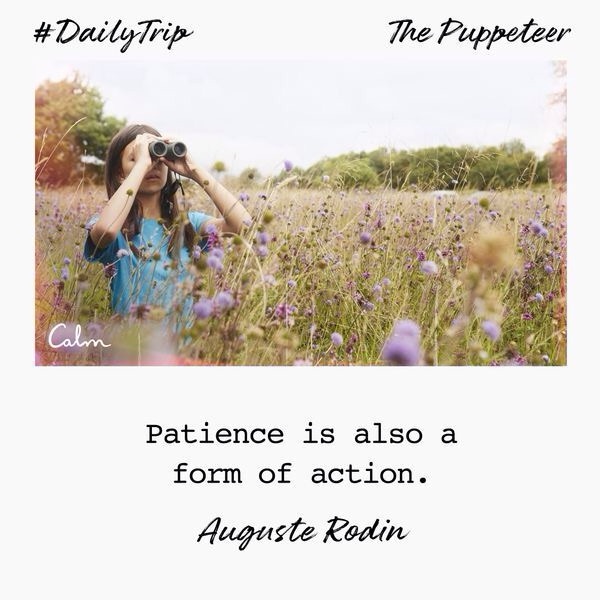
After suffering textbook burnout multiple times in my life, I overcalibrated towards patience. Buddhism, Taoism, and other spiritual philosophies that I studied lent themselves to patience and non-doing, which I felt I desperately needed at the time. Stoicism helped steer me back towards proactivity.

“Action without vision is blind; vision without action is just a dream.” – Nelson Mandela

I have found that Stoicism pairs well with Buddhism and Taoism. I would counsel people to consume all three in equal proportion. Stoicism helped teach me to take action and to do so boldly and consistently AND THEN to let go from there.

Detach from the outcome. Let go of how the action is received and perceived. 

That last part is a major missing piece from the good advice I received my entire life and hear/see being given to people these days by well-meaning folks. My experience has taught me that the majority of people are heavily tied up in the outcome of their actions. Not just entangled, but almost completely identified with their actions. 

That is also totally normal and natural. Aren’t we taught to believe that we are the result of our actions? Even if we aren’t taught that, isn’t there a consensus that a person’s identity is what they do? This is where spiritual philosophies and spiritual teachings fill in the hole I and many people feel inside of us when we’ve lived a life identified externally.

The teachings of Alan Watts, Ram Dass, Eckhart Tolle, and others provide empathy and compassion for myself and others in place of the default of judgment. The judgment of the patience, the judgment of the action, and the judgment of the results. Replacing all that judgment requires teaching and training because we live in a society that encourages and rewards judgment. 

Traditionally we have been our own worst critic. The modern era of the comment section has put negative judgment on steroids and placed it into a weapon of mass destruction with unlimited ammo.

“Empathy is about finding echoes of another person in yourself.” Mohsin Hamid

The scales of balancing patience and action are properly weighted with studying philosophy and spirituality.

Studying and applying the knowledge of these disciplines also helps to put an immeasurable, immaterial, internal balance on the scale in our very measurable, material, externally focused world. 

Before them, I was lost. I may not yet be found but I know I am at least on a path rather than walking alone and confused in the dark. 


Busyness to escapism is a vicious circle and a trap. 

Either can be confused with purpose which is dangerous. Put together, they’re deadly for one’s spirit and steroids for one’s ego. 

Busyness is not productivity or discipline it is avoidance and anxiety put into physical action. Keep busy to avoid _______________.

Stay busy long enough and you need an escape. A treat. A vacation. Some me time. Some self-care. Candy, carbs, social media scrolling, video games, sex, drugs, binge-watching, a drink, a smoke, a weekend getaway, and so on. It’s all the same. 

I’m burned out from being busy but I still need to avoid __________________ so I need to take/do my favorite ____________ so I can feel ______________.


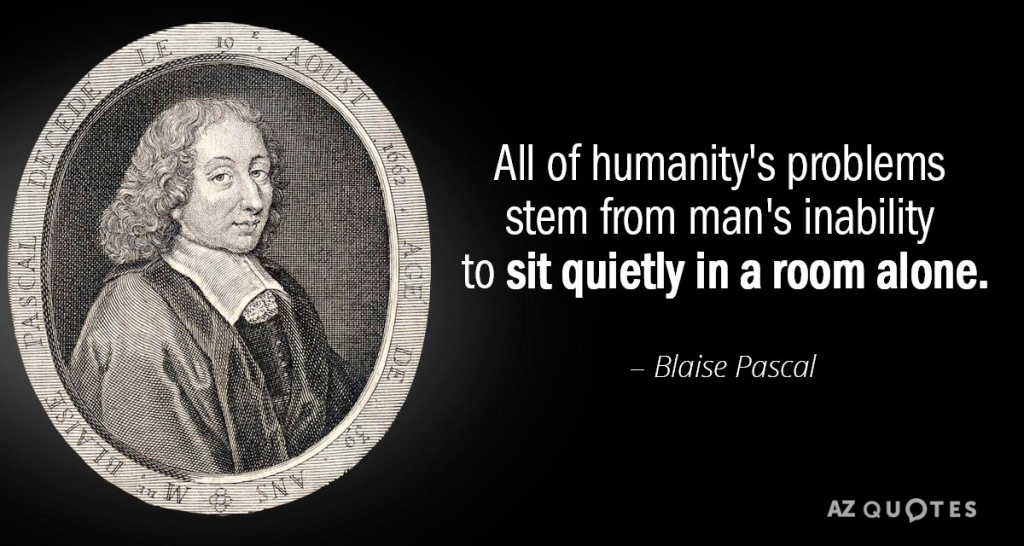
“All of humanity’s problems stem from man’s inability to sit quietly in a room alone.” – Blaise Pascal


A meditation and journaling practice are the simple answers here. Getting one’s thoughts out of their head by writing them onto paper, helps to clear the mind for a meditation practice to help detach and observe one’s thoughts mindfully while focusing on an anchor like one’s breath or body. 

But life isn’t simple and people aren’t simple. From a detached, safe, secure, bird’s eye view things may seem simple and easy. But life is not lived from a Goodyear blimp angle looking down. We’re in the trenches daily, minute to minute, breath to breath, trying to do our best with what we have. 

To stay busy long enough to earn an escape via entertainment is what many in first-world, capitalist-controlled countries, are incessantly conditioned to believe is what makes for a good life. Carrot and stick. Cheese in the maze. Do your job, earn your treat. Create shareholder value, have a pizza party.

However mental health is declining exponentially with every passing generation. Depression, burnout, and loneliness increased as consistently as the US Stock Market over the past century. Much like economics in America, a small percentage are doing very well while the vast majority suffer due to systemic failure. 


Therefore things like meditation, journaling, yoga, philosophy study, heavy weight training, nature bathing, cold exposure, deep breathing exercises, light therapies, legalized cannabis and hallucinogens, etc. all exponentially move from the fringe to the mainstream with every passing generation. Why? To counteract the systemic failures forced upon them, by the prior generations that seem to become exponentially more; fearful, greedy, and angry with each modicum of increased control and longevity they gain.

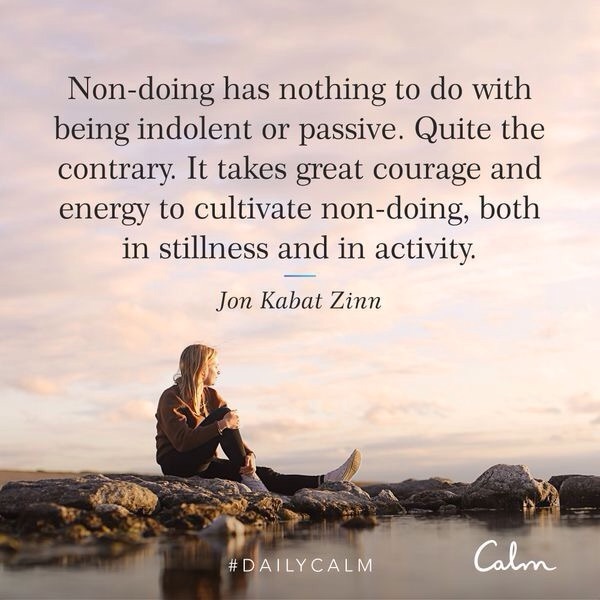
What do all the listed above, formerly; fringe, new-age, woo-woo, alternative, holistic, organic, practices have in common? They get a person present, focused, out of their head and into the present moment. Out of the delusion of the undue stress modernity thrusts upon them ad infinitum and into their physical bodies while detaching from their mind activity. They cultivate mental-emotional space, which can help put one in a space of non-doing and non-attachment. 

Cultivating that inner space, between stimulus and response, is how we break the vicious circle of busyness to escapism. Many great philosophers and spiritual teachers of the past and present have talked about this. Alan Watts, Ram Dass, Wayne Dyer, Eckhart Tolle, Wim Hof, Tim Ferriss, Ryan Holiday, Mark Manson, etc. 

Breaking that cycle, getting out of or avoiding that trap; is how one builds, one conscious choice at a time, a purpose-driven life. And a purpose-driven life doesn’t mean one tries to save the world or become a monk living on a mountain, or a motivational speaker. It simply means you live your life for you on your terms.

You have the space to get to know yourself, deeply and fully. You can determine your actual values, your actual morals, your actual wants, and your actual needs rather than the ones externally assigned and forced upon you. Then you assemble your ideal life step by step, action by action, choice by choice, day by day. Then, the real work of living begins. 

The perception of peace coupled with passivity seems as natural as peanut better going with jelly and peas with carrots. I find that the balance I am looking for internally and externally is a combination of peace and proactivity.

To be in a peaceful state, in my experience, lends itself to being laid back, chill, and just letting things happen. But that’s a trap. It’s better than the combination of inner and outer turmoil. That combination is a one way ticket to a medical facility.

Aspiring for pragmatic balance between inner peace and external proactivity is a personal development example of why our life’s work is never done until we’re dead. For years and years I would over correct from one end of the extreme to the other. Too busy to too lazy, to hectic to too peaceful, too aggressive to too passive.

Is it ever just right or is that for fairy tales and Hollywood movies?

We all need goals to chase after all.

To find balance between inner peace and external proactivity is a goal pursuit worthy of a life’s work. To be peaceful enough to not sweat the small stuff yet assertive enough to not be taken advantage of while being able to take advantage of win-win opportunities.

In a clean, quiet, stressless, anxiety free, vacuum sealed environment a balance of inner peace and external proactivity sounds simple enough. A few minutes in the chaos prone real world will put a goal like that on the long term goal list real fast.

But it is when the world is challenging us that we need the peace without passivity the most. That is why it is so rare and can be even hard to comprehend and put into words. Because it just isn’t natural.

A trip to any populated public place will show anyone this. Any crowded store, street, park, concert, sporting event, bar, nightclub, or coffee shop drive thru will show how humans naturally act is not synonymous with a balance of peace without passivity. It’s usually a lot of one and little to none of the other.

Don’t want to go out to a public place? That’s fine, just look at your own behavior when you’re hungry and/or haven’t had your morning coffee. Two states of human behavior so common they’ve been a point of cultural parody for almost a century. Snickers has been running an ad campaign on the concept of hangry for what seems like two decades now.

Internally peaceful, externally proactive. What a thought. What a concept. What a goal. What an ideal. Possible? Of course. Practical? Well that depends.

Nature and nurture as per usual loom heavy over how we think, perceive, feel, and act internally and externally. What can we do for ourselves here and now to move towards this ideal?

I’ve found that my path towards this goal, my very long, winding, obstacle ridden path on my way towards this goal involves a combination of yoga/meditation practice(s), weight training, studying philosophy, journaling and taking supplements.

Nothing innovative or unique about that list. Certainly nothing to copyright there. No magic wand or alchemy like combination. But my life before all of those practices and protocols was nothing resembling peaceful or proactive. I find all of my idols regardless of age, gender, or field of expertise have a similar list of hobbies.

I know that I think of that list when I feel the internal anxiety of the external challenges presented by life pressing against me in moments of choice. I know that without the years I’ve put into meditation, journaling, exercise, and my supplement regimen that my ability to cope with the challenges of life would be drastically inferior to my ability now.

So I do recommend them. Not in specific form but in generic form to be tailored to the lifestyle and life experience of each individual who would incorporate yoga/meditation, weight lifting, journaling, philosophy, and nutritional supplements into their life.

Aides, helpers, boosts, a nudge, a push, support…that what meditation/yoga, weight lifting, philosophy, journaling, and supplements provide. Nothing more, nothing less. No magic wand. No cure all. No shortcut. No doing the work for me.

I just know I can use all the help I can get. And I hope those things can help you too.

It is hard to see external events as neutral.

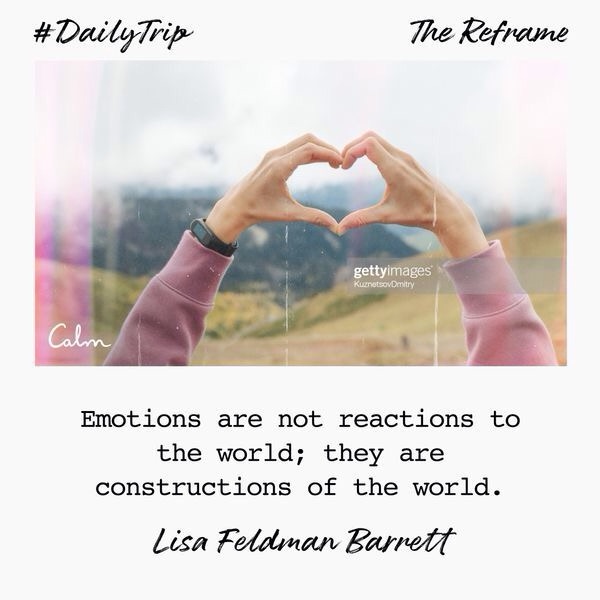
Of course we are going to dye the world in the colors of our thoughts and emotions. How could we not? Are we taught that in school? I’m pretty sure the playground and cafeteria experience(s) of school teaches us the opposite.

How can we regulate our emotions?

Because we have to. We can’t be hot heads. We can’t be basket cases. No matter what our ethnicity, gender or astrological sign(s) may tell us. We can’t go flying off the handle at people, places, events and/or situations because our emotions are stirred up.

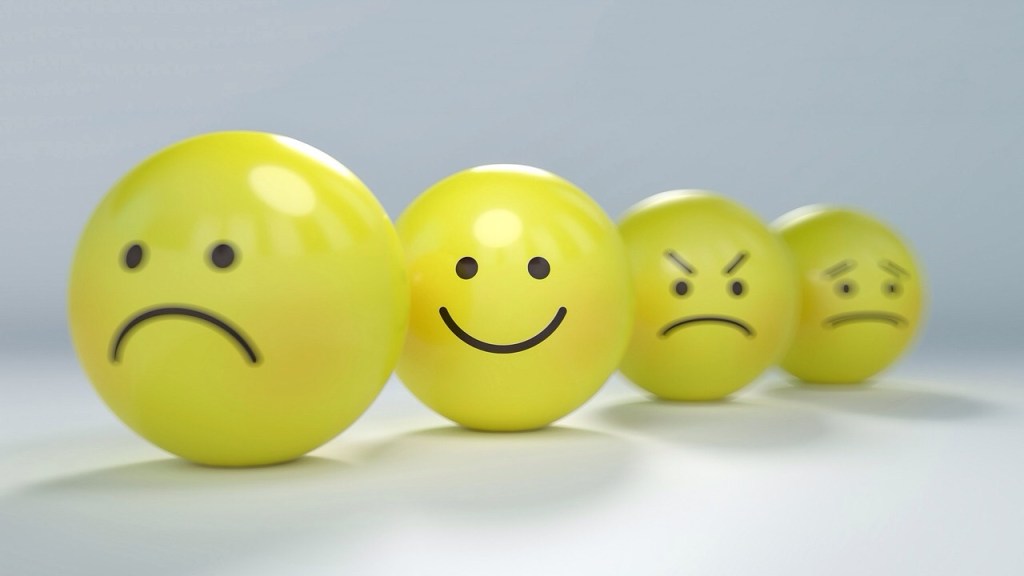
This goes for positive and negative emotions. Because getting to high when things go well leads directly into getting to low when things go poorly. Emotional regulation is mandatory for us to achieve our goals and be successful. Whether the goals and definition of success is externally material or internally immeasurable; we have to be able to control our emotions.

Is there anything more challenging? I suppose not identifying with our thoughts. It’s safe to say a majority of people living on planet Earth are completely identified with their thoughts and/or emotions.

We are easily distracted because we are so deeply identified with our thoughts and emotions. It’s why in America social issues are always at the forefront of political discourse. Because then the working class or 99% will fight amongst themselves over emotional hot button issues rather than on issues of economic equality and the historical lack thereof.

Awareness is the way out.

Maintaining separation from one’s thoughts and emotions can be the work of a lifetime. What do you think monks in monasteries are doing with their time?

To become aware that we are not our thoughts or emotions, we are the consciousness behind them, is one thing, to stay in that state is a whole other ball of wax. Today during my meditation practice I was barely able to stay focused on my breathing for a couple of five counts over the course of twenty minutes.

But we have to try. Especially in the area of the comment section. We have to try. Emotional regulation is as important to our health as breathing exercises, eating well, and hydrating. Easier said than done, just like everything else in this world.

A meditation practice in combination with studying philosophy and spirituality has been a big help for me over the years. Along with a regular journaling habit.

Using the Calm app for meditation, reading The Daily Stoic for philosophy, and watching Eckhart Tolle and Alan Watts videos on YouTube makes up my most frequently used daily routine along with a one page thought vomit journal entry.

For many years now I have utilized supplements to help with my mood. Ashwaghanda, Theanine, and St. John’s Wort has been my go to stack for a long time. I recently took out St. John’s Wort to save a little money since I currently can’t afford all the supplements I would prefer to take. I know other people have had good results with GABA, Kava, Rhodiola, and flavored Magnesium Powder.

Emotional control is the work of a lifetime. If it were easy, the world would be unrecognizable. Why create problems for anyone else if one feels good or neutral all the time? So we try to take things one choice at a time. But we have to try. Well, I do at least. Maybe the people reading this by nature or nurture have had emotional regulation in the bag since childhood.

If that’s the case, I’ll have what you’re having.

I love weight training. It is one of three things I recommend to every human being. It is one of the things I love that is actually good for me.

Weight training has positively impacted my life as much or more than any other external concept I’ve encountered while I’ve been alive. I’ve been regularly weight training for two thirds of my life now.

I don’t plan on stopping. All physical exercise is a marathon, not a sprint. Weight training is not something one does for a season, it is something one does for life.

Every year that goes by more and more scientific studies come out showing greater and greater benefits of weight training. Broader benefits and deeper benefits. Physical benefits, mental benefits and social/emotional benefits. Benefits for children and benefits for the elderly. Benefits for living longer and benefits for living a higher quality of life.

There has been and will continue to be resistance to weight training because of it being intertwined with bodybuilding. Male bodybuilders are to weight training as female instagram influencers are to yoga pants. They go hand in hand but only represent the egomaniacal extremes of the user base.

Most people want to exercise and benefit from weight training for practical health benefits. Not because they are seeking external validation from strangers via their smartphone to compensate for an internal lack.

For every fitness influencer covered in athleisure shape ware from head to toe while they photoshop their selfies, there are 10,000 people who would benefit from going to their local gym, a few times per week, to see and feel tangible physical benefits of exercise, surprisingly quickly.

Warm up, lift some weights that challenge their effort and comfort level, do some cardio, stretch, cool down, go home, shower, and eat. Anything beyond that moves into intermediate and beyond which one can find infinite information on in the growing podcast and youtube fitness video sphere.

Weight training helped me in the deepest, darkest times in my life. From depression, to burn out, to grieving the deaths of both of my parents. It helped me to feel good, feel challenged, feel accomplished, feel pride, feel growth. I wish that for every person I meet which is why I recommend it to everyone regardless of demographic or type.

Weight training also makes for great analogies and metaphors. Meditation, another thing I universally recommend, has been called doing bicep curls for the brain. Seeking general challenges and discomfort has been called weight training for life.

More weight training for all and more weight training metaphors please.

Notice how I am yet to bring up aesthetics. Except to poke at the social media narcissists who use perceived visual fitness achievement as a fix for their addiction to attention. Aesthetics is a by product of weight training and exercise in general.

Exercising for aesthetics can be a path the dark side of the fitness world. See fit fluencers and steroid abusers. People who are chemically and surgically enhanced, making a living, by living and lie. Lying to anyone and everyone, including themselves, that their aesthetics can be achieved with discipline, consistency, and whatever products they are selling.

I’ve had multiple IFBB pros tell me when it comes to who is on gear/has had cosmetic surgery vs naturals; muscle mass volume to body fat percentage never lies, ever.

So use common sense, although I’m not so sure how common that is anymore.

But common sense would dictate all humans engage in some form of physical exercise unless they spend their days engaging in physical labor for the job/career.

Use it or lose it. That applies to your body and your mind. Physical and mental ailments and deterioration are often brought about by physical and mental inactivity. The happiest and most spry elderly are the most active. The saddest and slowest youths are the most sedentary. Use it or lost it.

More weight training for all and more weight training metaphors please.