Posts Tagged ‘health’


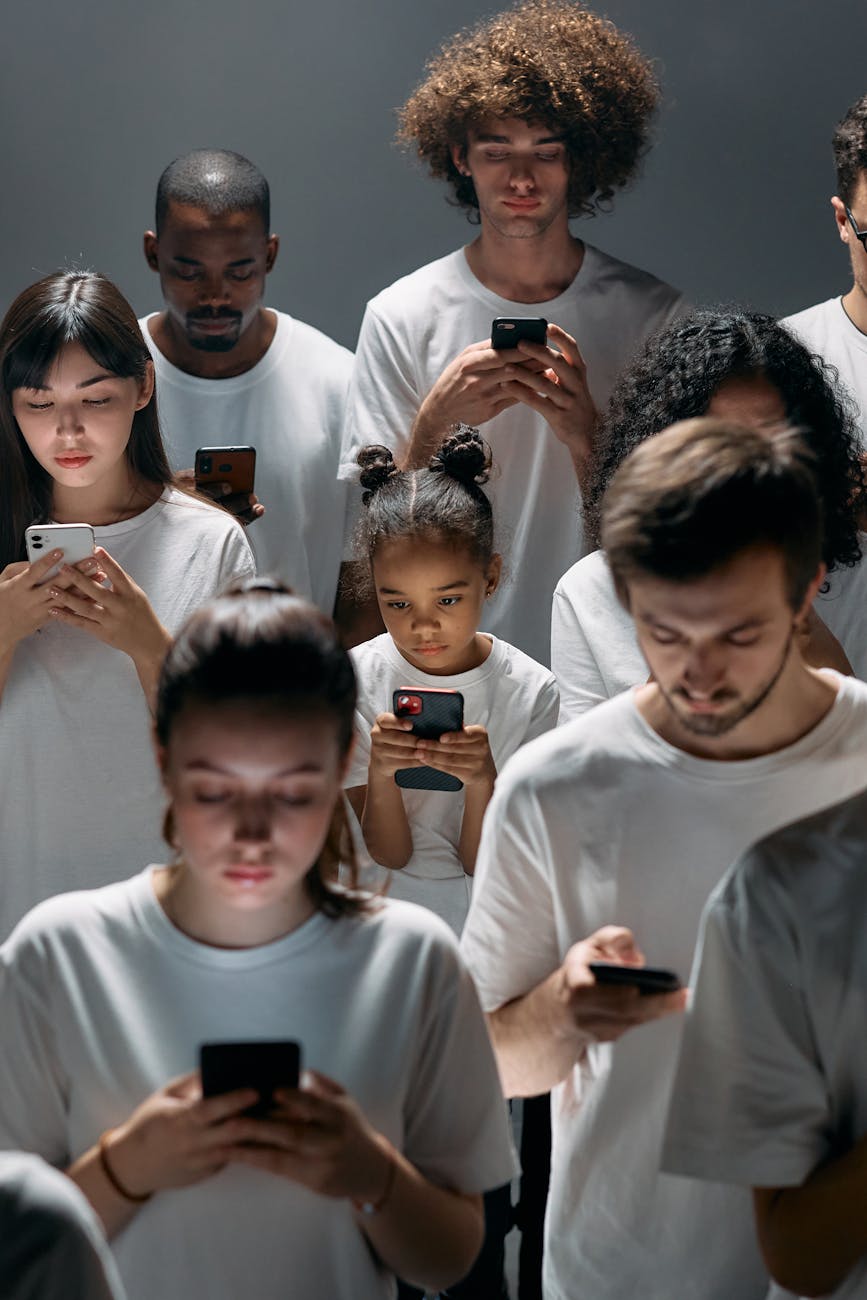
Inside the calculated architecture of algorithmic addiction—and why the systems keeping us hooked aren’t accidental, they’re engineered for profit.


Photo by Gabriel Freytez on Pexels.com

This Isn’t a Bug. It’s the Business Model.

Addiction isn’t a side effect. It’s the product.

The algorithms driving our feeds, for‑you pages, and autoplay queues weren’t built to serve us. They were built to own us—to capture attention, distort behavior, and extract time. The longer we stay, the more they win. And they’ve gotten very good at winning.

“Big Tech firms… have developed more and more sophisticated AI models… more successful at their goal of ensuring addiction to their platforms.” — Michelle Nie, “Algorithmic Addiction by Design” (2025)

This isn’t content delivery. It’s behavioral engineering at scale. And it’s working exactly as intended.

Hook the Brain, Hijack the Future

Let’s call it what it is: neurological warfare for profit.

Infinite scrolls keep us locked in motion. Likes and shares drip dopamine through variable rewards. Personalized algorithms feed us just enough novelty, rage, or validation to keep the lever pulling. And the lever never runs out.

“Persuasive design is deliberately baked into digital services… to create habitual behaviours.” — 5Rights Foundation, “Disrupted Childhood” (2024)

We are not customers. We are inputs in a profit‑generating loop, optimized not for our benefit, but for our addiction.

What It’s Doing to Us (Especially Them)

The damage isn’t theoretical. It’s measurable. Especially among kids and teens—those still forming identities, boundaries, and brains.

An algorithm doesn’t care if a 13‑year‑old spirals. It cares about engagement metrics.

“TikTok algorithms fed adolescents tens of thousands of weight‑loss videos… vulnerable accounts were served twelve times more self‑harm and suicide videos.”
American Journal of Law & Medicine, 2023

The platforms know. The companies know. And still they choose to push what hooks hardest.

It’s exploitation. But because it’s dressed in UX and recommender systems, it slides by as innovation.

Photo by cottonbro studio on Pexels.com

Legal Fiction vs. Corporate Reality

Law hasn’t caught up—but it’s beginning to stir.

Some EU voices are framing this as a consumer protection crisis, not just a mental health one.

“Hyper‑engaging dark patterns… reduce users’ autonomy and may have additional detrimental health effects.”
Fabrizio Esposito, “Addictive Design as an Unfair Commercial Practice” (2024)

The SAFE for Kids Act in New York aims to curb algorithmic targeting of minors. Europe is considering stricter design ethics laws. But Big Tech lobbyists work overtime to water down reform—and delay the inevitable.

Addiction is profitable. That’s why it persists.

Resist the Feed

This isn’t personalization. It’s manipulation.
And the only way out is resistance—personal, political, cultural.

Start small. Microtasks become momentum:

  • Turn off autoplay.
  • Disable nonessential notifications.
  • Use browser extensions to block algorithmic feeds.
  • Delete one app for a week. Watch what happens.

These aren’t solutions. They’re trim tabs—small shifts that change the system from below.

Then go bigger:

  • Push for dark‑pattern bans.
  • Support platform‑transparency laws.
  • Demand algorithmic opt‑outs.

Your time, your attention, your mental state—they’re not raw materials to be mined.

They’re yours. Take them back.


anarchyjc.com | Excess & Algorithms

Wisdom is Resistance

🎬 Scroll-Friendly Version
This article was reimagined as a visual essay — watch the reel below.

@anarchyroll_

🎯 ALGORITHM ADDICTION We scroll, swipe, and tap — and the algorithm learns. This <1-minute visual essay explores how tech hijacks attention and reshapes identity. #DigitalAddiction #TikTokAwareness #AlgorithmAddiction #MentalClarity #SelfAwareness

♬ Mystic – Perfect, so dystopian

📡 Follow anarchyroll across platforms for more visual essays, short-form truth, and independent, gonzo journalism-inspired writing:

📽️ TikTok: @anarchyroll_
📷 Instagram: @anarchyroll
🐤 X / Twitter: @anarchyroll
🧵 Threads: @anarchyroll
🔵 Bluesky: @anarchyroll


While our experiences are constantly in flux, a core sense of self exists, a presence that remains constant. Our external experience of life and the world is like a river, fire, or busy urban intersection. Our internal presence, awareness, consciousness, soul, or being; are the ground beneath those things.

The river flows fast and slow, the fire rages and flickers and the intersection goes from bustling to quiet, but the ground is solid, unmoving, unchanged, unnoticed but without it what goes on above it couldn’t exist.

“No man ever steps in the same river twice, for it’s not the same river and he’s not the same man.” — Heraclitus

Is this unchanging “simple being” who we are? Is this the answer to the question; “Who am I?” I’m pretty sure the answer to that question isn’t our ego, job title, hobbies, credit score, or proficiency with Excel.

The enduring self or our consciousness as the witness to our thoughts hasn’t exactly been part of the zeitgeist. However, the juxtaposition of getting and looking older externally, but feeling the same as we did when we were young internally, is a commonality shared by all people who reach old age.

“You are not a body, you have a body.” — Wayne Dyer

What is that within us that doesn’t age? Our body decays and our mind declines, but there is something about us that is ageless and timeless. We all share it. We all know what it is when we see ourselves in the mirror as we get older. We know we are older, but we also know there’s a part of us that doesn’t feel older. A constant presence underlying our experiences. Something within us that we can see, touch, or feel that seems to stay the same as everything else changes.

“There is a feeling of presence that transcends thought. This is your own essence, your Being.” — Eckhart Tolle

We inherently know this enduring self or consciousness exists. Notwithstanding, modern life distracts us from it, aiming our attention outward. We have numerous daily concerns, and virtual propaganda adds unnecessary layers of thought on top of what we need to survive. On top of that, our minds can be out of control thought-producing machines. Adding stress and suffering to our existence, by confusing us into emotionally identifying with our thoughts, rather than passively witnessing them.

Photo by HONG FENG on Unsplash

How do we combat this? Where attention goes, energy flows. We have to take some time or make some time to habitualize the cultivating our inner awareness and connection to our unchanging presence. The simplest, easiest, and most time-tested way of doing this is through mindfulness.

Mindfulness has become an overused catch-all buzzword in recent years. Mindfulness is no magic wand. It is simply the practice of paying attention to the present moment without judgment. Mindfulness is most commonly associated with meditation. The guided meditation sessions I engaged in daily can be classified as mindfulness meditation. I love and wholeheartedly recommend meditation to anyone and everyone.

Mindfulness isn’t limited to a traditional meditation practice. However, mindfulness is a way to turn everyday tasks and activities into meditative experiences.
  • Mindful Eating: Pay attention to the taste, texture, and aroma of your food.
  • Mindful Walking: Focus on your senses as you walk, noticing the sights, sounds, and sensations.
  • Mindful Showering: Pay attention to the feeling of the water on your skin and the sensations in your body.
  • Mindful Chores: Bring your full attention to the task at hand, whether it’s washing dishes or cleaning the house.
  • Mindful Drawing or Painting: Focus on the sensations of the brush or pencil and the colors you’re using.
  • Mindful Writing: Pay attention to the flow of your thoughts and the feel of the pen on the paper.
  • Mindful Music Listening: Listen to music with full attention, focusing on the sounds and emotions it evokes.
  • Forest Bathing: Spending time in nature, immersing yourself in the sights, sounds, and smells.

Keyword in all of these activities is either focus/attention. Where our attention goes, energy flows. Paying extra attention or deeply focusing on the different aspects of one of these activities helps us forget about external distractions, quiet our internal thought stream, and cultivate the connection with the constant presence within ourselves amidst the ever-changing stream of our life experience.

“You are not a thought, you are the awareness of thought.” — Mooji

Amidst the ever-changing currents of life, our deeper self remains constant and unchanging. By practicing mindfulness, we can reconnect with this inner presence, transcending the distractions and noise of modern life. Whether through meditation or mindful daily activities, we can cultivate a deeper awareness of our timeless self. As we turn our attention inward, we nurture the connection with our true being, allowing us to navigate life’s flux with greater peace and clarity.

“One must first know oneself to grow beyond oneself.” — Abraham Maslow


When should I be patient and when should I take action?

This can be a tough question for anyone at any level in life. I know it has been for me, at every stage of my life up to this point. I remember thinking that epiphanies brought about by consuming and then applying knowledge would be a permanent solution to this puzzle.

I suppose I’m old enough to possess the wisdom through experience to know that there is no such epiphany. I’ve had epiphanies. Did they create permanent change? No. Nothing does. Habitualized action creates permanent change. Anything else is snake oil.

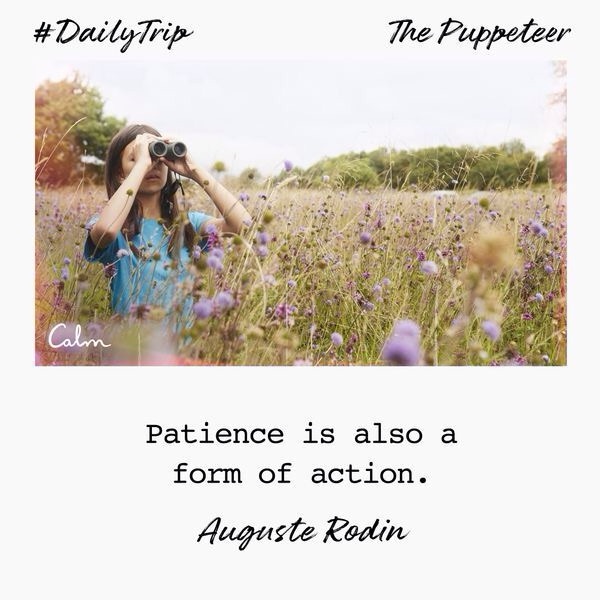
“The two most powerful warriors are patience and time.” – Leo Tolstoy

Patience and action are practical examples and applications of yin and yang. Buddhist philosophy has been a big help for me in taking the pressure off of the choice between patience and proactivity.

Because it is natural to worry about being too patient just as it is normal to worry about taking too much action. Bringing mindfulness into my life helped to relieve some of the pressure that modern life puts on us to always be doing something exciting and interesting while simultaneously always relaxing in an exotic location vacation. And of course, making sure to document anything and everything one does in HD 4K photo and video, posted and reposted in portrait and landscape mode.

After suffering textbook burnout multiple times in my life, I overcalibrated towards patience. Buddhism, Taoism, and other spiritual philosophies that I studied lent themselves to patience and non-doing, which I felt I desperately needed at the time. Stoicism helped steer me back towards proactivity.

“Action without vision is blind; vision without action is just a dream.” – Nelson Mandela

I have found that Stoicism pairs well with Buddhism and Taoism. I would counsel people to consume all three in equal proportion. Stoicism helped teach me to take action and to do so boldly and consistently AND THEN to let go from there.

Detach from the outcome. Let go of how the action is received and perceived. 

That last part is a major missing piece from the good advice I received my entire life and hear/see being given to people these days by well-meaning folks. My experience has taught me that the majority of people are heavily tied up in the outcome of their actions. Not just entangled, but almost completely identified with their actions. 

That is also totally normal and natural. Aren’t we taught to believe that we are the result of our actions? Even if we aren’t taught that, isn’t there a consensus that a person’s identity is what they do? This is where spiritual philosophies and spiritual teachings fill in the hole I and many people feel inside of us when we’ve lived a life identified externally.

The teachings of Alan Watts, Ram Dass, Eckhart Tolle, and others provide empathy and compassion for myself and others in place of the default of judgment. The judgment of the patience, the judgment of the action, and the judgment of the results. Replacing all that judgment requires teaching and training because we live in a society that encourages and rewards judgment. 

Traditionally we have been our own worst critic. The modern era of the comment section has put negative judgment on steroids and placed it into a weapon of mass destruction with unlimited ammo.

“Empathy is about finding echoes of another person in yourself.” Mohsin Hamid

The scales of balancing patience and action are properly weighted with studying philosophy and spirituality.

Studying and applying the knowledge of these disciplines also helps to put an immeasurable, immaterial, internal balance on the scale in our very measurable, material, externally focused world. 

Before them, I was lost. I may not yet be found but I know I am at least on a path rather than walking alone and confused in the dark. 


Busyness to escapism is a vicious circle and a trap. 

Either can be confused with purpose which is dangerous. Put together, they’re deadly for one’s spirit and steroids for one’s ego. 

Busyness is not productivity or discipline it is avoidance and anxiety put into physical action. Keep busy to avoid _______________.

Stay busy long enough and you need an escape. A treat. A vacation. Some me time. Some self-care. Candy, carbs, social media scrolling, video games, sex, drugs, binge-watching, a drink, a smoke, a weekend getaway, and so on. It’s all the same. 

I’m burned out from being busy but I still need to avoid __________________ so I need to take/do my favorite ____________ so I can feel ______________.


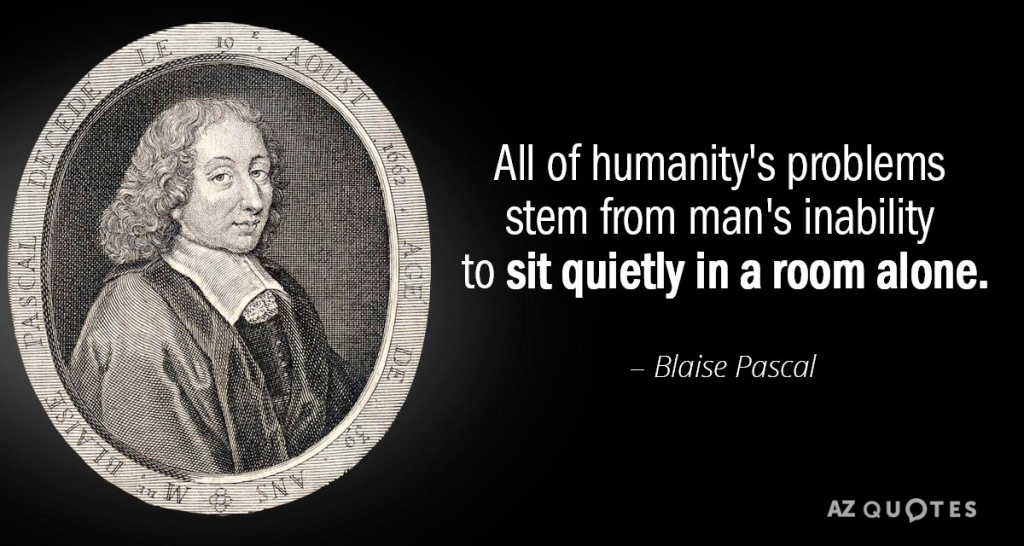
“All of humanity’s problems stem from man’s inability to sit quietly in a room alone.” – Blaise Pascal


A meditation and journaling practice are the simple answers here. Getting one’s thoughts out of their head by writing them onto paper, helps to clear the mind for a meditation practice to help detach and observe one’s thoughts mindfully while focusing on an anchor like one’s breath or body. 

But life isn’t simple and people aren’t simple. From a detached, safe, secure, bird’s eye view things may seem simple and easy. But life is not lived from a Goodyear blimp angle looking down. We’re in the trenches daily, minute to minute, breath to breath, trying to do our best with what we have. 

To stay busy long enough to earn an escape via entertainment is what many in first-world, capitalist-controlled countries, are incessantly conditioned to believe is what makes for a good life. Carrot and stick. Cheese in the maze. Do your job, earn your treat. Create shareholder value, have a pizza party.

However mental health is declining exponentially with every passing generation. Depression, burnout, and loneliness increased as consistently as the US Stock Market over the past century. Much like economics in America, a small percentage are doing very well while the vast majority suffer due to systemic failure. 


Therefore things like meditation, journaling, yoga, philosophy study, heavy weight training, nature bathing, cold exposure, deep breathing exercises, light therapies, legalized cannabis and hallucinogens, etc. all exponentially move from the fringe to the mainstream with every passing generation. Why? To counteract the systemic failures forced upon them, by the prior generations that seem to become exponentially more; fearful, greedy, and angry with each modicum of increased control and longevity they gain.

What do all the listed above, formerly; fringe, new-age, woo-woo, alternative, holistic, organic, practices have in common? They get a person present, focused, out of their head and into the present moment. Out of the delusion of the undue stress modernity thrusts upon them ad infinitum and into their physical bodies while detaching from their mind activity. They cultivate mental-emotional space, which can help put one in a space of non-doing and non-attachment. 

Cultivating that inner space, between stimulus and response, is how we break the vicious circle of busyness to escapism. Many great philosophers and spiritual teachers of the past and present have talked about this. Alan Watts, Ram Dass, Wayne Dyer, Eckhart Tolle, Wim Hof, Tim Ferriss, Ryan Holiday, Mark Manson, etc. 

Breaking that cycle, getting out of or avoiding that trap; is how one builds, one conscious choice at a time, a purpose-driven life. And a purpose-driven life doesn’t mean one tries to save the world or become a monk living on a mountain, or a motivational speaker. It simply means you live your life for you on your terms.

You have the space to get to know yourself, deeply and fully. You can determine your actual values, your actual morals, your actual wants, and your actual needs rather than the ones externally assigned and forced upon you. Then you assemble your ideal life step by step, action by action, choice by choice, day by day. Then, the real work of living begins. 

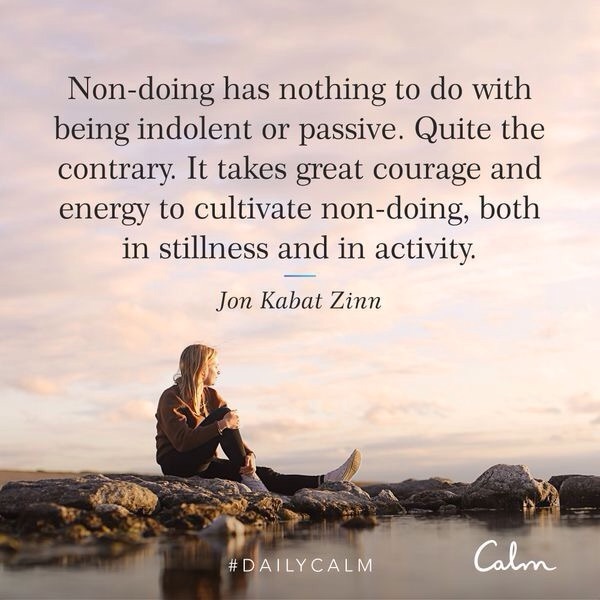
The perception of peace coupled with passivity seems as natural as peanut better going with jelly and peas with carrots. I find that the balance I am looking for internally and externally is a combination of peace and proactivity.

To be in a peaceful state, in my experience, lends itself to being laid back, chill, and just letting things happen. But that’s a trap. It’s better than the combination of inner and outer turmoil. That combination is a one way ticket to a medical facility.

Aspiring for pragmatic balance between inner peace and external proactivity is a personal development example of why our life’s work is never done until we’re dead. For years and years I would over correct from one end of the extreme to the other. Too busy to too lazy, to hectic to too peaceful, too aggressive to too passive.

Is it ever just right or is that for fairy tales and Hollywood movies?

We all need goals to chase after all.

To find balance between inner peace and external proactivity is a goal pursuit worthy of a life’s work. To be peaceful enough to not sweat the small stuff yet assertive enough to not be taken advantage of while being able to take advantage of win-win opportunities.

In a clean, quiet, stressless, anxiety free, vacuum sealed environment a balance of inner peace and external proactivity sounds simple enough. A few minutes in the chaos prone real world will put a goal like that on the long term goal list real fast.

But it is when the world is challenging us that we need the peace without passivity the most. That is why it is so rare and can be even hard to comprehend and put into words. Because it just isn’t natural.

A trip to any populated public place will show anyone this. Any crowded store, street, park, concert, sporting event, bar, nightclub, or coffee shop drive thru will show how humans naturally act is not synonymous with a balance of peace without passivity. It’s usually a lot of one and little to none of the other.

Don’t want to go out to a public place? That’s fine, just look at your own behavior when you’re hungry and/or haven’t had your morning coffee. Two states of human behavior so common they’ve been a point of cultural parody for almost a century. Snickers has been running an ad campaign on the concept of hangry for what seems like two decades now.

Internally peaceful, externally proactive. What a thought. What a concept. What a goal. What an ideal. Possible? Of course. Practical? Well that depends.

Nature and nurture as per usual loom heavy over how we think, perceive, feel, and act internally and externally. What can we do for ourselves here and now to move towards this ideal?

I’ve found that my path towards this goal, my very long, winding, obstacle ridden path on my way towards this goal involves a combination of yoga/meditation practice(s), weight training, studying philosophy, journaling and taking supplements.

Nothing innovative or unique about that list. Certainly nothing to copyright there. No magic wand or alchemy like combination. But my life before all of those practices and protocols was nothing resembling peaceful or proactive. I find all of my idols regardless of age, gender, or field of expertise have a similar list of hobbies.

I know that I think of that list when I feel the internal anxiety of the external challenges presented by life pressing against me in moments of choice. I know that without the years I’ve put into meditation, journaling, exercise, and my supplement regimen that my ability to cope with the challenges of life would be drastically inferior to my ability now.

So I do recommend them. Not in specific form but in generic form to be tailored to the lifestyle and life experience of each individual who would incorporate yoga/meditation, weight lifting, journaling, philosophy, and nutritional supplements into their life.

Aides, helpers, boosts, a nudge, a push, support…that what meditation/yoga, weight lifting, philosophy, journaling, and supplements provide. Nothing more, nothing less. No magic wand. No cure all. No shortcut. No doing the work for me.

I just know I can use all the help I can get. And I hope those things can help you too.