
Posts Tagged ‘pollution’

When one has little to no life experience in the “real” world, that of the world outside of high school and home life; climate change seems like a no brainer issue. We know what’s wrong. We know what’s causing it. So let’s fix it. Or at least do something of substance about it.

One only needs to spend a minimal amount of time working in first world, developed nations to understand why little to anything gets done about climate change that isn’t performative at best.
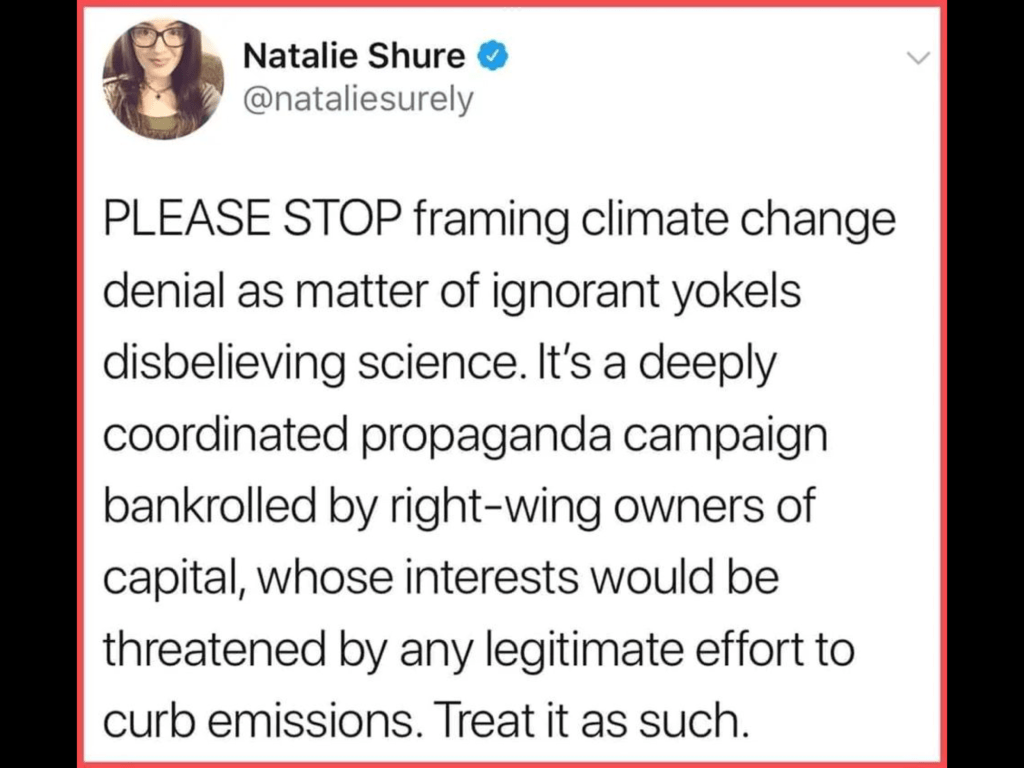
The foundation of all developed countries is that of waste and pollution. Capitalism in the late stage form we’re currently living in, demands infinite growth with finite resources. Throw out your old thing and buy this new thing, for every thing, for every one, ever, forever.

There is so much pollution that even the most ardent activists can’t comprehend and would prefer to not think about, for the sake of being able to sleep or have relationships.

That is the scale of the problem. Not that it’s inconceivable, but it is so vast that a human being with emotions and a soul can’t handle taking in a full account of the negatives vs the positives.

How many cargo ships sink, spill, or lose their cargo in the ocean every year? How many of those ships are moving across the ocean every day? Even the ones that don’t spill anything, which is beyond commonplace, how much oil is polluting the ocean just in day to day business?

Now include airplanes. Now include cars. Now buses. Now boats. Now cargo trucks. Now private jets. We haven’t even gotten to non recyclable plastic or styrofoam yet.

We can change all of this. But not you and me. Sorry, too much wealth inequality. This change has to come at the top. Capitalism is the cancer killing the planet. To deny that is to deny the law of gravity. We at the bottom certainly can’t give up, we know that in our bones. But what we also need to know, admit aloud, and talk about publicly is that the narrative of personal responsibility in combating climate change only need apply to those who pull the levers of capitalism. Not our neighbors driving an SUV or using plastic bags at the grocery store.
frackishimalogo1ajclogo2
by @anarchyroll

Did you know warm water contain less oxygen?

I didn’t. Like most people when I think of what produces oxygen, I think of trees. But 70% of the Earth’s oxygen comes from the ocean, more specifically from the marine plants in the ocean.

0-95685800_1438940931_45-1-20150815

One need not be an environmentalist or a cynic to be aware that the average person doesn’t give a shit about marine phytoplankton. Even people tuned into environmental news are likely to think phytoplankton is a superfood juice fad. Perhaps because Googling marine phytoplankton brings up almost exclusively websites trying to sell the plant in powdered form.

“Save the Trees” may be easier to say and fit on a button/bumper sticker, but it is the phytoplankton that produces almost 3/4 of the oxygen. Maybe we can turn “Save the Phytoplankton” into a meme or gif.

Did you know we need oxygen to live?

It’s true, although it feels like suffocation to not have access to dank memes and social media, not having oxygen is actually suffocation.

So although we as humans have demonstrated a remarkable tolerance for pollution of the air we breathe, that tolerance is likely to be just a wee bit smaller with no air to breathe at all.

frackishimalogo1

by @anarchyroll
9/21/2014

The #PeoplesClimate marches/rallies that occurred across the globe are a great representation of the good news/bad news holding pattern that pro environment supporters have been stuck in for decades. The good news is the #PeoplesClimate was so big, involving so many people, in so many of the world’s biggest cities that it literally could not be ignored by the press or anyone on the internet on 9/21/2014. The bad news is that tangible, global, legislative action is unlikely to occur for at least another full year.

This good news/bad news paradigm has most recently been demonstrated in regards to the two most talked about environment issues of the last quarter century; the ozone layer and the deforestation of the Amazon.

The good news is that scientists have discovered that the ozone layer is starting to heal. How awesome! Certainly no negative spin to put on this story. Since the 1970s attention has been brought to this issue in hopes of reversing the now notorious hole in the ozone layer that has been a direct contributor to global warming and rising skin cancer rates.

Ready for the bad news?

The Amazon rainforest is getting slashed and burned at a 30% increase. Deforestation is right there with industrial pollution as the greatest causes of global warming and climate change. We need rainforests to sustain the planet, but captains of industry seem to think we need grazing land for cattle and industrial logging more.

Good news, bad news unfortunately isn’t going to cut it, why? Because we are playing from behind. Pro environmentalists can’t keep scoring field goals while polluters and deforestrers are scoring touchdowns. It’s great that more people are aware of the negative effects of climate change, the fact that it’s man-made, and we must do something to reverse it. The problem is that this has happened because the negative effects of climate change are being felt more and more every single day. We have let so much wrong get done that the Earth is irreversibly changing all around us quicker, in real-time. It’s great to have good news to report but wildfires, droughts, and other natural disaster devastation is only going up. Is it too late? The good news is that in this fight, there is literally no reason to quit, because there is nothing else as worthy of fighting for as the future of the planet we inhabit.

frackishimalogo1ajclogo2

by @anarchyroll
8/28/2014

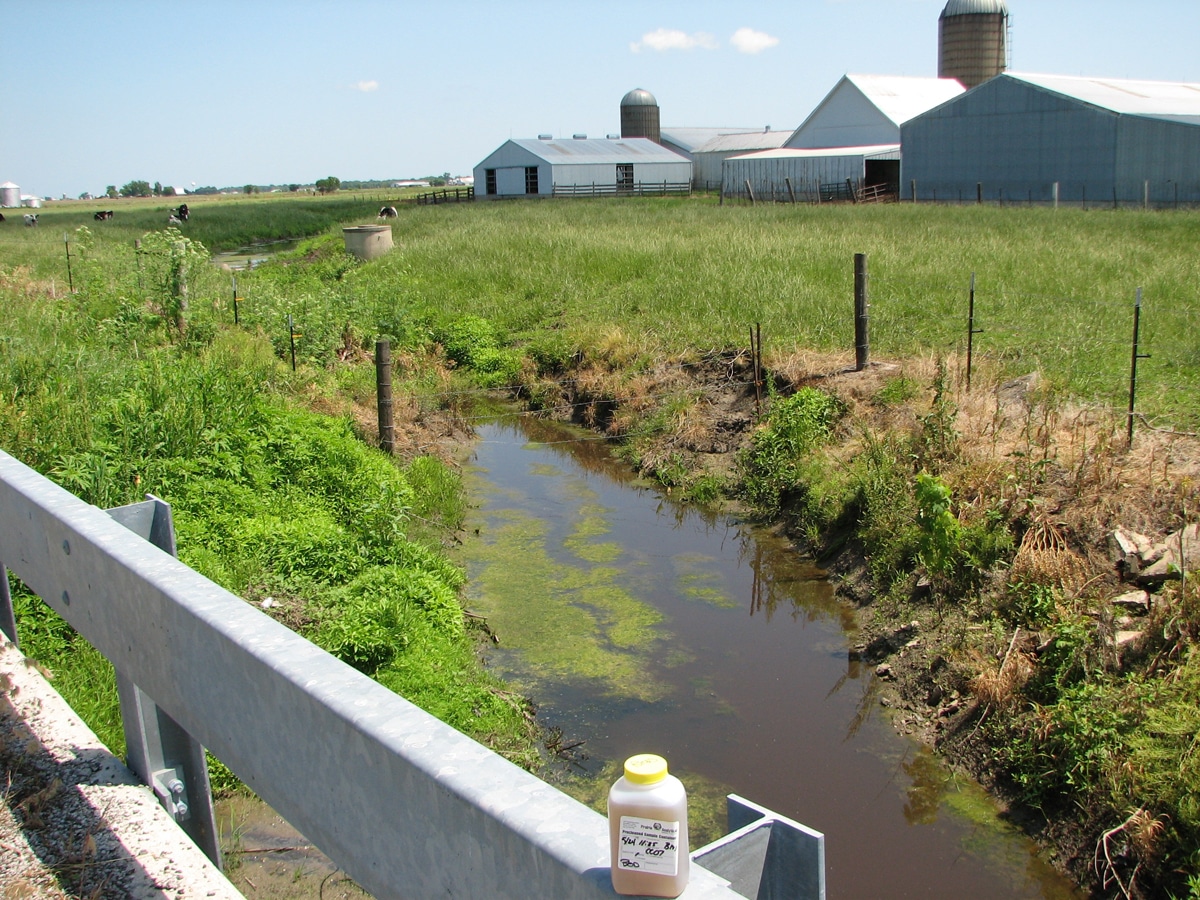
When people think of water pollution, what comes to mind? Maybe visions of sewage run offs, industrial plants, oil spills, etc?

I was certainly surprised to learn that “industrial agriculture is among the leading causes of water pollution in the United States today.

Farms? Really? Must be corporate farms then right? Wrong. Only 4% of farms in the United States are corporate farms.

So the lonely people using FarmersOnly.com need to get their shit together. Literally, manure stored in silos and lagoons spilling into streams, rivers, and other bodies of water during storms. But animal waste/byproduct isn’t half as bad as the hormones and antibiotics that are seeping into fresh water supplies.

That’s right, it’s not just hipsters who want grass-fed beef for their steaks and burgers. You see folks, farmers pump hormones and antibiotics either into the animals directly or into their food supply so they’ll grow faster and won’t get sick before they’re slaughtered. This means farmers can make more money by having a higher quantity of physically larger meat and poultry sources. This is why there are so many fast food places with cheap burgers and chicken sandwiches and why organic, grass-fed beef and poultry is more expensive. Animals fed grass are smaller and take longer to mature.

Now the vast majority of ‘Mericans don’t care about what their meat is fed before they eat it. They want more chicken nuggets and bigger burgers as cheap and as often as possible. How else can every fast food place have a dollar menu after all?

However, the hormones and antibiotics that are getting into the rivers and streams are starting to mutate the wildlife.

If the fish are getting mutated, what is happening/going to happen to human beings who come into contact with this water?

frackishimalogo1ajclogo2

by @anarchyroll
7/15/2014

Did you know you could poison the drinking water for 300,000 people and the only penalty you’ll face will be an $11,000 fine?

Freedom Industries is the company responsible for the West Virgina Chemical Spill that took place in January. 10,000 gallons of the chemical MCHM (used in coal production) spilled into a river that was the main source of fresh drinking water for 300,000 civilians in West Virgina across nine counties in the western part of the state. They have been fined $11,000 by the Labor Department of the federal government.

Freedom Industries has since filed for bankruptcy, and a bill regulating chemical tanks has been passed in the wake of the spill. But $11,000 as a penalty for leaving 300,000 people without drinkable water for ten days?

My attention is pulled towards stories that involve mass poisoning of fresh water. A vast minority of the amount of water on planet Earth is drinkable. We can’t survive as a species without fresh water. Yet we seem content with having the essence of life poisoned at a rate that could be classified as habitual and doing virtually nothing about it. What does that say about us?

Poisoning the essence of life should at least carry a penalty similar to a DUI. I know people who have gotten DUI’s who have had to pay more than $11,000 when it was all said and done. Is drinking and driving a vehicle on an empty road in the middle of the night worse than poisoning water for 300,000 people?

40 people were sent to the hospital from drinking or simply being exposed to the contaminated water. If I did something that sent 40 people to the hospital, would I not face a penalty more severe than an $11,000 fine?

There is no law without order and no order without law. If people can get away with stealing, murder, and rape then it has been shown throughout history that people will murder, steal, and rape vastly more than if there are immediate and severe consequences for those evil actions.

I certainly classify poisoning water as an evil action, do you?

If we continue to let companies and corporations break the law without having to worry about the consequences everyday people have to worry about, why do we think they’ll do the right thing and follow the laws/rules? Do we think that for profit corporations will engage in a thought and decision-making process in a way that is evolved beyond human nature?

The Supreme Court has said that corporations are people. If companies and corporations are people, then shouldn’t we  punish them for hurting people the way we punish individuals for hurting people?