Posts Tagged ‘pollution’


The Straw and the Fighter Jet

Americans have spent years being told that climate change is the defining challenge of our time.

We’ve been encouraged to recycle.

  • To use reusable bags.
  • To swap plastic straws for paper ones.
  • To buy electric vehicles.
  • To shrink our carbon footprints wherever possible.

Some of those changes may help. Some may not. But they all point toward the same idea:

Environmental responsibility starts with you. The message is everywhere.

The question isn’t whether individuals should be mindful of their consumption.

The question is why the conversation so often stops there.

Because while ordinary people are being asked to make small adjustments to their daily lives, one of the world’s largest institutional emitters operates largely outside the public climate debate.

The United States military.


The Carbon Cost of Global Power

The United States maintains a military presence unlike anything in modern history.

  • Hundreds of installations.
  • Dozens of countries.
  • Aircraft carriers crossing oceans.
  • Fighter jets are conducting training exercises.
  • Massive supply chains are moving personnel, equipment, and resources around the globe.

None of that runs on good intentions. It runs on fuel. Lots of it.

Researchers with Brown University’s Costs of War Project estimate Pentagon operations generate roughly 56 million metric tons of greenhouse gases annually.

Maintaining that footprint requires an estimated 4.6 billion gallons of fuel every year.

The scale becomes easier to understand when considering the military’s global reach. The United States operates approximately 750 military installations across more than 80 countries and territories.

If the U.S. military were a country, its emissions would rank ahead of many sovereign nations.

Yet most Americans rarely hear military emissions discussed in climate conversations.


An Emissions Source Hiding in Plain Sight

This isn’t because the information is secret.

It’s because the topic rarely receives the same attention as other sources of emissions.

Climate coverage often focuses on

  • Cars
  • Air travel.
  • Homes
  • Consumer products.
  • Individual lifestyle choices.

All legitimate subjects. But military emissions exist on a completely different scale.

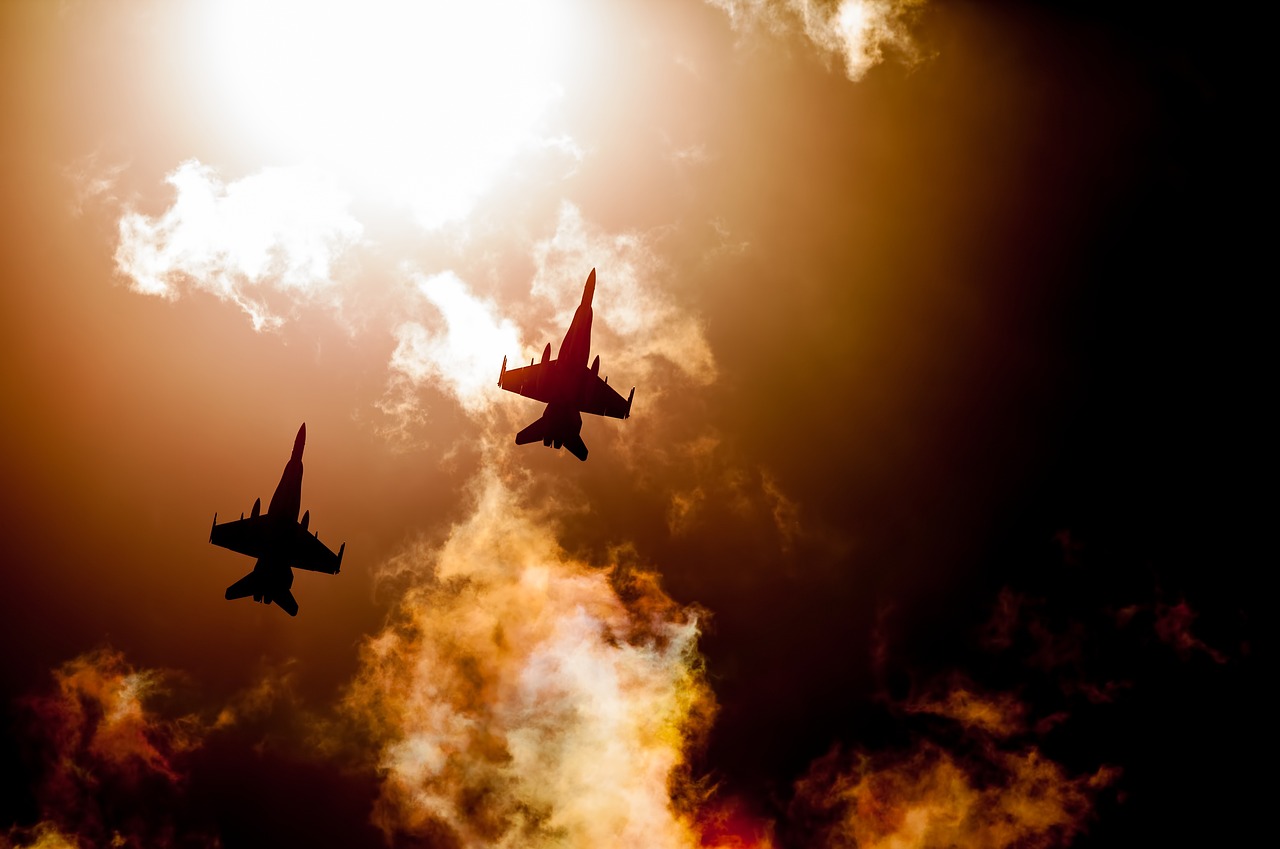
A single fighter aircraft can burn hundreds or even thousands of gallons of fuel during operations.

Carrier strike groups require fleets of ships, aircraft, and support vessels. Overseas bases consume enormous amounts of energy simply to remain operational. None of this is incidental.

These emissions are not an unfortunate side effect. They are part of the cost of maintaining global military reach.

Whether that cost is justified is a separate debate. Ignoring its existence shouldn’t be.

An American can spend an entire year carrying reusable grocery bags, rinsing out recycling bins, avoiding plastic straws, and feeling a small pang of guilt every time they forget one at the store. Those choices may matter.

But they do not change the reality that a single military aircraft can consume more fuel in a few hours than many households use in months.

For years, the public has been encouraged to view climate responsibility through the lens of personal consumption.

  • Bring the right bag.
  • Buy the right car.
  • Throw the right item into the right bin.

Meanwhile, institutions operating on a vastly different scale often remain in the background of the conversation.

The issue is not whether individual responsibility matters. The issue is whether responsibility is being discussed in proportion to power.


The Blind Spot

This creates an uncomfortable contradiction.

  • Political leaders regularly describe climate change as an urgent threat.
  • Corporations release sustainability reports.
  • Media outlets produce endless stories about individual carbon footprints.
  • Citizens are encouraged to change their behavior.

Yet one of the largest institutional sources of emissions remains largely absent from public discussion.

Why? Part of the answer may be political.

Questioning consumer habits is relatively easy. Questioning powerful institutions is not. A reusable grocery bag requires no confrontation with power.

A conversation about military emissions inevitably raises larger questions.

  • Questions about priorities.
  • Questions about spending.
  • Questions about the relationship between environmental goals and geopolitical ambitions.
  • Questions many people would rather avoid.

More than sixty years ago, President Dwight D. Eisenhower offered a warning that still resonates today:

“In the councils of government, we must guard against the acquisition of unwarranted influence, whether sought or unsought, by the military-industrial complex.”

Eisenhower wasn’t warning against national defense. He was warning about what happens when powerful institutions become insulated from public scrutiny.


The Climate Exception

The silence becomes even more interesting when viewed historically.

Military emissions have often occupied a unique position within international climate discussions.

Researchers have documented instances in which military emissions were exempt from, given special treatment, or subject to reduced reporting requirements compared with civilian sectors.

Again, this is not evidence of a conspiracy. It’s evidence of a hierarchy.

When environmental policies collide with powerful institutions, exceptions tend to emerge.

The rules may apply broadly. Just not always equally.

Climate researcher Neta Crawford, whose work has extensively documented Pentagon emissions, has noted that the U.S. military is “one of the largest institutional emitters of greenhouse gases in the world.”

Yet despite that reality, military emissions remain far less visible in public debate than emissions generated by individual consumers. That disconnect deserves more attention than it receives.


If It’s an Emergency, Treat It Like One

This article is not an argument against national defense. It is not an argument against military service. And it is not an attempt to reduce a complex geopolitical world into a simple environmental talking point.

It is a question. If climate change is truly the existential threat we are told it is, why does one of the world’s largest institutional emitters receive so little public scrutiny?

Why are citizens routinely reminded of their individual responsibility while some of the largest institutional sources of emissions are treated as an afterthought?

Why do some emissions dominate headlines while others remain largely invisible?

  • Perhaps there are good answers.
  • Perhaps there are strategic necessities.
  • Perhaps some tradeoffs cannot be avoided.

But a society serious about reducing emissions should be willing to examine every major source of them. Especially the ones it is least comfortable discussing.

Because if climate change is an emergency, then every major emitter deserves scrutiny. And if some institutions remain exempt from that scrutiny, then perhaps what we’re witnessing isn’t just environmental policy.

It’s political prioritization.
When one has little to no life experience in the “real” world, that of the world outside of high school and home life; climate change seems like a no brainer issue. We know what’s wrong. We know what’s causing it. So let’s fix it. Or at least do something of substance about it.

One only needs to spend a minimal amount of time working in first world, developed nations to understand why little to anything gets done about climate change that isn’t performative at best.

The foundation of all developed countries is that of waste and pollution. Capitalism in the late stage form we’re currently living in, demands infinite growth with finite resources. Throw out your old thing and buy this new thing, for every thing, for every one, ever, forever.

There is so much pollution that even the most ardent activists can’t comprehend and would prefer to not think about, for the sake of being able to sleep or have relationships.

That is the scale of the problem. Not that it’s inconceivable, but it is so vast that a human being with emotions and a soul can’t handle taking in a full account of the negatives vs the positives.

How many cargo ships sink, spill, or lose their cargo in the ocean every year? How many of those ships are moving across the ocean every day? Even the ones that don’t spill anything, which is beyond commonplace, how much oil is polluting the ocean just in day to day business?

Now include airplanes. Now include cars. Now buses. Now boats. Now cargo trucks. Now private jets. We haven’t even gotten to non recyclable plastic or styrofoam yet.

We can change all of this. But not you and me. Sorry, too much wealth inequality. This change has to come at the top. Capitalism is the cancer killing the planet. To deny that is to deny the law of gravity. We at the bottom certainly can’t give up, we know that in our bones. But what we also need to know, admit aloud, and talk about publicly is that the narrative of personal responsibility in combating climate change only need apply to those who pull the levers of capitalism. Not our neighbors driving an SUV or using plastic bags at the grocery store.

frackishimalogo1ajclogo2
by @anarchyroll

Did you know warm water contain less oxygen?

I didn’t. Like most people when I think of what produces oxygen, I think of trees. But 70% of the Earth’s oxygen comes from the ocean, more specifically from the marine plants in the ocean.

0-95685800_1438940931_45-1-20150815

One need not be an environmentalist or a cynic to be aware that the average person doesn’t give a shit about marine phytoplankton. Even people tuned into environmental news are likely to think phytoplankton is a superfood juice fad. Perhaps because Googling marine phytoplankton brings up almost exclusively websites trying to sell the plant in powdered form.

“Save the Trees” may be easier to say and fit on a button/bumper sticker, but it is the phytoplankton that produces almost 3/4 of the oxygen. Maybe we can turn “Save the Phytoplankton” into a meme or gif.

Did you know we need oxygen to live?

It’s true, although it feels like suffocation to not have access to dank memes and social media, not having oxygen is actually suffocation.

So although we as humans have demonstrated a remarkable tolerance for pollution of the air we breathe, that tolerance is likely to be just a wee bit smaller with no air to breathe at all.

frackishimalogo1

by @anarchyroll
9/21/2014

The #PeoplesClimate marches/rallies that occurred across the globe are a great representation of the good news/bad news holding pattern that pro environment supporters have been stuck in for decades. The good news is the #PeoplesClimate was so big, involving so many people, in so many of the world’s biggest cities that it literally could not be ignored by the press or anyone on the internet on 9/21/2014. The bad news is that tangible, global, legislative action is unlikely to occur for at least another full year.

This good news/bad news paradigm has most recently been demonstrated in regards to the two most talked about environment issues of the last quarter century; the ozone layer and the deforestation of the Amazon.

The good news is that scientists have discovered that the ozone layer is starting to heal. How awesome! Certainly no negative spin to put on this story. Since the 1970s attention has been brought to this issue in hopes of reversing the now notorious hole in the ozone layer that has been a direct contributor to global warming and rising skin cancer rates.

Ready for the bad news?

The Amazon rainforest is getting slashed and burned at a 30% increase. Deforestation is right there with industrial pollution as the greatest causes of global warming and climate change. We need rainforests to sustain the planet, but captains of industry seem to think we need grazing land for cattle and industrial logging more.

Good news, bad news unfortunately isn’t going to cut it, why? Because we are playing from behind. Pro environmentalists can’t keep scoring field goals while polluters and deforestrers are scoring touchdowns. It’s great that more people are aware of the negative effects of climate change, the fact that it’s man-made, and we must do something to reverse it. The problem is that this has happened because the negative effects of climate change are being felt more and more every single day. We have let so much wrong get done that the Earth is irreversibly changing all around us quicker, in real-time. It’s great to have good news to report but wildfires, droughts, and other natural disaster devastation is only going up. Is it too late? The good news is that in this fight, there is literally no reason to quit, because there is nothing else as worthy of fighting for as the future of the planet we inhabit.

frackishimalogo1ajclogo2

by @anarchyroll
8/28/2014

When people think of water pollution, what comes to mind? Maybe visions of sewage run offs, industrial plants, oil spills, etc?

I was certainly surprised to learn that “industrial agriculture is among the leading causes of water pollution in the United States today.

Farms? Really? Must be corporate farms then right? Wrong. Only 4% of farms in the United States are corporate farms.

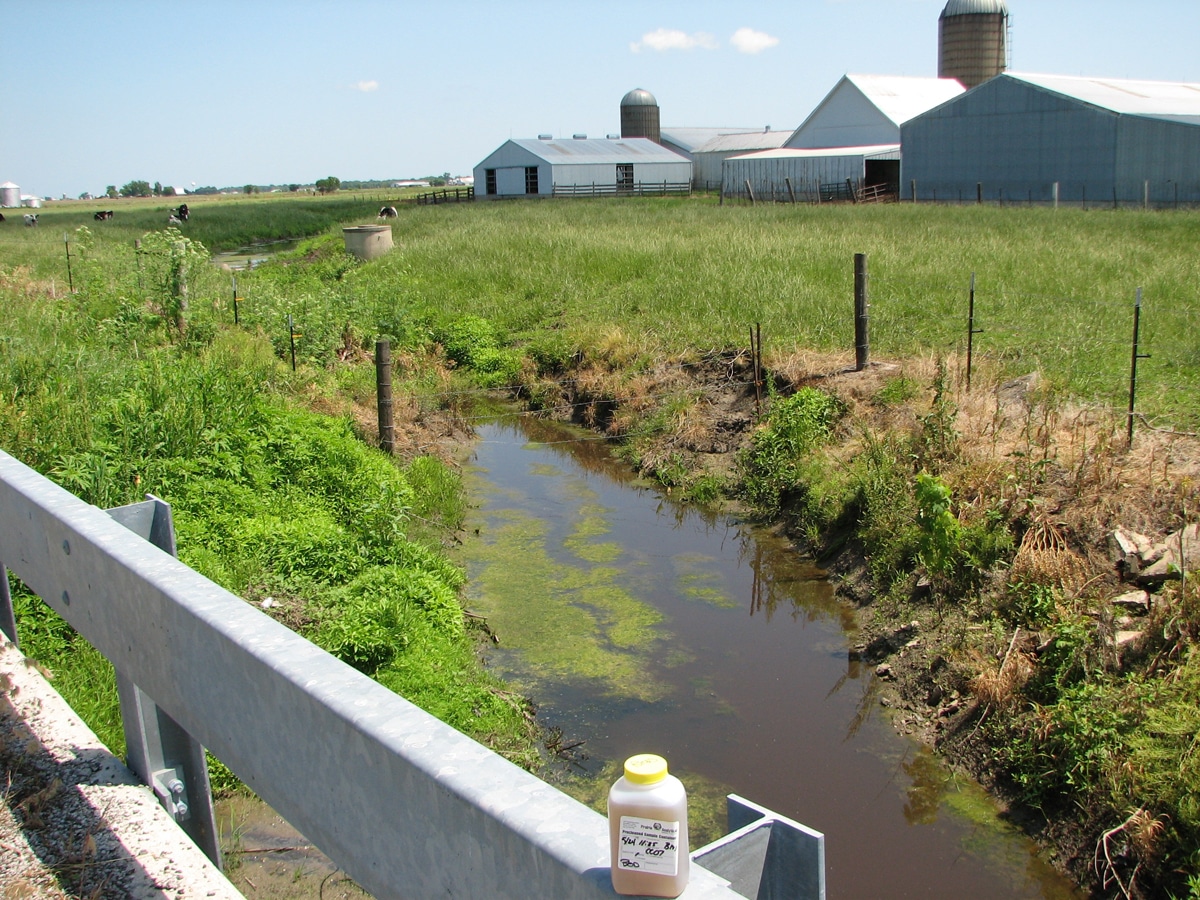
So the lonely people using FarmersOnly.com need to get their shit together. Literally, manure stored in silos and lagoons spilling into streams, rivers, and other bodies of water during storms. But animal waste/byproduct isn’t half as bad as the hormones and antibiotics that are seeping into fresh water supplies.

That’s right, it’s not just hipsters who want grass-fed beef for their steaks and burgers. You see folks, farmers pump hormones and antibiotics either into the animals directly or into their food supply so they’ll grow faster and won’t get sick before they’re slaughtered. This means farmers can make more money by having a higher quantity of physically larger meat and poultry sources. This is why there are so many fast food places with cheap burgers and chicken sandwiches and why organic, grass-fed beef and poultry is more expensive. Animals fed grass are smaller and take longer to mature.

Now the vast majority of ‘Mericans don’t care about what their meat is fed before they eat it. They want more chicken nuggets and bigger burgers as cheap and as often as possible. How else can every fast food place have a dollar menu after all?

However, the hormones and antibiotics that are getting into the rivers and streams are starting to mutate the wildlife.

If the fish are getting mutated, what is happening/going to happen to human beings who come into contact with this water?