Posts Tagged ‘global warming’


The Straw and the Fighter Jet

Americans have spent years being told that climate change is the defining challenge of our time.

We’ve been encouraged to recycle.

  • To use reusable bags.
  • To swap plastic straws for paper ones.
  • To buy electric vehicles.
  • To shrink our carbon footprints wherever possible.

Some of those changes may help. Some may not. But they all point toward the same idea:

Environmental responsibility starts with you. The message is everywhere.

The question isn’t whether individuals should be mindful of their consumption.

The question is why the conversation so often stops there.

Because while ordinary people are being asked to make small adjustments to their daily lives, one of the world’s largest institutional emitters operates largely outside the public climate debate.

The United States military.


The Carbon Cost of Global Power

The United States maintains a military presence unlike anything in modern history.

  • Hundreds of installations.
  • Dozens of countries.
  • Aircraft carriers crossing oceans.
  • Fighter jets are conducting training exercises.
  • Massive supply chains are moving personnel, equipment, and resources around the globe.

None of that runs on good intentions. It runs on fuel. Lots of it.

Researchers with Brown University’s Costs of War Project estimate Pentagon operations generate roughly 56 million metric tons of greenhouse gases annually.

Maintaining that footprint requires an estimated 4.6 billion gallons of fuel every year.

The scale becomes easier to understand when considering the military’s global reach. The United States operates approximately 750 military installations across more than 80 countries and territories.

If the U.S. military were a country, its emissions would rank ahead of many sovereign nations.

Yet most Americans rarely hear military emissions discussed in climate conversations.


An Emissions Source Hiding in Plain Sight

This isn’t because the information is secret.

It’s because the topic rarely receives the same attention as other sources of emissions.

Climate coverage often focuses on

  • Cars
  • Air travel.
  • Homes
  • Consumer products.
  • Individual lifestyle choices.

All legitimate subjects. But military emissions exist on a completely different scale.

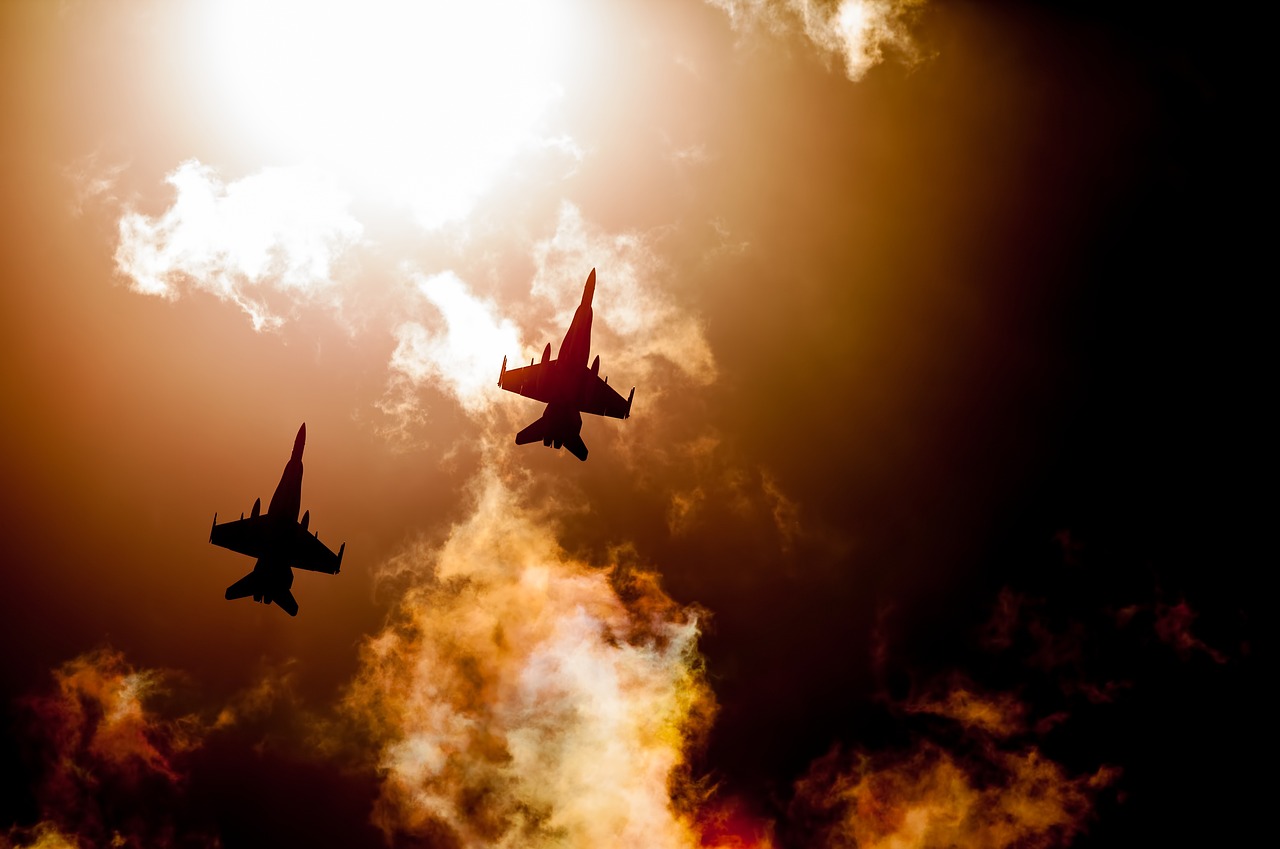
A single fighter aircraft can burn hundreds or even thousands of gallons of fuel during operations.

Carrier strike groups require fleets of ships, aircraft, and support vessels. Overseas bases consume enormous amounts of energy simply to remain operational. None of this is incidental.

These emissions are not an unfortunate side effect. They are part of the cost of maintaining global military reach.

Whether that cost is justified is a separate debate. Ignoring its existence shouldn’t be.

An American can spend an entire year carrying reusable grocery bags, rinsing out recycling bins, avoiding plastic straws, and feeling a small pang of guilt every time they forget one at the store. Those choices may matter.

But they do not change the reality that a single military aircraft can consume more fuel in a few hours than many households use in months.

For years, the public has been encouraged to view climate responsibility through the lens of personal consumption.

  • Bring the right bag.
  • Buy the right car.
  • Throw the right item into the right bin.

Meanwhile, institutions operating on a vastly different scale often remain in the background of the conversation.

The issue is not whether individual responsibility matters. The issue is whether responsibility is being discussed in proportion to power.


The Blind Spot

This creates an uncomfortable contradiction.

  • Political leaders regularly describe climate change as an urgent threat.
  • Corporations release sustainability reports.
  • Media outlets produce endless stories about individual carbon footprints.
  • Citizens are encouraged to change their behavior.

Yet one of the largest institutional sources of emissions remains largely absent from public discussion.

Why? Part of the answer may be political.

Questioning consumer habits is relatively easy. Questioning powerful institutions is not. A reusable grocery bag requires no confrontation with power.

A conversation about military emissions inevitably raises larger questions.

  • Questions about priorities.
  • Questions about spending.
  • Questions about the relationship between environmental goals and geopolitical ambitions.
  • Questions many people would rather avoid.

More than sixty years ago, President Dwight D. Eisenhower offered a warning that still resonates today:

“In the councils of government, we must guard against the acquisition of unwarranted influence, whether sought or unsought, by the military-industrial complex.”

Eisenhower wasn’t warning against national defense. He was warning about what happens when powerful institutions become insulated from public scrutiny.


The Climate Exception

The silence becomes even more interesting when viewed historically.

Military emissions have often occupied a unique position within international climate discussions.

Researchers have documented instances in which military emissions were exempt from, given special treatment, or subject to reduced reporting requirements compared with civilian sectors.

Again, this is not evidence of a conspiracy. It’s evidence of a hierarchy.

When environmental policies collide with powerful institutions, exceptions tend to emerge.

The rules may apply broadly. Just not always equally.

Climate researcher Neta Crawford, whose work has extensively documented Pentagon emissions, has noted that the U.S. military is “one of the largest institutional emitters of greenhouse gases in the world.”

Yet despite that reality, military emissions remain far less visible in public debate than emissions generated by individual consumers. That disconnect deserves more attention than it receives.


If It’s an Emergency, Treat It Like One

This article is not an argument against national defense. It is not an argument against military service. And it is not an attempt to reduce a complex geopolitical world into a simple environmental talking point.

It is a question. If climate change is truly the existential threat we are told it is, why does one of the world’s largest institutional emitters receive so little public scrutiny?

Why are citizens routinely reminded of their individual responsibility while some of the largest institutional sources of emissions are treated as an afterthought?

Why do some emissions dominate headlines while others remain largely invisible?

  • Perhaps there are good answers.
  • Perhaps there are strategic necessities.
  • Perhaps some tradeoffs cannot be avoided.

But a society serious about reducing emissions should be willing to examine every major source of them. Especially the ones it is least comfortable discussing.

Because if climate change is an emergency, then every major emitter deserves scrutiny. And if some institutions remain exempt from that scrutiny, then perhaps what we’re witnessing isn’t just environmental policy.

It’s political prioritization.



How disaster capitalism thrives in the age of climate chaos


Disaster as a Business Model

Hurricanes rip coastlines apart, wildfires reduce neighborhoods to ash, floods drown farmlands. Each new disaster is framed as a natural tragedy—yet behind the smoke, someone always finds a way to profit.

Swiss RE reports climate disasters are already costing the U.S. 0.4% of GDP annually, with every dollar of adaptation saving eleven in avoided damages【time.com】. But adaptation isn’t what elites are betting on. Instead, they see chaos as an opportunity.

As American Studies scholar Kevin Rozario puts it:

“The human component is a massive accelerant to the fires.”【smith.edu】

The accelerant isn’t just carbon—it’s capitalism itself.


The Pattern of Profit

When a climate disaster strikes, everyday people lose homes, livelihoods, and loved ones. Meanwhile, corporations cash in.

In the insurance sector, even a catastrophe doesn’t halt profits. The Financial Times reports that despite massive underwriting losses, insurers are hiking premiums and retreating from high-risk zones, and “investors are rewarding them for becoming increasingly selective in the coverage they offer.”【ft.com】

In 2024, global disaster losses hit $320 billion. Only $140 billion was insured, leaving $180 billion uninsured, shifted onto individuals and taxpayers【thinklandscape.globallandscapesforum.org】.

Kay Young, a 63-year-old survivor of the Los Angeles wildfires, summed up the fight ordinary people face:

“They’re not going to give you the value of your house … if they do, you really have to fight for it.”【reuters.com】


The Shock Doctrine Playbook

This cycle is not an accident—it’s a strategy.

Naomi Klein’s Shock Doctrine laid it bare: disasters create a “shock window” in which elites exploit public disorientation to push radical privatization. The American Bar Association defines disaster capitalism as:

“Exploitation of natural or man-made disasters in service of capitalist interests.”【americanbar.org】

We’ve seen it after wars, coups, and financial crashes. Now, the same playbook drives climate response.


Wildfires & the Land Grab Economy

Few examples show this more clearly than California’s wildfires. In Malibu, where entire neighborhoods burned, wealthy investors swooped in. The Times reports lots reduced to rubble were resold for up to $7.5 million, raising “troubling questions about gentrification in the wake of climate-related disasters.”【thetimes.co.uk】

Governor Newsom eventually issued an order barring unsolicited offers from speculators preying on survivors—some of whom were approached while their houses were still burning【gov.ca.gov】. But the vultures had already circled.

Stephen Pyne, the historian of fire, describes this era as the Pyrocene:

Humanity’s combustion—fossil fuel and ecological disruption—has created a fire-dominated epoch.

In other words, we lit the match. Now, profiteers are selling the ashes.


Who Pays the Price

Communities most vulnerable to climate chaos are the ones paying the heaviest price. In developing nations, most disaster losses are uninsured. In the U.S., low-income and marginalized neighborhoods bear the brunt of heat waves, toxic smoke, and flooding.

Scholars writing in Global Environmental Change warn:

“Climate-induced disasters deepen inequality and social vulnerability, disproportionately harming marginalized communities.”【sciencedirect.com】

Meanwhile, wealth insulates the few: billionaires hire private firefighters, build fortified compounds, or buy real estate on higher ground. The rest of us scrape together GoFundMe donations.


Who Cashes In

The winners of this game are clear:

  • Insurance companies post record profits even as payouts shrink【greenmoney.com】.
  • Wall Street invents catastrophe bonds, letting investors bet on disasters.
  • Developers flip ruined communities into luxury zones.
  • Corporations snap up FEMA contracts.

The Allianz Group—hardly a radical source—warned bluntly that at 3°C of warming, damage will be impossible to adapt to or insure against, threatening the foundations of capitalism itself【theguardian.com】. Even the system’s architects know it’s unsustainable.


Resistance Against the Shock Doctrine

When fire levels a community, it should be a moment of collective rebuilding. Instead, it’s too often a handoff: loss for the many, leverage for the few.

As Vanity Fair reported from wildfire-stricken California:

“Profiteers and misinformation have exacerbated the distress of the affected … community members … are concerned about future rebuilding efforts potentially displacing them.”【vanityfair.com】

This is the heart of the Climate Shock Doctrine: the transformation of catastrophe into capital.

The fight for climate justice is not just ecological—it’s economic. We can’t stop disasters from striking, but we can decide who owns the recovery. That means:

  • Public ownership of critical resources.
  • Investments in resilience for poor communities first.
  • Grassroots solidarity networks that sidestep corporate vultures.
  • Cutting off financial pipelines to fossil fuels—the “oxygen on which the fire of global warming burns”【newyorker.com】.

Because if disaster capitalism keeps winning, we’re not just burning forests—we’re torching the future.


Wisdom is Resistance. Truth Over Tribalism.

frackishimalogo1

global-warming

by @anarchyroll

You gotta have faith, faith, faith.

Faith is essential, when going through hard times. During hard times one must have faith that things will get better. One needs to have faith in his or herself to do the work needed to dig out of the hole they are in. Faith in other people is essential to living in civilized societies. Our currency is backed by the full faith and credit of the US government. More than 3/4 of the world’s population belongs to a religious faith.

The leader of the world’s largest religion believes in global warming and believes science is the way forward on the issue.

I wonder how many of his followers across the globe feel the same or in this case, believe as he does. I’m pretty sure they have to, or are at least supposed to. But aren’t we supposed to believe 97% of scientists, NASA, and the Pentagon when they all agree global warming is happening and is a threat to our security and very existence?

Is it faith that a higher power will protect us that stops people from accepting the reality of global warming? Is it greed from money earned from contributing to the acceleration of global warming over the past thirty years? Is it ignorance in thinking that because the weather in one’s hometown is fine that global warming is a hoax? Is it denial? Accepting global warming as the reality of our present and future forces both a painful look in the mirror and even more painful wide scale changes moving forward.

The Military Industrial Complex knows global warming is real. When did they become a bastion of liberal ideology? The effects of global warming are presently causing security risks and have potential for greater security threats in the future. Maybe fighting two wars for oil got them to change their tune on wind, hydro, and solar energy. Or maybe its the nature of military operations being centered around collecting, analyzing, and accepting results of measurable data that got them to come around to the reality of global warming.

On the other end of the spectrum is the current President of the United States who has said that global warming is a “hoax” perpetrated by the Chinese. Many of his supporters/voters are also climate change deniers. Trump is backing up his words on this issue by attempting to cut the Environmental Protection Agency budget. He also recently green-lit the Keystone XL Pipeline which has negative environmental concerns associated with it.

Climate change deniers may sound and come across as ignorant, but at least they don’t have the power to further damage the planet in an negative way. Trump, in his first 100 days in office has taken two measures to tangibly create negative consequences for the planet. I suppose I could have faith that Trump will do the right thing, change course, and become an environmentally friendly President. I could have faith and believe that all the climate skeptics will accept the scientific facts and reality.

They can have faith, I’ll trust…but verify.

frackishimalogo1

By @anarchyroll

What is it about important events that will actually effect all of humanity that allows it to fly under the radar? It doesn’t bleed so I guess it doesnt lead. It’s easy to blame the gatekeepers of information but in the era of internet news, is there such a thing as news/information gatekeepers?

Humans do not like thinking about their mortality. We hate acknowledging the fact that we will die. We spend billions of dollars trying to delay death and even more trying to look not as near death as we are. I suppose its natural that we also don’t want to think about the end of the world.

Just like how we are all guaranteed death, the Earth is guarenteed to meet its end one day. That day is incomprehensibly far in the future. However, the world ending and the world being uninhabitable for human beings are two very different things.

article-2568825-1be1f72300000578-287_634x427

Hearing or reading about things like rising sea levels, coral bleaching, and global warming doesn’t shout out apocalypse. The Earth has withstood much worse than all three of those forces combined. Which is true. Global warming on steroids wont be the end of the Earth. The massive disruption in the food chain caused by coral bleaching wont come anywhere near the end of the world.

But apocalyptic scare tactics have never been the point of bring environmental news to the forefront of people’s attention. The Earth will be just fine. But will it be inhabitable for humans? That is a whole other story and is the issue at hand when environmentalists and NASA ring the alarm about carbon dioxide in the air, acidity in the sea and draughts on land.

We all love Earth, but we love ourselves more. Distracting ourselves from our problems is a natural part of the human condition. Without memes and gifs my slow work days would be soul dissolving. But the distractions must not continue to overshadow the purpose when we are reaching external benchmarks for disaster such as the carbon dioxide tipping point.


frackishimalogo1
ajclogo2

heat-wave-15-04-2016-429

1 Degree Celcius = 34 Degrees Farenheit

by @anarchyroll

Discussing the weather is something that I prefer not to do in general. Namely because I live in an area surrounded demographics who complain about the weather regardless of the season, temperature, humidity percentage, or precipitation level.

But when you care about global warming and climate change, reading and writing about the weather becomes unavoidable.

Climate change is also becoming an unavoidable topic for a growing percentage of the general population. Consequences of climate change are becoming increasingly unavoidable for a growing percentage of the population living near a coastline or the Equator.

Take the second largest democracy in the world for instance, India.

Where temperatures averaging 119 degrees has 330 million people in danger heatstroke, dehydration, and other heat related health threats.

The record draught caused by the record heat has already caused hundreds of farmers to kill themselves due to drastically reduced or completely eliminated crop yields.

Hundreds of millions of people in danger and death due to drastically reduced resources. These two things will soon become the norm for the majority of the planet rather than a minority. Although saying 300 million people are a minority looks weird to read, feels weird to type, and sounds weird to say. But if global warming continues as is.

It is easy to dismiss this news and to not care. Those are parts of the human condition. To not care unless we are in direct danger. India is far away. To go there feels like you’re on a different planet let alone a different country. But as far away as it is, as different as the people and culture may be. If their plight seems unrealistic for say Americans enjoying the start of summer, why don’t we ask the people of California how unrealistic and far away dangers from rising temperatures and draught are