

How modern media exploits cognitive bias and emotional tribalism
Modern propaganda doesn’t arrive wearing a uniform or marching behind a flag. It slips through screens wrapped in certainty, engineered outrage, and the subtle pleasure of belonging. It has evolved from posters and radio broadcasts into a precision-guided psychological instrument — one that understands human cognition better than many of us understand ourselves.
The old question — “How do they manipulate people?” — has a modern answer:
They don’t manipulate us in spite of how the mind works; they manipulate us because of it.
Propaganda is not powered by lies alone. It’s powered by the machinery of human bias.
The Mind Wants Simplicity, Power Wants Compliance
The human brain is a pattern-hungry organ. It hates uncertainty. It hates complexity. It rewards itself for reaching quick conclusions, even when those conclusions are wrong. Modern propaganda exploits this ancient wiring.
Cognitive shortcuts — heuristics — make survival faster. But in the information age, they become vulnerabilities.
- Availability bias: the more something is repeated, the more “true” it feels.
- Confirmation bias: we select information that flatters our worldview and ignore what threatens it.
- Black-and-white thinking: nuance becomes uncomfortable, so we choose a side because sides feel safer than questions.
The corporate press, political operatives, and intelligence-adjacent media pipelines all understand one thing: A confused public is dangerous to power, but a certain public is easily controlled. Certainty is the product. Propaganda is the packaging.

Outrage Is a Business Model
Once, propaganda was a state-driven affair. Today, it’s a market.
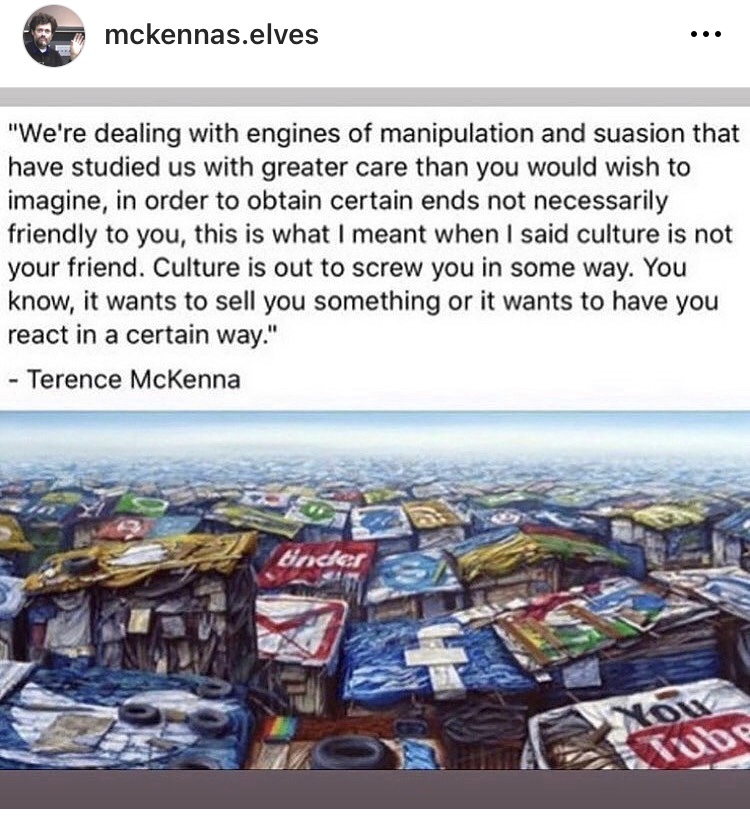
Emotion is the cheapest fuel. Outrage the most renewable. Entire empires — cable news, social media platforms, political campaign networks — have built their fortunes on keeping the collective nervous system in fight-or-flight mode.
Anger boosts clicks. Fear extends watch-time. Tribalism keeps audiences loyal.
Our emotional circuitry — evolved for survival on an open savannah — was not designed to absorb 24/7 stimulation from institutions with quarterly earnings goals. Attention is monetized, but emotion is weaponized.
Propaganda is no longer about controlling a narrative.
It’s about creating one that the public cannot look away from.
Tribalism Isn’t a Bug — It’s the Operating System
Humans form tribes because they offer belonging. But in the modern era, belonging is manufactured. Propaganda leans heavily on identity, because identity determines loyalty.
We are encouraged to view politics as teams, not policies.
We are nudged to respond to stories as fans of a faction, not citizens.
We are trained to mistake performative allegiance for moral clarity.
This emotional tribalism creates a self-reinforcing ecosystem:
- Stories are framed to validate “our side.”
- The other side is dehumanized, mocked, or demonized.
- Facts become less important than the feeling of being correct.
- Propaganda does not need to persuade — it only needs to polarize.
A divided public is predictable. Predictability is profitable.
And profit keeps the propaganda machine humming.
Modern Media Doesn’t Report Reality — It Constructs It
The issue is not simply bias. Bias is human.
The issue is manufacture — the deliberate shaping of public perception to serve institutional goals.
We’ve seen this repeatedly:
- Intelligence agencies quietly laundering narratives through sympathetic journalists.
- Corporate advertisers influencing editorial decision-making.
- Tech platforms algorithmically boosting content that increases dependence on the platform, not awareness in the world.
- “Fact-checking” becoming less about truth and more about enforcing the preferred narrative frame.
In this environment, propaganda is not a fringe tactic.
It’s the default language of power.
Reality doesn’t break down in this system — it gets replaced.
Why the Propaganda Works: The Mind’s Need for Belonging, Safety, and Story
No matter how educated or skeptical we become, the mechanics of the human mind stay the same.
Propaganda works because:
- We crave coherence. A simple story beats a true one.
- We crave belonging. Being on a team beats being uncertain.
- We crave order. Someone explaining the world beats admitting how chaotic it is.
- We crave villains. It’s easier to fear an enemy than question a system.
The architects of modern propaganda don’t need to change our minds.
They just need to activate what’s already inside them.
The weapon is not the message.
The weapon is our psychology.
Breaking the Spell: Awareness as Resistance
If propaganda exploits cognitive bias, then the antidote begins with awareness of those biases. Not enlightenment. Not perfect objectivity. Just the willingness to notice the machinery at work.
If tribalism fuels propaganda, then solidarity outside the binary becomes a quiet act of rebellion.
If emotion is the lever, then slowing down — refusing the engineered urgency — becomes a tactic.
Truth is not served by choosing a side.
Truth is served by stepping outside the game.
Propaganda collapses when the public stops responding on autopilot.
The goal is not to become immune.
The goal is to become unmanipulable.
The psychology of propaganda is simple: power weaponizes the deepest impulses of the human mind — our fear, our certainty, our longing to belong — and sells them back to us as truth.
But once the mechanism is visible, it loses its magic.
Once the trick is known, it stops being a trick.
Seeing clearly has always been the first step of resistance.







 Anarchy Journal Constitutional