
Posts Tagged ‘disaster capitalism’


How Economic Crises Become Engines of Wealth and Power Consolidation

Economic crises tend to arrive with a familiar explanation. A housing bubble bursts, a banking system destabilizes, a pandemic disrupts global supply chains, or inflation spirals beyond expectations. The details differ, but the public narrative usually converges on the same conclusion: the outcome was unavoidable, and no one could have reasonably predicted it.

But the aftermath tends to follow a far more consistent pattern than the causes. Large financial institutions stabilize or expand, political power becomes more centralized, and wealth shifts upward while broad segments of the population absorb long-term losses. After the volatility fades, recovery is not evenly distributed. It reliably flows toward institutions that were already closest to capital, credit, and political leverage.

That asymmetry raises a question that does not depend on conspiracy or intent. It depends only on repetition: why do economic crises so consistently produce the same winners and losers?

The focus here is not whether crises are secretly engineered in advance. The more grounded question is why existing systems appear structurally capable of converting instability into consolidation, often regardless of what triggered the instability in the first place.


The Myth of the Unpredictable Crisis

Economic crises are typically framed as unpredictable shocks, yet the historical record often shows sustained warnings before major breakdowns. Analysts, regulators, and even insiders frequently identify systemic risks long before they materialize, though these warnings rarely alter behavior while conditions remain profitable.

The 2008 Financial Crisis illustrates this clearly. In the years leading up to the collapse, U.S. household debt rose to roughly 130% of disposable income, while the housing market became increasingly dependent on subprime lending and complex financial derivatives. When the system unraveled, more than 8 million Americans lost their homes through foreclosure.

Journalist Matt Taibbi has repeatedly emphasized a structural imbalance in how risk is handled in these systems: gains remain concentrated during expansion, while losses are dispersed broadly once failure occurs. That pattern is not an accident of timing. It is a consequence of incentives that reward risk-taking during growth phases and shift costs outward during collapse.


Disaster Creates Opportunity

Crises do not only expose weaknesses in systems; they expand what becomes politically and economically possible. During stable periods, major structural changes face resistance from public scrutiny, regulatory friction, and institutional inertia. During crises, that resistance weakens as urgency compresses decision-making timelines.

Author Naomi Klein described this dynamic as “disaster capitalism,” a pattern in which shock conditions create openings for rapid restructuring that would otherwise face significant opposition. The mechanism does not require centralized coordination. It requires only urgency combined with unequal capacity to act.

In moments of disruption, institutions with speed, capital access, and political influence are able to shape outcomes while broader populations are focused on immediate survival. The result is not always deliberate design, but it is consistently asymmetric advantage.


The Wealth Transfer Machine: 2008 and Its Aftermath

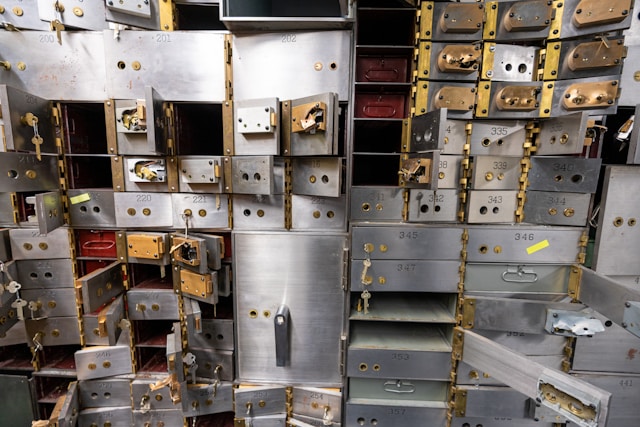
The post-2008 recovery provides one of the clearest modern examples of crisis-driven consolidation. Between 2007 and 2011, U.S. home prices fell by roughly 30% nationally, wiping out trillions in household wealth. At the same time, foreclosure filings affected over 4 million properties in the United States, with peak annual filings exceeding one million.

While households absorbed the losses, financial institutions stabilized through coordinated intervention. The Troubled Asset Relief Program (TARP) authorized $700 billion in potential support for banks and financial institutions, preventing systemic collapse while stabilizing major actors in the financial sector.

In practical terms, collapse functions as a pricing mechanism: it converts widespread financial distress into discounted access for actors with liquidity.

In the years that followed, institutional investors expanded significantly into housing markets. Firms such as BlackRock and other large asset managers helped drive large-scale acquisitions of distressed single-family homes, converting portions of owner-occupied housing stock into long-term rental portfolios. What appeared as market recovery functioned simultaneously as a restructuring of ownership.

This is where abstraction becomes structure. Crises do not merely erase wealth; they reorganize it under conditions where liquidity determines who can acquire and who must exit.


Pandemic Shock and Small Business Collapse

A similar pattern emerged during the economic disruption caused by the COVID-19 pandemic. In the United States, more than 200,000 small businesses were estimated to have closed permanently in 2020 alone, with many more experiencing prolonged revenue losses that weakened long-term viability.

At the same time, large corporations expanded market dominance. Between March 2020 and mid-2021, the combined wealth of U.S. billionaires increased by over $1.5 trillion, even as unemployment peaked above 14% during the early phase of the downturn.

Government stabilization programs such as the Paycheck Protection Program (PPP), which distributed over $800 billion in loans and aid, helped prevent a deeper collapse. However, reporting and subsequent analysis showed that a disproportionate share of larger or better-connected firms accessed relief funding more effectively than smaller independent operators.

The result was economic disruption at the bottom and accelerated accumulation at the top, operating in the same timeframe.

The result was not only economic disruption but structural consolidation. Large retailers, technology platforms, and logistics networks increased market share while many local businesses disappeared permanently, reducing competitive diversity in multiple sectors.


Manufacturing Consent During Crisis

Economic crises are also narrative events. Public perception during instability is shaped by uncertainty, fear, and reliance on official interpretation. Under these conditions, narratives that might otherwise face scrutiny often become dominant by default.

Political theorist Noam Chomsky has argued that power operates not only through coercion but through the management of public consent. In crisis conditions, the acceptable range of discourse often narrows, and alternative interpretations are more easily dismissed as destabilizing or irresponsible.

Journalist Glenn Greenwald has repeatedly pointed out that emergency frameworks tend to outlast their original justification. Temporary expansions of authority frequently become embedded into long-term governance structures, particularly when they are normalized during periods of collective uncertainty.

The result is a feedback loop: crisis reduces scrutiny, and reduced scrutiny allows structural changes that persist long after the emergency fades.


Progress for Whom?

Across different crises and time periods, certain patterns repeat. Markets recover, but unevenly. Institutions stabilize, but often at larger scale than before. Wealth rebounds, but increasingly concentrates within systems that already held disproportionate influence.

This leads to a final set of questions that avoids speculation and focuses instead on outcomes. Who gained ownership of distressed assets? Who expanded market share during periods of contraction? Who received public stabilization or institutional protection? And who absorbed the long-term costs of adjustment?

These are not rhetorical questions in the abstract. They are measurable outcomes that appear consistently across multiple economic disruptions. The concern is not that crises are identical in cause, but that they are often similar in effect.

If economic systems repeatedly translate instability into consolidation, then crises are not external interruptions to the system. They may be one of the mechanisms through which the system reorganizes itself.

The defining issue, then, is not whether crises will occur. It is whether the structure of modern economies systematically channels those crises toward concentrated ownership, centralized control, and unequal recovery.

And if that pattern holds, the next downturn will not simply test the resilience of the system. It will once again reveal who the system is built to serve.


How disaster capitalism thrives in the age of climate chaos


Disaster as a Business Model

Hurricanes rip coastlines apart, wildfires reduce neighborhoods to ash, floods drown farmlands. Each new disaster is framed as a natural tragedy—yet behind the smoke, someone always finds a way to profit.

Swiss RE reports climate disasters are already costing the U.S. 0.4% of GDP annually, with every dollar of adaptation saving eleven in avoided damages【time.com】. But adaptation isn’t what elites are betting on. Instead, they see chaos as an opportunity.

As American Studies scholar Kevin Rozario puts it:

“The human component is a massive accelerant to the fires.”【smith.edu】

The accelerant isn’t just carbon—it’s capitalism itself.


The Pattern of Profit

When a climate disaster strikes, everyday people lose homes, livelihoods, and loved ones. Meanwhile, corporations cash in.

In the insurance sector, even a catastrophe doesn’t halt profits. The Financial Times reports that despite massive underwriting losses, insurers are hiking premiums and retreating from high-risk zones, and “investors are rewarding them for becoming increasingly selective in the coverage they offer.”【ft.com】

In 2024, global disaster losses hit $320 billion. Only $140 billion was insured, leaving $180 billion uninsured, shifted onto individuals and taxpayers【thinklandscape.globallandscapesforum.org】.

Kay Young, a 63-year-old survivor of the Los Angeles wildfires, summed up the fight ordinary people face:

“They’re not going to give you the value of your house … if they do, you really have to fight for it.”【reuters.com】


The Shock Doctrine Playbook

This cycle is not an accident—it’s a strategy.

Naomi Klein’s Shock Doctrine laid it bare: disasters create a “shock window” in which elites exploit public disorientation to push radical privatization. The American Bar Association defines disaster capitalism as:

“Exploitation of natural or man-made disasters in service of capitalist interests.”【americanbar.org】

We’ve seen it after wars, coups, and financial crashes. Now, the same playbook drives climate response.


Wildfires & the Land Grab Economy

Few examples show this more clearly than California’s wildfires. In Malibu, where entire neighborhoods burned, wealthy investors swooped in. The Times reports lots reduced to rubble were resold for up to $7.5 million, raising “troubling questions about gentrification in the wake of climate-related disasters.”【thetimes.co.uk】

Governor Newsom eventually issued an order barring unsolicited offers from speculators preying on survivors—some of whom were approached while their houses were still burning【gov.ca.gov】. But the vultures had already circled.

Stephen Pyne, the historian of fire, describes this era as the Pyrocene:

Humanity’s combustion—fossil fuel and ecological disruption—has created a fire-dominated epoch.

In other words, we lit the match. Now, profiteers are selling the ashes.


Who Pays the Price

Communities most vulnerable to climate chaos are the ones paying the heaviest price. In developing nations, most disaster losses are uninsured. In the U.S., low-income and marginalized neighborhoods bear the brunt of heat waves, toxic smoke, and flooding.

Scholars writing in Global Environmental Change warn:

“Climate-induced disasters deepen inequality and social vulnerability, disproportionately harming marginalized communities.”【sciencedirect.com】

Meanwhile, wealth insulates the few: billionaires hire private firefighters, build fortified compounds, or buy real estate on higher ground. The rest of us scrape together GoFundMe donations.


Who Cashes In

The winners of this game are clear:

  • Insurance companies post record profits even as payouts shrink【greenmoney.com】.
  • Wall Street invents catastrophe bonds, letting investors bet on disasters.
  • Developers flip ruined communities into luxury zones.
  • Corporations snap up FEMA contracts.

The Allianz Group—hardly a radical source—warned bluntly that at 3°C of warming, damage will be impossible to adapt to or insure against, threatening the foundations of capitalism itself【theguardian.com】. Even the system’s architects know it’s unsustainable.


Resistance Against the Shock Doctrine

When fire levels a community, it should be a moment of collective rebuilding. Instead, it’s too often a handoff: loss for the many, leverage for the few.

As Vanity Fair reported from wildfire-stricken California:

“Profiteers and misinformation have exacerbated the distress of the affected … community members … are concerned about future rebuilding efforts potentially displacing them.”【vanityfair.com】

This is the heart of the Climate Shock Doctrine: the transformation of catastrophe into capital.

The fight for climate justice is not just ecological—it’s economic. We can’t stop disasters from striking, but we can decide who owns the recovery. That means:

  • Public ownership of critical resources.
  • Investments in resilience for poor communities first.
  • Grassroots solidarity networks that sidestep corporate vultures.
  • Cutting off financial pipelines to fossil fuels—the “oxygen on which the fire of global warming burns”【newyorker.com】.

Because if disaster capitalism keeps winning, we’re not just burning forests—we’re torching the future.


Wisdom is Resistance. Truth Over Tribalism.


The system breaks us, then sells us pills.

They tell us it’s a personal failing. That anxiety is a chemical imbalance. That depression is a genetic curse. That burnout is solved with resilience. But look around: the conditions that feed this crisis are man-made.

“Doctors … argue that chronic stress, stemming from social problems such as financial distress, racism, and poor working conditions, is a key driver of mental health issues.”The Guardian


We work longer hours for less pay. We doomscroll through endless cycles of bad news and empty distraction. We spend more time isolated in front of glowing screens than in human connection. The pressure is relentless—engineered to keep us consuming, competing, and collapsing.

“About one in four American adults suffers from a diagnosable mental disorder in a given year, and one in ten will suffer from a depressive illness, such as major depression or bipolar disorder.”Johns Hopkins–derived data


And just when we break, they offer us a fix. Not by changing the system—but by medicalizing our despair. Big Pharma has turned misery into a trillion-dollar market. Antidepressant prescriptions keep climbing. ADHD meds are at record highs. Anti-anxiety pills sell like candy. And yet, rates of suicide, loneliness, and mental illness are higher than ever.

“In 2020, 20.3% of adults had received any mental-health treatment in the past 12 months, including 16.5% who had taken prescription medication for their mental health.”CDC

“Today, a full fourth of U.S. women are on antidepressants.”KevinMD / Harvard Health


This isn’t healing—it’s management. Profitable management. The more the machine grinds us down, the more pills they can sell us to function well enough to keep serving the machine. It’s a cycle of extraction: from our labor, our attention, and now our very psychology.

“The monthly antidepressant dispensing rate for females ages 12–17 surged 129.6% from March 2020 onward compared with beforehand.”University of Michigan study in Pediatrics


None of this denies that meds can help. But let’s be clear: the crisis isn’t random. It’s not just “in our heads.” It’s the direct product of an economy built on overwork, digital isolation, and engineered anxiety. A society where meaning is stripped down to productivity, and hope is marketed back to us in capsules.

“Despite a significant rise in mental-health awareness and treatment … mental-health conditions are worsening. Suicide rates have increased by 30% since 2000, and nearly one-third of adults report symptoms of depression or anxiety.”Time

“Between 1999 and 2022, antidepressant-related overdose deaths climbed; in 2022, there were 5,863 overdoses—comparable to heroin overdose deaths that same year.”The Guardian


The mental health crisis wasn’t an accident. It was manufactured. And the ones cashing in are the same ones who built the conditions that broke us.

Wisdom is Resistance. Truth Over Tribalism.


Disaster Capitalism in Los Angeles.

The playbook hasn’t changed. The targets just keep getting poorer.

This time, it’s Los Angeles.

June 2025. Trump bypassed the state and federalized the National Guard, sending them into LA under the guise of “public safety.” The mission? Remove unhoused people from public land. Sweep the evidence of systemic failure under armed boots and branding slogans.

They called it a cleanup. They called it necessary. They always do.

We’ve seen this before.

New Orleans after Katrina. Standing Rock. Ferguson. Every time the system collapses under its own weight, it turns violent—

Not against the cause of the collapse, but against those left standing in the rubble.

This is Disaster Capitalism 101:

  • Exploit a crisis.
  • Militarize the response.
  • Clear the land.
  • Sell it to developers.
  • Repeat.

It’s not governance. It’s asset management—by force.

You can’t police away poverty. You can’t evict despair. But you can train the public to see poverty as a threat, and sell the solution as “safety.”

Language is a weapon. So is silence.

This isn’t public service. This is class war.

Wrapped in press briefings. Backed by rifles. Packaged for voters. Profitable for real estate.

What’s happening in LA isn’t new. It’s just the next move.

Displacement ≠ Safety Militarization ≠ Care Silence ≠ Neutrality


anarchyjc.com | Anarchy Journal Constitutional

Wisdom is Resistance

🎬 Scroll-Friendly Version
This article was reimagined as a visual essay — watch the reel below.

@anarchyroll_

📍Los Angeles, June 2025 Protesters filled the streets. The government sent in the National Guard. This isn’t democracy. It’s choreography. Theatrics to mask obedience. 🎥 Visual form essay: anarchyjc.com #LAProtests #NoKings #TruthOverTribalism #anarchyroll #VisualEssay #PoliceState #NationalGuard #WisdomIsResistance #IndependentMedia

♬ Anointing & Power – Spiritual Warfare Music Epic & Instrumental Worship and Prayer

📡 Follow anarchyroll across platforms for more visual essays, short-form truth, and independent, gonzo journalism-inspired writing:

📽️ TikTok: @anarchyroll_
📷 Instagram: @anarchyroll
🐤 X / Twitter: @anarchyroll
🧵 Threads: @anarchyroll
🔵 Bluesky: @anarchyroll