
Posts Tagged ‘health’


The system breaks us, then sells us pills.

They tell us it’s a personal failing. That anxiety is a chemical imbalance. That depression is a genetic curse. That burnout is solved with resilience. But look around: the conditions that feed this crisis are man-made.

“Doctors … argue that chronic stress, stemming from social problems such as financial distress, racism, and poor working conditions, is a key driver of mental health issues.”The Guardian


We work longer hours for less pay. We doomscroll through endless cycles of bad news and empty distraction. We spend more time isolated in front of glowing screens than in human connection. The pressure is relentless—engineered to keep us consuming, competing, and collapsing.

“About one in four American adults suffers from a diagnosable mental disorder in a given year, and one in ten will suffer from a depressive illness, such as major depression or bipolar disorder.”Johns Hopkins–derived data


And just when we break, they offer us a fix. Not by changing the system—but by medicalizing our despair. Big Pharma has turned misery into a trillion-dollar market. Antidepressant prescriptions keep climbing. ADHD meds are at record highs. Anti-anxiety pills sell like candy. And yet, rates of suicide, loneliness, and mental illness are higher than ever.

“In 2020, 20.3% of adults had received any mental-health treatment in the past 12 months, including 16.5% who had taken prescription medication for their mental health.”CDC

“Today, a full fourth of U.S. women are on antidepressants.”KevinMD / Harvard Health


This isn’t healing—it’s management. Profitable management. The more the machine grinds us down, the more pills they can sell us to function well enough to keep serving the machine. It’s a cycle of extraction: from our labor, our attention, and now our very psychology.

“The monthly antidepressant dispensing rate for females ages 12–17 surged 129.6% from March 2020 onward compared with beforehand.”University of Michigan study in Pediatrics


None of this denies that meds can help. But let’s be clear: the crisis isn’t random. It’s not just “in our heads.” It’s the direct product of an economy built on overwork, digital isolation, and engineered anxiety. A society where meaning is stripped down to productivity, and hope is marketed back to us in capsules.

“Despite a significant rise in mental-health awareness and treatment … mental-health conditions are worsening. Suicide rates have increased by 30% since 2000, and nearly one-third of adults report symptoms of depression or anxiety.”Time

“Between 1999 and 2022, antidepressant-related overdose deaths climbed; in 2022, there were 5,863 overdoses—comparable to heroin overdose deaths that same year.”The Guardian


The mental health crisis wasn’t an accident. It was manufactured. And the ones cashing in are the same ones who built the conditions that broke us.

Wisdom is Resistance. Truth Over Tribalism.


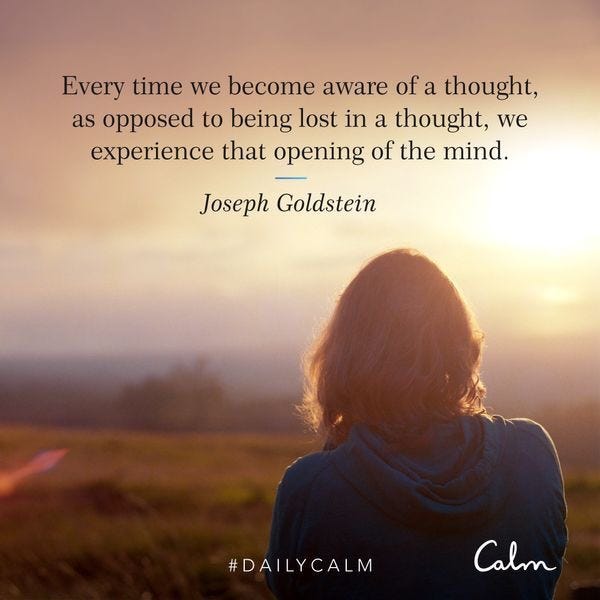
The challenge of maintaining awareness of our thoughts is a fundamental aspect of human experience. Our minds are hardwired to think and become lost in thought streams constantly.

However, awareness of our thoughts and the ability to open our minds is crucial for personal growth and mental well-being. By revisiting this concept, we can continually remind ourselves of its importance and strive to live more consciously.


Many, if not most, people are completely identified with their thoughts and emotions. Despite meditating and studying philosophy and spirituality for ten years, I still slip into identification with my thoughts and emotions. I have often found myself dragged into petty thoughts and judgmental emotions.

Even though I take multiple actions habitually to counteract negativity such as:

  • reading philosophy
  • meditating
  • journaling
  • taking mood support supplements
  • doing yoga
  • walking outside
  • getting around eight hours of sleep
  • hydrating
  • drinking herbal tea
  • lifting weights
  • eating healthy meals
  • watching self-improvement videos on YouTube
  • listening to binaural beats
  • limiting screen time

I still constantly identify with my thoughts, emotions, and life situations.

Becoming aware of our thoughts, breaking free from identifying with them, and opening up the mind are important subjects to me. Worth coming back to again and again. Because it is an inner fight we all must wage again and again if we are to live a life of inner peace.

Typically, awareness of our thoughts is not the norm — automatic thoughts usually dominate. In cognitive psychology, automatic thoughts are rapid, often unconscious assumptions or conclusions that arise in response to a situation or stimuli. They appear without conscious effort and are usually brief, immediate interpretations of an event, often with a negative bias.

“Thoughts are like clouds in the sky. Sometimes it’s clear, sometimes it’s cloudy. But don’t get attached to the clouds.” — Thich Nhat Hanh

Automatic thoughts often lead to runaway thoughts, which are longer and more intense versions of automatic thoughts. A consistent double dose of automatic and runaway thoughts can likely result in cognitive distortions, confirmation biases, and intense emotional triggers.

Observing social media and the modern world, it seems more people are easily triggered when their confirmation bias, built on cognitive distortions, is challenged or broken. A clear example is the state of America after a presidential election.


Photo by Dan Crile on Unsplash

“It is not what happens to you that troubles you, but your judgment about what happens.” — Epictetus


Identifying with our thoughts means being consumed by them. Our true selves get swallowed up and erased due to constant states of stress, anxiety, disappointment, depression, and anger. We can’t escape fight-or-flight survival mode if we are constantly pulled into the rushing stream of automatic and runaway thoughts.

We must continuously choose to be aware and detach from our thought streams because our thoughts never stop. Our minds are thinking machines, but they do not define who we are. We are not our minds. We are not our thoughts. We are not our emotions. We must constantly cultivate awareness and remind ourselves of this truth.

Photo by Bahadır on Unsplash

Practical ways to practice awareness include mindfulness, which involves being fully focused on the present moment. Deep breathing exercises and guided meditations have also significantly helped me in my ongoing effort to increase awareness in my life. Journaling is beneficial as well, provided you consistently write and periodically review past entries to observe your patterns and progress.

Cultivating awareness of our thoughts while remaining detached from them can create an opening in the mind. The more we expand that opening with healthy practices like mindfulness, yoga, journaling, meditation, and studying philosophy and spirituality, the better we become at utilizing that inner space.

This helps us avoid reacting automatically to stimuli like an animal and instead respond thoughtfully and consciously. By embracing these practices, we can strive to live with greater mindfulness and peace, continually growing and evolving in our journey of self-awareness.

How Hustle Culture Masks Wage Stagnation and Serves the System That Exploits Us


“If you just work harder, you’ll make it.”
That’s the lie. That’s the scam.

We’ve been sold a fantasy of upward mobility that depends not on policy, fairness, or collective progress, but on our willingness to self-destruct in the name of ambition. Hustle culture tells us that success is just a matter of willpower. Wake up earlier. Grind longer. Outwork everyone. Sleep less. Want it more.

Meanwhile, corporations rake in record profits. Wages flatline. Healthcare, housing, and higher education become luxury items. But you? You’re still thinking it’s your fault.

Let’s pull back the curtain.


Hustle Culture Is Corporate Propaganda

Productivity influencers. 5AM club bros. “No days off” as a flex.

This isn’t just personal ambition — it’s been industrialized. We’re encouraged to track every breath, stack habits, bullet-journal our burnout, and turn our identities into brands. This isn’t motivation. It’s manipulation.

By reframing overwork as a virtue, the system turns our exhaustion into a badge of honor. You’re not supposed to question why you have to hustle this hard just to survive. You’re just supposed to optimize better.


Productivity Went Up — Wages Did Not

Since 1979, worker productivity in the U.S. has risen by more than 60%. But hourly wages? Up only about 17%. Where did the gains go? Straight into the hands of shareholders, executives, and the asset-owning class.

You’ve probably felt it. Working longer hours just to keep up. Side hustles becoming lifelines. And still, rent rises faster than your paycheck. It’s not laziness. It’s a rigged game.

📊 From 1979 to 2020, U.S. productivity grew 61.8% while hourly pay rose just 17.5%.Economic Policy Institute

Hustle culture isn’t closing the gap. It’s hiding it.


Burnout Isn’t a Personal Failure

Internalized capitalism teaches us to equate self-worth with output. When we feel overwhelmed, we don’t blame the system — we blame ourselves.

But the exhaustion isn’t a bug. It’s the feature.

We’ve been taught that if we feel burned out, we just need better time management. A better planner. A better morning routine. We keep trying to fix the machine — when the problem is that we’re not machines at all.

“You are not lazy, unmotivated, or stuck. After years of living in survival mode, you are exhausted. There is a difference.” — Nedra Glover Tawwab


The Scam Serves Power

There’s a reason hustle culture has been monetized and weaponized by the very systems profiting off your labor.

Big Tech sells you productivity tools. Influencers push affiliate codes for morning journals and nootropics. Employers glorify “passion” to justify unpaid overtime. Gig apps track your every second. Even rest has been turned into another thing to optimize.

The more exhausted you are, the less likely you are to resist. The scam isn’t just psychological — it’s strategic.


Opting Out Is the First Step

Quiet quitting. Labor strikes. The rise of “lazy girl jobs.” These are signals of something deeper — a refusal to keep feeding a system that only takes.

We don’t need to hustle harder. We need to stop normalizing a world where burnout is inevitable, and survival is treated like success.

Stop optimizing. Start organizing.
The system is broken — not you.


anarchyroll presents

Anarchy Journal Constitutional
☯ Wisdom is Resistance | ∞ Truth Over Tribalism


🎬 Scroll-Friendly Version
This article was reimagined as a visual essay — watch the reel below.

@anarchyroll_

The productivity scam is working. We hustle, they profit. This isn’t about success. It’s about survival. Visual essay by @anarchyroll ☯️ Wisdom is Resistance 🗞 anarchyjc.com #burnout #hustleculture #productivityscam #visualessay #anarchyroll

♬ Apocalypse – Alex From Space

📡 Follow anarchyroll across platforms for more visual essays, short-form truth, and independent, gonzo journalism-inspired writing:

📽️ TikTok: @anarchyroll_
📷 Instagram: @anarchyroll
🐤 X / Twitter: @anarchyroll
🧵 Threads: @anarchyroll
🔵 Bluesky: @anarchyroll


Inside the calculated architecture of algorithmic addiction—and why the systems keeping us hooked aren’t accidental, they’re engineered for profit.


Photo by Gabriel Freytez on Pexels.com

This Isn’t a Bug. It’s the Business Model.

Addiction isn’t a side effect. It’s the product.

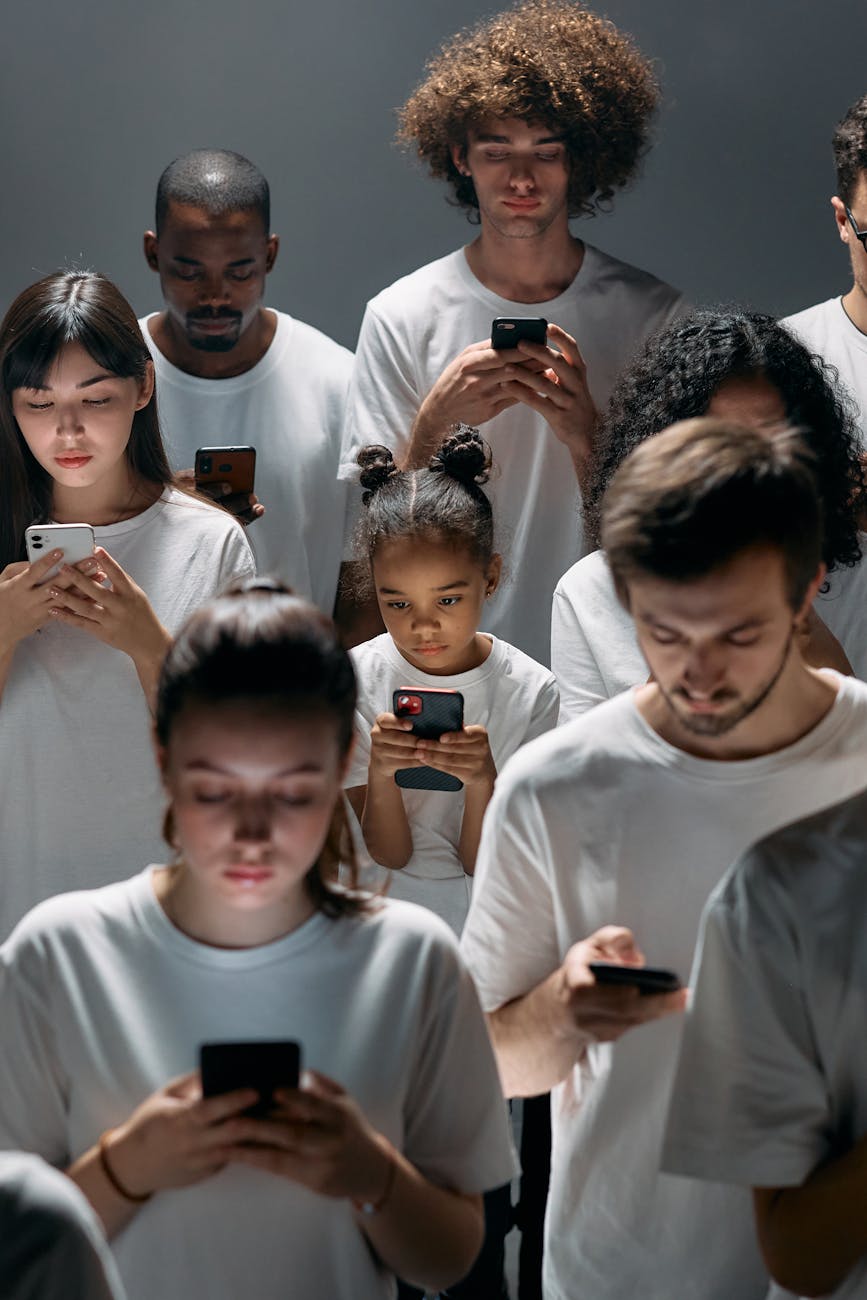
The algorithms driving our feeds, for‑you pages, and autoplay queues weren’t built to serve us. They were built to own us—to capture attention, distort behavior, and extract time. The longer we stay, the more they win. And they’ve gotten very good at winning.

“Big Tech firms… have developed more and more sophisticated AI models… more successful at their goal of ensuring addiction to their platforms.” — Michelle Nie, “Algorithmic Addiction by Design” (2025)

This isn’t content delivery. It’s behavioral engineering at scale. And it’s working exactly as intended.

Hook the Brain, Hijack the Future

Let’s call it what it is: neurological warfare for profit.

Infinite scrolls keep us locked in motion. Likes and shares drip dopamine through variable rewards. Personalized algorithms feed us just enough novelty, rage, or validation to keep the lever pulling. And the lever never runs out.

“Persuasive design is deliberately baked into digital services… to create habitual behaviours.” — 5Rights Foundation, “Disrupted Childhood” (2024)

We are not customers. We are inputs in a profit‑generating loop, optimized not for our benefit, but for our addiction.

What It’s Doing to Us (Especially Them)

The damage isn’t theoretical. It’s measurable. Especially among kids and teens—those still forming identities, boundaries, and brains.

An algorithm doesn’t care if a 13‑year‑old spirals. It cares about engagement metrics.

“TikTok algorithms fed adolescents tens of thousands of weight‑loss videos… vulnerable accounts were served twelve times more self‑harm and suicide videos.”
American Journal of Law & Medicine, 2023

The platforms know. The companies know. And still they choose to push what hooks hardest.

It’s exploitation. But because it’s dressed in UX and recommender systems, it slides by as innovation.

Photo by cottonbro studio on Pexels.com

Legal Fiction vs. Corporate Reality

Law hasn’t caught up—but it’s beginning to stir.

Some EU voices are framing this as a consumer protection crisis, not just a mental health one.

“Hyper‑engaging dark patterns… reduce users’ autonomy and may have additional detrimental health effects.”
Fabrizio Esposito, “Addictive Design as an Unfair Commercial Practice” (2024)

The SAFE for Kids Act in New York aims to curb algorithmic targeting of minors. Europe is considering stricter design ethics laws. But Big Tech lobbyists work overtime to water down reform—and delay the inevitable.

Addiction is profitable. That’s why it persists.

Resist the Feed

This isn’t personalization. It’s manipulation.
And the only way out is resistance—personal, political, cultural.

Start small. Microtasks become momentum:

  • Turn off autoplay.
  • Disable nonessential notifications.
  • Use browser extensions to block algorithmic feeds.
  • Delete one app for a week. Watch what happens.

These aren’t solutions. They’re trim tabs—small shifts that change the system from below.

Then go bigger:

  • Push for dark‑pattern bans.
  • Support platform‑transparency laws.
  • Demand algorithmic opt‑outs.

Your time, your attention, your mental state—they’re not raw materials to be mined.

They’re yours. Take them back.


anarchyjc.com | Excess & Algorithms

Wisdom is Resistance

🎬 Scroll-Friendly Version
This article was reimagined as a visual essay — watch the reel below.

@anarchyroll_

🎯 ALGORITHM ADDICTION We scroll, swipe, and tap — and the algorithm learns. This <1-minute visual essay explores how tech hijacks attention and reshapes identity. #DigitalAddiction #TikTokAwareness #AlgorithmAddiction #MentalClarity #SelfAwareness

♬ Mystic – Perfect, so dystopian

📡 Follow anarchyroll across platforms for more visual essays, short-form truth, and independent, gonzo journalism-inspired writing:

📽️ TikTok: @anarchyroll_
📷 Instagram: @anarchyroll
🐤 X / Twitter: @anarchyroll
🧵 Threads: @anarchyroll
🔵 Bluesky: @anarchyroll


While our experiences are constantly in flux, a core sense of self exists, a presence that remains constant. Our external experience of life and the world is like a river, fire, or busy urban intersection. Our internal presence, awareness, consciousness, soul, or being; are the ground beneath those things.

The river flows fast and slow, the fire rages and flickers and the intersection goes from bustling to quiet, but the ground is solid, unmoving, unchanged, unnoticed but without it what goes on above it couldn’t exist.

“No man ever steps in the same river twice, for it’s not the same river and he’s not the same man.” — Heraclitus

Is this unchanging “simple being” who we are? Is this the answer to the question; “Who am I?” I’m pretty sure the answer to that question isn’t our ego, job title, hobbies, credit score, or proficiency with Excel.

The enduring self or our consciousness as the witness to our thoughts hasn’t exactly been part of the zeitgeist. However, the juxtaposition of getting and looking older externally, but feeling the same as we did when we were young internally, is a commonality shared by all people who reach old age.

“You are not a body, you have a body.” — Wayne Dyer

What is that within us that doesn’t age? Our body decays and our mind declines, but there is something about us that is ageless and timeless. We all share it. We all know what it is when we see ourselves in the mirror as we get older. We know we are older, but we also know there’s a part of us that doesn’t feel older. A constant presence underlying our experiences. Something within us that we can see, touch, or feel that seems to stay the same as everything else changes.

“There is a feeling of presence that transcends thought. This is your own essence, your Being.” — Eckhart Tolle

We inherently know this enduring self or consciousness exists. Notwithstanding, modern life distracts us from it, aiming our attention outward. We have numerous daily concerns, and virtual propaganda adds unnecessary layers of thought on top of what we need to survive. On top of that, our minds can be out of control thought-producing machines. Adding stress and suffering to our existence, by confusing us into emotionally identifying with our thoughts, rather than passively witnessing them.

Photo by HONG FENG on Unsplash

How do we combat this? Where attention goes, energy flows. We have to take some time or make some time to habitualize the cultivating our inner awareness and connection to our unchanging presence. The simplest, easiest, and most time-tested way of doing this is through mindfulness.

Mindfulness has become an overused catch-all buzzword in recent years. Mindfulness is no magic wand. It is simply the practice of paying attention to the present moment without judgment. Mindfulness is most commonly associated with meditation. The guided meditation sessions I engaged in daily can be classified as mindfulness meditation. I love and wholeheartedly recommend meditation to anyone and everyone.

Mindfulness isn’t limited to a traditional meditation practice. However, mindfulness is a way to turn everyday tasks and activities into meditative experiences.
  • Mindful Eating: Pay attention to the taste, texture, and aroma of your food.
  • Mindful Walking: Focus on your senses as you walk, noticing the sights, sounds, and sensations.
  • Mindful Showering: Pay attention to the feeling of the water on your skin and the sensations in your body.
  • Mindful Chores: Bring your full attention to the task at hand, whether it’s washing dishes or cleaning the house.
  • Mindful Drawing or Painting: Focus on the sensations of the brush or pencil and the colors you’re using.
  • Mindful Writing: Pay attention to the flow of your thoughts and the feel of the pen on the paper.
  • Mindful Music Listening: Listen to music with full attention, focusing on the sounds and emotions it evokes.
  • Forest Bathing: Spending time in nature, immersing yourself in the sights, sounds, and smells.

Keyword in all of these activities is either focus/attention. Where our attention goes, energy flows. Paying extra attention or deeply focusing on the different aspects of one of these activities helps us forget about external distractions, quiet our internal thought stream, and cultivate the connection with the constant presence within ourselves amidst the ever-changing stream of our life experience.

“You are not a thought, you are the awareness of thought.” — Mooji

Amidst the ever-changing currents of life, our deeper self remains constant and unchanging. By practicing mindfulness, we can reconnect with this inner presence, transcending the distractions and noise of modern life. Whether through meditation or mindful daily activities, we can cultivate a deeper awareness of our timeless self. As we turn our attention inward, we nurture the connection with our true being, allowing us to navigate life’s flux with greater peace and clarity.

“One must first know oneself to grow beyond oneself.” — Abraham Maslow