Posts Tagged ‘social media’

How manufactured distraction masks elite power grabs

“The most potent weapon in the hands of the oppressor is the mind of the oppressed.” — Steve Biko


We’re not fighting each other.

We’re being told we are.

While billionaires rig markets, write laws, and extract more than ever before, we’re fed a diet of distraction: who wore what, who said what, who to cancel, who to worship.
Culture wars and celebrity scandals dominate the headlines. Political rage becomes entertainment. Reality is replaced with performance.

Meanwhile, real decisions get made in rooms we’re not in.


Distraction is strategy.

Bread and circuses is policy.

The phrase comes from ancient Rome. Give the people food and entertainment, and they’ll ignore the empire crumbling around them.
Today’s version isn’t lions and gladiators. It’s 24/7 news cycles, viral beef, televised outrage, algorithmic dopamine, and the myth that “both sides” are the problem.

But both sides serve the same class.
The one you’re not in.


“The purpose of the modern media is to make the public passive and distracted, not informed and engaged.” – Glenn Greenwald


Who benefits from distraction?

Follow the money.

Culture wars don’t threaten capital.
They serve it.
If we’re busy hating each other, we’re not organizing. If we’re bickering about bathrooms, we’re not taxing billionaires. If we’re glued to gossip, we’re not watching the war profiteers, the surveillance state, or the bought politicians signing our futures away.

Distraction is not a side effect. It’s the point.


Manufactured chaos is cover.

Power prefers shadows.

The more noise, the less clarity.
The more conflict, the less unity.
The more fear, the more control.

Every celebrity trial, every TikTok feud, every political theater act keeps us from looking up. Keeps us consuming, not questioning. Arguing, not organizing.


“The press is not a watchdog. It’s a tool used by the powerful to manage public opinion.” – Matt Taibbi


We don’t need more sides.

We need more sight.

Start with the question: Who does this serve?
When the story goes viral, when the talking heads scream, when the rage is addictive—ask it again:
Who benefits from our attention being here?
Because the real theft isn’t always money.
Sometimes, it’s focus.


“You are being made to focus on the sideshow, while the tent burns down.” – Edward Snowden


anarchyjc.com // Truth over tribalism.
@anarchyroll_ on TikTok | @anarchyroll on Threads, X, IG, and Bluesky
Published by @anarchyroll via Anarchy Journal Constitutional


“We don’t need a truth squad. We need a First Amendment.” — Matt Taibbi, Congressional Testimony


Governments don’t need to pass laws to control speech.
They just need to pressure the platforms.


The Censorship-Industrial Complex is the unholy alliance of federal agencies, tech corporations, and pseudo-academic disinformation labs — working together to decide what ideas are safe enough for the public.

It starts with an email from DHS.
It ends with your post silently disappearing.

This isn’t a left vs. right issue.


Anti-war journalists, independent researchers, COVID policy critics — all have been flagged, suppressed, or algorithmically erased. Not because they were wrong. But because they were inconvenient.


“The people who are trying to censor speech are not protecting you. They’re protecting themselves — from accountability.” – Edward Snowden


This isn’t about protecting democracy.
It’s about protecting power.

The Twitter Files showed us the blueprint: FBI flagging accounts. NGOs vetting narratives. Platforms complying behind closed doors. But Twitter was just the tip — Facebook, Reddit, YouTube, even Microsoft were all in on it.

The architecture of censorship is modular now.
And no one is coming to dismantle it from the inside.

These aren’t isolated incidents. They’re rehearsals. The system keeps improving — not at identifying truth, but at engineering consent. Real-time surveillance of trending topics. Preemptive labeling of emerging narratives. Pressure campaigns behind the scenes. By the time the public hears a story, the terms of engagement have already been set.


“Censorship is never about stopping lies. It’s about stopping inconvenient truths from gaining traction.” – Glenn Greenwald


They call it safety.
We should call it by its name: control.

So we speak.
We write.
We resist.

Because the First Amendment isn’t a suggestion.
It’s a firewall.

anarchyjc.com | Anarchy Journal Constitutional

Wisdom is Resistance

🎬 This article was reimagined as a visual essay — watch the reel below.

@anarchyroll_

🚨 The Censorship-Industrial Complex isn’t a theory — it’s a pipeline. Government agencies NGOs Platforms All working to silence dissent. Not wrong. Just disruptive. 🔏 Truth over tribalism 📍 More at anarchyjc.com #freespeech #censorship #twitterfiles #surveillance #anarchyroll #independentmedia #mediawatch #truthseeker

♬ Void(Original ) – 崔洪喆

📡 Follow anarchyroll across platforms for more visual essays, short-form truth, and independent, gonzo journalism-inspired writing:

📽️ TikTok: @anarchyroll_
📷 Instagram: @anarchyroll
🐤 X / Twitter: @anarchyroll
🧵 Threads: @anarchyroll
🔵 Bluesky: @anarchyroll


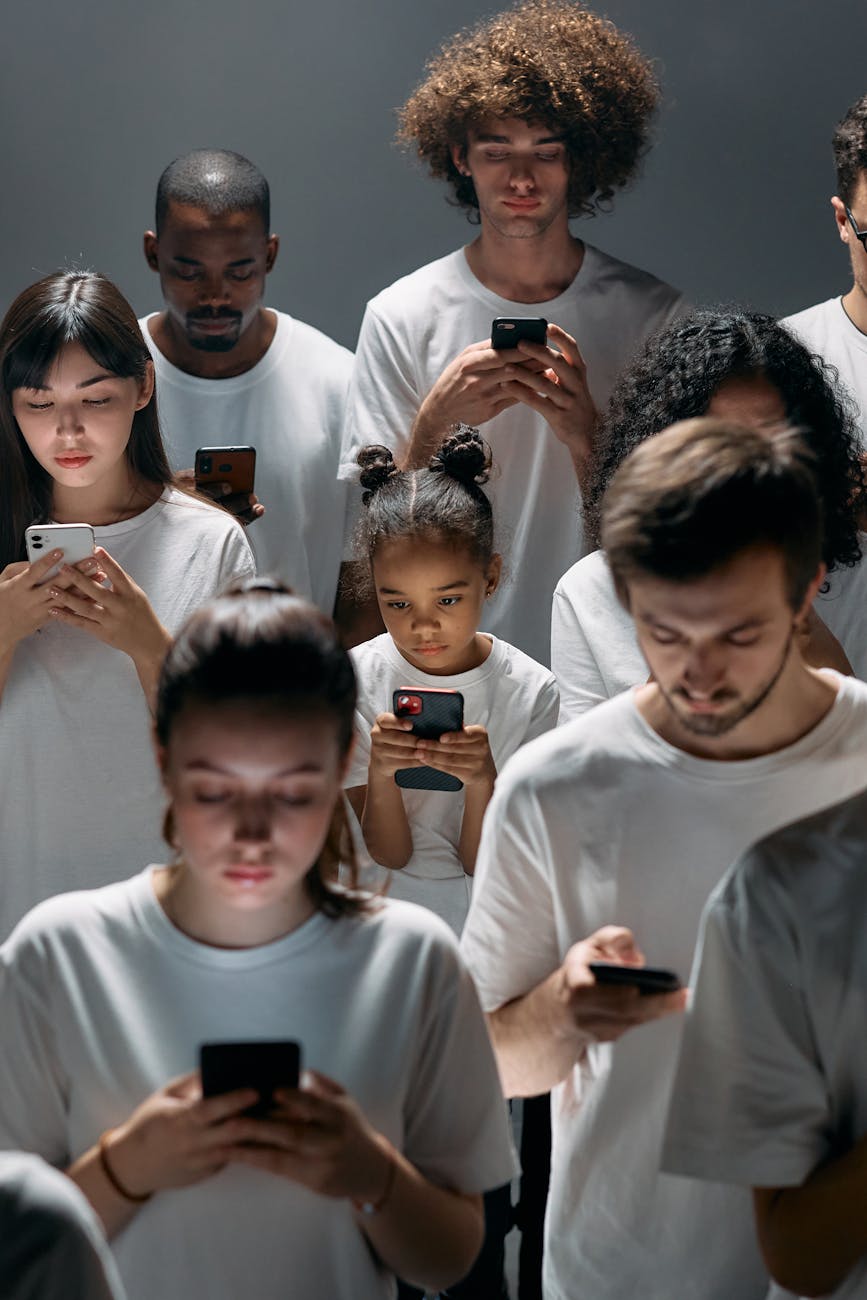
Inside the calculated architecture of algorithmic addiction—and why the systems keeping us hooked aren’t accidental, they’re engineered for profit.


Photo by Gabriel Freytez on Pexels.com

This Isn’t a Bug. It’s the Business Model.

Addiction isn’t a side effect. It’s the product.

The algorithms driving our feeds, for‑you pages, and autoplay queues weren’t built to serve us. They were built to own us—to capture attention, distort behavior, and extract time. The longer we stay, the more they win. And they’ve gotten very good at winning.

“Big Tech firms… have developed more and more sophisticated AI models… more successful at their goal of ensuring addiction to their platforms.” — Michelle Nie, “Algorithmic Addiction by Design” (2025)

This isn’t content delivery. It’s behavioral engineering at scale. And it’s working exactly as intended.

Hook the Brain, Hijack the Future

Let’s call it what it is: neurological warfare for profit.

Infinite scrolls keep us locked in motion. Likes and shares drip dopamine through variable rewards. Personalized algorithms feed us just enough novelty, rage, or validation to keep the lever pulling. And the lever never runs out.

“Persuasive design is deliberately baked into digital services… to create habitual behaviours.” — 5Rights Foundation, “Disrupted Childhood” (2024)

We are not customers. We are inputs in a profit‑generating loop, optimized not for our benefit, but for our addiction.

What It’s Doing to Us (Especially Them)

The damage isn’t theoretical. It’s measurable. Especially among kids and teens—those still forming identities, boundaries, and brains.

An algorithm doesn’t care if a 13‑year‑old spirals. It cares about engagement metrics.

“TikTok algorithms fed adolescents tens of thousands of weight‑loss videos… vulnerable accounts were served twelve times more self‑harm and suicide videos.”
American Journal of Law & Medicine, 2023

The platforms know. The companies know. And still they choose to push what hooks hardest.

It’s exploitation. But because it’s dressed in UX and recommender systems, it slides by as innovation.

Photo by cottonbro studio on Pexels.com

Legal Fiction vs. Corporate Reality

Law hasn’t caught up—but it’s beginning to stir.

Some EU voices are framing this as a consumer protection crisis, not just a mental health one.

“Hyper‑engaging dark patterns… reduce users’ autonomy and may have additional detrimental health effects.”
Fabrizio Esposito, “Addictive Design as an Unfair Commercial Practice” (2024)

The SAFE for Kids Act in New York aims to curb algorithmic targeting of minors. Europe is considering stricter design ethics laws. But Big Tech lobbyists work overtime to water down reform—and delay the inevitable.

Addiction is profitable. That’s why it persists.

Resist the Feed

This isn’t personalization. It’s manipulation.
And the only way out is resistance—personal, political, cultural.

Start small. Microtasks become momentum:

  • Turn off autoplay.
  • Disable nonessential notifications.
  • Use browser extensions to block algorithmic feeds.
  • Delete one app for a week. Watch what happens.

These aren’t solutions. They’re trim tabs—small shifts that change the system from below.

Then go bigger:

  • Push for dark‑pattern bans.
  • Support platform‑transparency laws.
  • Demand algorithmic opt‑outs.

Your time, your attention, your mental state—they’re not raw materials to be mined.

They’re yours. Take them back.


anarchyjc.com | Excess & Algorithms

Wisdom is Resistance

🎬 Scroll-Friendly Version
This article was reimagined as a visual essay — watch the reel below.

@anarchyroll_

🎯 ALGORITHM ADDICTION We scroll, swipe, and tap — and the algorithm learns. This <1-minute visual essay explores how tech hijacks attention and reshapes identity. #DigitalAddiction #TikTokAwareness #AlgorithmAddiction #MentalClarity #SelfAwareness

♬ Mystic – Perfect, so dystopian

📡 Follow anarchyroll across platforms for more visual essays, short-form truth, and independent, gonzo journalism-inspired writing:

📽️ TikTok: @anarchyroll_
📷 Instagram: @anarchyroll
🐤 X / Twitter: @anarchyroll
🧵 Threads: @anarchyroll
🔵 Bluesky: @anarchyroll


“There is beauty and humility in imperfection.” – Guillermo del Toro

We are our own worst critic. We identify with our thoughts by default. We think we are our minds by default. So the idealized image of ourselves that we have in our heads is the standard we hold ourselves to. Regardless of how unrealistic that image is.

Then life layers wouldas, couldas, and shouldas on top of that idealized self-image. Social media inundates us with non-stop upward social comparisons. The rest of the media seems determined to scare and isolate us. Now all of a sudden negative self-talk that was once a pesky house fly, has evolved into a full-on rodent infestation. 

Our lives are constantly a work in progress. Social media not only encourages but actively boosts and rewards people and brands who present their image as a finished polished product. In the moment, how could we not compare ourselves and feel less than?

“Comparison is the thief of joy,” – Theodore Roosevelt

Self-criticism, like everything else in life, doesn’t happen in a vacuum. It often spirals, like all bad habits seem to do.  Before we know it, we haven’t just had our joy taken from us, but our confidence, esteem, and belief in ourselves. 

Curating our social media feeds is a more tangible option than deleting them altogether. Much like how eating a little better and doing a little exercise is a more realistic way of getting in shape. Small steps, one at a time, will add up more consistently than radical change at once for the majority of us.

The current era of social media has made philosophy, mindfulness, psychology, health, and wellness information more accessible, digestible, and entertaining than ever before. Searching topics and following accounts on informative and educational content has been a big help for me since the COVID lockdowns. 

Not a day goes by that I don’t watch at least a couple of Reels or YouTube shorts with clips from some of my favorite authors or thought leaders on self-improvement material. Whereas I once had to choose to watch a twenty-minute video or listen to a whole podcast, I can now get snack-sized, 30-second, personal development information on pretty much any platform. 

This can serve as a positive/productive double-edged sword. In that, it can make people feel less bad/wasteful about using social media in the first place, then provide beneficial information that is as easy to consume as it is to understand. So we’re beating ourselves up less for doom scrolling, and beating ourselves up less because we’re feeding our minds healthy information instead of metaphorical junk food.

Every little bit helps.

It really does. Every little beneficial thing we do for ourselves does help and does add up the more we do. No cure-all or magic pill of course. Consuming some informative content while we’re staring at a screen doesn’t do the work of self-actualizing for us. But it’s a step in the right direction, even if it is a baby step.  Baby steps still mean we’re moving forward. 


Some of the accounts I follow that create content that adds value to my life:

The Daily Stoic, The School of Life, Eckhart Tolle, Robert Green, Philosophies for Life, Therapy in a Nutshell, Dr. Tracey Marks, HealthyGamerGG, T&H, Einzelganger, Hellohappie Inspiration, Huberman Lab, and After Skool

Check any/all of those out, let me know what you think of them, and if you have some recommendations of accounts you think I should look into, please let me know in the comments.

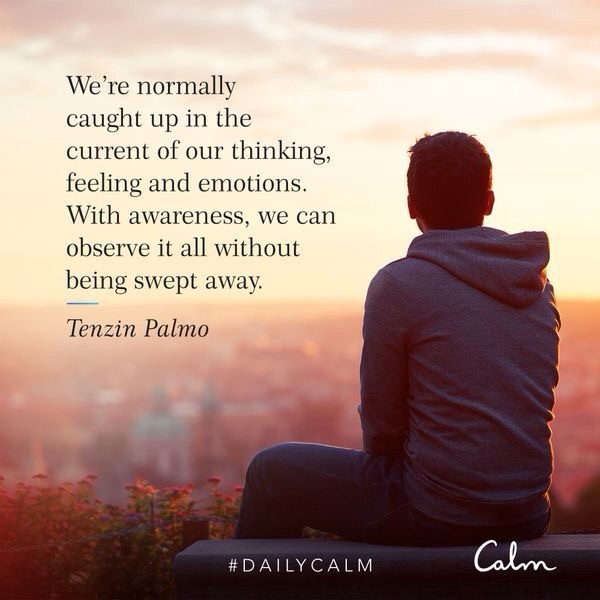
It is not just easy, but normal and natural to get caught up in our thoughts and emotions. We don’t even notice that we’re swept up in them until time has passed and we’re in the same physical position for x amount of time.

I think this is why doom scrolling became engrained in the culture and human nature so fast. Scrolling through social media is the external manifestation of our internal scrolling through thoughts, emotions, memories, and projections.

Awareness kicks in eventually for most people. Often times after an amount of time passes that we’re ashamed to admit to ourselves or to anyone else.

“I was spacing out for how long?!” “I was scrolling through Instagram for how long?!” Two sides of the same coin.

Awareness is the way out. But like everything else, it must be cultivated. Cultivated through repetition. Practice makes progress. There is no progress without repeated action consistently, persistently. Easier said than done, just like everything else in life.

Meditation has helped me to cultivate my self awareness. Journaling has also helped me to cultivate awareness, as long as I occasionally review past journal entries so I may become aware of potential patterns of detrimental thought, emotion, and/or action.

Any journaling is better than no journaling. We have too many thoughts in our head to not take some time, some of the time, to just vomit them onto paper with a pen or pencil.

Any meditation practice is better than no meditation practice. We are too scattered brained to not take some time, some of the time to find stillness, focus on our breath, and attempt to bring inner state into alignment with the present moment.

Both journaling and meditation are put to better use for us when they are done purposefully. Mindless writing with no review can be called journaling. Sitting with our eyes closed, with new age music playing in the background, while we think aimlessly could be called meditation.

To cultivate our awareness, so we can break the cycles of getting swept away by detrimental thoughts and emotions; journaling with review of past journal entries, like extended breath focused meditation sessions with a mantra; are more useful tools to bring about the results we are looking for when engaging in self improvement practices.

Neither of which are one and done magic pills. No such thing. I still find myself getting swept up in thoughts and social media scrolling. Just five minutes before I started writing this essay I found myself standing next to my workstation, scrolling on my phone, unable to remember why I even picked my device up.

I do know I caught myself quicker than I used to. I know I get sucked into salacious social media content less often.

I know I still space out and get caught in streams of past memories and future projections. I also know I do so less often and for smaller periods of time than I used to. Even compared to this time last year or this time last month.

Little by little. One day at a time. One step at a time. One choice at a time. One action at a time.

Awareness is the way out.

Practice Makes Progress.