Posts Tagged ‘social media’

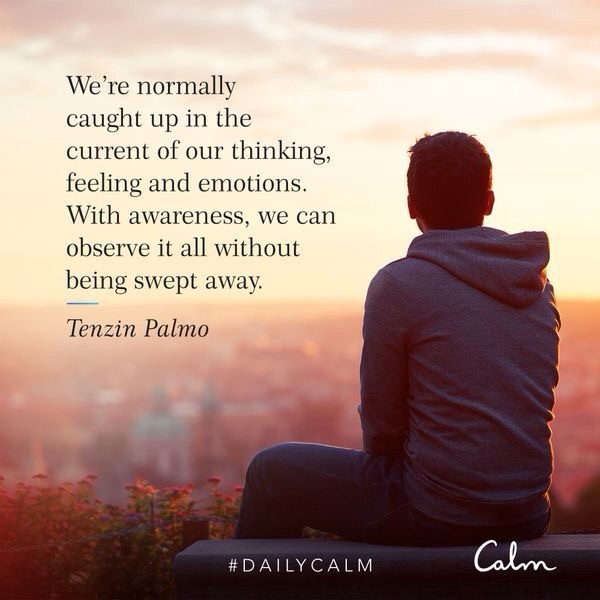
It is not just easy, but normal and natural to get caught up in our thoughts and emotions. We don’t even notice that we’re swept up in them until time has passed and we’re in the same physical position for x amount of time.

I think this is why doom scrolling became engrained in the culture and human nature so fast. Scrolling through social media is the external manifestation of our internal scrolling through thoughts, emotions, memories, and projections.

Awareness kicks in eventually for most people. Often times after an amount of time passes that we’re ashamed to admit to ourselves or to anyone else.

“I was spacing out for how long?!” “I was scrolling through Instagram for how long?!” Two sides of the same coin.

Awareness is the way out. But like everything else, it must be cultivated. Cultivated through repetition. Practice makes progress. There is no progress without repeated action consistently, persistently. Easier said than done, just like everything else in life.

Meditation has helped me to cultivate my self awareness. Journaling has also helped me to cultivate awareness, as long as I occasionally review past journal entries so I may become aware of potential patterns of detrimental thought, emotion, and/or action.

Any journaling is better than no journaling. We have too many thoughts in our head to not take some time, some of the time, to just vomit them onto paper with a pen or pencil.

Any meditation practice is better than no meditation practice. We are too scattered brained to not take some time, some of the time to find stillness, focus on our breath, and attempt to bring inner state into alignment with the present moment.

Both journaling and meditation are put to better use for us when they are done purposefully. Mindless writing with no review can be called journaling. Sitting with our eyes closed, with new age music playing in the background, while we think aimlessly could be called meditation.

To cultivate our awareness, so we can break the cycles of getting swept away by detrimental thoughts and emotions; journaling with review of past journal entries, like extended breath focused meditation sessions with a mantra; are more useful tools to bring about the results we are looking for when engaging in self improvement practices.

Neither of which are one and done magic pills. No such thing. I still find myself getting swept up in thoughts and social media scrolling. Just five minutes before I started writing this essay I found myself standing next to my workstation, scrolling on my phone, unable to remember why I even picked my device up.

I do know I caught myself quicker than I used to. I know I get sucked into salacious social media content less often.

I know I still space out and get caught in streams of past memories and future projections. I also know I do so less often and for smaller periods of time than I used to. Even compared to this time last year or this time last month.

Little by little. One day at a time. One step at a time. One choice at a time. One action at a time.

Awareness is the way out.

Practice Makes Progress.

Manufacture of Consent

That term has fascinated me from the moment I heard the term.

Same goes for Social Conditioning.

I used to think people were willfully ignorant to these concepts. As I got older, I come to think it’s more of a combination of naïveté and fear.

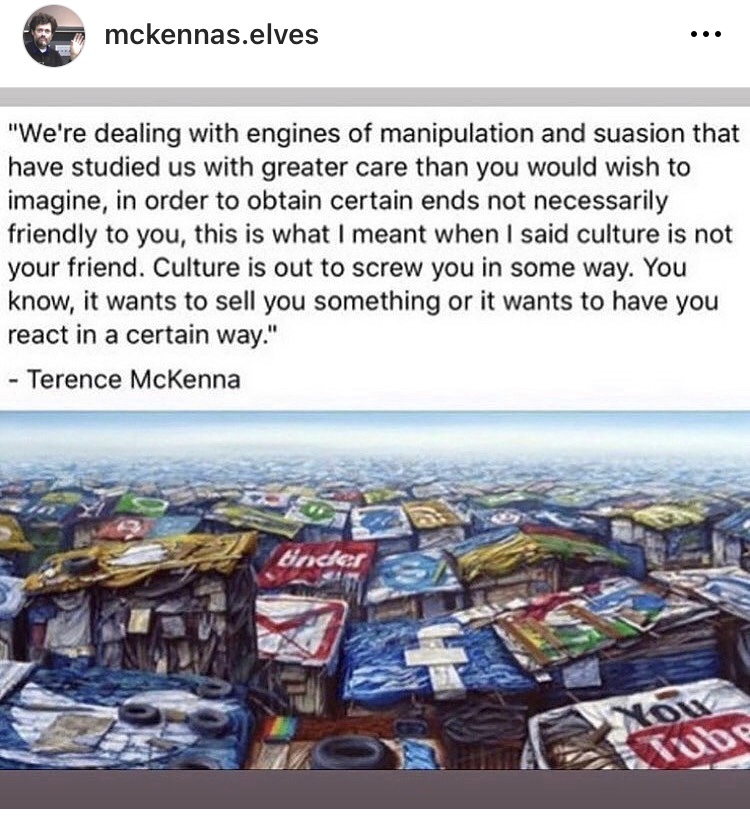
We’re hard wired to conserve our energy and effort. This has been, is, and will be exploited by those with power and influence against those without them to keep it that way.

Control.

It’s all about control. Influence. Manipulation.

To do what?

Benefit those in power.

That those with the most have such a scarcity mindset is sad.

The fact that their scarcity mindset causes so much undue suffering to the masses is something worse than sad.


copypasteimage-2
By @anarchyroll

Do social media platforms or the people running them have a responsibility to the public or to the republic? Is it in the nature of the services to spread modern-day propaganda which has been repackaged as fake news? Are these mediums a cause for negative events or are they simply mirrors and microphones? Are they bringing the worst out of people and society? Or are they just the biggest magnifying glass in the history of the species?

Are these services really that much different from the mediums that came before them? Radio and television have the exact same purpose as social media services…..to sell ads and the information about the people who consume them.

There is no moral compass at play with Facebook, with Twitter, especially with Google or Instagram or Snapchat. They are capitalist enterprises with one reason for existing, to make money. So if one or all of the companies get offered a lot of money from a foreign country to run political ads during a presidential campaign, why wouldn’t they take the money and put the content on their platform?

Oh, the information was blatantly false? It was straight up propaganda from a foreign government? Yeah okay but, they paid up front. Money talks. In America the Supreme Court has literally said money equals speech.

If anyone thinks Facebook or Google has a moral compass or conscious, try and find out exactly what they’re doing with all that personal metadata they mine from everyone who uses their services and/or apps.

It is not just a little too late to have the “ so social media companies have a responsibility” argument. That ship sailed once the collective population decided we didn’t want our phones to be phones anymore. Once the companies realized they were able to tap into our collective dopamine addictions by turning what used to be a portable audio communicator into a slot machine that can fit into a skinny jeans pocket, responsibility went right out the window.

2017-08-03-uscapitol-ljdoyle-017-1-

Do casinos have a responsibility to their guests other than making them enjoy losing their wages? Of course not, the whole business model is built around taking money out of people’s pockets and into the casino safe. Well social media is the casino and our attention and personal information is the cash.

On top of all that, Facebook (which owns Instagram), Twitter, and Snapchat are publicly traded companies. So quite literally, their only responsibility is to maximize profits for their shareholders. Their collective interest in the health of democracy only goes as far as the stock market opening and closing on time.

Americans love social media. We also love seeing powerful people get yelled at in public by elected officials. Dogs and ponies are adorable, who wouldn’t want to see a whole show of them? Well we got the best of both worlds last week when lawyers representing the big social media players went to capitol hill and got a verbal spanking from some very angry public officials.

It was modern American politics personified. Verbal spankings, non answers, legislation proposed but not supported, visual aide charts, legal jargon, and pledges to do better in the future. The vitriol directed at social media is just a reflection of our collective anger at ourselves. We’re angry for thinking social media would be a tool for good and not just a tool to make money.

We’re angry at ourselves for being so readily fooled by fake news that we’re all to easily manipulated into believing are the real thing. We’re angry at ourselves because we thought the internet, and the web 2.0 that social media represents would make us more informed and more united. Instead it’s deepened our divide and by putting our preexisting confirmation biases on technological steroids.

Our elected officials can yell at high-priced lawyers all they want. Public berating is much easier than putting regulations into place. It’s easier for Facebook and Twitter to higher more lobbyists than more moderators to discern what is being put on their platforms, by whom, and for what purpose. It’s easier to apologize later than to do the right thing in the moments of choice. We know this. That’s why we’re not angry at social media for what happened during the 2016 election season, we’re angry at ourselves.


mm@C4logo2ajclogo2

by @anarchyroll

Temporary, private multimedia messages exchanged through a smartphone application.

Sharing personal moments. That is what Snapchat is about. That is why it is the social media platform de jour in America, it is THE preferred method of communication to a number of young people that warrants the phrase of a generation.

The early adopters may have used it predominantly for NSFW purposes. But the majority of users these days are using it to share their lives with a limited spectrum of people in their social circle. And of course young people use it to for the inherent ability of the app to prevent parents, relatives, teachers, and bosses from seeing their communications and embarrassing them on another public and achievable medium.

Big business has recently come around to the idea of leveraging Snapchat to build community like loyalty for their products. Snapchat still has an air of being counter culture cool and ahead of the curve. So anyone trying to make money is trying to utilize Snapchat’s young, cool factor.

Is Snapchat cool?

Well it is fun.

The people who use Snapchat have fun doing it. The ability to customize messages in so many ways, then send it out only to people the sender wants seeing it, for a limited amount of time. Snapchat has stood on the shoulders of Facebook, Instagram, and Twitter and has built a platform that combines the positives of each without the negatives.

Snapchat, like Tinder has an earned reputation for as an medium for the explicit and salacious. To deny that Snapchat is used as an exchange for sexual/sexualized acts and content is to deny reality. However, both Snapchat and Tinder are about much more than people’s naughty bits. Both are very much mainstream and both have a vastly large number of users who use the services for very much on the level, straightforward communication.

The purpose of Snapchat is that it is a temporary, multimedia messaging service and social media combo. The value is that the messages are temporary. In the era of big brother watching, there is an inherent comfort in sending a visual message that will self destruct in a maximum time of ten seconds. Whether the files actually delete themselves is another story and the public has decided is not important. The illusion of self destructing messages is just fine for most people whether they are sending goofy faces and/or nudes.

That comfort and intimacy whether illusionary or authentic is currently being exploited by every company and celebrity A list to Z. The business of Snapchat is on the exclusivity of the people the messages are shared with by the users and by the limited number of companies allowed to be featured in its Discover section. The personal of Snapchat is the fun factor that comes with the variety of ways to customize each message.

Snapchat has helped me open up more and share more personal moments with the world. For an antisocial who has battled depression and social anxiety for over half his life, that is a very good thing.

ssrlogo2

by @anarchyroll
7/3/2014

Social network sounds so much more appealing than electronic social emotional psychological experiment platform.

It was recently revealed that in 2012, Facebook manipulated the news feeds of just under 700,000 users, in order to measure the effects the news feed changes, on the mood(s) of the user(s).

The exact number of users who were unknowingly experimented on is 689,003. The exact amount of time was one week. Facebook showed less (than) positive posts from both friends and publication providers. Facebook did not get the consent of the users to do this experiment.

Facebook has both apologized, and offered no apologies for conducting this unauthorized psychological experiment.

Me personally, I find something like this to be disgusting and despicable. This is also a great learning lesson on a variety of levels. Let’s focus on how the results of the experiment show what social conditioning is.

Social conditioning is how we learn to think, perceive, and act through the media (movies, television, music, magazines, newspapers, social media websites/platforms, etc).

Facebook proved to themselves and to the world that social conditioning is a very real, very applicable, very effective social-emotional concept. Social conditioning shapes all of us, myself very much included. Facebook itself can be considered one big social conditioning machine.

It was also learned in the experiment that emotions are contagious. That people can in mass be manipulated to feel happier or sadder. What are the implications of this? What other large companies have performed experiments like this in the past? In the present?

I’m not going to bring this article down the conspiracy theory rabbit hole. There are simply questions worth asking of ourselves internally as well as the external world around us. How much of what we think and feel is rooted in our own personal identity, integrity, character, and principles? How much of our identity, values, and consent has been manufactured?

Think about it. Be aware of it.

What is “it”? It in this case would be the non material aspects of what makes you up as a person. Your thoughts, feelings, and so on. Do you think, perceive, and act based on what you internally believe? Or are you being so manipulated by the world around you that you have no identity that isn’t a corporate brand or group think produced? No one is above being asked that question, especially not yours truly.

Think about it. Be aware of it.