How manufactured distraction masks elite power grabs



“The most potent weapon in the hands of the oppressor is the mind of the oppressed.” — Steve Biko


We’re not fighting each other.

We’re being told we are.

While billionaires rig markets, write laws, and extract more than ever before, we’re fed a diet of distraction: who wore what, who said what, who to cancel, who to worship.
Culture wars and celebrity scandals dominate the headlines. Political rage becomes entertainment. Reality is replaced with performance.

Meanwhile, real decisions get made in rooms we’re not in.


Distraction is strategy.

Bread and circuses is policy.

The phrase comes from ancient Rome. Give the people food and entertainment, and they’ll ignore the empire crumbling around them.
Today’s version isn’t lions and gladiators. It’s 24/7 news cycles, viral beef, televised outrage, algorithmic dopamine, and the myth that “both sides” are the problem.

But both sides serve the same class.
The one you’re not in.


“The purpose of the modern media is to make the public passive and distracted, not informed and engaged.” – Glenn Greenwald


Who benefits from distraction?

Follow the money.

Culture wars don’t threaten capital.
They serve it.
If we’re busy hating each other, we’re not organizing. If we’re bickering about bathrooms, we’re not taxing billionaires. If we’re glued to gossip, we’re not watching the war profiteers, the surveillance state, or the bought politicians signing our futures away.

Distraction is not a side effect. It’s the point.


Manufactured chaos is cover.

Power prefers shadows.

The more noise, the less clarity.
The more conflict, the less unity.
The more fear, the more control.

Every celebrity trial, every TikTok feud, every political theater act keeps us from looking up. Keeps us consuming, not questioning. Arguing, not organizing.


“The press is not a watchdog. It’s a tool used by the powerful to manage public opinion.” – Matt Taibbi


We don’t need more sides.

We need more sight.

Start with the question: Who does this serve?
When the story goes viral, when the talking heads scream, when the rage is addictive—ask it again:
Who benefits from our attention being here?
Because the real theft isn’t always money.
Sometimes, it’s focus.


“You are being made to focus on the sideshow, while the tent burns down.” – Edward Snowden


anarchyjc.com // Truth over tribalism.
@anarchyroll_ on TikTok | @anarchyroll on Threads, X, IG, and Bluesky

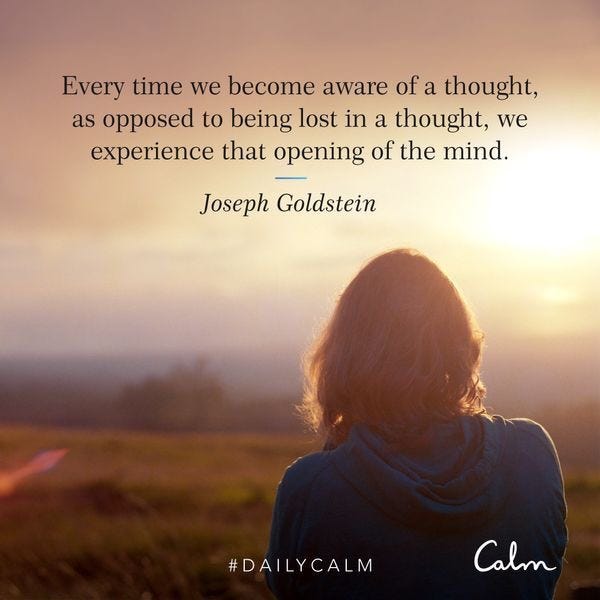


The challenge of maintaining awareness of our thoughts is a fundamental aspect of human experience. Our minds are hardwired to think and become lost in thought streams constantly.

However, awareness of our thoughts and the ability to open our minds is crucial for personal growth and mental well-being. By revisiting this concept, we can continually remind ourselves of its importance and strive to live more consciously.


Many, if not most, people are completely identified with their thoughts and emotions. Despite meditating and studying philosophy and spirituality for ten years, I still slip into identification with my thoughts and emotions. I have often found myself dragged into petty thoughts and judgmental emotions.

Even though I take multiple actions habitually to counteract negativity such as:

  • reading philosophy
  • meditating
  • journaling
  • taking mood support supplements
  • doing yoga
  • walking outside
  • getting around eight hours of sleep
  • hydrating
  • drinking herbal tea
  • lifting weights
  • eating healthy meals
  • watching self-improvement videos on YouTube
  • listening to binaural beats
  • limiting screen time

I still constantly identify with my thoughts, emotions, and life situations.

Becoming aware of our thoughts, breaking free from identifying with them, and opening up the mind are important subjects to me. Worth coming back to again and again. Because it is an inner fight we all must wage again and again if we are to live a life of inner peace.

Typically, awareness of our thoughts is not the norm — automatic thoughts usually dominate. In cognitive psychology, automatic thoughts are rapid, often unconscious assumptions or conclusions that arise in response to a situation or stimuli. They appear without conscious effort and are usually brief, immediate interpretations of an event, often with a negative bias.

“Thoughts are like clouds in the sky. Sometimes it’s clear, sometimes it’s cloudy. But don’t get attached to the clouds.” — Thich Nhat Hanh

Automatic thoughts often lead to runaway thoughts, which are longer and more intense versions of automatic thoughts. A consistent double dose of automatic and runaway thoughts can likely result in cognitive distortions, confirmation biases, and intense emotional triggers.

Observing social media and the modern world, it seems more people are easily triggered when their confirmation bias, built on cognitive distortions, is challenged or broken. A clear example is the state of America after a presidential election.


Photo by Dan Crile on Unsplash

“It is not what happens to you that troubles you, but your judgment about what happens.” — Epictetus


Identifying with our thoughts means being consumed by them. Our true selves get swallowed up and erased due to constant states of stress, anxiety, disappointment, depression, and anger. We can’t escape fight-or-flight survival mode if we are constantly pulled into the rushing stream of automatic and runaway thoughts.

We must continuously choose to be aware and detach from our thought streams because our thoughts never stop. Our minds are thinking machines, but they do not define who we are. We are not our minds. We are not our thoughts. We are not our emotions. We must constantly cultivate awareness and remind ourselves of this truth.

Photo by Bahadır on Unsplash

Practical ways to practice awareness include mindfulness, which involves being fully focused on the present moment. Deep breathing exercises and guided meditations have also significantly helped me in my ongoing effort to increase awareness in my life. Journaling is beneficial as well, provided you consistently write and periodically review past entries to observe your patterns and progress.

Cultivating awareness of our thoughts while remaining detached from them can create an opening in the mind. The more we expand that opening with healthy practices like mindfulness, yoga, journaling, meditation, and studying philosophy and spirituality, the better we become at utilizing that inner space.

This helps us avoid reacting automatically to stimuli like an animal and instead respond thoughtfully and consciously. By embracing these practices, we can strive to live with greater mindfulness and peace, continually growing and evolving in our journey of self-awareness.

Elections change the faces—but never the outcome. Lobbyists always win.


“Now it’s just an oligarchy, with unlimited political bribery being the essence of getting the nominations for president or being elected president.”
— Jimmy Carter


Every election cycle, we’re told to pick a side.

Red or blue.
Hope or fear.
Change or more of the same.

But behind the curtains and campaign ads, the same winners always emerge: the corporations who bankroll both sides.

Their lobbyists don’t need to win elections.
They just need to outlast them.

“The most offensive aspect of the modern political system is how entirely legalized the corruption is.”
— Matt Taibbi


The Revolving Door Spins On

The people writing our laws?
They often come straight from the industries they’re supposed to regulate.

And when they’re done “serving the public”?
They go right back into the private sector—with a pay bump for playing ball.

This isn’t representation.
It’s a handshake deal between government and corporate power.

And it’s why regulations rarely hurt the companies they’re aimed at.
They’re often written by them.

“The reason why the U.S. government does not hold elites accountable is because they are part of the same system. It is not broken — it is designed that way.”
— Glenn Greenwald


Regulatory Capture Is Not a Flaw—It’s the Design

When Big Pharma influences the FDA,
when defense contractors sit on Pentagon advisory boards,
when fossil fuel execs shape environmental policy—
that’s not corruption by accident.
It’s the system working exactly as built.

Agencies meant to protect the public
are used to protect the profits of the powerful.

And once captured, those agencies become shields—
giving the illusion of oversight while doing the opposite.

“The smart way to keep people passive and obedient is to strictly limit the spectrum of acceptable opinion, but allow very lively debate within that spectrum.”
— Noam Chomsky


Campaign Donors Aren’t Donating—They’re Investing

In 2024, over $17 billion was spent on political campaigns.

But none of that money was a gift.
It was an investment.

And like all investors, donors expect returns:
– favorable legislation
– deregulation
– subsidies
– tax loopholes

They buy access. They buy influence.
And when necessary, they buy silence.

No matter who wins the vote, the lobby wins the outcome.


It’s Not a Bug. It’s a Business Model.

We’re taught that voting is our voice.
But what happens when the choices are pre-approved by money?

What happens when both parties answer to the same donors?
When every regulation is pre-lobbied?
When the economy is run by the few and paid for by the many?

Then we aren’t living in a democracy.
We’re living in a managed marketplace.

And the customers don’t get to write the rules.

“Elections are supposed to be an expression of will — not a demand for submission to manufactured choices.”
— Edward Snowden


🩸 Truth Over Tribalism

This isn’t about red or blue.
It’s about the money that owns them both.

It’s about a system where billionaires write the laws,
corporations fund the campaigns,
and lobbyists run the show.

We don’t need new slogans.
We need new structures.
Because the lobby will keep winning—until we stop playing by their rules.


📣 Follow the work:

📹 TikTok: @anarchyroll_
📸 Instagram: @anarchyroll
🐦 X/Twitter: @anarchyroll
🧵 Threads: @anarchyroll
🌐 Bluesky: @anarchyroll.bsky.social


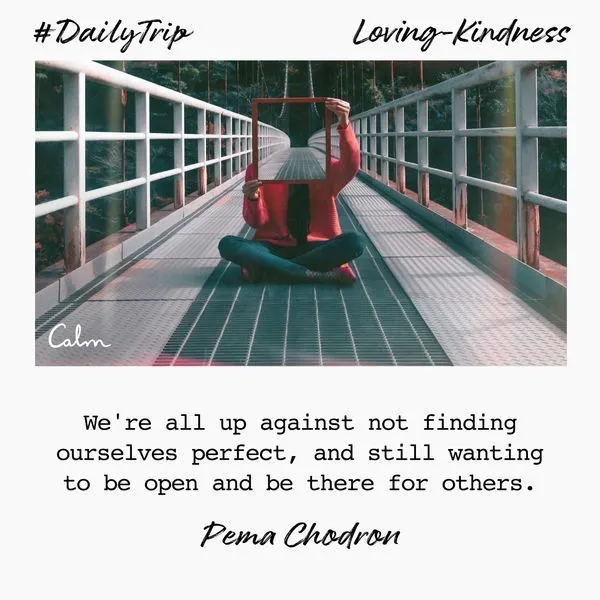
Imperfection is the most human characteristic.

We often find ourselves in a constant state of wanting to be perfect, expecting others to be perfect, forgiving our imperfections, and accepting the imperfections in others. This internal battle can create a tug-of-war between self-criticism and the desire to be social and supportive of those closest to us.

Who are we to be there for others when we have so many flaws ourselves? This harsh self-judgment can make us feel unworthy or not confident enough to interact with others. Alternatively, we might judge ourselves and others so harshly that we isolate ourselves from the world, clinging to imagined ideals that only exist in our minds. Neither of these paths is healthy.

“Our culture is obsessed with fixing and improving. This relentless improvement mentality can leave us feeling perpetually inadequate.” — Brené Brown

Guided Meditations

Non-judgment and loving-kindness centered meditations, from the Calm app, have been instrumental in helping me address this issue over the years. The judging mind can be hard to tame, especially in an increasingly hyper-judgmental culture. Cultivating awareness of my judging mind through meditation has been a significant help in this journey.

Amor Fati

The next step forward for me was learning about the Stoic concept of Amor Fati — a love of fate. This philosophy encourages us to accept what is outside of our control and to love whatever happens to us as if it is what we had wished for. By embracing this mindset, we can find peace and strength in our imperfections, allowing us to be open and there for others despite our flaws.

“The chief task in life is simply this: to identify and separate matters so that I can say clearly to myself which are externals not under my control, and which have to do with the choices I actually control. Where then do good and evil lie? In my own choices.” — Epictetus

Compassion

The more time I spent practicing meditation and studying Stoicism, the more I found myself dipping my toes into Buddhist teachings as well. One of those teachings is that self-compassion is the foundation for compassion towards others. We can’t pour from an empty cup.

It can be hard not to be our own worst enemy or biggest critic. The intersection of these philosophies and spiritualities helped me realize that peace begins with compassion, whether for ourselves or others.

Photo by Jonas Gerlach on Unsplash

Authentic Acceptance

If awareness shows us the way out, acceptance is how we start moving in the direction of the right action. To be human is to be flawed. We must accept this about ourselves for our own sake and sanity. If and when we can do that, the next step is to extend that acceptance to others.

Offering ourselves acceptance allows us to exist authentically. We don’t have to lie to ourselves or others. When we can be ourselves, rather than putting up a front, we are then more able and likely to have deeper connections with others. How? Because acceptance and authenticity open doors to vulnerability.

“Vulnerability is the core of all connection, whether it’s emotional intimacy or physical intimacy. Vulnerability is what we share when we open ourselves up to love and connection. It’s the core of all empathy and connection.” — Brené Brown

It simply isn’t optional for us to embrace imperfection. If we want to grow, evolve, or be our best selves, we need to embrace our imperfections. To deepen existing relationships, resolve family conflicts, or meet new potential romantic partners, we must accept and empathize with the imperfections of others.

Our flaws are part of our journey. To become aware of them, we need to make and take time for reflection in our lives. Meditation and journaling are time-tested tactics, used in philosophy and spirituality practices, that have been very helpful for me, and I believe they can be very helpful for you as well.


The Epstein list is no longer a conspiracy theory. So why does everything still feel so silent?


📚 The Facts — No Longer Fringe

Over 170 names have now been confirmed through the release of legal documents tied to Jeffrey Epstein’s sex trafficking network. These include billionaires, celebrities, politicians, and royalty. The details are out. The timeline is established. The cover-up is ongoing.


🔦 What Do We Do With the Truth?

We now know.

Not in theory. Not through whispers or redacted documents or vague rumors.

We know — because it’s confirmed.

There was, and likely still is, a global sex trafficking network facilitated by billionaires, royalty, scientists, politicians, and financiers. Children were exploited. Victims were silenced. Powerful names were protected.


So what does it say about us?


That these are our leaders.
That this is our system.
That this was allowed to exist.

What does it say about power?
About justice?
About what we tolerate?

What kind of society protects this?
What kind of humanity forgets it?


We have been taught that truth is powerful.


That exposure leads to change.
That sunlight is the best disinfectant.

But what happens when truth lands like a stone in the ocean?
When facts come out — and are absorbed into the machine of normalcy?

What happens when justice does not follow evidence?


This isn’t a left vs. right issue.


This isn’t partisan.
This is a reflection of power.

And maybe that’s the point.
Maybe we are not meant to act on this truth.
Maybe we are only meant to know it — and feel helpless.

But that’s not enough.

We should not be okay with knowing… and doing nothing.

We should not learn of atrocities… and scroll past.

We cannot pretend that this level of coordinated abuse — and cover-up — is just another passing headline.


Some truths shouldn’t fade.


They should haunt.
They should wake us up.
They should never be allowed to settle.


🕳️

If you’ve made it this far, sit with it.
Not to be consumed by despair — but to resist forgetting.
Because forgetting is how they win.


🎬 This article was reimagined as a visual essay — watch the reel below.

@anarchyroll_

The list is real The silence is louder This is the part where we don’t look away. We don’t stop asking. We don’t stop naming. 🕳️ 🎥 Visual essay from: anarchyjc.com @anarchyroll_ #EpsteinCoverup #EliteProtection #TruthOverTribalism #epstein #digitalart

♬ Deep – Courten

📡 Follow anarchyroll across platforms for more visual essays, short-form truth, and independent, gonzo journalism-inspired writing:

📽️ TikTok: @anarchyroll_
🐤 X / Twitter: @anarchyroll
🧵 Threads: @anarchyroll
🔵 Bluesky: @anarchyroll