“We figured out there’s something that sells better than sex, and that’s rage.” — Scott Galloway
Every week, there is another crisis.
- Another viral outrage.
- Another politician saying the unthinkable.
- Another celebrity demanding your attention.
- Another company apologizing.
- Another boycott.
- Another culture war.
- Another reason to pick a side.
Within hours, millions of people are arguing with strangers they’ve never met about people they’ll never know over events they’ll barely remember a month later.
Meanwhile:
- Rent is still due.
- Healthcare is still expensive.
- Groceries still cost more than they did a few years ago.
- Corporate profits continue to climb.
- Private equity keeps buying hospitals, nursing homes, and housing.
- Lobbyists continue writing legislation.
- The concentration of wealth continues.
- The concentration of power continues.
And almost none of it trends. That contrast isn’t the article. It’s the question.
If our lives are increasingly shaped by economic forces, why does so much of our collective attention revolve around cultural conflict?
The answer is not that these cultural issues are fake. They’re not.
Questions surrounding race, religion, immigration, abortion, LGBTQ rights, policing, gun ownership, and free speech are real. They affect real people in meaningful ways. But there is another question that receives far less attention.
Why do these issues dominate our public imagination so completely while the economic structures shaping nearly everyone’s daily life rarely receive the same sustained focus?
The issue isn’t that people care about the wrong things. The issue is that we are rarely given enough uninterrupted attention to care deeply about the things that shape our lives the most. That distinction matters.
Because attention is no longer simply a feature of modern life. It has become one of its most valuable commodities.
The Product Is Our Attention
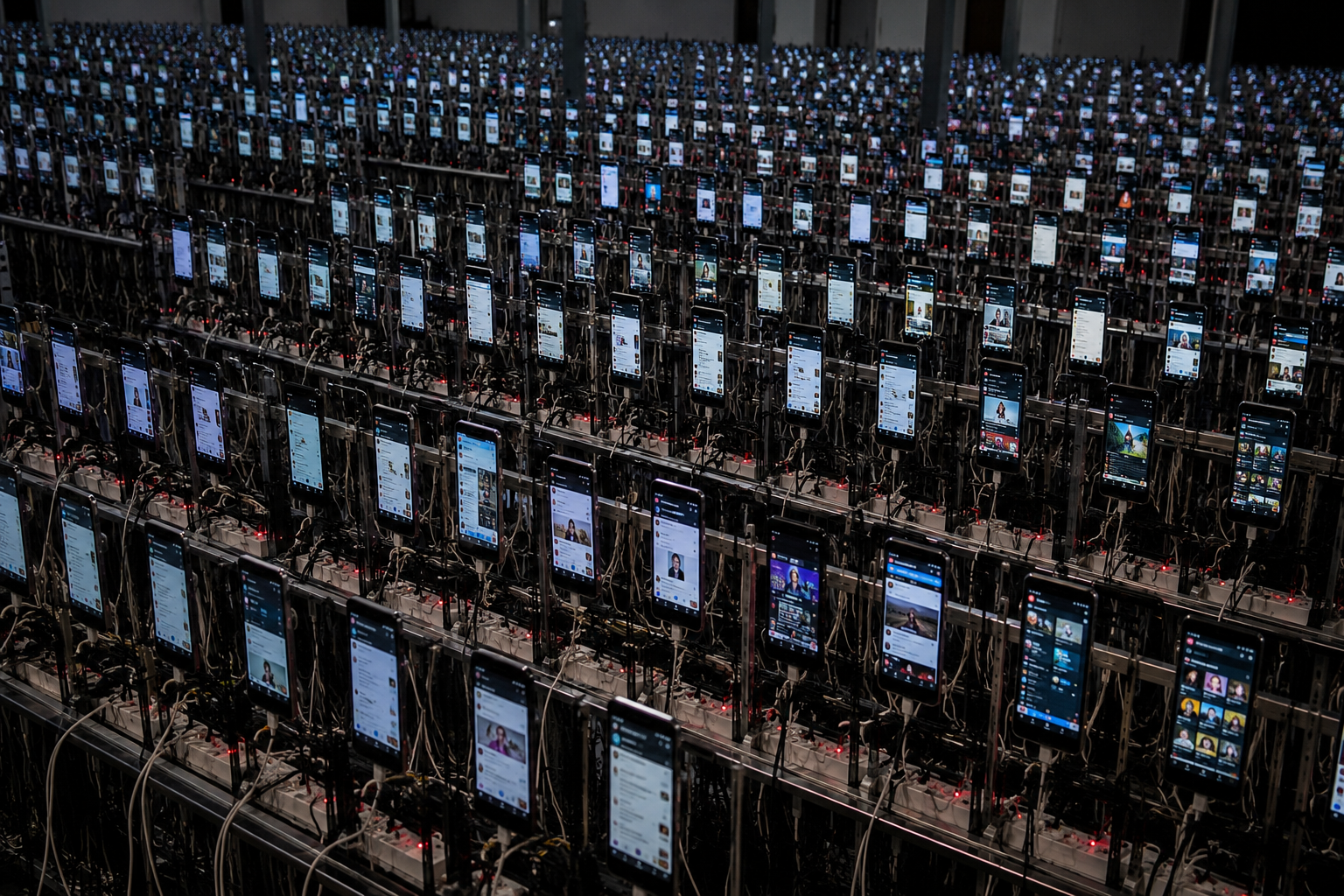
Industrial capitalism extracted physical labor. The digital economy extracts attention.
- Every swipe.
- Every click.
- Every comment.
- Every notification.
Every moment spent looking at a screen is measured, analyzed, monetized, and sold inside one of the most competitive markets ever created.
- Technology companies compete for it.
- Advertisers compete for it.
- Political campaigns compete for it.
- News organizations compete for it.
- Influencers compete for it.
Your attention has become an economic resource. And like every valuable resource, institutions have become remarkably efficient at extracting it.
The question is no longer whether information reaches us. The question is which information survives long enough to command our attention.
Journalist Chris Hedges has spent years warning that much of modern journalism has been transformed into spectacle—where entertainment values increasingly eclipse civic ones. News still informs, but it must also compete for ratings, clicks, and engagement. In that environment, spectacle often wins.
The market rewards what captures attention. Not necessarily what deserves it. That incentive changes everything.
- Stories become shorter.
- Context becomes optional.
- Conflict becomes continuous.
The goal is no longer simply to inform the public. The goal is to keep the public watching.
Scott Galloway argues that digital platforms discovered something profound about human behavior.
“We figured out there’s something that sells better than sex, and that’s rage.”
That observation explains more than social media.
- It explains modern media.
- It explains political fundraising.
- It explains why cable news panels seem permanently angry.
- It explains why every notification sounds urgent.
- It explains why every disagreement becomes existential.
Because outrage performs. Not morally. Economically.
The system does not ask whether anger is healthy. Only whether it is effective. And by nearly every measurable engagement metric, it is. Which raises a deeper question.
If attention has become the world’s most valuable commodity…Who decides where it goes?
The Great Substitution
Noam Chomsky once observed:
“The smart way to keep people passive and obedient is to strictly limit the spectrum of acceptable opinion, but allow very lively debate within that spectrum.”
Whether one agrees with every aspect of Chomsky’s political analysis is almost beside the point. The observation points toward something larger than ideology. It points toward perception.
Every society contains more events than its citizens could ever possibly follow.
- Thousands of policy decisions.
- Corporate mergers.
- Labor disputes.
- Environmental rulings.
- Court decisions.
- Regulatory changes.
- Scientific discoveries.
- International conflicts.
No individual can meaningfully process all of them. Selection is inevitable. Somebody—or something—must decide what receives sustained attention. The question isn’t whether filtering exists. The question is how that filtering happens.
In previous generations, editors and producers performed much of that role. Today, editors still matter. But increasingly, algorithms perform it alongside them.
A handful of digital platforms now mediate an extraordinary share of the world’s information flow. Search engines decide what is discoverable. Social media platforms determine what becomes visible. Recommendation systems decide what spreads, what disappears, and what millions of people encounter before they’ve consciously chosen to look for it.
None of these systems asks a moral question. They ask an engineering question. What keeps people engaged?
And once that becomes the optimizing principle, another pattern quietly emerges. Attention becomes perception. Perception becomes priority. Priority becomes power.
Once you begin looking through that lens, the daily news starts to feel different. Not because the stories are false. But because you begin asking a different question.
What isn’t staying in view long enough for us to fully understand it?
The Incentive Machine
Conflict Is More Profitable Than Cooperation
If attention becomes perception, the next question is obvious. What determines where attention goes?
Not ideology. Incentives.
The most important systems in modern public life are built around optimization.
- Social media platforms optimize for engagement.
- Television networks optimize for ratings.
- Advertisers optimize for attention.
- Political campaigns optimize for turnout and donations.
- News organizations optimize for subscriptions, viewership, and clicks.
Each institution has different goals. Yet remarkably, they all arrive at the same conclusion. Conflict performs. Calm does not.
A nuanced discussion of healthcare financing may affect millions of people. A viral confrontation between political rivals can dominate headlines for days. One changes lives. The other captures attention.
The incentive structure doesn’t ask which story matters more. It asks which story keeps people from scrolling.
Journalist Glenn Greenwald has long argued that the greatest threat to journalism is not simply political bias, but institutional incentives that reward audience affirmation over adversarial reporting. As news increasingly competes in the same marketplace as entertainment, the pressure shifts from informing audiences to retaining them.
The result isn’t necessarily false information. It’s selective attention. Stories that provoke outrage survive. Stories that require patience struggle.
Complexity loses. Conflict wins. Again and again. Not because someone gives the order. Because every institution is responding to the same market signal. Attention.
Edward Snowden approached the same problem from a different direction. His warnings were never only about surveillance. They were about architecture.
The systems we build quietly shape the choices we make inside them.
- Recommendation engines determine what appears before us.
- Algorithms decide what is amplified.
- Notifications compete for interruption.
- Trending topics compete for urgency.
None of these systems are conscious. But all of them influence perception. They don’t tell us what to believe. They influence what we repeatedly encounter. And repetition has extraordinary power.
Not because repetition proves something is true. Because repetition teaches the brain that something is important.
Attention becomes perception. Perception becomes priority. Priority becomes power.
Robert Greene writes that whoever can provoke emotional reactions gains influence over others. Modern technology has industrialized that insight.
Every outrage cycle follows a familiar rhythm.
- A statement.
- A reaction.
- A counter-reaction.
- A viral clip.
- A thousand comment threads.
- A million people emotionally invested.
Then another controversy arrives. The previous outrage disappears. Nothing is resolved. Everything resets.
The cycle isn’t designed to produce understanding. It is designed to produce engagement. And engagement has become one of the most valuable commodities in the world.
This is why the question is not: Who is manipulating us? That question almost always leads to conspiracy thinking.
A better question is: What behaviors does the system reward?
Systems don’t require central planning to produce predictable outcomes.
- Markets don’t.
- Evolution doesn’t.
- Traffic patterns don’t.
They emerge from incentives. The attention economy works the same way.
- No single editor has to coordinate with every platform.
- No executive has to orchestrate every controversy.
- No politician has to manufacture every division.
When every institution benefits from attention…and outrage is the fastest path to attention……the outcome becomes remarkably predictable. Not because it was planned. Because it was rewarded.

When Reality Interrupts the Narrative
If the outrage economy has one weakness…it’s reality.
Reality has a habit of cutting across political identities.
- A mortgage payment doesn’t ask whether you’re Republican or Democrat.
- A medical bill doesn’t care who you voted for.
- A factory closing doesn’t distinguish between progressive and conservative workers.
Economic reality has a way of collapsing cultural distance. And when that happens, something interesting occurs.
People who have spent years arguing with one another suddenly discover that they share the same employer.
- The same landlord.
- The same healthcare system.
- The same paycheck anxiety.
- The same shrinking leverage.
- The same uncertainty about the future.
Shared conditions create shared interests. And shared interests create the possibility of something the outrage economy struggles to monetize. Solidarity.
When Workers Remember What They Have in Common
Shared Material Interests Build Stronger Coalitions Than Manufactured Division
If outrage fragments attention…shared experience restores it.
That is the quiet lesson running beneath nearly every successful labor movement in modern history. Not that people suddenly begin agreeing on everything. But that they begin remembering what they already share. Chris Smalls understood this.
When Amazon workers on Staten Island organized the company’s first successful independent union, they were not recruited because they shared the same political identity. They didn’t. Some were conservatives. Some were liberals. Some rarely thought about politics at all.
They came from different racial, religious, and cultural backgrounds. Yet every one of them walked through the same warehouse doors. Worked under the same productivity quotas. Faced the same scheduling pressures. Shared the same concerns about wages, safety, dignity, and respect.
For a brief moment, the culture war gave way to something more immediate. Reality. Material conditions became impossible to ignore because everyone experienced them together.
The organizing question was never: “Who did you vote for?”
It was: “What kind of workplace do we want?”
That distinction changes everything. Because shared material conditions often succeed where shared ideology fails. They create coalitions built not on identity…but on lived experience.
The same pattern has appeared elsewhere.
Starbucks workers organized stores across states with vastly different political cultures around scheduling, staffing, and wages.
The United Auto Workers brought together employees from communities that often vote very differently, yet negotiated around the same paychecks, pensions, and working conditions.
Hollywood writers and actors—hardly a monolithic political community—organized around compensation, creative ownership, and the emerging impact of artificial intelligence on their profession.
UPS Teamsters secured one of the most significant labor contracts in recent years by focusing on concrete workplace issues that affected every driver and warehouse employee regardless of party affiliation.
Different industries. Different cultures. Different politics.
The same underlying pattern. When reality becomes impossible to ignore…identity becomes less important than shared conditions.
This should not surprise us.
- Economic pressure rarely asks ideological questions.
- Inflation does not distinguish between red states and blue states.
- Medical debt does not care who you follow on social media.
- Unaffordable housing does not check voter registration.
- A factory closure does not pause to ask your position on the latest cultural controversy.
Reality is stubbornly bipartisan. And reality has a remarkable ability to expose what outrage often conceals.
The people working beside you are rarely your greatest source of economic leverage—or your greatest obstacle.
More often than not, they’re living through many of the same structural pressures you are. That doesn’t erase genuine disagreements. Nor should it. Democracy depends on disagreement.
The question is not whether disagreements exist. The question is whether they consume so much of our collective attention that we lose sight of the conditions we experience together.
Attention becomes perception. Perception becomes priority. Priority becomes power.
If that sequence is true…then solidarity begins with attention. Not attention to the newest outrage. Attention to the realities that remain long after the outrage has disappeared.
Wisdom Is Resistance
There is an old saying that if you want to understand a society, don’t ask what it says it values. Watch what it rewards.
The modern attention economy rewards speed over depth.
- Reaction over reflection.
- Performance over participation.
- Certainty over curiosity.
- Outrage over understanding.
None of this requires a conspiracy. It requires incentives.
- Markets respond to incentives.
- Algorithms respond to incentives.
- Political campaigns respond to incentives.
- Media organizations respond to incentives.
- Human beings respond to incentives.
Why would we expect the information ecosystem to behave differently?
Perhaps the most important question we can ask ourselves is no longer: “Is this story true?”
Truth matters. But another question comes first. “Why is this the story I am being invited to spend my attention on today?”
It reminds us that attention is never merely personal. It is political. It is economic. And increasingly…it is one of the primary ways power is exercised in the twenty-first century.
That question changes everything. Because it transforms us from consumers of information…into observers of the system that delivers it.
Manufactured outrage does not require us to hate one another. It only requires us to look away from one another long enough to forget what we have in common.
Workers do not share the same religion. They do not share the same political party. They do not share the same cultural identity. They do not share the same vision for every social issue. They never have.
Yet increasingly, workers share the same economic landscape.
- The same housing market.
- The same healthcare system.
- The same concentration of corporate power.
- The same shrinking leverage over the institutions that shape their daily lives.
Attention becomes perception. Perception becomes priority. Priority becomes power.
The struggle over public attention is not ultimately a struggle over opinion. It is a struggle over what society remembers. Because what a society remembers…is what it eventually decides to change.
The outrage economy wins when every day feels like an emergency. Democracy works only when citizens can distinguish between the urgent…and the important.
The next time another manufactured outrage demands your attention, don’t just ask which side is right. Ask a different question.
What disappeared from view while everyone was looking here?
The answer may tell you far more about power than the outrage itself ever could.