Posts Tagged ‘environment’


How disaster capitalism thrives in the age of climate chaos


Disaster as a Business Model

Hurricanes rip coastlines apart, wildfires reduce neighborhoods to ash, floods drown farmlands. Each new disaster is framed as a natural tragedy—yet behind the smoke, someone always finds a way to profit.

Swiss RE reports climate disasters are already costing the U.S. 0.4% of GDP annually, with every dollar of adaptation saving eleven in avoided damages【time.com】. But adaptation isn’t what elites are betting on. Instead, they see chaos as an opportunity.

As American Studies scholar Kevin Rozario puts it:

“The human component is a massive accelerant to the fires.”【smith.edu】

The accelerant isn’t just carbon—it’s capitalism itself.


The Pattern of Profit

When a climate disaster strikes, everyday people lose homes, livelihoods, and loved ones. Meanwhile, corporations cash in.

In the insurance sector, even a catastrophe doesn’t halt profits. The Financial Times reports that despite massive underwriting losses, insurers are hiking premiums and retreating from high-risk zones, and “investors are rewarding them for becoming increasingly selective in the coverage they offer.”【ft.com】

In 2024, global disaster losses hit $320 billion. Only $140 billion was insured, leaving $180 billion uninsured, shifted onto individuals and taxpayers【thinklandscape.globallandscapesforum.org】.

Kay Young, a 63-year-old survivor of the Los Angeles wildfires, summed up the fight ordinary people face:

“They’re not going to give you the value of your house … if they do, you really have to fight for it.”【reuters.com】


The Shock Doctrine Playbook

This cycle is not an accident—it’s a strategy.

Naomi Klein’s Shock Doctrine laid it bare: disasters create a “shock window” in which elites exploit public disorientation to push radical privatization. The American Bar Association defines disaster capitalism as:

“Exploitation of natural or man-made disasters in service of capitalist interests.”【americanbar.org】

We’ve seen it after wars, coups, and financial crashes. Now, the same playbook drives climate response.


Wildfires & the Land Grab Economy

Few examples show this more clearly than California’s wildfires. In Malibu, where entire neighborhoods burned, wealthy investors swooped in. The Times reports lots reduced to rubble were resold for up to $7.5 million, raising “troubling questions about gentrification in the wake of climate-related disasters.”【thetimes.co.uk】

Governor Newsom eventually issued an order barring unsolicited offers from speculators preying on survivors—some of whom were approached while their houses were still burning【gov.ca.gov】. But the vultures had already circled.

Stephen Pyne, the historian of fire, describes this era as the Pyrocene:

Humanity’s combustion—fossil fuel and ecological disruption—has created a fire-dominated epoch.

In other words, we lit the match. Now, profiteers are selling the ashes.


Who Pays the Price

Communities most vulnerable to climate chaos are the ones paying the heaviest price. In developing nations, most disaster losses are uninsured. In the U.S., low-income and marginalized neighborhoods bear the brunt of heat waves, toxic smoke, and flooding.

Scholars writing in Global Environmental Change warn:

“Climate-induced disasters deepen inequality and social vulnerability, disproportionately harming marginalized communities.”【sciencedirect.com】

Meanwhile, wealth insulates the few: billionaires hire private firefighters, build fortified compounds, or buy real estate on higher ground. The rest of us scrape together GoFundMe donations.


Who Cashes In

The winners of this game are clear:

  • Insurance companies post record profits even as payouts shrink【greenmoney.com】.
  • Wall Street invents catastrophe bonds, letting investors bet on disasters.
  • Developers flip ruined communities into luxury zones.
  • Corporations snap up FEMA contracts.

The Allianz Group—hardly a radical source—warned bluntly that at 3°C of warming, damage will be impossible to adapt to or insure against, threatening the foundations of capitalism itself【theguardian.com】. Even the system’s architects know it’s unsustainable.


Resistance Against the Shock Doctrine

When fire levels a community, it should be a moment of collective rebuilding. Instead, it’s too often a handoff: loss for the many, leverage for the few.

As Vanity Fair reported from wildfire-stricken California:

“Profiteers and misinformation have exacerbated the distress of the affected … community members … are concerned about future rebuilding efforts potentially displacing them.”【vanityfair.com】

This is the heart of the Climate Shock Doctrine: the transformation of catastrophe into capital.

The fight for climate justice is not just ecological—it’s economic. We can’t stop disasters from striking, but we can decide who owns the recovery. That means:

  • Public ownership of critical resources.
  • Investments in resilience for poor communities first.
  • Grassroots solidarity networks that sidestep corporate vultures.
  • Cutting off financial pipelines to fossil fuels—the “oxygen on which the fire of global warming burns”【newyorker.com】.

Because if disaster capitalism keeps winning, we’re not just burning forests—we’re torching the future.

Wisdom is Resistance. Truth Over Tribalism.

Why does it seem like climate change is only getting worse?

Why do the institutions, organizations, and countries that can have the greatest impact only pay lip service to combatting climate change?

Why is that even regular everyday people who aren’t skeptics seem apathetic to the prospects of positively reversing climate change?

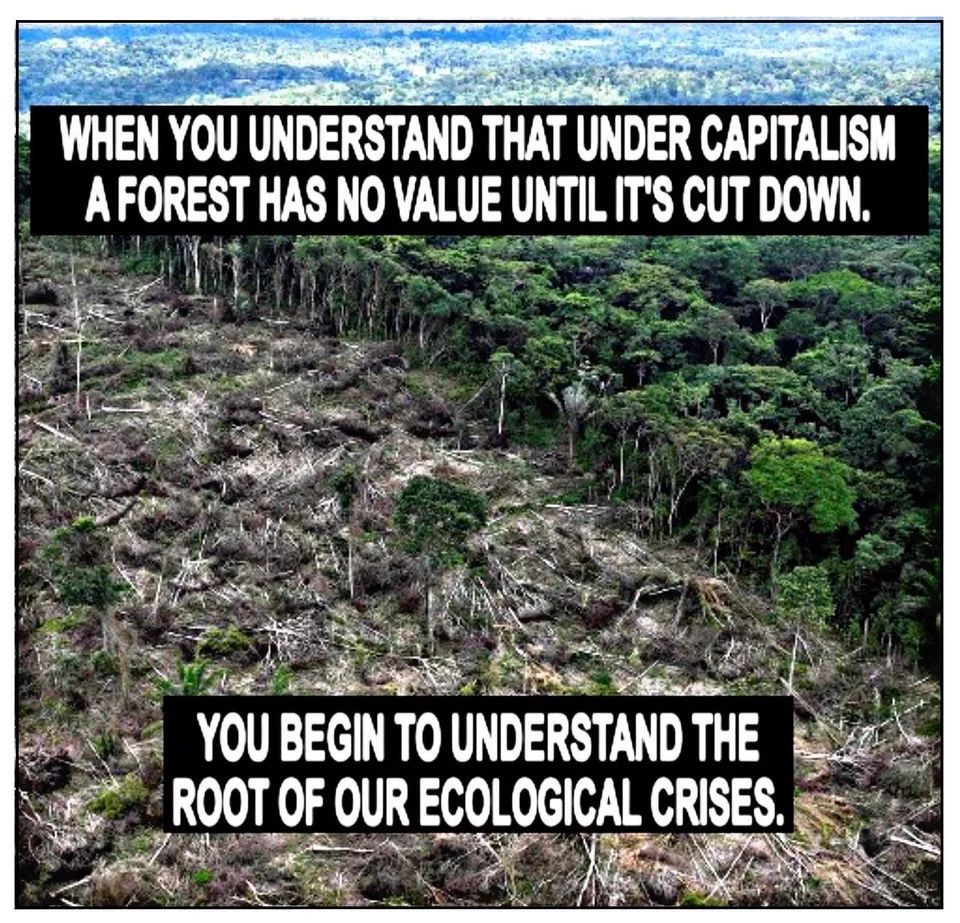
Capitalism.

Profit motive > anything & everything

Until the many are able to unite against the few, things are only moving in one direction.

Getting people to understand that countries and cultures that are completely identified with capitalism are not going to change positively because the changes required to change would require a temporary loss in profits in large amounts for large quantities of current beneficiaries of the capitalist system.

And we know how we human can justify doing the wrong thing if it benefits us. Every human being has done it at some point in their life. An action either on purpose or on accident that negatively impacts another person or thing. But we believe we’re a good person, we didn’t mean it, we deserve better, etc.

Just scale that up to that of communities, countries, civilizations and corporations.

An aspect of human nature that works in our favor on tackling climate change is the inner drive humans have to help each other. You see it all the time when disaster strikes. There are always helpers. People helping people.

There is no benefit to losing faith in humanity. There are enough of us who want to help each other on a mass scale by helping the planet. There are enough people on the wrong side of capitalist policies to unite and drive change forward. That is where my hope lays.

When one has little to no life experience in the “real” world, that of the world outside of high school and home life; climate change seems like a no brainer issue. We know what’s wrong. We know what’s causing it. So let’s fix it. Or at least do something of substance about it.

One only needs to spend a minimal amount of time working in first world, developed nations to understand why little to anything gets done about climate change that isn’t performative at best.

The foundation of all developed countries is that of waste and pollution. Capitalism in the late stage form we’re currently living in, demands infinite growth with finite resources. Throw out your old thing and buy this new thing, for every thing, for every one, ever, forever.

There is so much pollution that even the most ardent activists can’t comprehend and would prefer to not think about, for the sake of being able to sleep or have relationships.

That is the scale of the problem. Not that it’s inconceivable, but it is so vast that a human being with emotions and a soul can’t handle taking in a full account of the negatives vs the positives.

How many cargo ships sink, spill, or lose their cargo in the ocean every year? How many of those ships are moving across the ocean every day? Even the ones that don’t spill anything, which is beyond commonplace, how much oil is polluting the ocean just in day to day business?

Now include airplanes. Now include cars. Now buses. Now boats. Now cargo trucks. Now private jets. We haven’t even gotten to non recyclable plastic or styrofoam yet.

We can change all of this. But not you and me. Sorry, too much wealth inequality. This change has to come at the top. Capitalism is the cancer killing the planet. To deny that is to deny the law of gravity. We at the bottom certainly can’t give up, we know that in our bones. But what we also need to know, admit aloud, and talk about publicly is that the narrative of personal responsibility in combating climate change only need apply to those who pull the levers of capitalism. Not our neighbors driving an SUV or using plastic bags at the grocery store.

frackishimalogo1

By @anarchyroll

What is it about important events that will actually effect all of humanity that allows it to fly under the radar? It doesn’t bleed so I guess it doesnt lead. It’s easy to blame the gatekeepers of information but in the era of internet news, is there such a thing as news/information gatekeepers?

Humans do not like thinking about their mortality. We hate acknowledging the fact that we will die. We spend billions of dollars trying to delay death and even more trying to look not as near death as we are. I suppose its natural that we also don’t want to think about the end of the world.

Just like how we are all guaranteed death, the Earth is guarenteed to meet its end one day. That day is incomprehensibly far in the future. However, the world ending and the world being uninhabitable for human beings are two very different things.

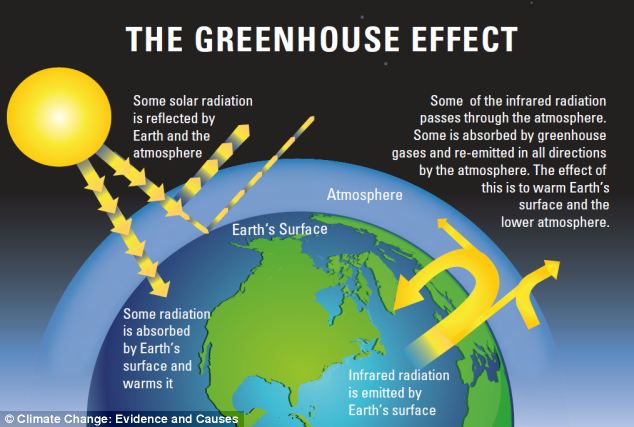
article-2568825-1be1f72300000578-287_634x427

Hearing or reading about things like rising sea levels, coral bleaching, and global warming doesn’t shout out apocalypse. The Earth has withstood much worse than all three of those forces combined. Which is true. Global warming on steroids wont be the end of the Earth. The massive disruption in the food chain caused by coral bleaching wont come anywhere near the end of the world.

But apocalyptic scare tactics have never been the point of bring environmental news to the forefront of people’s attention. The Earth will be just fine. But will it be inhabitable for humans? That is a whole other story and is the issue at hand when environmentalists and NASA ring the alarm about carbon dioxide in the air, acidity in the sea and draughts on land.

We all love Earth, but we love ourselves more. Distracting ourselves from our problems is a natural part of the human condition. Without memes and gifs my slow work days would be soul dissolving. But the distractions must not continue to overshadow the purpose when we are reaching external benchmarks for disaster such as the carbon dioxide tipping point.


frackishimalogo1
ajclogo2

heat-wave-15-04-2016-429

1 Degree Celcius = 34 Degrees Farenheit

by @anarchyroll

Discussing the weather is something that I prefer not to do in general. Namely because I live in an area surrounded demographics who complain about the weather regardless of the season, temperature, humidity percentage, or precipitation level.

But when you care about global warming and climate change, reading and writing about the weather becomes unavoidable.

Climate change is also becoming an unavoidable topic for a growing percentage of the general population. Consequences of climate change are becoming increasingly unavoidable for a growing percentage of the population living near a coastline or the Equator.

Take the second largest democracy in the world for instance, India.

Where temperatures averaging 119 degrees has 330 million people in danger heatstroke, dehydration, and other heat related health threats.

The record draught caused by the record heat has already caused hundreds of farmers to kill themselves due to drastically reduced or completely eliminated crop yields.

Hundreds of millions of people in danger and death due to drastically reduced resources. These two things will soon become the norm for the majority of the planet rather than a minority. Although saying 300 million people are a minority looks weird to read, feels weird to type, and sounds weird to say. But if global warming continues as is.

It is easy to dismiss this news and to not care. Those are parts of the human condition. To not care unless we are in direct danger. India is far away. To go there feels like you’re on a different planet let alone a different country. But as far away as it is, as different as the people and culture may be. If their plight seems unrealistic for say Americans enjoying the start of summer, why don’t we ask the people of California how unrealistic and far away dangers from rising temperatures and draught are