Posts Tagged ‘mental health’


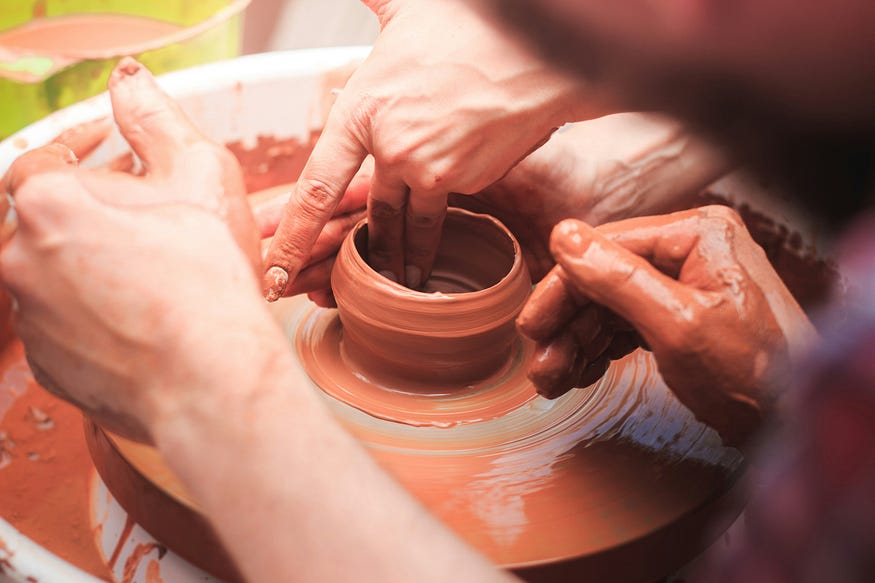
The act of beginning again is itself the practice — not a flaw in the process, but the process. We tend to think of starting over as something reserved for mistakes or failures, as if it’s a sign we’ve strayed off course. But what if beginning again is actually the most honest course we can take?

Every breath is a reset. Every day we wake up alive is a quiet invitation to try once more — this time with a little more clarity, a little more compassion, a little less ego. We are not meant to stay in motion uninterrupted. We are meant to pause, to question, to recommit. To begin again is not weakness. It’s wisdom.

This idea — that beginning again is not a detour but the path itself — is something the Stoics understood deeply. To them, each moment was a fresh opportunity to align with reason, virtue, and the present.


“You could leave life right now. Let that determine what you do and say and think.” — Marcus Aurelius


The urgency here isn’t morbid — it’s motivational. It’s a call to reset with intention, without needing a grand reason. Just the present moment is reason enough. Focusing on what I have control over, in the present moment, and then taking action with a sense of urgency is a balanced approach to life that Stoicism has brought to my attention many times.

Where Stoicism urges us to meet the moment with discipline, Taoism invites us to meet it with ease. If the Stoics offer a firm hand on the tiller, the Tao offers an open palm to the wind.


“Nature does not hurry, yet everything is accomplished.” — Lao Tzu


There’s wisdom in allowing our return — our beginning again — to unfold naturally, like water finding its path downhill. Taoism helps to take the weight off our backs and reduce the pressure we put on ourselves.

Photo by Tatiana Rodriguez on Unsplash

Taoism teaches us to flow, but Buddhism teaches us to see. To see the moment clearly, without clinging or resistance. In the Buddhist view, every beginning is just part of the great cycle of arising and passing away. The breath in. The breath out. There is no need to carry the weight of yesterday when the present is already enough.


“Each morning we are born again. What we do today is what matters most.” — Buddha


These ancient philosophies of nature and simplicity feel more vital than ever in a world shaped by constant productivity, curated identities, and hustle culture. Internally and externally, we’re pressured to do more, be more, and prove our worth through performance.

That pressure often leads to stagnation, analysis paralysis, and burnout. But revisiting these timeless teachings — ones that predate democracy and capitalism — offers calming reassurance. It reminds us that what we’re feeling isn’t failure. It’s human. And it makes beginning again feel not only acceptable, but natural.

Returning to the present — the Stoic, Taoist, and Buddhist invitation to simply be — also finds support in modern psychology and neuroscience. Where ancient wisdom speaks in metaphors and mantras, contemporary science offers data and neural pathways.

Dr. Andrew Huberman often reminds us that real change begins not with motivation, but with action. Tiny, repeated actions reshape the brain through neuroplasticity. So even when the mind says, “Why bother starting over?” the body can respond, “Because this is how we grow.”

Science may explain how we change, but philosophy still asks us why. Why return to a craft, a calling, a version of yourself you once abandoned?

The answer, I’ve found, is rarely logical. It’s personal. It’s emotional. Because I’m a person and people aren’t logical, we are emotional beings.

Sometimes it’s a whisper — other times a reckoning. But whatever shape it takes, it’s a form of recommitment. Not to some imagined perfection, but to the values and curiosities that make us feel most alive.


“You’re under no obligation to be the same person you were five minutes ago.” — Alan Watts


All of this — the philosophy, the science, the stillness — eventually brought me back to something simple but easy to forget: the quiet power of recommitment. Not a dramatic restart. Not a brand-new version of me. Just a returning.

A choice to keep showing up, to remember what matters most, and to walk toward it again, even if slowly. I’ve realized it’s not about being perfectly consistent. It’s about being consistently willing to try — to give whatever effort you have in you, in the moment.


There will always be reasons to delay the return — doubt, fear, the feeling that we’ve waited too long. But the truth is, we don’t need permission to begin again. Not from others, and not even from our past selves.

The beginner’s mind is the bravest mind. The moment we choose to return — to a habit, a purpose, a part of ourselves — we’re already on the path. Whether it’s through meditation, journaling, movement, or simply pausing to take a breath, there are so many ways to come home to yourself. Whichever path you take, just know this: beginning again doesn’t make you a beginner. It makes you human. It makes you brave.

How manufactured distraction masks elite power grabs


“The most potent weapon in the hands of the oppressor is the mind of the oppressed.” — Steve Biko


We’re not fighting each other.

We’re being told we are.

While billionaires rig markets, write laws, and extract more than ever before, we’re fed a diet of distraction: who wore what, who said what, who to cancel, who to worship.
Culture wars and celebrity scandals dominate the headlines. Political rage becomes entertainment. Reality is replaced with performance.

Meanwhile, real decisions get made in rooms we’re not in.


Distraction is strategy.

Bread and circuses is policy.

The phrase comes from ancient Rome. Give the people food and entertainment, and they’ll ignore the empire crumbling around them.
Today’s version isn’t lions and gladiators. It’s 24/7 news cycles, viral beef, televised outrage, algorithmic dopamine, and the myth that “both sides” are the problem.

But both sides serve the same class.
The one you’re not in.


“The purpose of the modern media is to make the public passive and distracted, not informed and engaged.” – Glenn Greenwald


Who benefits from distraction?

Follow the money.

Culture wars don’t threaten capital.
They serve it.
If we’re busy hating each other, we’re not organizing. If we’re bickering about bathrooms, we’re not taxing billionaires. If we’re glued to gossip, we’re not watching the war profiteers, the surveillance state, or the bought politicians signing our futures away.

Distraction is not a side effect. It’s the point.


Manufactured chaos is cover.

Power prefers shadows.

The more noise, the less clarity.
The more conflict, the less unity.
The more fear, the more control.

Every celebrity trial, every TikTok feud, every political theater act keeps us from looking up. Keeps us consuming, not questioning. Arguing, not organizing.


“The press is not a watchdog. It’s a tool used by the powerful to manage public opinion.” – Matt Taibbi


We don’t need more sides.

We need more sight.

Start with the question: Who does this serve?
When the story goes viral, when the talking heads scream, when the rage is addictive—ask it again:
Who benefits from our attention being here?
Because the real theft isn’t always money.
Sometimes, it’s focus.


“You are being made to focus on the sideshow, while the tent burns down.” – Edward Snowden


anarchyjc.com // Truth over tribalism.
@anarchyroll_ on TikTok | @anarchyroll on Threads, X, IG, and Bluesky


The challenge of maintaining awareness of our thoughts is a fundamental aspect of human experience. Our minds are hardwired to think and become lost in thought streams constantly.

However, awareness of our thoughts and the ability to open our minds is crucial for personal growth and mental well-being. By revisiting this concept, we can continually remind ourselves of its importance and strive to live more consciously.


Many, if not most, people are completely identified with their thoughts and emotions. Despite meditating and studying philosophy and spirituality for ten years, I still slip into identification with my thoughts and emotions. I have often found myself dragged into petty thoughts and judgmental emotions.

Even though I take multiple actions habitually to counteract negativity such as:

  • reading philosophy
  • meditating
  • journaling
  • taking mood support supplements
  • doing yoga
  • walking outside
  • getting around eight hours of sleep
  • hydrating
  • drinking herbal tea
  • lifting weights
  • eating healthy meals
  • watching self-improvement videos on YouTube
  • listening to binaural beats
  • limiting screen time

I still constantly identify with my thoughts, emotions, and life situations.

Becoming aware of our thoughts, breaking free from identifying with them, and opening up the mind are important subjects to me. Worth coming back to again and again. Because it is an inner fight we all must wage again and again if we are to live a life of inner peace.

Typically, awareness of our thoughts is not the norm — automatic thoughts usually dominate. In cognitive psychology, automatic thoughts are rapid, often unconscious assumptions or conclusions that arise in response to a situation or stimuli. They appear without conscious effort and are usually brief, immediate interpretations of an event, often with a negative bias.

“Thoughts are like clouds in the sky. Sometimes it’s clear, sometimes it’s cloudy. But don’t get attached to the clouds.” — Thich Nhat Hanh

Automatic thoughts often lead to runaway thoughts, which are longer and more intense versions of automatic thoughts. A consistent double dose of automatic and runaway thoughts can likely result in cognitive distortions, confirmation biases, and intense emotional triggers.

Observing social media and the modern world, it seems more people are easily triggered when their confirmation bias, built on cognitive distortions, is challenged or broken. A clear example is the state of America after a presidential election.


Photo by Dan Crile on Unsplash

“It is not what happens to you that troubles you, but your judgment about what happens.” — Epictetus


Identifying with our thoughts means being consumed by them. Our true selves get swallowed up and erased due to constant states of stress, anxiety, disappointment, depression, and anger. We can’t escape fight-or-flight survival mode if we are constantly pulled into the rushing stream of automatic and runaway thoughts.

We must continuously choose to be aware and detach from our thought streams because our thoughts never stop. Our minds are thinking machines, but they do not define who we are. We are not our minds. We are not our thoughts. We are not our emotions. We must constantly cultivate awareness and remind ourselves of this truth.

Photo by Bahadır on Unsplash

Practical ways to practice awareness include mindfulness, which involves being fully focused on the present moment. Deep breathing exercises and guided meditations have also significantly helped me in my ongoing effort to increase awareness in my life. Journaling is beneficial as well, provided you consistently write and periodically review past entries to observe your patterns and progress.

Cultivating awareness of our thoughts while remaining detached from them can create an opening in the mind. The more we expand that opening with healthy practices like mindfulness, yoga, journaling, meditation, and studying philosophy and spirituality, the better we become at utilizing that inner space.

This helps us avoid reacting automatically to stimuli like an animal and instead respond thoughtfully and consciously. By embracing these practices, we can strive to live with greater mindfulness and peace, continually growing and evolving in our journey of self-awareness.


Imperfection is the most human characteristic.

We often find ourselves in a constant state of wanting to be perfect, expecting others to be perfect, forgiving our imperfections, and accepting the imperfections in others. This internal battle can create a tug-of-war between self-criticism and the desire to be social and supportive of those closest to us.

Who are we to be there for others when we have so many flaws ourselves? This harsh self-judgment can make us feel unworthy or not confident enough to interact with others. Alternatively, we might judge ourselves and others so harshly that we isolate ourselves from the world, clinging to imagined ideals that only exist in our minds. Neither of these paths is healthy.

“Our culture is obsessed with fixing and improving. This relentless improvement mentality can leave us feeling perpetually inadequate.” — Brené Brown

Guided Meditations

Non-judgment and loving-kindness centered meditations, from the Calm app, have been instrumental in helping me address this issue over the years. The judging mind can be hard to tame, especially in an increasingly hyper-judgmental culture. Cultivating awareness of my judging mind through meditation has been a significant help in this journey.

Amor Fati

The next step forward for me was learning about the Stoic concept of Amor Fati — a love of fate. This philosophy encourages us to accept what is outside of our control and to love whatever happens to us as if it is what we had wished for. By embracing this mindset, we can find peace and strength in our imperfections, allowing us to be open and there for others despite our flaws.

“The chief task in life is simply this: to identify and separate matters so that I can say clearly to myself which are externals not under my control, and which have to do with the choices I actually control. Where then do good and evil lie? In my own choices.” — Epictetus

Compassion

The more time I spent practicing meditation and studying Stoicism, the more I found myself dipping my toes into Buddhist teachings as well. One of those teachings is that self-compassion is the foundation for compassion towards others. We can’t pour from an empty cup.

It can be hard not to be our own worst enemy or biggest critic. The intersection of these philosophies and spiritualities helped me realize that peace begins with compassion, whether for ourselves or others.

Photo by Jonas Gerlach on Unsplash

Authentic Acceptance

If awareness shows us the way out, acceptance is how we start moving in the direction of the right action. To be human is to be flawed. We must accept this about ourselves for our own sake and sanity. If and when we can do that, the next step is to extend that acceptance to others.

Offering ourselves acceptance allows us to exist authentically. We don’t have to lie to ourselves or others. When we can be ourselves, rather than putting up a front, we are then more able and likely to have deeper connections with others. How? Because acceptance and authenticity open doors to vulnerability.

“Vulnerability is the core of all connection, whether it’s emotional intimacy or physical intimacy. Vulnerability is what we share when we open ourselves up to love and connection. It’s the core of all empathy and connection.” — Brené Brown

It simply isn’t optional for us to embrace imperfection. If we want to grow, evolve, or be our best selves, we need to embrace our imperfections. To deepen existing relationships, resolve family conflicts, or meet new potential romantic partners, we must accept and empathize with the imperfections of others.

Our flaws are part of our journey. To become aware of them, we need to make and take time for reflection in our lives. Meditation and journaling are time-tested tactics, used in philosophy and spirituality practices, that have been very helpful for me, and I believe they can be very helpful for you as well.


The concept of being able to begin again and start over every day has fascinated me for a long time. Studying philosophy and spirituality has brought me to the idea that we can start over at any moment, with any choice we decide to make, with every breath that we take.

I know the feeling of being stuck, like I’m on a loop I can’t control. Many people, regardless of their demographic, experience this sentiment. Addressing this concept can shed light on an overlooked or under-featured area of personal growth content.

“Growth is painful. Change is painful. But nothing is as painful as staying stuck somewhere you don’t belong.” — Mandy Hale

Often, I need to start again within a given day, or even within a given hour. I can have a productive morning, hit a wall in the afternoon, and then rally in the evening. Or I might struggle to get out of bed in the morning, gain momentum in the afternoon, and have a ‘meh’ evening before needing to sleep.

Keeping the concept of being able to begin again in mind is crucial. It’s easy to fall into all-or-nothing thinking, focus on the negatives, or catastrophize. Knowing that we can always begin again can relieve some of the pressure we put on ourselves. This mindset allows us to live more productively or at least more positively. The sun will come out tomorrow, after all.


Photo by Jessica Ruscello on Unsplash

What a relief it is to learn that we don’t have to wait for tomorrow. Sometimes, the challenges of life will dictate that we power down and try again the next day. But many other times by studying and applying the wisdom of philosophy, spirituality, and humanism; we can directly take action in the present moment to begin again immediately.

  • Stoicism has a core tenet of self-reflection, (often through journaling) and course-correcting our actions, habits, and lives as we go. To begin again is to exercise virtue.
  • Buddhism encourages revising our thoughts and actions because being attached to them or anything is the root cause of suffering. Small, consistent resets are normal and natural.
  • Taoism believes in not overplanning or overreacting which is a wonderful anecdote to the catastrophizing and all-or-nothing thinking that causes us to get stuck and need to start over.
  • Humanism highlights critical thinking and adaptation to new information and experience. Change being the only constant means beginning again is a necessity.

Photo by Lili Popper on Unsplash

There is no literal reset button in this life. But a metaphorical reset is constantly possible in regards to how we choose to think, perceive, feel, and act going forward regardless of what is behind us. We can choose to begin again and change our:

  • Habits
  • Goals
  • Relationships
  • Self-Perception

Embracing the ability to revise and start over empowers us to navigate life’s challenges with resilience and hope. It’s never too late to change our stories and create new beginnings.


“The good life is a process, not a state of being. It is a journey, not a destination.” — Carl Rogers


anarchyroll presents

Stimulus Space Response
 ☯ Wisdom is Resistance | ∞ Truth Over Tribalism
 Follow @anarchyroll on TikTok, IG, X, Threads & Bluesky