

Posts Tagged ‘history’


The Changing Relationship Between Wealth and Democracy.


Once in a while, the Supreme Court hands down another campaign finance decision.

For a day or two, the ruling dominates political headlines. Legal analysts dissect the opinion. Advocacy groups issue carefully worded statements. Politicians divide along familiar lines. One side celebrates another victory for free speech. The other warns that democracy has become even more vulnerable to wealthy interests.

Then the news cycle moves on.

The Court’s latest ruling followed the same script. By striking down federal limits on coordinated spending between political parties and their candidates, the justices removed another restriction from America’s campaign finance system. Supporters called it a victory for the First Amendment. Critics called it another step toward allowing money to exert even greater influence over elections.

If you only watched the immediate reaction, you’d think the country was arguing about one court case. It isn’t.

The real argument has been unfolding for half a century.

Because the latest decision is not an isolated event. It is another chapter in a legal philosophy that has steadily expanded constitutional protections for political spending since the 1970s. Seen in isolation, each ruling can appear technical, even obscure.

Viewed together, they begin to tell a much larger story; one not just about campaign finance, but about how democracies evolve when wealth and political influence become increasingly intertwined. That distinction matters.

Modern politics encourages us to consume public life one headline at a time. Every controversy arrives as if it exists in isolation. Every election is framed as the most important of our lifetime. Every court decision is treated as either the salvation or the destruction of the republic.

Reality is usually less dramatic.

Institutions rarely transform overnight. They drift.

Not through revolutions, but through accumulation. One precedent. One amendment. One court ruling. One regulatory change. Each decision is debated on its own merits. Each has its own legal reasoning. Each appears manageable on its own.

Only when you step back over decades does the cumulative direction become visible. That is the question worth asking here.

Not whether this week’s ruling was good or bad. Not whether one political party benefits more than the other. But something both simpler and more difficult: What kind of political system has gradually emerged from these decisions taken together?

That question deserves more than ideological slogans.


For years, the debate over campaign finance has been trapped between two competing narratives.

One argues that spending money to advocate for political ideas is protected speech. Restricting political expenditures, under this view, risks allowing the government to decide who may speak and how loudly.

The other argues that extraordinary concentrations of wealth inevitably produce extraordinary concentrations of political influence. When financial resources become the primary means of amplifying political messages, democracy begins to reward wealth in ways the ballot box was intended to counterbalance.

Both arguments contain legitimate concerns. One prioritizes liberty. The other political equality. Neither can simply be dismissed.

But after sixteen years of living under the legal framework established by Citizens United, we no longer have to rely entirely on competing theories. We have evidence.

  • We know how campaign spending has changed.
  • We know how outside organizations have evolved.
  • We know what has happened to Super PACs.
  • We know who finances a growing share of political advertising.
  • We know how expensive elections have become.
  • We know far more than we did in 2010.

That doesn’t mean the evidence settles every debate. Democracy is too complicated for that. But it does allow us to ask a better question than the one dominating cable news.

If expanding constitutional protections for political spending was intended to strengthen democratic discourse, what would success actually look like?

  • Would we expect political participation to become more broadly distributed?
  • Would we expect campaigns to rely less on major donors?
  • Would ordinary citizens feel more represented—or less?
  • Would elected officials spend more of their time governing, or more of it fundraising?
  • Would public confidence in democratic institutions rise?

These aren’t rhetorical questions. They’re measurable ones. And sixteen years is long enough to begin measuring.

Because this article isn’t really about a Supreme Court decision. It isn’t even about campaign finance. Those are simply the latest breadcrumbs leading toward a larger investigation. At its heart, this is a story about incentives.

About what happens when a republic built on the principle of political equality increasingly intersects with an economy defined by extraordinary financial inequality. About whether constitutional principles should be evaluated only by the reasoning that justifies them, or also by the systems they gradually create.

Most importantly, it’s about something every citizen has a stake in, regardless of ideology. Not whether your preferred candidate wins. But whether your voice still matters after the checks have cleared.


How We Got Here

Every system has an origin story. The one we’re investigating didn’t begin with billionaires, Super PACs, or Citizens United. It began with something much older; and something surprisingly familiar. A crisis of public trust.

In the early 1970s, the Watergate scandal exposed more than political espionage. It revealed an ecosystem of secret donations, corporate contributions, hidden fundraising networks, and financial influence operating largely outside public view. Americans weren’t simply questioning the actions of one administration. They were questioning whether money had become too entangled with democratic power.

Congress responded with one of the most significant overhauls of campaign finance law in American history.

Contribution limits were strengthened. Disclosure requirements expanded. The Federal Election Commission was given broader authority to enforce campaign finance rules. Public financing for presidential campaigns was introduced. The reforms shared a common objective: reduce opportunities for corruption while preserving competitive elections.

Whether those reforms succeeded is still debated. What matters for our story is something else. They reflected a particular vision of democracy. One in which elections should be shaped as much as possible by citizens rather than by concentrated financial interests. That vision, however, would almost immediately encounter a competing constitutional principle.

Just two years later, in Buckley v. Valeo, the Supreme Court faced a question that continues to shape American politics nearly fifty years later. Can government limit political spending without limiting political speech?

The Court’s answer was nuanced. It upheld limits on direct contributions to candidates, recognizing the government’s interest in preventing corruption. But it drew a distinction that would become one of the most consequential ideas in modern campaign finance law. Independent political expenditures, the Court reasoned, were different.

Spending money to communicate political ideas was itself an act of expression protected by the First Amendment.

That principle didn’t settle the debate. It began it. Over the following decades, Congress and the courts would repeatedly push and pull against one another.

Lawmakers attempted to close loopholes. The courts asked whether those restrictions burdened constitutionally protected speech. Congress responded. The courts responded again. Like two people slowly adjusting opposite ends of the same rope.

For a time, the system reached an uneasy equilibrium. Then came 2010.
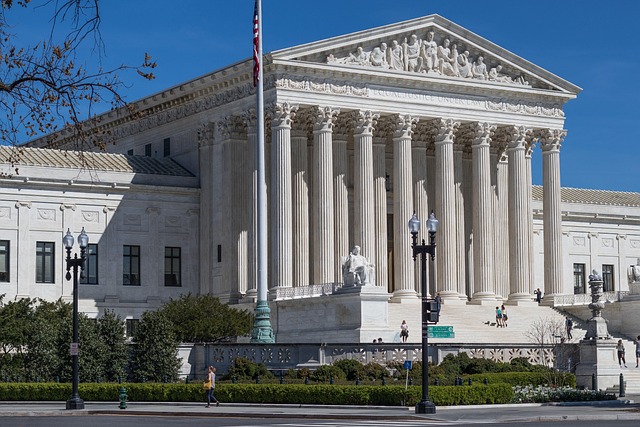


Few Supreme Court cases have become as politically symbolic as Citizens United v. Federal Election Commission.

Even people who have never read the opinion often recognize its name. Yet it’s also one of the most misunderstood decisions in American politics. Contrary to popular belief, the Court did not rule that corporations could donate unlimited money directly to political candidates. Those limits remained.

Instead, the Court held that corporations and labor unions could spend unlimited amounts independently to advocate for or against candidates, so long as those expenditures were not direct contributions.

To supporters, the reasoning followed naturally from Buckley. If political spending enables political speech, then restricting independent political spending risks restricting political speech itself. Justice Anthony Kennedy, writing for the majority, argued that the First Amendment does not permit the government to suppress political speech based on the identity of the speaker.

Critics saw something very different. They argued that while speech may be protected equally under the Constitution, the ability to purchase attention is not distributed equally throughout society. In a nation where wealth is profoundly unequal, they warned, expanding the constitutional protection of political spending would inevitably amplify those who already possessed the greatest financial resources.

Both arguments were grounded in genuine democratic values. One feared government deciding who may speak. The other feared wealth deciding who would be heard. The debate has often been presented as though Americans must choose between free speech and fair elections.

But that framing misses something important. Both sides claim to be defending democracy. They simply disagree about what democracy requires.

One emphasizes liberty. The other political equality.

For the next sixteen years, that philosophical tension would quietly reshape the legal architecture of American elections.

Cases like SpeechNow.org v. FEC, McCutcheon v. FEC, and now this year’s decision removing limits on coordinated spending between political parties and candidates did not emerge from nowhere. They built upon the same constitutional foundation laid decades earlier.

Viewed individually, each case addressed a specific legal question. Viewed together, they reveal something larger.

Not a conspiracy. Not a partisan strategy. A trajectory.

One that has steadily expanded the constitutional protection afforded to political spending while gradually narrowing many of the restrictions built in the aftermath of Watergate. Whether that trajectory has strengthened American democracy is the question that usually divides the country.

But before we try to answer it, we should ask a simpler one. What actually changed after those decisions?

Because for the first time, we don’t have to argue only from constitutional theory. We can examine sixteen years of evidence.


Sixteen Years Later

Ideas are easy to defend in theory. They’re harder to defend in history.

One of the strengths of democracy is that, eventually, theories collide with reality. Predictions become evidence. Arguments become measurable. What once existed only as constitutional philosophy leaves fingerprints in the real world. That is where our investigation turns next.

When Citizens United was decided in 2010, neither supporters nor critics could prove what would happen. Both sides were making competing forecasts about the future of American democracy.

Today, those forecasts are no longer the only evidence we have.

We have sixteen years of:
  • elections
  • campaign finance reports,
  • fundraising records.
  • political science research.

Most importantly, we have sixteen years of observable change. The first pattern is impossible to miss. There is simply more money. Much more.

According to data from the OpenSecrets, outside political spending has grown dramatically since 2010. Election cycles that once measured outside expenditures in the hundreds of millions now routinely measure them in the billions. Independent spending; once a relatively modest part of federal elections; has become one of their defining features.

That fact, by itself, tells us almost nothing about whether democracy is healthier. In a capitalist controlled society like America, money is required for individual survival let alone for organizing and enacting projects of any size.

Campaigns cost money. Advertising costs money. Organizing voters costs money. Speech itself often requires resources.

The existence of more political spending is not the story. The concentration of that spending might be. Because the second pattern is just as important as the first.

The explosion of political spending has not been evenly distributed across millions of ordinary Americans. A relatively small number of donors now account for an outsized share of independent expenditures, while Super PACs; organizations that did not exist before the legal changes of 2010; have become central institutions in modern elections.

That distinction matters. Imagine measuring an economy without asking who owns the wealth. The total tells part of the story. The distribution tells another.

Campaign finance works much the same way. The question isn’t simply whether more money entered politics. It’s whose money. That shift changes the conversation from dollars to influence. Not because writing a larger check automatically purchases legislation. The evidence doesn’t support such a simplistic conclusion.

Political scientists have spent decades studying whether money “buys elections,” and the answer is surprisingly nuanced. Candidate quality matters. Incumbency matters. Party identification matters. Economic conditions matter. Campaign spending can help, but it doesn’t function like a vending machine where donations reliably produce political victories.

That’s an important finding. It forces us to ask a better question. What if money’s greatest value isn’t purchasing votes? What if it’s purchasing access?

Researchers have increasingly focused on something less visible than election results: who gets meetings, who gets phone calls returned, whose concerns receive legislative attention, and whose policy proposals arrive on a committee agenda before anyone else’s.


Influence, it turns out, often begins long before Congress casts a vote. It begins with attention. And attention is one of the scarcest resources in government.

Every member of Congress has the same twenty-four hours in a day. Every committee has a finite number of hearings. Every legislative session has limited time.

When campaigns become more expensive, representatives must spend more time raising money to remain competitive. Former lawmakers from both parties have described hours each day devoted not to writing legislation or meeting constituents, but to fundraising.

No corruption is required for that incentive to reshape political life. The tradeoff is built into the structure itself. Every additional hour spent dialing donors is an hour unavailable for something else.

The question isn’t whether members of Congress are good people. The question is whether we’ve built a system that increasingly rewards activities voters never elected them to perform. That’s a different kind of criticism.

It’s not moral. It’s structural. And structural problems rarely announce themselves dramatically. They accumulate quietly. One incentive at a time. The same pattern appears beyond Congress.

Running for office has become increasingly expensive. Competitive Senate races routinely cost tens—sometimes hundreds—of millions of dollars. Presidential campaigns are measured in billions. Serious candidates now require fundraising networks that would have been almost unimaginable a generation ago.

Money has not become the only prerequisite for public office. But it does mean the price of entry has steadily increased. Again, that’s not a slogan. It’s an observable trend.

By now, another question begins to emerge. If political campaigns require ever-greater financial resources…and if those resources are increasingly concentrated…what happens to citizens whose greatest political asset isn’t wealth, but a single vote?

That question cannot be answered with campaign finance reports alone. Because democracy isn’t supposed to be measured only in dollars. It’s also meant to be measured in trust. And that may be where the evidence becomes most uncomfortable.


The Marketplace of Ideas

By now, the numbers have brought us to a place the headlines rarely do. Not a political argument. A philosophical one.

Every campaign finance debate eventually arrives at the same crossroads. What makes a democracy more democratic? The answer seems obvious until you begin asking how democracies actually function.

The Supreme Court’s modern campaign finance decisions rest on an idea that is deeply American. Political speech deserves extraordinary constitutional protection. If spending money allows citizens, organizations, newspapers, advocacy groups, labor unions, or corporations to communicate political ideas, then restricting that spending risks allowing government to decide who may speak and how loudly.

Taken on its own terms, the logic is compelling. A government with the power to silence unpopular speech is a dangerous thing. History has demonstrated that repeatedly.

In that sense, the Court’s reasoning is rooted in a legitimate fear; not of wealthy citizens, but of powerful governments. That fear deserves to be taken seriously. But constitutional principles are often tested not by their intentions…but by the worlds they create.

Because there is another democratic value that has quietly accompanied this discussion from the beginning. Political equality.

  • Not equality of wealth.
  • Not equality of talent.
  • Not equality of outcome.

Political equality. The simple democratic promise that every citizen enters the voting booth with one vote and, in principle, one equal voice. That promise has always been imperfect. America has never been a nation of equal wealth.

The Founders understood that people would possess different talents, different fortunes, and different ambitions. What worried them wasn’t inequality itself. It was concentrated power.

Again and again, the Constitution disperses authority rather than consolidating it.
  • Legislative power is divided.
  • Executive power is checked.
  • Judicial power is constrained.
  • Federal power is balanced against state power.

The system was intentionally designed around a simple assumption: Power, wherever it accumulates, deserves skepticism. That concern appears repeatedly throughout the The Federalist Papers.

In Federalist No. 10, James Madison argued that factions were inevitable. The challenge was never to eliminate them. It was to prevent any single faction from becoming so dominant that it overwhelmed the public interest.

Read today, those essays don’t offer simple answers to modern campaign finance law. They do offer something perhaps more valuable. A lens.

They remind us that democracy is not merely a system for counting votes. It is a system for balancing power.That distinction matters because campaign finance debates often ask the wrong question.

We ask whether money is speech. Perhaps it is. The Constitution certainly protects political expression with unusual force. But speech and influence are not necessarily the same thing.

One citizen writing a letter to the editor is exercising speech. A neighborhood organization holding a town hall is exercising speech. A billionaire funding one hundred million dollars of political advertising is also exercising speech.

Legally, those actions may belong to the same constitutional family. Practically, they occupy very different neighborhoods. This is where the marketplace metaphor begins to strain.

Markets reward unequal outcomes. Democracies are designed to restrain unequal political power. Those are not identical goals.

A marketplace asks: Who can create the greatest value?

A democracy asks: Who should possess the greatest voice?

Sometimes those answers overlap. Sometimes they don’t. That doesn’t mean the Court’s reasoning is wrong. It means it exists in tension with another democratic principle that deserves equal attention.

Protecting liberty is one constitutional value. Preserving broad political legitimacy is another. The challenge isn’t choosing one over the other. It’s recognizing that every legal decision inevitably shifts the balance between them. Perhaps that’s why the debate has endured for decades.

It isn’t really about campaign finance. It’s about two competing visions of freedom.

One sees freedom primarily as the absence of government restraint. The other sees freedom as meaningful participation in a political system where extraordinary wealth does not quietly become extraordinary influence.

Both are sincere. Both have deep roots in American political thought. And both force us to confront a question that extends far beyond any single Supreme Court ruling.

If the Constitution protects everyone’s right to speak…what protects everyone’s opportunity to be heard?

That question cannot be answered by constitutional philosophy alone. Because constitutions define rights. Institutions determine how those rights are experienced. And that brings us back to the ordinary American voter.

Because whatever theory we adopt, whatever philosophy we prefer, every democratic system is ultimately judged by the same standard. Does it leave its citizens believing their participation still matters?


When Institutions Become Personal

Constitutional law has a way of feeling distant. Campaign finance even more so.

Most Americans will never read a Supreme Court opinion. Most will never donate six figures to a political campaign. Most will never meet a lobbyist, attend a fundraiser at a private estate, or spend an afternoon debating the finer points of First Amendment jurisprudence. Which makes one question unavoidable.

If this entire discussion takes place in courtrooms, campaign offices, and Washington conference rooms…why should anyone else care?

Because institutions eventually become personal. Not all at once. Not in dramatic fashion. But quietly, through the incentives they create.

Imagine two members of Congress beginning the same day. One spends the morning meeting local business owners worried about rising costs. The other spends the morning calling potential donors to prepare for the next election.

Neither is necessarily acting in bad faith. Neither has broken the law. Neither has accepted a bribe. Both are responding rationally to the incentives placed in front of them. That’s what makes institutional change so difficult to recognize.

It rarely requires bad people. Only systems that consistently reward certain behaviors over others.

Campaign finance is one example. The media landscape we explored in Manufactured Outrage is another.

Social media algorithms don’t ask whether information is true. They reward engagement. Campaigns don’t ask whether fundraising is the highest use of an elected official’s time. They reward survival. Different institutions. Same pattern.

Incentives shape behavior. Behavior shapes institutions. Institutions shape everyday life.

By the time ordinary citizens notice the effects, the incentives that produced them have often been in place for years.

That’s why this story isn’t ultimately about donors. Or politicians. Or even judges. It’s about attention.

Every democracy asks the same fundamental question: Whose concerns rise to the top?

Not every citizen has the same resources. Not every organization has the same reach. Not every interest group has the same access. That’s inevitable.

The deeper question is whether our institutions compensate for those inequalities…or quietly magnify them. Consider the average American voter.

Whether they live in a farming community in Iowa, a suburb outside Chicago, a small town in Texas, or a neighborhood in Los Angeles, their daily concerns are remarkably familiar.
  • Can I afford housing?
  • Will my wages keep up with prices?
  • Is healthcare becoming more expensive?
  • Will my children have opportunities I didn’t?
  • Will my community still exist twenty years from now?

These aren’t partisan questions. They’re human ones.

Yet solving problems like these requires something citizens rarely think about until it’s missing: responsive institutions.

When people say they feel like “Washington doesn’t listen,” they’re usually describing an experience rather than presenting evidence. Experiences matter. But they’re also incomplete. The evidence tells a more nuanced story.

Political scientists continue to debate exactly how much influence wealth purchases. What they increasingly agree on is that access, agenda-setting, and sustained attention are often distributed unevenly.

Not because democracy has disappeared. Because time is finite. Attention is finite. Political capital is finite.

Every meeting granted to one interest is a meeting unavailable to another. Every hour spent raising campaign money is an hour unavailable for legislative work. Every incentive has an opportunity cost.

This is where campaign finance stops being an abstract constitutional debate. And starts becoming a question of representation.

Not whether elected officials care about ordinary citizens. But whether the system consistently gives ordinary citizens the same opportunity to be heard as those capable of financing increasingly expensive campaigns.

That’s a very different question. And perhaps the more important one. Democracies are not judged solely by whether citizens possess rights. They are judged by whether citizens believe those rights remain meaningful.

That belief is difficult to measure. But easy to recognize when it begins to disappear.
  • People stop voting.
  • They stop participating in civic organizations.
  • They stop attending town halls.
  • They stop believing institutions belong to them.
  • Eventually, they stop expecting those institutions to solve shared problems at all.

Cynicism doesn’t arrive because one Supreme Court decision changes the country overnight. It accumulates. The same way institutional drift accumulates. One incentive. One precedent. One adaptation at a time.

Which brings us back to the question that has quietly followed us through this entire investigation. Not whether money belongs in politics. It always has. Not whether political speech deserves constitutional protection. It absolutely does.

But whether a democracy can ask its citizens to believe their voices matter…while steadily increasing the value of voices that can afford the loudest amplification.

That is no longer a legal question. It’s a civic one. And it’s one every generation has to answer for itself.


The Shape of a Republic

The easiest way to misunderstand institutional change is to imagine that it announces itself. History suggests otherwise.

When people picture democracies in decline, they often imagine dramatic moments; tanks in the streets, constitutions suspended overnight, elections abruptly canceled. Those events happen. But they are rarely how established democracies evolve.

More often, change arrives dressed as normalcy.
  • A court decision.
  • A budget bill.
  • A regulatory adjustment.
  • A technological innovation.
  • A new incentive.

Each one, considered on its own, appears manageable. Reasonable people disagree. Life goes on. The country adapts. And that last word deserves more attention than it usually receives.

Adaptation is one of democracy’s greatest strengths. It’s also one of its greatest risks.

Healthy democracies adapt because societies change. New technologies emerge. Economies evolve. Constitutional questions arise that earlier generations could never have anticipated.

Adaptation keeps institutions alive. But every adaptation has a direction. That’s the question we’ve been circling since the beginning. Not whether America is changing. Every nation changes.

Changing toward what?

Campaign finance law offers one answer; not because it explains everything, but because it reveals a broader pattern.

Over the past half century, American institutions have repeatedly expanded the constitutional protection afforded to political spending. Each decision was argued on its own legal merits. Each addressed a discrete constitutional question. Each became another stone in a path laid one case at a time.

No single ruling transformed the republic. But together, they transformed the environment in which politics now operates.

That distinction matters. Environments shape behavior.
  • If campaigns become more expensive, candidates adapt.
  • If fundraising becomes more important, parties adapt.
  • If independent spending becomes easier, advocacy groups adapt.
  • If attention increasingly follows financial capacity, everyone adapts.

Eventually, citizens adapt as well. They adjust their expectations. Some become more engaged. Others become more cynical.

Many simply conclude that politics is something happening somewhere else; performed by professionals, financed by interests they cannot compete with, discussed in a language they no longer recognize.

Democracy rarely dies the moment people lose the right to vote. It begins to weaken when people lose confidence that voting is enough. That confidence is difficult to restore once it fades. Not because citizens stop caring. But because institutions are built on trust as much as law.

A constitution can define powers. It cannot manufacture legitimacy. Legitimacy is earned over time, through the repeated experience that participation matters. That experience doesn’t require every citizen to get the outcome they wanted.

Democracy has never promised that. It promises something quieter. That every citizen enters the process believing their voice deserves consideration, even when it doesn’t prevail.

The danger isn’t simply that money amplifies some voices more than others. Money has always amplified voices. The deeper question is whether our institutions still work hard enough to ensure amplification never becomes substitution. That is where constitutional theory meets democratic reality.

A republic can protect political speech while still asking whether political influence is becoming too narrowly concentrated. It can celebrate liberty while remaining attentive to legitimacy. Those ideas are not enemies. They are partners that require constant balancing.

Perhaps that is the central lesson of this investigation. Democracy is not self-executing. It is not preserved by good intentions alone. It survives because each generation repeatedly asks whether the systems it inherited still serve the principles they were designed to protect.

That question has no permanent answer. Which is precisely why it must continue to be asked.

The Supreme Court will issue more rulings. Congress will pass more laws. Technology will create new forms of political influence that today’s legal frameworks can scarcely imagine. The details will change. The underlying question will not.

How do we preserve both liberty and legitimacy in a society where economic power and political power increasingly intersect?

That isn’t merely a legal question. It isn’t merely a political question. It’s the ongoing work of constitutional self-government. And whether we succeed will depend less on any single court decision than on whether citizens continue paying attention to the cumulative direction of the path beneath their feet.

Because paths rarely feel consequential while we’re walking them. Only when we stop…turn around…and realize how far we’ve drifted.


Seeing the Water

There is an old observation, often attributed to the writer David Foster Wallace. Two young fish are swimming when an older fish passes by and asks, “How’s the water?” The younger fish continue swimming. Eventually one turns to the other and asks, “What the hell is water?”

The point isn’t that the fish are unintelligent. It’s that the most influential parts of our environment are often the ones we notice least. We adapt to them. We stop questioning them. Eventually, we mistake them for reality itself. Politics works much the same way.

Every generation inherits institutions it did not build.
  • Campaign finance laws.
  • Election systems.
  • Media ecosystems.
  • Economic assumptions.
  • Constitutional precedents.

Most of us spend very little time asking why these systems look the way they do. We simply learn to swim. That is why stories like this matter.

Not because one Supreme Court ruling determines the fate of the republic. It doesn’t. Not because one election changes everything. It won’t. And certainly not because this one article possesses the final answer. No article ever does.

They matter because democracies are shaped less by dramatic moments than by accumulated assumptions.
  • Assumptions about who gets heard.
  • Assumptions about whose time receives attention.
  • Assumptions about the relationship between wealth and influence.
  • Assumptions about what is simply “the way politics works.”

Those assumptions become invisible long before they become inevitable.

This investigation began with a single Supreme Court decision. It ends somewhere much broader. With a question that will outlive this news cycle, this Court, and perhaps even this generation.

When future Americans look back on this period of constitutional history…what will they say we were protecting?

Will they see a nation that successfully defended political liberty while preserving broad democratic legitimacy? Or will they conclude that, little by little, we confused the freedom to amplify speech with the health of the conversation itself?

History rarely announces which moment mattered most. It assembles the answer afterward. That is both its frustration…and its gift. Because it means we are never merely observers. We are participants. Not only in elections. But in the habits of citizenship itself.

In the questions we choose to ask. In the institutions we choose to strengthen. In the incentives we choose to tolerate. And in the assumptions we refuse to examine simply because they have become familiar.

Perhaps that is the quiet responsibility of a republic. Not to assume that democracy, once achieved, naturally sustains itself. But to recognize that every generation inherits a political system in motion.

Always adapting. Always drifting. Always becoming.

The challenge has never been to stop that movement. The challenge is to make sure we are aware enough to notice its direction. Because the health of a democracy is measured not only by the freedom to speak…but by the willingness of its citizens to keep asking what kind of society those voices are building together.

And maybe that’s the real purpose of journalism. Not simply to tell us what happened today. But to help us see the water we’ve been swimming in all along.


“We figured out there’s something that sells better than sex, and that’s rage.” — Scott Galloway


Every week, there is another crisis.

  • Another viral outrage.
  • Another politician saying the unthinkable.
  • Another celebrity demanding your attention.
  • Another company apologizing.
  • Another boycott.
  • Another culture war.
  • Another reason to pick a side.

Within hours, millions of people are arguing with strangers they’ve never met about people they’ll never know over events they’ll barely remember a month later.

Meanwhile:

  • Rent is still due.
  • Healthcare is still expensive.
  • Groceries still cost more than they did a few years ago.
  • Corporate profits continue to climb.
  • Private equity keeps buying hospitals, nursing homes, and housing.
  • Lobbyists continue writing legislation.
  • The concentration of wealth continues.
  • The concentration of power continues.

And almost none of it trends. That contrast isn’t the article. It’s the question.

If our lives are increasingly shaped by economic forces, why does so much of our collective attention revolve around cultural conflict?

The answer is not that these cultural issues are fake. They’re not.

Questions surrounding race, religion, immigration, abortion, LGBTQ rights, policing, gun ownership, and free speech are real. They affect real people in meaningful ways. But there is another question that receives far less attention.

Why do these issues dominate our public imagination so completely while the economic structures shaping nearly everyone’s daily life rarely receive the same sustained focus?

The issue isn’t that people care about the wrong things. The issue is that we are rarely given enough uninterrupted attention to care deeply about the things that shape our lives the most. That distinction matters.

Because attention is no longer simply a feature of modern life. It has become one of its most valuable commodities.


The Product Is Our Attention

Industrial capitalism extracted physical labor. The digital economy extracts attention.
  • Every swipe.
  • Every click.
  • Every comment.
  • Every notification.
Every moment spent looking at a screen is measured, analyzed, monetized, and sold inside one of the most competitive markets ever created.
  • Technology companies compete for it.
  • Advertisers compete for it.
  • Political campaigns compete for it.
  • News organizations compete for it.
  • Influencers compete for it.

Your attention has become an economic resource. And like every valuable resource, institutions have become remarkably efficient at extracting it.

The question is no longer whether information reaches us. The question is which information survives long enough to command our attention.

Journalist Chris Hedges has spent years warning that much of modern journalism has been transformed into spectacle—where entertainment values increasingly eclipse civic ones. News still informs, but it must also compete for ratings, clicks, and engagement. In that environment, spectacle often wins.

The market rewards what captures attention. Not necessarily what deserves it. That incentive changes everything.
  • Stories become shorter.
  • Context becomes optional.
  • Conflict becomes continuous.

The goal is no longer simply to inform the public. The goal is to keep the public watching.


Scott Galloway argues that digital platforms discovered something profound about human behavior.

“We figured out there’s something that sells better than sex, and that’s rage.”


That observation explains more than social media.
  • It explains modern media.
  • It explains political fundraising.
  • It explains why cable news panels seem permanently angry.
  • It explains why every notification sounds urgent.
  • It explains why every disagreement becomes existential.

Because outrage performs. Not morally. Economically.

The system does not ask whether anger is healthy. Only whether it is effective. And by nearly every measurable engagement metric, it is. Which raises a deeper question.

If attention has become the world’s most valuable commodity…Who decides where it goes?


The Great Substitution

Noam Chomsky once observed:

“The smart way to keep people passive and obedient is to strictly limit the spectrum of acceptable opinion, but allow very lively debate within that spectrum.”

Whether one agrees with every aspect of Chomsky’s political analysis is almost beside the point. The observation points toward something larger than ideology. It points toward perception.

Every society contains more events than its citizens could ever possibly follow.
  • Thousands of policy decisions.
  • Corporate mergers.
  • Labor disputes.
  • Environmental rulings.
  • Court decisions.
  • Regulatory changes.
  • Scientific discoveries.
  • International conflicts.

No individual can meaningfully process all of them. Selection is inevitable. Somebody—or something—must decide what receives sustained attention. The question isn’t whether filtering exists. The question is how that filtering happens.

In previous generations, editors and producers performed much of that role. Today, editors still matter. But increasingly, algorithms perform it alongside them.

A handful of digital platforms now mediate an extraordinary share of the world’s information flow. Search engines decide what is discoverable. Social media platforms determine what becomes visible. Recommendation systems decide what spreads, what disappears, and what millions of people encounter before they’ve consciously chosen to look for it.

None of these systems asks a moral question. They ask an engineering question. What keeps people engaged?

And once that becomes the optimizing principle, another pattern quietly emerges. Attention becomes perception. Perception becomes priority. Priority becomes power.

Once you begin looking through that lens, the daily news starts to feel different. Not because the stories are false. But because you begin asking a different question.

What isn’t staying in view long enough for us to fully understand it?


The Incentive Machine

Conflict Is More Profitable Than Cooperation

If attention becomes perception, the next question is obvious. What determines where attention goes?

Not ideology. Incentives.

The most important systems in modern public life are built around optimization.
  • Social media platforms optimize for engagement.
  • Television networks optimize for ratings.
  • Advertisers optimize for attention.
  • Political campaigns optimize for turnout and donations.
  • News organizations optimize for subscriptions, viewership, and clicks.

Each institution has different goals. Yet remarkably, they all arrive at the same conclusion. Conflict performs. Calm does not.

A nuanced discussion of healthcare financing may affect millions of people. A viral confrontation between political rivals can dominate headlines for days. One changes lives. The other captures attention.

The incentive structure doesn’t ask which story matters more. It asks which story keeps people from scrolling.

Journalist Glenn Greenwald has long argued that the greatest threat to journalism is not simply political bias, but institutional incentives that reward audience affirmation over adversarial reporting. As news increasingly competes in the same marketplace as entertainment, the pressure shifts from informing audiences to retaining them.

The result isn’t necessarily false information. It’s selective attention. Stories that provoke outrage survive. Stories that require patience struggle.

Complexity loses. Conflict wins. Again and again. Not because someone gives the order. Because every institution is responding to the same market signal. Attention.


Edward Snowden approached the same problem from a different direction. His warnings were never only about surveillance. They were about architecture.

The systems we build quietly shape the choices we make inside them.
  • Recommendation engines determine what appears before us.
  • Algorithms decide what is amplified.
  • Notifications compete for interruption.
  • Trending topics compete for urgency.

None of these systems are conscious. But all of them influence perception. They don’t tell us what to believe. They influence what we repeatedly encounter. And repetition has extraordinary power.

Not because repetition proves something is true. Because repetition teaches the brain that something is important.

Attention becomes perception. Perception becomes priority. Priority becomes power.


Robert Greene writes that whoever can provoke emotional reactions gains influence over others. Modern technology has industrialized that insight.

Every outrage cycle follows a familiar rhythm.
  • A statement.
  • A reaction.
  • A counter-reaction.
  • A viral clip.
  • A thousand comment threads.
  • A million people emotionally invested.

Then another controversy arrives. The previous outrage disappears. Nothing is resolved. Everything resets.

The cycle isn’t designed to produce understanding. It is designed to produce engagement. And engagement has become one of the most valuable commodities in the world.


This is why the question is not: Who is manipulating us? That question almost always leads to conspiracy thinking.

A better question is: What behaviors does the system reward?

Systems don’t require central planning to produce predictable outcomes.
  • Markets don’t.
  • Evolution doesn’t.
  • Traffic patterns don’t.
They emerge from incentives. The attention economy works the same way.
  • No single editor has to coordinate with every platform.
  • No executive has to orchestrate every controversy.
  • No politician has to manufacture every division.

When every institution benefits from attention…and outrage is the fastest path to attention……the outcome becomes remarkably predictable. Not because it was planned. Because it was rewarded.


When Reality Interrupts the Narrative

If the outrage economy has one weakness…it’s reality.

Reality has a habit of cutting across political identities.
  • A mortgage payment doesn’t ask whether you’re Republican or Democrat.
  • A medical bill doesn’t care who you voted for.
  • A factory closing doesn’t distinguish between progressive and conservative workers.

Economic reality has a way of collapsing cultural distance. And when that happens, something interesting occurs.

People who have spent years arguing with one another suddenly discover that they share the same employer.
  • The same landlord.
  • The same healthcare system.
  • The same paycheck anxiety.
  • The same shrinking leverage.
  • The same uncertainty about the future.

Shared conditions create shared interests. And shared interests create the possibility of something the outrage economy struggles to monetize. Solidarity.


When Workers Remember What They Have in Common

Shared Material Interests Build Stronger Coalitions Than Manufactured Division

If outrage fragments attention…shared experience restores it.

That is the quiet lesson running beneath nearly every successful labor movement in modern history. Not that people suddenly begin agreeing on everything. But that they begin remembering what they already share. Chris Smalls understood this.

When Amazon workers on Staten Island organized the company’s first successful independent union, they were not recruited because they shared the same political identity. They didn’t. Some were conservatives. Some were liberals. Some rarely thought about politics at all.

They came from different racial, religious, and cultural backgrounds. Yet every one of them walked through the same warehouse doors. Worked under the same productivity quotas. Faced the same scheduling pressures. Shared the same concerns about wages, safety, dignity, and respect.

For a brief moment, the culture war gave way to something more immediate. Reality. Material conditions became impossible to ignore because everyone experienced them together.

The organizing question was never: “Who did you vote for?”

It was: “What kind of workplace do we want?”

That distinction changes everything. Because shared material conditions often succeed where shared ideology fails. They create coalitions built not on identity…but on lived experience.


The same pattern has appeared elsewhere.

Starbucks workers organized stores across states with vastly different political cultures around scheduling, staffing, and wages.

The United Auto Workers brought together employees from communities that often vote very differently, yet negotiated around the same paychecks, pensions, and working conditions.

Hollywood writers and actors—hardly a monolithic political community—organized around compensation, creative ownership, and the emerging impact of artificial intelligence on their profession.

UPS Teamsters secured one of the most significant labor contracts in recent years by focusing on concrete workplace issues that affected every driver and warehouse employee regardless of party affiliation.

Different industries. Different cultures. Different politics.

The same underlying pattern. When reality becomes impossible to ignore…identity becomes less important than shared conditions.


This should not surprise us.
  • Economic pressure rarely asks ideological questions.
  • Inflation does not distinguish between red states and blue states.
  • Medical debt does not care who you follow on social media.
  • Unaffordable housing does not check voter registration.
  • A factory closure does not pause to ask your position on the latest cultural controversy.

Reality is stubbornly bipartisan. And reality has a remarkable ability to expose what outrage often conceals.

The people working beside you are rarely your greatest source of economic leverage—or your greatest obstacle.

More often than not, they’re living through many of the same structural pressures you are. That doesn’t erase genuine disagreements. Nor should it. Democracy depends on disagreement.

The question is not whether disagreements exist. The question is whether they consume so much of our collective attention that we lose sight of the conditions we experience together.

Attention becomes perception. Perception becomes priority. Priority becomes power.

If that sequence is true…then solidarity begins with attention. Not attention to the newest outrage. Attention to the realities that remain long after the outrage has disappeared.


Wisdom Is Resistance

There is an old saying that if you want to understand a society, don’t ask what it says it values. Watch what it rewards.

The modern attention economy rewards speed over depth.
  • Reaction over reflection.
  • Performance over participation.
  • Certainty over curiosity.
  • Outrage over understanding.
None of this requires a conspiracy. It requires incentives.
  • Markets respond to incentives.
  • Algorithms respond to incentives.
  • Political campaigns respond to incentives.
  • Media organizations respond to incentives.
  • Human beings respond to incentives.

Why would we expect the information ecosystem to behave differently?

Perhaps the most important question we can ask ourselves is no longer: “Is this story true?”

Truth matters. But another question comes first. “Why is this the story I am being invited to spend my attention on today?”

It reminds us that attention is never merely personal. It is political. It is economic. And increasingly…it is one of the primary ways power is exercised in the twenty-first century.

That question changes everything. Because it transforms us from consumers of information…into observers of the system that delivers it.


Manufactured outrage does not require us to hate one another. It only requires us to look away from one another long enough to forget what we have in common.

Workers do not share the same religion. They do not share the same political party. They do not share the same cultural identity. They do not share the same vision for every social issue. They never have.

Yet increasingly, workers share the same economic landscape.
  • The same housing market.
  • The same healthcare system.
  • The same concentration of corporate power.
  • The same shrinking leverage over the institutions that shape their daily lives.

Attention becomes perception. Perception becomes priority. Priority becomes power.

The struggle over public attention is not ultimately a struggle over opinion. It is a struggle over what society remembers. Because what a society remembers…is what it eventually decides to change.

The outrage economy wins when every day feels like an emergency. Democracy works only when citizens can distinguish between the urgent…and the important.

The next time another manufactured outrage demands your attention, don’t just ask which side is right. Ask a different question.

What disappeared from view while everyone was looking here?

The answer may tell you far more about power than the outrage itself ever could.


Corporate Consolidation, Media Mergers, and the Remaking of the American Press


Back in January, comedian Nikki Glaser made a joke about CBS News during her Golden Globes monologue.

The audience laughed. At the time, it felt like satire. Six months later, it reads more like documentation.

Because what has unfolded since then is no longer just commentary about journalism’s decline, it is structural change happening in real time.

Journalism didn’t die because people stopped caring about the truth. It didn’t collapse under a single failure or scandal.

It was gradually absorbed through acquisition, restructuring, and financial logic that treated public information as a cost center rather than a civic function.

The watchdog wasn’t killed. It was acquired.


Journalism’s Long Decline

The crisis didn’t begin in 2026.

It began decades earlier, as advertising revenue migrated to digital platforms and subscription models failed to fully replace it.

Newsrooms contracted. Local papers disappeared. Investigative desks were reduced or eliminated entirely. Veteran reporters were replaced by smaller teams expected to produce more content in less time.

The result wasn’t an immediate collapse. It was degradation through efficiency.

Journalism became faster, cheaper, and thinner; optimized for output, not scrutiny.


The Age of Consolidation

As revenue collapsed, ownership consolidated.

Each merger promised efficiency. Each acquisition promised stability. Each restructuring promised survival. What they rarely promised was more journalism.

And each wave of consolidation reduced the number of independent decision-makers shaping what millions of people would see as “news.”

The public still sees different logos. Different anchors. Different branding.

But behind those surfaces, fewer institutions now determine what qualifies as newsworthy.

And fewer still are structurally insulated from corporate pressure.


The Battle for CBS News

Recent turmoil at CBS News illustrates the new reality.

Leadership changes, editorial disputes, and internal restructuring have raised a question that once would have been unthinkable at legacy institutions:

Who actually controls editorial judgment: journalists, or ownership?

Regardless of where one stands on Bari Weiss or the direction of reform, the structural issue remains unchanged.

Once ownership begins reshaping newsroom priorities directly, editorial independence becomes conditional rather than assumed.

And once that happens, credibility stops being inherited. It has to be defended story by story.


When Journalism Becomes Brand Management

As Noam Chomsky observed:

“The smart way to keep people passive and obedient is to strictly limit the spectrum of acceptable opinion, but allow very lively debate within that spectrum.”

Modern media rarely looks like censorship. It looks like constraint. Stories are not always blocked. They are deprioritized. Investigations are not always stopped. They are rendered expensive.

The old concern was advertiser pressure. The new concern is executive intervention. And as consolidation increases, those pressures begin to merge into a single structural force: risk management.

Once ownership starts editing the newsroom, every story becomes a conflict-of-interest disclosure waiting to happen.


The PR Replacement

Public relations was once journalism’s subject. Now it increasingly functions as journalism’s substitute.

Across corporate and political institutions, communications teams have expanded while investigative newsrooms have contracted. Entire infrastructures now exist to generate narratives faster than they can be scrutinized.

The imbalance is not subtle. A single institution may employ dozens of people shaping messaging, and only a handful of journalists attempting to interrogate it. Guess which side tends to be better resourced.

This produces a media environment saturated with professionally engineered statements, narratives, and “official explanations” that arrive prepackaged for publication.

Increasingly, journalism is not competing with PR. PR has already won.

The modern information economy has produced a quiet inversion: those most capable of shaping public narratives are least accountable to the public, while those tasked with challenging them operate with diminishing capacity.

The appearance of scrutiny without scrutiny. The appearance of accountability without accountability.

What replaces journalism isn’t ignorance. It’s simulation.


What Journalism is Supposed to Do

Journalism was never supposed to make powerful institutions comfortable. It was supposed to make them uncomfortable.

As Glenn Greenwald has argued:

“Journalism’s ultimate purpose is to hold those in power accountable.”

That is the job. Not access. Not brand protection. Not institutional stability. Accountability.

Without it, journalism becomes something else entirely.

Edward Snowden captured the consequence of failing institutions more broadly:

“When exposing a crime is treated as committing a crime, you are being ruled by criminals.”

While originally referring to state secrecy, the principle extends further. Institutions that fear scrutiny tend not to be strengthened by it. They tend to suppress it, avoid it, or neutralize it.

Healthy systems absorb criticism. Failing systems resist it. Declining systems begin to treat criticism itself as the problem.


The News is Still Here

The news industry spent years warning the public about misinformation. Fair enough. But misinformation was never the only structural threat.

Concentrated ownership is a threat. Executive intervention is a threat. The conversion of newsrooms into corporate subsidiaries is a threat.

For decades, concern focused on whether governments would control the press. Far less attention was paid to how thoroughly the press was becoming embedded within the same consolidation logic that reshaped nearly every major American industry.

The danger is not that information disappears. The danger is that it remains everywhere while journalism becomes increasingly rare.

Headlines will continue. Alerts will continue. Breaking news banners will continue. The machinery will keep running.

But a society can drown in information while starving for truth.

The watchdog wasn’t killed. It was acquired.

The news is still here. Journalism isn’t.


How Economic Crises Become Engines of Wealth and Power Consolidation

Economic crises tend to arrive with a familiar explanation. A housing bubble bursts, a banking system destabilizes, a pandemic disrupts global supply chains, or inflation spirals beyond expectations. The details differ, but the public narrative usually converges on the same conclusion: the outcome was unavoidable, and no one could have reasonably predicted it.

But the aftermath tends to follow a far more consistent pattern than the causes. Large financial institutions stabilize or expand, political power becomes more centralized, and wealth shifts upward while broad segments of the population absorb long-term losses. After the volatility fades, recovery is not evenly distributed. It reliably flows toward institutions that were already closest to capital, credit, and political leverage.

That asymmetry raises a question that does not depend on conspiracy or intent. It depends only on repetition: why do economic crises so consistently produce the same winners and losers?

The focus here is not whether crises are secretly engineered in advance. The more grounded question is why existing systems appear structurally capable of converting instability into consolidation, often regardless of what triggered the instability in the first place.


The Myth of the Unpredictable Crisis

Economic crises are typically framed as unpredictable shocks, yet the historical record often shows sustained warnings before major breakdowns. Analysts, regulators, and even insiders frequently identify systemic risks long before they materialize, though these warnings rarely alter behavior while conditions remain profitable.

The 2008 Financial Crisis illustrates this clearly. In the years leading up to the collapse, U.S. household debt rose to roughly 130% of disposable income, while the housing market became increasingly dependent on subprime lending and complex financial derivatives. When the system unraveled, more than 8 million Americans lost their homes through foreclosure.

Journalist Matt Taibbi has repeatedly emphasized a structural imbalance in how risk is handled in these systems: gains remain concentrated during expansion, while losses are dispersed broadly once failure occurs. That pattern is not an accident of timing. It is a consequence of incentives that reward risk-taking during growth phases and shift costs outward during collapse.


Disaster Creates Opportunity

Crises do not only expose weaknesses in systems; they expand what becomes politically and economically possible. During stable periods, major structural changes face resistance from public scrutiny, regulatory friction, and institutional inertia. During crises, that resistance weakens as urgency compresses decision-making timelines.

Author Naomi Klein described this dynamic as “disaster capitalism,” a pattern in which shock conditions create openings for rapid restructuring that would otherwise face significant opposition. The mechanism does not require centralized coordination. It requires only urgency combined with unequal capacity to act.

In moments of disruption, institutions with speed, capital access, and political influence are able to shape outcomes while broader populations are focused on immediate survival. The result is not always deliberate design, but it is consistently asymmetric advantage.


The Wealth Transfer Machine: 2008 and Its Aftermath

The post-2008 recovery provides one of the clearest modern examples of crisis-driven consolidation. Between 2007 and 2011, U.S. home prices fell by roughly 30% nationally, wiping out trillions in household wealth. At the same time, foreclosure filings affected over 4 million properties in the United States, with peak annual filings exceeding one million.

While households absorbed the losses, financial institutions stabilized through coordinated intervention. The Troubled Asset Relief Program (TARP) authorized $700 billion in potential support for banks and financial institutions, preventing systemic collapse while stabilizing major actors in the financial sector.

In practical terms, collapse functions as a pricing mechanism: it converts widespread financial distress into discounted access for actors with liquidity.

In the years that followed, institutional investors expanded significantly into housing markets. Firms such as BlackRock and other large asset managers helped drive large-scale acquisitions of distressed single-family homes, converting portions of owner-occupied housing stock into long-term rental portfolios. What appeared as market recovery functioned simultaneously as a restructuring of ownership.

This is where abstraction becomes structure. Crises do not merely erase wealth; they reorganize it under conditions where liquidity determines who can acquire and who must exit.


Pandemic Shock and Small Business Collapse

A similar pattern emerged during the economic disruption caused by the COVID-19 pandemic. In the United States, more than 200,000 small businesses were estimated to have closed permanently in 2020 alone, with many more experiencing prolonged revenue losses that weakened long-term viability.

At the same time, large corporations expanded market dominance. Between March 2020 and mid-2021, the combined wealth of U.S. billionaires increased by over $1.5 trillion, even as unemployment peaked above 14% during the early phase of the downturn.

Government stabilization programs such as the Paycheck Protection Program (PPP), which distributed over $800 billion in loans and aid, helped prevent a deeper collapse. However, reporting and subsequent analysis showed that a disproportionate share of larger or better-connected firms accessed relief funding more effectively than smaller independent operators.

The result was economic disruption at the bottom and accelerated accumulation at the top, operating in the same timeframe.

The result was not only economic disruption but structural consolidation. Large retailers, technology platforms, and logistics networks increased market share while many local businesses disappeared permanently, reducing competitive diversity in multiple sectors.


Manufacturing Consent During Crisis

Economic crises are also narrative events. Public perception during instability is shaped by uncertainty, fear, and reliance on official interpretation. Under these conditions, narratives that might otherwise face scrutiny often become dominant by default.

Political theorist Noam Chomsky has argued that power operates not only through coercion but through the management of public consent. In crisis conditions, the acceptable range of discourse often narrows, and alternative interpretations are more easily dismissed as destabilizing or irresponsible.

Journalist Glenn Greenwald has repeatedly pointed out that emergency frameworks tend to outlast their original justification. Temporary expansions of authority frequently become embedded into long-term governance structures, particularly when they are normalized during periods of collective uncertainty.

The result is a feedback loop: crisis reduces scrutiny, and reduced scrutiny allows structural changes that persist long after the emergency fades.


Progress for Whom?

Across different crises and time periods, certain patterns repeat. Markets recover, but unevenly. Institutions stabilize, but often at larger scale than before. Wealth rebounds, but increasingly concentrates within systems that already held disproportionate influence.

This leads to a final set of questions that avoids speculation and focuses instead on outcomes. Who gained ownership of distressed assets? Who expanded market share during periods of contraction? Who received public stabilization or institutional protection? And who absorbed the long-term costs of adjustment?

These are not rhetorical questions in the abstract. They are measurable outcomes that appear consistently across multiple economic disruptions. The concern is not that crises are identical in cause, but that they are often similar in effect.

If economic systems repeatedly translate instability into consolidation, then crises are not external interruptions to the system. They may be one of the mechanisms through which the system reorganizes itself.

The defining issue, then, is not whether crises will occur. It is whether the structure of modern economies systematically channels those crises toward concentrated ownership, centralized control, and unequal recovery.

And if that pattern holds, the next downturn will not simply test the resilience of the system. It will once again reveal who the system is built to serve.

How Epstein transparency, anti-war dissent, and donor-driven politics collided in one of the most revealing Republican primaries in modern America.


American politics still pretends to reward independence.

Candidates campaign as outsiders. Lawmakers promise to “fight the establishment.” Cable news panels praise courage, authenticity, and principle — at least rhetorically. Voters are told that democracy works because elected officials answer to the public rather than to entrenched power.

But every so often, a political event cuts through the performance and reveals something colder underneath.

The recent political destruction of Congressman Thomas Massie felt like one of those moments.

Massie was never an easy figure to categorize. A libertarian-minded Republican from Kentucky, he spent years irritating both parties with his opposition to surveillance expansion, foreign intervention, omnibus spending bills, and centralized federal authority. He frequently voted alone. Sometimes awkwardly. Sometimes stubbornly. Sometimes correctly. Often inconveniently.

For years, Washington tolerated him as a manageable dissenter — the kind of ideological outlier every political system keeps around as proof that dissent still exists.

Then something changed.

Massie became one of the most visible congressional voices demanding greater transparency surrounding the Epstein files. At the same time, he grew increasingly outspoken about U.S. foreign aid, Israeli military policy in Gaza, and the role powerful lobbying organizations play inside American politics.

Individually, none of those positions was unprecedented.

Combined, they placed him in direct conflict with some of the most protected consensus structures in modern American political life.

Soon afterward, the money arrived.

Not ordinary campaign money. Not local political backlash. Nationalized political money. Establishment money. Punishment money.

Outside groups flooded the race. Party pressure escalated. Trump turned against him publicly. Media framing hardened. What should have been a relatively contained congressional primary transformed into something much larger: a political demonstration.

Whether one agrees with Thomas Massie personally is almost beside the point.

The real question is what his defeat reveals about the narrowing boundaries of acceptable dissent inside the American political system.

Because modern political systems rarely suppress opposition outright anymore.

They discipline it financially.


The One Scandal Neither Party Could Fully Contain

The Jeffrey Epstein case became something larger than a criminal scandal over the past year.

For many Americans, it evolved into a symbol of elite impunity itself — a cultural shorthand for the suspicion that wealth, political connections, intelligence-adjacent networks, and institutional protection can place certain people beyond the reach of normal accountability.

The reason the Epstein story refused to disappear was not simply because of the crimes. It was because of the perception that the public was only being allowed to see fragments of the truth.

Names remained redacted. Records appeared to be selectively released. Court documents surfaced in waves. Questions multiplied faster than answers. Every partial disclosure created new suspicion that powerful institutions were managing information rather than transparently releasing it.

In that environment, calls for transparency became politically potent.

What made Massie’s involvement especially significant was that he approached the issue not as a fringe media personality or internet provocateur, but as a sitting member of Congress working alongside Democratic Congressman Ro Khanna in a rare bipartisan alliance demanding broader disclosure of Epstein-related documents.

That bipartisan coalition mattered.

The Epstein issue briefly united groups that normally agree on almost nothing:

  • populist conservatives
  • anti-establishment progressives
  • libertarians
  • independent journalists
  • online transparency activists
  • distrustful voters across ideological lines

For a brief moment, the issue threatened to cut across traditional party management structures entirely.

Massie and Khanna pushed legislation demanding the release of records connected to Epstein, Ghislaine Maxwell, flight logs, plea agreements, and internal Justice Department communications. The language surrounding those efforts was unusually aggressive for official congressional action. One transparency proposal explicitly argued that information should not be withheld simply because disclosure might cause embarrassment or political discomfort.

That language struck a nerve because it touched the deeper public fear underneath the entire Epstein story: not merely criminality, but institutional protection.

As pressure grew, the Department of Justice faced accusations of excessive redactions and withholding large portions of relevant material. Khanna publicly accused the DOJ of “stonewalling.” Massie argued that millions of documents remained hidden from public view.

Whether every suspicion surrounding Epstein is justified is ultimately less important than what the controversy exposed psychologically. Millions of Americans across the political spectrum no longer trust powerful institutions to investigate powerful people honestly.

That erosion of trust is politically explosive.

And politicians willing to amplify that distrust — especially from inside the system itself — become dangerous in ways that extend beyond any single issue.


The Third Rail of American Politics

If the Epstein issue made Massie politically uncomfortable for establishment Republicans, his criticism of Israeli policy and American foreign aid pushed him into even more dangerous territory.

American politics contains certain subjects that remain heavily managed by bipartisan consensus. Criticism of intelligence agencies can trigger backlash. Opposition to military intervention can trigger backlash. Serious scrutiny of donor infrastructure can trigger backlash.

But few areas generate political consequences faster than questioning the American political relationship with Israel.

To be clear, criticism of Israeli government policy is not remotely the same thing as hostility toward Jewish people, and collapsing those distinctions has become one of the most effective ways to shut down legitimate political discussion in the United States.

Massie’s criticism largely emerged through an anti-war and constitutionalist framework. He opposed large foreign aid packages, criticized endless interventionism, and raised concerns about civilian casualties in Gaza. In many cases, his objections mirrored the same anti-interventionist principles he applied to Ukraine funding, surveillance expansion, and military spending generally.

That consistency matters.

Because the issue was not merely that Massie opposed a particular policy. It was that he refused to obey the normal partisan boundaries governing which foreign policy questions are considered politically safe to ask.

At the same time, lobbying organizations connected to pro-Israel advocacy were becoming increasingly aggressive in congressional primaries nationwide. Enormous sums of money were already being deployed against candidates perceived as insufficiently aligned with establishment foreign policy consensus.

This was not hidden. It was a public strategy.

Super PACs and donor networks openly framed many of these races as battles for ideological control of Congress itself.

Again, none of this proves secret coordination or conspiracy. Modern political enforcement rarely operates through cinematic backroom plotting anyway. It operates through incentives. Through donor pressure. Through career calculations. Through media narratives. Through fear of becoming the next example.

And examples matter. Because once lawmakers see enormous political punishment deployed against visible dissenters, most never need to be threatened directly. They self-correct.


When the Money Arrived

Every political system has mechanisms for enforcing discipline.

In modern America, that mechanism is often money.

The transformation of congressional races after Citizens United fundamentally altered the balance of political power inside both parties. Primaries increasingly stopped being local contests between candidates and became nationalized proxy wars fueled by donor infrastructure, ideological branding, and outside spending.

Massie’s race reflected that transformation perfectly.

What should have remained a relatively routine Republican primary became saturated with outside attention, outside messaging, and outside financial interests. Trump’s involvement escalated the stakes dramatically. Once the former president publicly turned against Massie, the race stopped being merely about Kentucky politics and became a symbolic loyalty test inside the broader Republican ecosystem.

The message was unmistakable: independence has limits.

Massie’s critics framed him as disloyal, difficult, obstructionist, and politically erratic. Establishment media often portrayed him as a fringe libertarian figure perpetually at odds with his own party. Meanwhile, many independent media voices framed the situation very differently — as a visible case study in how modern political systems punish ideological unpredictability.

That framing divide is important. Because one of the defining features of modern American politics is that entirely separate media ecosystems now describe the same events using completely different moral frameworks.

To establishment institutions, Massie became an example of the dangers of ideological noncompliance.

To many anti-establishment observers, he became an example of what happens when someone challenges too many protected interests simultaneously.

Neither interpretation fully explains the entire story alone. But together, they reveal a political environment increasingly defined by enforcement rather than persuasion. And enforcement does not require proving conspiracy.

The money itself is visible.

The incentives are visible.

The punishment is visible.


Managed Democracy

The deeper story here is not Thomas Massie specifically.

It is the political system that produced this outcome.

Americans still speak about democracy as though elected officials operate primarily according to public opinion and voter interests. In reality, modern political behavior is shaped by a far more complicated matrix of pressures:

  • donor dependency
  • media ecosystems
  • lobbying infrastructure
  • party advancement incentives
  • ideological branding
  • fear of organized retaliation

Most politicians understand these pressures intuitively. Very few openly resist them.

That does not mean every politician is corrupt, nor does it mean shadowy forces secretly control every outcome. The truth is often more banal and more disturbing at the same time: systems of power become self-reinforcing long before explicit coordination is necessary.

People adapt to incentives. Careers adapt to incentives. Institutions adapt to incentives.

The result is a form of managed democracy where dissent technically remains allowed, but only within carefully tolerated boundaries.

Step too far outside those boundaries — especially on issues involving war, intelligence, donor power, or elite protection systems — and the political machinery begins activating around you.

Sometimes subtly. Sometimes all at once.

This is why Massie’s case resonated far beyond Kentucky.

He represented something increasingly rare in American politics: ideological unpredictability.

Not ideological purity. Not moral perfection. Not universal correctness. Unpredictability.

He was difficult to fully control because his positions did not fit neatly into the existing partisan architecture. He could align with conservatives on spending while aligning with civil libertarians on surveillance. He could criticize Democratic leadership while also opposing Republican foreign policy orthodoxy. He could support populist transparency efforts while alienating establishment donors.

Systems built around message discipline struggle with figures like that. Especially when those figures begin attracting public attention around elite accountability issues.


Every Purge Is Also a Warning

The most revealing part of Thomas Massie’s political downfall may not be that it happened. It may be how openly it happened.

The money was public. The pressure was public. The endorsements were public. The media narratives were public. The punishment was visible enough that other politicians could clearly understand the lesson being communicated. And perhaps that was the point.

Because political punishment is rarely just about removing one person. It is about shaping the future behavior of everyone watching. Whether Thomas Massie was right about every issue is ultimately irrelevant to the larger question.

The larger question is this: What kinds of political dissent trigger overwhelming institutional response in modern America?

Criticize party leadership, and you may survive. Challenge intelligence narratives and you may survive. Oppose foreign wars, and you may survive. Question the donor infrastructure and you may survive.

But begin combining all of those positions together — while amplifying public distrust surrounding elite accountability — and the tolerance for independence appears to shrink rapidly.

That does not prove conspiracy. It proves systems have boundaries.

And increasingly, those boundaries are enforced not through censorship alone, but through financial warfare, reputational management, donor coordination, and political isolation.

In modern Washington, dissent is still allowed. Right up until it becomes contagious.